Facelift Recovery: A Week-by-Week Healing Timeline Guide

Facelift recovery follows a clear timeline, but understanding what is normal at each stage makes the process far less stressful. The first few weeks bring visible changes, shifting from swelling and bruising to a more refined appearance. Knowing what to expect helps patients stay confident and avoid unnecessary concern as healing progresses.

Each phase of recovery serves a purpose. Early care protects incision sites, while later stages focus on gradual return to normal activity. With consistent aftercare and realistic expectations, patients can move through recovery with clarity and steady progress toward a refreshed, natural-looking result.

Key Takeaways of Facelift Recovery

  • Facelift recovery follows a gradual timeline with the most swelling and bruising occurring in the first 72 hours, requiring rest and careful incision care.
  • During week 1, facelift procedure patients should protect incision sites, avoid strenuous activities, and attend follow-up visits to monitor healing and reduce scarring.
  • By weeks 2 to 3, visible swelling decreases and many patients feel confident returning to daily activities while continuing to avoid intense physical strain.
  • Between weeks 4 to 6, facelift results appear more natural as swelling subsides further, scars begin to fade.
  • Factors like poor nutrition, smoking, and early activity resumption can slow face lift recovery process. Severe pain, sudden swelling, or unusual drainage should prompt immediate office contact.

What A Normal Facelift Recovery Looks Like

A normal facelift recovery timeline is gradual, not instant. Whether the patient has a standard facelift procedure, a deep plane facelift, a mini facelift, or a facelift surgery combined with a neck lift, healing moves in phases. The exact recovery time depends on the surgical procedure, overall health, skin quality, and how closely the patient follows instructions.

Face Lift Recovery Stages After Facelift Surgery

After facelift surgery, the body responds to surgical trauma with swelling and bruising, then shifts into tissue repair. In the early phase, the face and neck can feel tight, sore, and heavy. Temporary numbness is also common because facial tissues and small nerve pathways are still settling.

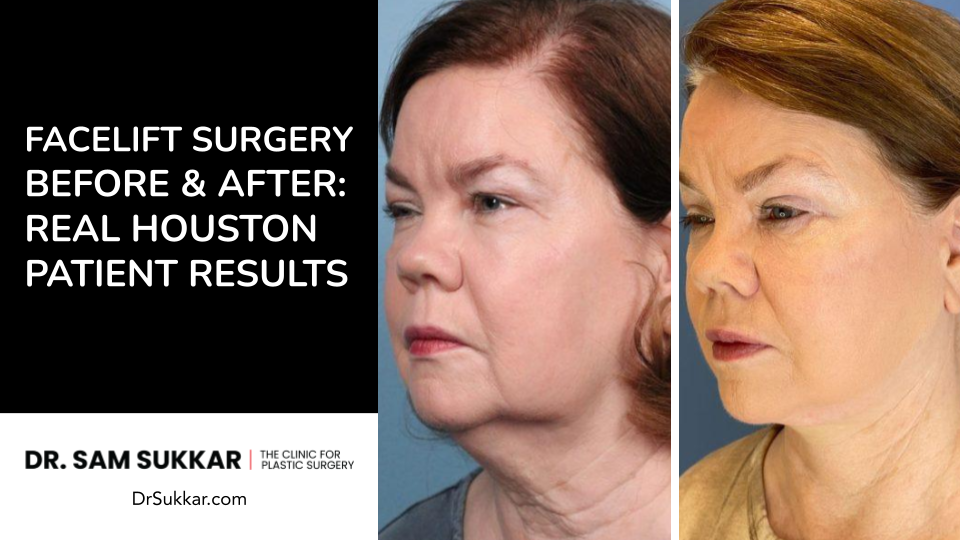
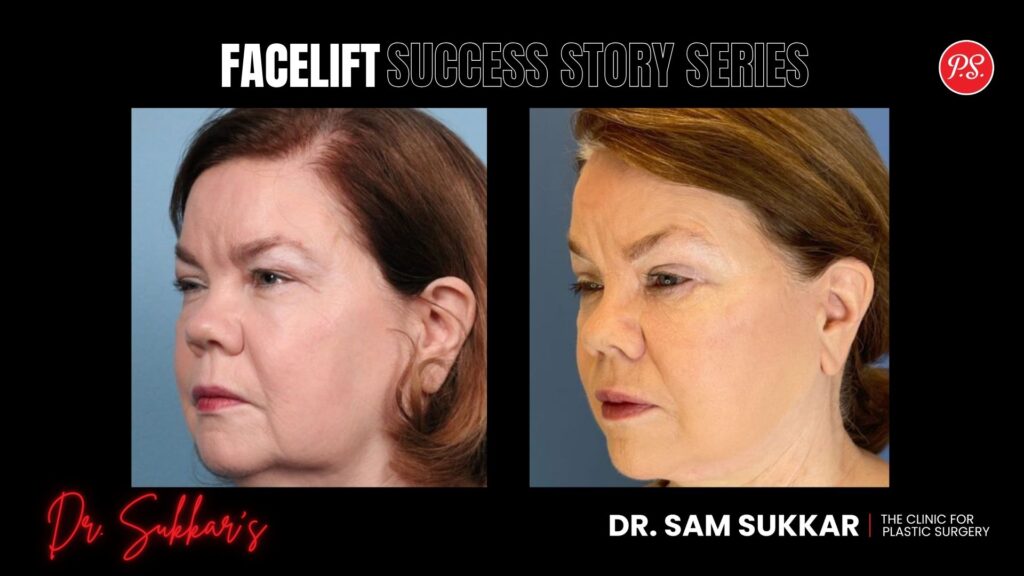
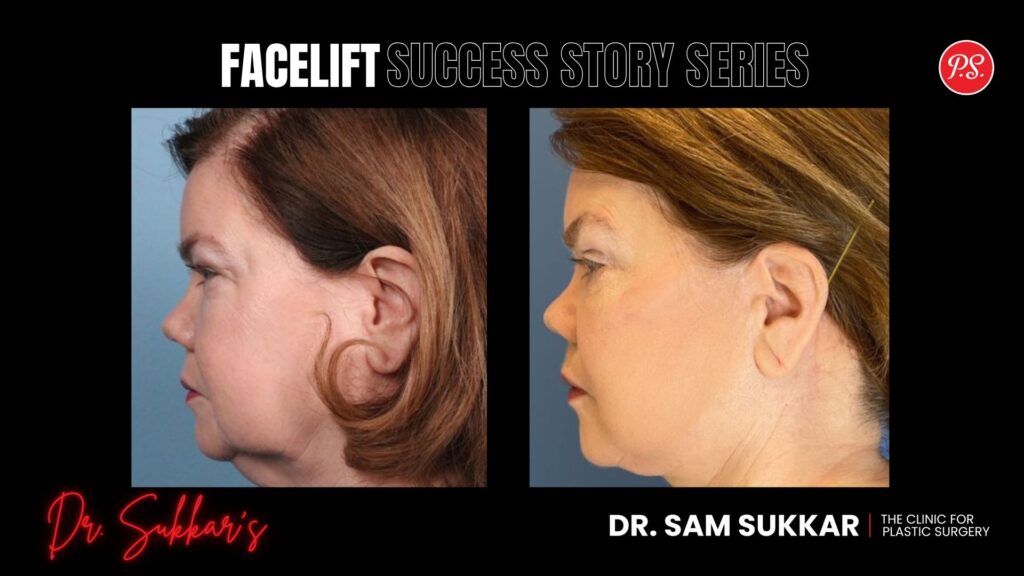
As the healing process continues, most patients begin to look less swollen and more like themselves. Many patients see a refreshed appearance by the second or third week, even though residual swelling remains. That’s why realistic expectations matter. Early improvement is real, but final results take time.

What Affects Facelift Recovery and Healing Progress

Different face lift techniques heal a little differently. A deep plane facelift surgery works deeper around the superficial musculoaponeurotic system and facial muscles, so the recovery may involve a different pattern of tightness and swelling than a mini facelift. If facial implants or other facial rejuvenation procedures are added, recovery can take longer.

Age matters, but it is not everything. Younger patients may have better skin elasticity, yet older patients with strong overall health often heal very well too. During consultation, a clear explanation of what is normal is provided based on the patient’s anatomy, skin laxity, and degree of facial aging or sagging skin.

The First 72 Hours: Swelling, Bruising, And Rest

The first three days are the most intense part of full facelift recovery. This is when swelling and bruising build, discomfort peaks, and the patient needs real rest. Most patients should plan for help at home, especially after a major surgery involving the face and neck.

What Facelift Recovery Feels Like in the First 72 Hours

During this window, the body reacts to the surgical procedure with inflammation. Swelling and bruising often worsen before they improve, and that can be unsettling if the patient is not prepared. Mild drainage on dressings, tightness, pressure, and fatigue are common.

Discomfort after a facelift surgery is usually managed with prescribed pain medication during the initial recovery phase. Pain is usually manageable with prescription pain medication provided by the aftercare team. Not everyone needs strong medicine for long, but they should use only the prescribed medications approved by the practice. Cold exposure is not always advised directly on the face, so patients should follow office-specific instructions.

Rest, Positioning, and Early Facelift Recovery Care

The top priorities are head elevation, hydration, and light movement. Gentle movement around the home helps circulation, but bending, lifting, or rushing back to routine can increase swelling. This is not the time for errands or trying to look presentable.

The surgical team may remove or adjust surgical dressings around day two. That early visit lets the aftercare team to check incision sites, monitor incision healing, and make sure bruising looks normal. Bruising often peaks around days 3 to 4, so patients should not judge facelift results too early.

Week 1: Incision Care, Activity Limits, And Follow-Up Visits

Week 1 is about protecting the surgical work. Swelling may start to ease, but the patient is still in the initial healing phase. Careful incision care and strict activity limits help minimize scarring and support smooth healing progress.

Incision Care During Week 1 of Facial Plastic Surgery Recovery

By this stage, drains and bulky wraps are often gone, and the focus shifts to keeping incision sites clean and dry. Avoid creams, makeup, or home remedies unless specifically approved. The goal is uncomplicated incision healing, not speed at any cost.

Some sutures come out between days 5 and 7. At follow-up visits, the team checks for early signs of infection, unusual redness, or fluid buildup. Residual bruising and swelling may still appear near the jawline, ears, or neck, which is usually normal.

Activity Limits and Appointments After Facelift Surgery

Even if the patient feels better, blood pressure spikes can disrupt recovery. They should avoid strenuous exercise, heavy lifting, and sharp bending. Light walking is usually encouraged because it supports circulation without stressing the healing facial tissues. Also, sleep with your head elevated at 30–45 degrees for at least 2 weeks to reduce swelling.

This is also when many patients need reminders to follow post-operative instructions carefully. Taking medications on time, sleeping with the head elevated, and attending every appointment all matter. The aftercare team uses these visits to confirm that healing stays on schedule after cosmetic or reconstructive facial procedures.

Weeks 2 To 3: Returning To Daily Life While Healing Continues

Weeks 2 to 3 are often the emotional turning point in face lift recovery. The patient still has healing ahead, but they usually begin seeing a more balanced, youthful appearance. This is the period when many patients feel comfortable returning to work, social plans, and normal routines with some caution.

Week 2 of Facelift Recovery: Visible Improvement and Caution

By the second week, swelling and bruising have eased enough that many patients look much better in public. Some can wear makeup if cleared and the incision lines are ready. Others still prefer to wait, especially if they have visible bruising near the neck or ears.

Energy often improves here, but overdoing it can cause setbacks. Patients may return to desk work and light daily tasks, yet should still avoid strenuous exercise and anything that strains the face and neck. The recovery process is improving, not finished.

Week 3 of Facelift Recovery: Patients Begin Feeling Normal Again

Around two to three weeks, most patients notice that about 80% of swelling has settled. The face looks less puffy, and the contour from the cheeks to the jawline appears more defined. This is when facelift patients often see the first strong glimpse of their facelift results.

Still, some firmness, temporary numbness, and subtle asymmetry can remain. Incision lines may look pink, and loose skin is gone before the final softness returns. Patients begin normal activities more confidently, but healing is still active under the surface.

Weeks 4 To 6: When Results Start Looking More Natural

By weeks 4 to 6, recovery usually looks less dramatic and more refined. The obvious signs of surgery fade, the refreshed appearance becomes easier to appreciate, and the patient starts looking less “post-op” and more naturally rested.

Weeks 4 to 6 in the Facelift Recovery Timeline

At this stage, most visible swelling has resolved, though some residual swelling can linger in front of the ears, along the jaw, or beneath the chin. This is especially true after a deep plane facelift recovery or combined facial rejuvenation and neck work. The patient may feel small areas of stiffness even when looking much better.

The good news is that healing progress becomes more predictable. Patients notice smoother facial contours, less heaviness, and better definition where sagging skin once softened the jawline. Skin quality and underlying support begin to show through more clearly.

Activity, Scar Maturation, and Final Facelift Results

Moderate exercise is often allowed around week 4, with broader clearance by week 6. Even then, activity should increase gradually. Gentle movement is smart; a sudden return to full training is not.

Incision lines continue to fade over time, but scar maturation takes months, not weeks. Final results from plastic surgery and facial rejuvenation procedures usually emerge after several weeks and keep improving. A healthy lifestyle helps reduce swelling, support skin elasticity, and preserve a natural-looking outcome.

What Can Slow Healing Or Signal A Problem

Most facelift recovery follows a normal pattern, but not every delay means danger. Some patients simply heal slower than others. What matters is recognizing the difference between expected healing and warning signs that require prompt attention.

What Can Slow Healing After a Facelift Procedure

Several factors can lead to slow healing. Poor nutrition, dehydration, smoking, unmanaged medical conditions, and pushing activity too early can all lengthen the recovery timeline. Patients with lower skin elasticity or more extensive correction of sagging skin and loose skin may also need more time.

Combined procedures can extend recovery too. A facelift procedure paired with facial implants, a neck lift, or other facial rejuvenation procedures creates more swelling and more healing demands. That does not mean something is wrong. It just means the patient should keep realistic expectations.

Warning Signs That Should Prompt A Call to the Office

A patient should contact the office for severe or worsening pain on one side, sudden swelling, fever, foul-smelling drainage, or bleeding that soaks dressings. Marked asymmetry that appears suddenly can also signal a problem. These are not symptoms to watch for casually.

The same goes for dark skin changes, expanding redness, or drainage from incision sites that increases instead of improving. The safest move is always to call the aftercare team. Early evaluation helps protect healing, reduce complications, and preserve the best possible outcome after surgery.

Frequently Asked Questions About Facelift Recovery: A Week-by-Week Healing Timeline Guide

What to expect right after a facelift?

During the first 72 hours, expect swelling and bruising to peak, along with discomfort, tightness, and mild numbness. Rest is essential, and you should avoid strenuous activities while following specific care instructions and attending the first post-op checkup. Gentle movement, such as short walks, can encourage circulation and reduce the risk of blood clots after surgery.

How long does it typically take to see visible improvements after a facelift?

Most patients notice clear visible improvements between weeks 2 and 3 post-surgery, with about 80% of swelling resolved by week 3. Most patients begin to notice visible improvements in their facial contours by the end of the second week post-surgery, as swelling and bruising continue to decrease. But, full internal healing after a facelift can take up to one year.

What activities should be avoided during the first week of facelift recovery?

During week 1, avoid bending over, heavy lifting, strenuous exercise, and any activity that spikes blood pressure. Light walking is encouraged to promote circulation, while careful incision care helps minimize scarring and support healing.

When can I safely resume moderate exercise after facelift surgery?

Moderate exercise is often allowed around week 4, provided activity increases gradually and overexertion is avoided. By the end of the first month after surgery, around 80-90% of swelling has typically subsided, allowing patients to feel more comfortable and confident in their appearance. Full clearance for all activities usually comes by week 6, once most swelling has subsided and healing is well underway.

What factors can slow down facelift recovery?

Poor nutrition, dehydration, smoking, unmanaged medical conditions, pushing activity too early, extensive skin correction, or combined procedures can slow healing. Following your aftercare team’s post-op instructions closely is crucial for a smooth recovery.

Conclusion and Conclusion of Facelift Recovery: A Week-by-Week Healing Timeline Guide

A smooth recovery depends on patience, consistency, and attention to detail. Small habits such as following instructions, attending follow-up visits, and easing back into daily routines all support better healing. Most patients begin to feel like themselves again within a few weeks, even though subtle changes continue beneath the surface.

Final results take time, but the process is predictable when handled correctly. Staying aware of normal healing patterns and acting quickly if something feels off helps protect outcomes and maintain long-term results.

Your Trusted Destination for Facelift Surgery in Houston, Texas (TX)

Are you located in one of these Houston Metro Area cities?

Houston, The Woodlands, Sugar Land, Katy, Pearland, Pasadena, League City, Baytown, Conroe, Cypress, Spring, Kingwood, Humble, Missouri City, Friendswood, Bellaire, Clear Lake, Tomball, Galveston, Richmond, Rosenberg, Stafford, La Porte, Deer Park, Seabrook, Webster, Alvin, and Channelview.

Board-Certified Plastic Surgeon Dr. Sam Sukkar, MD, FACS, and the The Clinic for Plastic Surgery Team provide advanced facelift surgery solutions to rejuvenate and restore a more youthful, refreshed appearance.

If you are dealing with sagging skin, deep facial folds, jowls, volume loss, or a tired, aging appearance, we offer comprehensive facial rejuvenation options, including:

  • Facelift Surgery
  • Mini Facelift
  • Lower Facelift
  • Neck Lift Surgery
  • Facelift with Neck Lift
  • Customized Facial Rejuvenation Treatment Plans

Visit our modern 18,000+ sq. ft. plastic surgery center and med spa in Houston, Texas, designed for comfort, privacy, and results-driven care. From your first consultation through recovery, our talented team focuses on natural-looking rejuvenation with elegant, refreshed results.

For patients outside the Houston area or those with limited availability, schedule a virtual facelift surgery consultation.

Book Your Personalized Facelift Consultation today at DrSukkar.com or call (281) 940-1535.

About the Author – Meet Dr. Sam Sukkar, MD
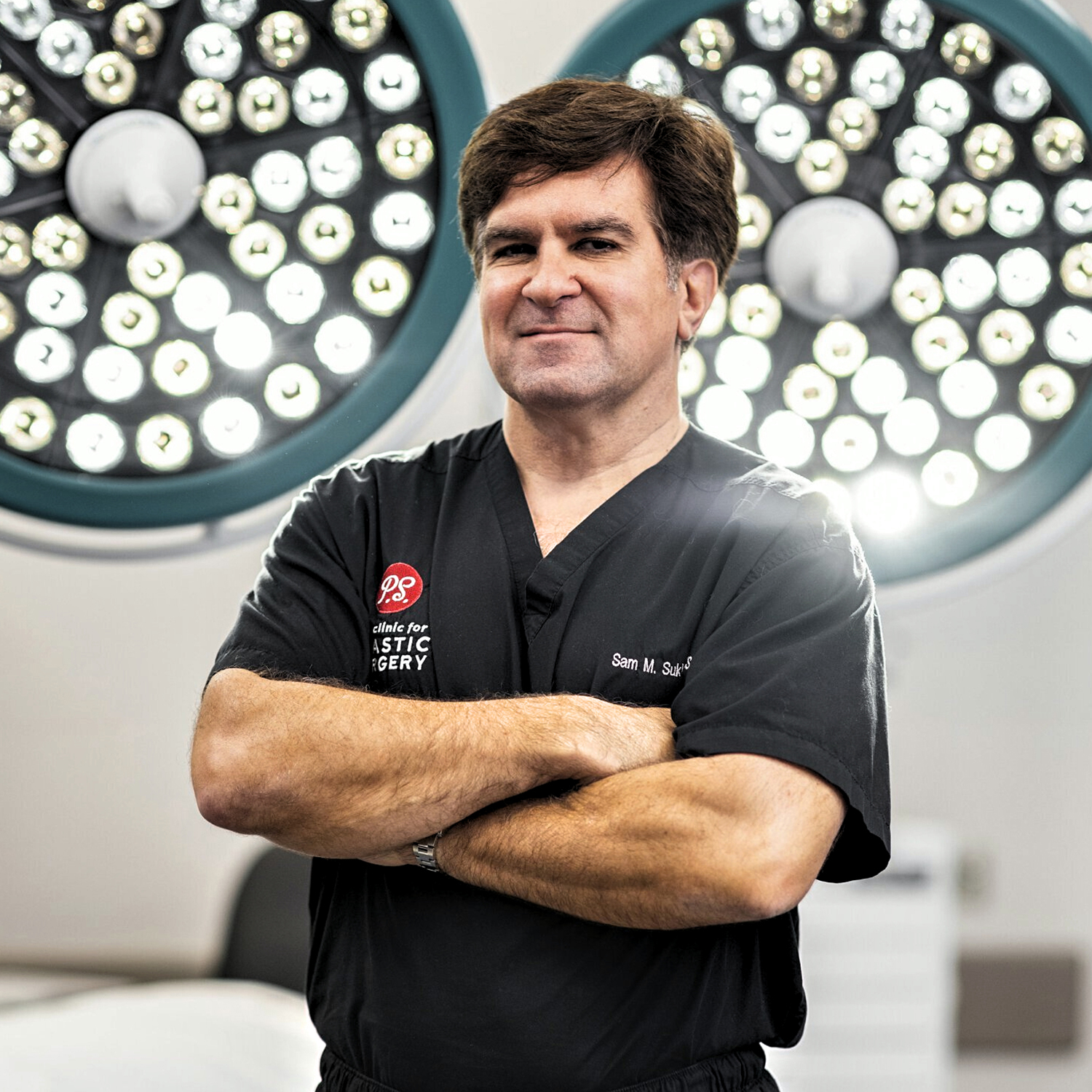
Dr. Sam Sukkar, MD, FACS is a highly respected Board-Certified Plastic Surgeon in Houston, Texas, known for his expertise in advanced cosmetic and reconstructive procedures. As the founder of The Clinic for Plastic Surgery, Dr. Sukkar has set a new standard for excellence, performing over 20,000 procedures with a focus on delivering natural, refined results.

Dr. Sukkar earned his Doctor of Medicine (M.D.) degree from Louisiana State University School of Medicine in 1992 after graduating summa cum laude with a Bachelor of Science in Microbiology. He then completed an intensive General Surgery Residency at the University of Texas Hermann Hospital before being selected for a highly competitive Plastic Surgery Fellowship at Northwestern University in Chicago, one of the most prestigious training programs in the country.

With more than 20 years of experience, Dr. Sukkar is a Diplomate of the American Board of Plastic Surgery and a Fellow of the American College of Surgeons (FACS). He is also an active member of the American Society of Plastic Surgeons (ASPS) and the Houston Society of Plastic Surgery (HSPS). His dedication to innovation and continuing education has solidified his reputation as a leading expert in aesthetic surgery, specializing in breast surgery, body contouring, facial procedures, and non-invasive treatments.

Dr. Sukkar’s expertise has been recognized by Houston Magazine, naming him one of Houston’s “Top Docs for Women,” and he has been featured among RealSelf’s America’s Top Doctors. Committed to his patients, he prioritizes personalized care, ensuring every individual feels informed, comfortable, and confident in their aesthetic journey.

Contact Dr. Sukkar today to schedule a consultation, visit DrSukkar.com to learn more, or call us directly at (281) 940-1535.

How a Liquid Facelift Works: Who Is the Best Candidate?

A liquid face lift is a non surgical, minimally invasive treatment that uses dermal fillers and neuromodulators such as Botox. They help to restore volume, smooth wrinkles, and create a fresher, lifted appearance without a surgical facelift. In a medical office, this approach targets volume loss, nasolabial folds, marionette lines, cheeks, and other areas where aging changes the face.

For the right individual patient, it can deliver natural looking results with little recovery time. Based on current cosmetic dermatology and plastic surgery standards, the best outcomes usually happen in patients with mild sagging skin, early sagging jowls, and realistic goals.

Key Takeaways of How a Liquid Facelift Works

  • A liquid facelift uses dermal fillers and neuromodulators like Botox to restore facial volume and smooth wrinkles without surgery.
  • Ideal candidates for a liquid facelift have mild sagging skin, early volume loss, and realistic expectations for subtle, natural-looking results.
  • This minimally invasive procedure is best for patients with early to moderate aging who want a refreshed appearance without the downtime of surgery.
  • Liquid facelifts combine fillers that add volume with neuromodulators that relax muscles to create a balanced, lifted look.
  • Patients with severe sagging or deep folds may require a surgical facelift for more dramatic and long-lasting correction.
  • Results from a liquid facelift typically last from several months up to 18 months, requiring maintenance treatments for sustained effects.

What A Liquid Facelift Actually Is

A liquid face lift, also called a liquid facelift, is a category of injectable treatments performed in a medical office to improve facial aging without incisions. Unlike a traditional facelift or other forms of cosmetic surgery, it relies on fillers and neuromodulators to refresh the face and improving overall appearance.

Liquid Facelift Basics: How The Treatment Is Defined

The core idea is simple. As the face ages, it loses fat, collagen, and structural support. That loss shows up as flatter cheeks, hollow temples, nasolabial folds, marionette lines, and skin that looks less firm.

A liquid facelift procedure addresses those changes with strategically placed injections. The goal is not to copy a facelift procedure done in the operating room. It is to subtly restore volume, add fullness, and help the face look more rested.

Liquid Facelift vs Surgical Face Lift

A liquid facelift and a surgical facelift are not interchangeable. A traditional facelift removes or repositions tissue to treat heavier laxity and more advanced descent.

By contrast, a liquid approach is minimally invasive. It does not remove excess skin, and it cannot recreate the more dramatic results of surgery. But for patients with early aging changes, it can be an effective treatment that avoids incisions and long downtime.

How Injectable Fillers And Neuromodulators Create A Lifted Look

A liquid facelift work plan usually combines dermal fillers with neuromodulators. Each product does a different job, and the best results often come from that combination rather than one product alone.

How Dermal Fillers Restore Volume and Support

Most dermal fillers replace structure where age has reduced facial support. Hyaluronic acid fillers are commonly used because they can be placed precisely and can smooth lines while also helping restore volume in the midface.

When injected into the cheeks, temples, or around the nose and mouth, fillers can support deeper tissues and improve facial proportions. This may soften wrinkles, improve sagging jowls, and reduce the tired look that comes with volume loss.

Some options also use collagen-stimulating options such as poly l lactic acid. These are chosen when a gradual improvement is needed in areas affected by diffuse lost volume rather than a single fold or crease.

How Botox and Similar Injectables Soften Movement Lines

Neuromodulators such as Botox do not add volume. Instead, they relax targeted muscles that create expression lines, helping smooth wrinkles in selected areas.

That matters because a younger look is not only about plumping skin. When injectables relax strong muscle pull and fillers support weak areas, the face can appear more balanced and lifted. In practice, the exact specific injectables used depend on anatomy, movement patterns, and the desired results.

The Best Candidate For A Liquid Facelift

The best candidate is usually someone with early to moderate facial aging who wants subtle improvement without surgery. In general, a liquid facelift depends on skin quality, the degree of tissue descent, and whether the patient wants refinement or major correction.

Ideal Candidates Usually Have Mild Sagging and Volume Loss

Ideal candidates often have mild sagging skin, shallow to moderate lines and wrinkles, and visible volume loss in the midface. They may notice flatter cheeks, soft marionette lines, or developing nasolabial folds.

They also tend to have decent skin elasticity. That is important because fillers can replace support, but they cannot remove large amounts of loose skin. Patients under 50 often fit this profile, though age alone does not decide who is a good candidate.

Best Results Come From Realistic Expectations and Expert Planning

The strongest outcomes usually happen when patients want a refreshed, not transformed, look. A liquid facelift can achieve a youthful appearance, but it is not meant to duplicate a surgical lift.

A careful consultation matters. Medical history, facial structure, and personal goals are reviewed to determine the safest and most effective procedure.

When A Liquid Facelift May Not Be The Right Choice

Not every face benefits enough from injectables alone. In some cases, the more honest answer is that a surgical facelift or another medical procedure will match the anatomy better and produce a more stable result.

Severe Sagging Skin and Heavy Jowling Often Need Surgery

When a patient has advanced sagging skin, deep folds, or pronounced sagging jowls, a filler-based approach may only offer limited improvement. Adding too much product can make the face look puffy instead of lifted.

This is where the difference between non surgical and surgery becomes clear. A traditional facelift repositions tissue and removes excess skin. Fillers cannot do that, even if how many injections are used is increased.

Medical and Cosmetic Limits Also Matter

Some patients are not ideal because of allergy concerns, prior complications, or expectations that do not fit what liquid facelift procedures can deliver. A full review of medical history helps identify factors that may increase bruising or affect healing.

There are also common risks and potential side effects to discuss, including swelling, bruising, tenderness at the injection site, and in rare cases, vascular complications or allergic reactions. A responsible injector should offer a clear critical appraisal of whether the treatment is appropriate.

How Long Results Last And What Affects Longevity

One reason patients choose this approach is flexibility. Liquid facelift results can appear quickly, but they are not permanent, and longevity varies by product, placement, metabolism, and technique.

How Long Different Injectables Usually Last

Results from many fillers are visible right away. Hyaluronic acid products may last around 6 to 18 months depending on the area and the formula, while some biostimulatory products can last longer.

Neuromodulators such as Botox usually wear off faster, often in 3 to 4 months. Because of that, a full liquid facelift may be maintained in stages rather than repeated all at once. The exact timeline depends on which most fillers or neuromodulators were used.

Why Cost and Maintenance Vary

Liquid facelifts cost less upfront than a surgical facelift, but maintenance is part of the equation. The total cost changes based on the amount of product, and the number of areas treated.

A liquid facelift depends on ongoing touch-ups if the patient wants steady correction. And liquid facelift requires a personalized schedule because metabolism, movement, sun exposure, and lifestyle all affect how long results hold.

Frequently Asked Questions About How a Liquid Facelift Works: Who Is the Best Candidate?

What is a liquid facelift and how does it work?

A liquid facelift is a nonsurgical procedure using injectable dermal fillers and neuromodulators like Botox. They restore facial volume, smooth wrinkles, and create a lifted, rejuvenated appearance without incisions or surgery.

Who is the best candidate for a liquid facelift?

Ideal candidates are typically under 50 with mild sagging, shallow wrinkles, light volume loss, and good skin elasticity seeking subtle, natural results without surgery.

How do dermal fillers and neuromodulators contribute to the lifted look?

Dermal fillers replace lost volume and support deeper tissues to lift the face. While neuromodulators relax muscles that cause wrinkles, together creating a more balanced and youthful appearance.

How long do the results of a liquid facelift last?

Results are visible immediately and last 3-18 months depending on the product. Neuromodulators last about 3-4 months, while fillers may last 12-24 months, with maintenance treatments recommended.

Conclusion and Summary of How a Liquid Facelift Works: Who Is the Best Candidate?

A facelift, whether surgical or non-surgical, is ultimately about restoring structure, balance, and definition to the face. Different techniques address different levels of aging, from early volume loss to more advanced sagging in the cheeks, jawline, and neck. The most effective outcomes come from choosing an approach that fits the individual’s anatomy and goals, rather than relying on a single method for every case.

Non-surgical options like a liquid facelift can offer subtle improvement with minimal downtime, especially for early aging changes, while more advanced concerns may require deeper structural correction. Understanding the limits and strengths of each option leads to more realistic expectations and better long-term satisfaction. The right plan focuses on natural-looking results that refine facial contours without creating an overdone appearance.

Your Trusted Destination for Facelift Surgery in Houston, Texas (TX)

Are you located in one of these Houston Metro Area cities?

Houston, The Woodlands, Sugar Land, Katy, Pearland, Pasadena, League City, Baytown, Conroe, Cypress, Spring, Kingwood, Humble, Missouri City, Friendswood, Bellaire, Clear Lake, Tomball, Galveston, Richmond, Rosenberg, Stafford, La Porte, Deer Park, Seabrook, Webster, Alvin, and Channelview.

Board-Certified Plastic Surgeon Dr. Sam Sukkar, MD, FACS, and the The Clinic for Plastic Surgery Team provide advanced facelift surgery solutions to rejuvenate and restore a more youthful, refreshed appearance.

If you are dealing with sagging skin, deep facial folds, jowls, volume loss, or a tired, aging appearance, we offer comprehensive facial rejuvenation options, including:

  • Facelift Surgery
  • Mini Facelift
  • Lower Facelift
  • Neck Lift Surgery
  • Facelift with Neck Lift
  • Customized Facial Rejuvenation Treatment Plans

Visit our modern 18,000+ sq. ft. plastic surgery center and med spa in Houston, Texas, designed for comfort, privacy, and results-driven care. From your first consultation through recovery, our talented team focuses on natural-looking rejuvenation with elegant, refreshed results.

For patients outside the Houston area or those with limited availability, schedule a virtual facelift surgery consultation.

Book Your Personalized Facelift Consultation today at DrSukkar.com or call (281) 940-1535.

About the Author – Meet Dr. Sam Sukkar, MD

Dr. Sam Sukkar, MD, FACS is a highly respected Board-Certified Plastic Surgeon in Houston, Texas, known for his expertise in advanced cosmetic and reconstructive procedures. As the founder of The Clinic for Plastic Surgery, Dr. Sukkar has set a new standard for excellence, performing over 20,000 procedures with a focus on delivering natural, refined results.

Dr. Sukkar earned his Doctor of Medicine (M.D.) degree from Louisiana State University School of Medicine in 1992 after graduating summa cum laude with a Bachelor of Science in Microbiology. He then completed an intensive General Surgery Residency at the University of Texas Hermann Hospital before being selected for a highly competitive Plastic Surgery Fellowship at Northwestern University in Chicago, one of the most prestigious training programs in the country.

With more than 20 years of experience, Dr. Sukkar is a Diplomate of the American Board of Plastic Surgery and a Fellow of the American College of Surgeons (FACS). He is also an active member of the American Society of Plastic Surgeons (ASPS) and the Houston Society of Plastic Surgery (HSPS). His dedication to innovation and continuing education has solidified his reputation as a leading expert in aesthetic surgery, specializing in breast surgery, body contouring, facial procedures, and non-invasive treatments.

Dr. Sukkar’s expertise has been recognized by Houston Magazine, naming him one of Houston’s “Top Docs for Women,” and he has been featured among RealSelf’s America’s Top Doctors. Committed to his patients, he prioritizes personalized care, ensuring every individual feels informed, comfortable, and confident in their aesthetic journey.

Contact Dr. Sukkar today to schedule a consultation, visit DrSukkar.com to learn more, or call us directly at (281) 940-1535.

Lindsay Lohan Facelift: Did She Get Her Face Lifted?

The short answer: there is no confirmed evidence that a Lindsay Lohan face lift ever happened, and Lindsay Lohan herself has denied getting a facelift or other major plastic surgery. What sparked the buzz was her noticeably refreshed appearance, smoother skin, sharper facial contours, and a more defined jawline seen across 2024 and 2025.

She has said she uses non surgical treatments such as Botox, fillers, and laser facials, along with a stricter skin care and skincare routine. That matters because many cosmetic procedures can create a youthful, rested appearance without surgery.

Key Takeaways of Lindsay Lohan Facelift

About Lindsay Lohan

Lindsay Lohan is an American actress, singer, and songwriter who rose to fame as one of the most recognizable young stars of the early 2000s. Born on July 2, 1986, in The Bronx, New York, she began her career at a very young age. She is the daughter of Dina Lohan and Michael Lohan, and has several siblings, including Aliana Lohan and Dakota Lohan. Lohan married Bader Shammas in 2022. Standing at approximately 1.65 meters tall, Lindsay Lohan remains a recognizable figure in entertainment, known for both her early impact and her ongoing presence in film and media.

Early Career

She was signed to Ford Models at just three years old and soon transitioned into acting, gaining early attention through appearances on soap operas like Guiding Light and Another World. Her breakout role came with Disney’s The Parent Trap (1998), where she played twin sisters, establishing her as a leading young talent.

Rise to Fame in Film and Music

Lohan quickly became a defining face of teen cinema with films such as Freaky Friday (2003), Confessions of a Teenage Drama Queen (2004), and the cultural hit Mean Girls (2004), which remains one of her most iconic performances. Alongside acting, she pursued music, releasing albums like Speak (2004) and A Little More Personal (Raw) (2005), showcasing her work as a singer and songwriter. Over time, she transitioned into more mature roles while navigating intense media attention that often overshadowed her professional work.

In recent years, Lohan has reintroduced herself to audiences with a more focused return to acting, including projects with Netflix such as Falling for Christmas (2022). Her career reflects a mix of early success, public challenges, and a steady return to the screen. Outside of entertainment, she has expanded into business ventures and maintains a global fan base.

What Is a Face Lift Plastic Surgery?

A facelift, also known as rhytidectomy, is a surgical procedure designed to improve visible signs of aging in the lower face and neck. It focuses on lifting sagging tissues, refining the jawline, and reducing loose skin rather than simply tightening the surface. Modern techniques go beyond the skin by repositioning deeper support layers, including the superficial musculoaponeurotic system, to restore more natural facial contours.

This procedure is commonly chosen to address concerns such as jowls, deep folds around the mouth, and an aging neck. While it can create a more youthful and defined appearance, it does not fully correct fine lines, sun damage, or volume loss on its own. Those concerns are often managed with complementary treatments like fillers, laser therapy, or skin resurfacing.

Main Types of Facelift and the Results They Provide

  • SMAS Facelift: Targets deeper support layers beneath the skin to improve jawline definition and soften deep folds. Results tend to look natural and last longer compared to surface-level techniques.
  • Deep Plane Facelift: Repositions deeper facial structures for more comprehensive correction. Often used for moderate to severe sagging, especially in the midface, with strong, long-lasting contour improvement.
  • Mini Facelift: Focuses on mild sagging in the lower face using smaller incisions. Results are more subtle, with a quicker recovery and less downtime.
  • Full Facelift: Addresses advanced aging by lifting deeper tissues and removing excess skin. Provides more dramatic improvement in the jawline, cheeks, and neck.
  • Mid-Face Lift: Lifts the cheek area to restore volume and reduce deep nasolabial folds. Helps create a fuller, more youthful midface.

Why Lindsay Lohan’s Appearance Has Sparked Fresh Facelift Speculation

The renewed conversation around Lindsay Lohan facelift rumors did not appear out of nowhere. It grew out of a visible shift in Lindsay’s appearance that many fans described as a dramatic glow up.

Lindsay Lohan facelift rumors grew after her refreshed public appearances

Lindsay Lohan drew fresh attention when recent red carpet photos and interviews showed smoother skin, softer under eyes, and more refined facial structure. For a celebrity whose look has been documented since The Parent Trap, even subtle changes can trigger countless discussions.

Entertainment coverage and social posts often focused on her radiant appearance and youthful finish. Side by side images made her cheeks, lips, nose, and defined jawline the center of debate.

Lindsay Lohan Addresses Face Lift Rumors. Video Source E! News.

Lindsay Lohan’s plastic surgery speculation reflects how closely celebrity faces are watched

Public interest in Lindsay Lohan’s plastic surgery is also tied to her long career. People feel they know her face, so any evolving appearance gets read as proof of cosmetic surgery.

But celebrity transformations rarely come down to one simple explanation. Styling, lighting, healthier lifestyle habits, skin texture improvements, and non surgical enhancements can all change how facial contours read in photos. In Lindsay’s case, that mix is a big reason speculation spread so fast.

Features Fans And Commentators Point To In Before-And-After Comparisons

Online discussions about Lindsay Lohan often center on visible changes in her appearance over time. Many of these comparisons focus on specific facial areas and have fueled ongoing facelift rumors, even though no public confirmation supports those claims. Social media, red carpet photos, and side-by-side images from different years continue to drive the conversation.

Facial Contours, Jawline, and Cheeks

Fans frequently point to a more sculpted look in recent appearances, noting a sharper jawline, more defined cheeks, and smoother facial contours compared to earlier paparazzi photos. These changes often lead to speculation about facelift procedures, including deeper techniques. At the same time, others attribute the difference to factors like weight fluctuations, makeup styling, lighting, or the use of fillers that can reshape facial balance without surgery.

Under Eyes, Brow Area, Lips, and Nose

Attention also turns to the eye area, brow position, lips, and nose. A smoother under-eye area and softer forehead lines often spark conversations about injectables, while fuller lips tend to bring up filler speculation. Subtle differences in nose shape across photos have also led to ongoing rumors.

While these observations create strong online narratives, variations in angles, expressions, and overall styling can significantly change how features appear. As a result, visible differences alone do not confirm any specific cosmetic procedure, even though they continue to fuel public curiosity.

What Lindsay Lohan Has Said About Facelift Rumors

Public statements from Lindsay Lohan have been consistent when it comes to facelift rumors. She has denied undergoing a facelift or any major surgical procedures, despite ongoing speculation driven by her noticeably refreshed appearance in recent years. Interviews and media coverage often highlight her response: there is no confirmed evidence of a surgical facelift, and she has directly addressed those claims by attributing her look to non-surgical care and personal routine changes.

Instead, Lohan has openly shared that her appearance is the result of consistent skincare, lifestyle improvements, and non-invasive treatments. She has referenced options like Botox, fillers, and laser-based facials, along with a more disciplined skincare routine. These statements align with what many outlets have reported, reinforcing that her transformation likely reflects a combination of maintenance treatments and overall wellness rather than a single surgical procedure. While rumors continue to circulate online, her own comments remain clear in denying facelift surgery.

Other Reasons A Celebrity’s Face Can Look Dramatically Different

A celebrity’s face can change a lot without a single major surgery. That is especially true when skin care, professional treatments, and lifestyle shifts all happen at once.

Lindsay Lohan has credited skin care, laser treatments, and a healthier lifestyle

Lohan has said her refreshed look came from a better skincare routine, improved skin care habits, and non surgical treatments. Reported details include laser facials, laser treatments, and Morpheus8 style RF microneedling to support collagen production and skin texture.

She has also mentioned simple habits like ice cold water, eye patches, and nutrition changes that included green tea and other wellness focused choices. After becoming a mother, Lindsay shared that her skin changed, which pushed her toward a more consistent routine and a healthier lifestyle.

Makeup, lighting, aging, and treatment stacking can create noticeable changes

Even without surgical procedures, stacked treatments can produce a big transformation. Botox, fillers, chemical peels, non surgical options, and skin tightening can soften crow’s feet, brighten skin, and create a more youthful, refreshed appearance.

Professional makeup also matters. Contour can sharpen the nose and cheeks. Camera angles can make lips or the upper lip look fuller. Better lighting alone can make someone appear more rested and radiant. That is why Lindsay’s case cannot be reduced to one explanation.

Frequently Asked Questions About Lindsay Lohan Facelift: Did She Get Her Face Lifted?

Did Lindsay Lohan get a facelift or major plastic surgery?

Lindsay Lohan has denied having a facelift or any major surgical procedures. She credits her refreshed look to non-invasive treatments like Botox, fillers, laser facials, and an improved skincare routine.

What is the difference between a facelift and non-surgical treatments?

A facelift is a surgical procedure that lifts and tightens sagging skin on the face and neck. Non-surgical treatments like Botox, fillers, laser facials, and microneedling improve skin texture and facial contours without surgery or downtime.

How can non-surgical treatments change Lindsay Lohan’s appearance?

Non-invasive options such as Botox and dermal fillers smooth wrinkles, enhance facial volume, and improve skin tone. Laser facials and microneedling stimulate collagen, resulting in a more youthful and refreshed appearance without surgery.

How long the facelift results last?

Facelift results can last around 7 to 10 years or longer. Results last depends on the technique used, skin quality, and lifestyle factors like sun exposure and smoking. Deeper approaches such as SMAS or deep plane lifts tend to provide longer-lasting support, while less invasive options may have a shorter duration. Although aging continues, the face typically maintains a more youthful contour compared to before the procedure.

Who is a good candidate for a facelift?

Good candidates have skin laxity in the lower face or neck, but still has enough skin elasticity for smooth redraping. Overall health, realistic expectations, and a clear goal for improvement also play an important role. Candidacy is based more on facial anatomy and tissue quality than age alone.

Conclusion and Summary of Lindsay Lohan Facelift: Did She Get Her Face Lifted?

There is no confirmed evidence that Lindsay Lohan has undergone a facelift. She has publicly denied having any major surgical procedures. This continues to drive the conversation is her noticeably refreshed appearance, including smoother skin, more defined facial contours, and a sharper jawline seen in recent years. These visible changes have fueled speculation, but her own statements consistently point toward non-surgical treatments and improved skincare rather than invasive procedures.

In reality, many factors can influence how a face appears over time, especially for someone constantly in front of cameras. Skincare routines, treatments like Botox and fillers, makeup, and lifestyle changes can all create a more youthful and refined look. While online discussions often lean toward dramatic conclusions, the most grounded takeaway is simple. Photos and comparisons alone cannot confirm surgery. The available information supports a non-surgical explanation behind her transformation.

Your Trusted Destination for Facelift Surgery in Houston, Texas (TX)

Are you located in one of these Houston Metro Area cities?

Houston, The Woodlands, Sugar Land, Katy, Pearland, Pasadena, League City, Baytown, Conroe, Cypress, Spring, Kingwood, Humble, Missouri City, Friendswood, Bellaire, Clear Lake, Tomball, Galveston, Richmond, Rosenberg, Stafford, La Porte, Deer Park, Seabrook, Webster, Alvin, and Channelview.

Board-Certified Plastic Surgeon Dr. Sam Sukkar, MD, FACS, and the The Clinic for Plastic Surgery Team provide advanced facelift surgery solutions to rejuvenate and restore a more youthful, refreshed appearance.

If you are dealing with sagging skin, deep facial folds, jowls, volume loss, or a tired, aging appearance, we offer comprehensive facial rejuvenation options, including:

  • Facelift Surgery
  • Mini Facelift
  • Lower Facelift
  • Neck Lift Surgery
  • Facelift with Neck Lift
  • Customized Facial Rejuvenation Treatment Plans

Visit our modern 18,000+ sq. ft. plastic surgery center and med spa in Houston, Texas, designed for comfort, privacy, and results-driven care. From your first consultation through recovery, our talented team focuses on natural-looking rejuvenation with elegant, refreshed results.

For patients outside the Houston area or those with limited availability, schedule a virtual facelift surgery consultation.

Book Your Personalized Facelift Consultation today at DrSukkar.com or call (281) 940-1535.

About the Author – Meet Dr. Sam Sukkar, MD

Dr. Sam Sukkar, MD, FACS is a highly respected Board-Certified Plastic Surgeon in Houston, Texas, known for his expertise in advanced cosmetic and reconstructive procedures. As the founder of The Clinic for Plastic Surgery, Dr. Sukkar has set a new standard for excellence, performing over 20,000 procedures with a focus on delivering natural, refined results.

Dr. Sukkar earned his Doctor of Medicine (M.D.) degree from Louisiana State University School of Medicine in 1992 after graduating summa cum laude with a Bachelor of Science in Microbiology. He then completed an intensive General Surgery Residency at the University of Texas Hermann Hospital before being selected for a highly competitive Plastic Surgery Fellowship at Northwestern University in Chicago, one of the most prestigious training programs in the country.

With more than 20 years of experience, Dr. Sukkar is a Diplomate of the American Board of Plastic Surgery and a Fellow of the American College of Surgeons (FACS). He is also an active member of the American Society of Plastic Surgeons (ASPS) and the Houston Society of Plastic Surgery (HSPS). His dedication to innovation and continuing education has solidified his reputation as a leading expert in aesthetic surgery, specializing in breast surgery, body contouring, facial procedures, and non-invasive treatments.

Dr. Sukkar’s expertise has been recognized by Houston Magazine, naming him one of Houston’s “Top Docs for Women,” and he has been featured among RealSelf’s America’s Top Doctors. Committed to his patients, he prioritizes personalized care, ensuring every individual feels informed, comfortable, and confident in their aesthetic journey.

Contact Dr. Sukkar today to schedule a consultation, visit DrSukkar.com to learn more, or call us directly at (281) 940-1535.

Facelifts: How to Choose Between the Different Types

Facelifts in 2026 are not one-size-fits-all. The right facelift surgery depends on facial aging, skin laxity, facial anatomy, and how much lift a patient wants in the cheeks, jawline, and aging neck. In most cases, the best option is the one that corrects sagging skin and deeper facial tissues without overpulling the facial appearance.

At a glance, mini facelift patients often have mild facial sagging, while SMAS facelift and deep plane facelift techniques are better for moderate to severe facial sagging. A consultation helps match the surgical technique to skin quality, recovery goals, and expected facelift results.

Key Takeaways of Facelifts: How to Choose Between the Different Types

  • Facelift surgery effectively lifts sagging cheeks, softens deep folds, and tightens the jawline and neck by repositioning underlying tissues and removing excess skin.
  • Choosing the right facelift procedure depends on facial aging severity, skin laxity, and individual facial anatomy to ensure natural and balanced results.
  • Mini facelifts suit patients with mild sagging seeking modest correction and quicker recovery. SMAS and deep plane facelifts address moderate to severe facial sagging with longer-lasting effects.
  • A thorough consultation helps match the facelift type to your specific aging signs, recovery expectations, and desired lift areas.
  • Facelifts improve structural signs of aging but do not fully address fine lines, skin quality, or volume loss, which may require complementary treatments like fillers or laser therapy.
  • Understanding recovery time, risks, and potential combination treatments during consultation leads to a safer, more satisfying facelift experience.

What A Facelift Can And Cannot Improve

A facelift is designed to improve structural signs of facial aging, not every surface-level concern. The most effective facelift procedures lift sagging cheeks, soften deep folds, reduce jowls, improve loose skin along the jawline, and tighten an aging neck by repositioning underlying tissues and removing excess skin.

What Facelift Surgery Can Improve

Facelift surgery targets changes caused by the natural process of aging in the lower face and neck. As collagen production slows and skin begins to lose elasticity, facial tissues descend. That creates sagging skin, deep wrinkles, and a heavier jawline.

A well-planned facial rejuvenation procedure can restore cleaner facial contours and a more youthful appearance. Depending on the technique, it may involve tightening the superficial musculoaponeurotic system, repositioning deeper tissues, and improving skin laxity in the neck. This is why modern facelift technique choices play such an important role in overall results.

What Facelift Procedures Cannot Fully Correct

Even excellent facial cosmetic surgery has limits. A facelift does not erase fine lines caused by sun damage or improve skin quality the way laser treatments or other cosmetic procedures might. It also does not reliably restore volume in hollow areas, where fat transfer or dermal fillers may be more useful.

A facelift also does not treat heavy upper eyelids or forehead descent. Those concerns may call for a brow lift or eyelid-focused facial rejuvenation procedures. In many cases, comprehensive facial rejuvenation combines facelift surgery with selected add-ons, but the right plan depends on facial structure and goals.

The Main Types Of Facelifts And Who They Suit Best

The different types of facelifts vary in how deeply they work and how much correction they deliver. The choice usually comes down to severity of sagging, recovery time, and which part of the face needs the most support.

SMAS Facelift

The SMAS facelift targets the superficial musculo aponeurotic system, a key layer beneath the facial skin that supports structure and contour. By repositioning the underlying muscles instead of only tightening the remaining skin, this approach improves deep nasolabial folds and jawline definition. It is one of the most studied types of face lift and is widely used in aesthetic surgery and reconstructive surgery settings.

Deep Plane Facelift

The deep plane facelift works below the SMAS layer, releasing and repositioning deeper facial structures for a more complete lift. This technique directly addresses deep nasolabial folds, midface descent, and heavy sagging without placing tension on the facial skin. It is considered one of the more advanced invasive procedures, often chosen when longer-lasting structural correction is needed.

Mini Facelift (Short-Scar Facelift)

A mini facelift uses shorter incisions and focuses on mild sagging in the lower face. It relies on more superficial techniques and limited adjustment of the underlying muscles, which can reduce facelift recovery time. This option is often discussed during a facelift consultation when early aging changes appear but do not yet require more extensive correction.

Full Facelift (Traditional Facelift)

A full facelift addresses more advanced aging by lifting deeper structures, removing excess facial skin, and refining the neck and jawline. It allows for greater repositioning of the underlying muscles and remaining skin, making it one of the most comprehensive types of face lift for moderate to severe laxity. Recovery is longer, but results tend to be more dramatic and longer lasting.

Brow Lift (Forehead Lift)

A brow lift focuses on the upper face, lifting the forehead and reducing heavy or drooping brows. It improves horizontal lines and restores a more open, refreshed look without directly treating the lower face. This procedure is often combined with other types of face lift to create balanced facial rejuvenation.

Mid-Face Lift (Cheek Lift)

A mid-face lift targets the cheek area, lifting descended fat pads and soft tissue to restore volume and contour. It is particularly effective for improving deep nasolabial folds and flattening in the midface. By repositioning tissue rather than pulling the facial skin, it supports more natural-looking results.

Liquid Facelift

A liquid facelift uses injectables like dermal fillers and neuromodulators to restore volume and soften lines. This nonsurgical facelift option does not involve incisions but can stimulate collagen production and improve facial contours temporarily. It works best for early signs of aging and volume loss rather than significant sagging.

Thread Lift

A thread lift uses dissolvable sutures placed under the facial skin to lift and support sagging areas. It also helps stimulate collagen production over time. While less invasive than traditional surgery, results are more subtle and shorter lasting, and careful planning is important to reduce risks such as poor wound healing.

How Age, Skin Laxity, And Facial Anatomy Affect Your Choice

The right facelift is usually determined by three things: age-related change, skin laxity, and facial anatomy. Chronological age matters, but tissue quality and the pattern of descent matter more.

How Age and Skin Laxity Shape Facelift Choice

Patients with early facial aging often still have decent skin elasticity. In that group, a mini facelift may be enough to improve mild jowls and loose skin. The lift needed is smaller, and the skin can redrape more smoothly after surgery.

With advancing age, the picture changes. More severe facial sagging, an aging neck, and poorer skin quality often require stronger support in the deeper facial tissues. That is where SMAS facelift, deep plane, or traditional facelift procedures become more appropriate. These approaches address underlying tissues rather than relying only on removing excess skin.

Why Facial Anatomy Matters as Much as Age

Two people can be the same age and need very different facial rejuvenation procedures. Someone with heavy jowls and neck laxity may benefit from a traditional facelift or neck lift combination. Another patient may have midface descent, deep folds, and flattening through the cheeks, making a deep plane facelift more logical.

Facial anatomy also plays a major role in how natural the result will look. Careful planning takes into account facial muscles, overall structure, and skin thickness when selecting the most appropriate approach. In facial plastic surgery, the best outcomes come from matching facelift techniques to the individual face rather than applying the same method to everyone.

How to Choose the Correct Facelift Surgical Procedure

Choosing the correct facelift surgical procedure starts with understanding what is actually causing the aging changes. Sagging skin, descent of deeper tissues, and volume loss all require different solutions. Some patients benefit from a lighter approach that refines early laxity, while others need deeper structural repositioning to correct more advanced changes in the cheeks, jawline, and neck. The goal is not to choose the most aggressive option, but the one that restores balance without over-tightening the facial appearance.

A detailed facelift consultation plays a central role in this decision. Skin quality, facial structure, and the pattern of aging determine whether a mini facelift, SMAS technique, deep plane approach, or a more comprehensive lift will deliver the most natural result. Recovery time, lifestyle, and expectations also matter, since different techniques vary in downtime and longevity. Matching the procedure to both anatomy and goals leads to more predictable healing and a result that looks refreshed, not altered.

Frequently Asked Questions About Facelifts: How to Choose Between the Different Types

What types of facelift procedures are available?

Common facelift types include a mini facelift for mild sagging, SMAS and deep plane facelifts for moderate to severe sagging, and traditional facelifts for more advanced aging. The most appropriate option depends on facial anatomy, skin laxity, and the overall degree of aging changes.

How does a mini facelift differ from a traditional facelift?

A mini facelift uses smaller incisions and targets mild sagging with a quicker recovery (1–2 weeks), ideal for patients in their 30s to 50s. Traditional facelifts address more advanced sagging, especially in the lower face and neck, with longer recovery but more comprehensive results.

Can a facelift improve fine lines or volume loss in the face?

Facelifts tighten sagging skin and underlying tissues but do not effectively treat fine lines, sun damage, or volume loss. These concerns are better addressed with complementary treatments like laser therapy or dermal fillers.

Which type of facelift provides the most natural-looking results?

Natural-looking results depend more on technique selection and proper tissue repositioning than the name of the procedure. Approaches like SMAS and deep plane facelifts focus on deeper structures, which often helps avoid an overly tight or pulled appearance.

How long do results last for different facelift types?

Longevity varies by technique and individual factors such as skin quality and lifestyle. Mini facelifts may last several years, while SMAS, deep plane, and traditional facelifts often provide longer-lasting results, commonly around 10 years or more with proper care.

Conclusion and Summary of Facelifts: How to Choose Between the Different Types

Choosing the right facelift approach comes down to aligning the procedure with facial anatomy, skin laxity, and the degree of aging. Less extensive techniques can refine early changes, while deeper approaches address structural descent and more advanced sagging in the cheeks, jawline, and neck. The focus should always be on restoring natural contours by repositioning underlying tissues rather than simply tightening the surface.

A well-structured plan also considers recovery, longevity, and whether additional treatments are needed to address other concerns. When each element is selected with intention, the result looks balanced, refreshed, and consistent with the individual’s features, not overdone or artificial.

Your Trusted Destination for Facelift Surgery in Houston, Texas (TX)

Are you located in one of these Houston Metro Area cities?

Houston, The Woodlands, Sugar Land, Katy, Pearland, Pasadena, League City, Baytown, Conroe, Cypress, Spring, Kingwood, Humble, Missouri City, Friendswood, Bellaire, Clear Lake, Tomball, Galveston, Richmond, Rosenberg, Stafford, La Porte, Deer Park, Seabrook, Webster, Alvin, and Channelview.

Board-Certified Plastic Surgeon Dr. Sam Sukkar, MD, FACS, and the The Clinic for Plastic Surgery Team provide advanced facelift surgery solutions to rejuvenate and restore a more youthful, refreshed appearance.

If you are dealing with sagging skin, deep facial folds, jowls, volume loss, or a tired, aging appearance, we offer comprehensive facial rejuvenation options, including:

  • Facelift Surgery
  • Mini Facelift
  • Lower Facelift
  • Neck Lift Surgery
  • Facelift with Neck Lift
  • Customized Facial Rejuvenation Treatment Plans

Visit our modern 18,000+ sq. ft. plastic surgery center and med spa in Houston, Texas, designed for comfort, privacy, and results-driven care. From your first consultation through recovery, our talented team focuses on natural-looking rejuvenation with elegant, refreshed results.

For patients outside the Houston area or those with limited availability, schedule a virtual facelift surgery consultation.

Book Your Personalized Facelift Consultation today at DrSukkar.com or call (281) 940-1535.

About the Author – Meet Dr. Sam Sukkar, MD

Dr. Sam Sukkar, MD, FACS is a highly respected Board-Certified Plastic Surgeon in Houston, Texas, known for his expertise in advanced cosmetic and reconstructive procedures. As the founder of The Clinic for Plastic Surgery, Dr. Sukkar has set a new standard for excellence, performing over 20,000 procedures with a focus on delivering natural, refined results.

Dr. Sukkar earned his Doctor of Medicine (M.D.) degree from Louisiana State University School of Medicine in 1992 after graduating summa cum laude with a Bachelor of Science in Microbiology. He then completed an intensive General Surgery Residency at the University of Texas Hermann Hospital before being selected for a highly competitive Plastic Surgery Fellowship at Northwestern University in Chicago, one of the most prestigious training programs in the country.

With more than 20 years of experience, Dr. Sukkar is a Diplomate of the American Board of Plastic Surgery and a Fellow of the American College of Surgeons (FACS). He is also an active member of the American Society of Plastic Surgeons (ASPS) and the Houston Society of Plastic Surgery (HSPS). His dedication to innovation and continuing education has solidified his reputation as a leading expert in aesthetic surgery, specializing in breast surgery, body contouring, facial procedures, and non-invasive treatments.

Dr. Sukkar’s expertise has been recognized by Houston Magazine, naming him one of Houston’s “Top Docs for Women,” and he has been featured among RealSelf’s America’s Top Doctors. Committed to his patients, he prioritizes personalized care, ensuring every individual feels informed, comfortable, and confident in their aesthetic journey.

Contact Dr. Sukkar today to schedule a consultation, visit DrSukkar.com to learn more, or call us directly at (281) 940-1535.

Houston’s Top Facelift Surgeon: Clinic for Plastic Surgery

Facelift surgery remains one of the most effective ways to restore definition in the jawline, neck, and midface. As facial support weakens over time, loose skin and deeper tissue descent can create a tired or aged appearance that skincare or injectables alone cannot fully correct. A well-planned approach focuses on restoring structure while maintaining natural balance.

At The Clinic for Plastic Surgery, the process centers on precision and personalization. Each plan reflects the patient’s anatomy, degree of aging, and long-term goals. The goal is not to create a different face, but to refine contours and bring back a more rested, defined appearance that still feels authentic.

Key Takeaways of Houston’s Top Facelift Surgeon

  • The Clinic for Plastic Surgery combines board-certified training with advanced facelift techniques, including deep plane and SMAS approaches, to create natural, refined results.
  • Facelift surgery is highly individualized. The right plan is based on facial anatomy, tissue descent, and skin quality, not a standard or trend-driven approach.
  • Effective facelift procedures address deeper structural layers, not just loose skin, and may include complementary treatments such as neck lift or skin resurfacing for balanced outcomes.
  • Ideal candidates show visible signs of aging such as sagging, loss of jawline definition, or neck laxity and want longer-lasting improvement beyond non-surgical options.
  • A thorough consultation at The Clinic for Plastic Surgery includes detailed facial assessment, customized planning, and a clear explanation of recovery and expected results.
  • Safety, consistency, and natural-looking outcomes remain the priority, with every recommendation tailored to support long-term facial balance and realistic expectations.

What Sets A Top Facelift Surgeon In Houston Apart

At The Clinic for Plastic Surgery, results are built on experience, precision, and a clear understanding of facial anatomy. The focus stays on restoring natural contours while avoiding the tight or overcorrected look that can make results feel obvious.

Every plan starts with a detailed evaluation of the face and neck, including skin quality, structural support, and how aging has changed overall balance. Facelift facial plastic surgery is never treated as a one-size-fits-all procedure. The approach reflects what the anatomy shows, with the goal of creating a result that looks refined, not forced.

Credentials, Training, Qualifications and Surgical Standards

At The Clinic for Plastic Surgery, board certification, hospital privileges, and formal training in plastic surgery are clearly established and openly shared. Patients should feel confident knowing exactly who is performing the procedure and the level of experience behind that decision.

Facelift surgery requires more than technical skill, it demands a strong understanding of how deeper tissues, muscle layers, and skin behave over time. That knowledge guides every step of planning and execution, ensuring that each procedure aligns with both safety standards and aesthetic goals.

Technique Selection and Natural-Looking Results

At The Clinic for Plastic Surgery, facelift techniques focus on repositioning deeper structures rather than simply tightening the surface. Options may include deep plane facelift, SMAS, or shorter-incision approaches, depending on what best suits the patient’s anatomy and level of aging.

In some cases, combining procedures such as a neck lift or skin resurfacing helps create a more balanced outcome. Every recommendation supports a cohesive result, one that improves definition, softens aging changes, and maintains a natural appearance without looking overdone.

Facelift Procedures And Personalized Treatment Options

Modern facelift procedures are more nuanced than the old idea of simply pulling the skin tighter. The best plans are tailored to the patient’s aging pattern, skin quality, and whether the concern is mainly the cheeks, jawline, or face and neck together.

Deep plane facelift, SMAS facelift, and other facelift techniques

A deep plane facelift repositions deeper support structures instead of focusing only on surface tightening. In the right patient, that can help restore facial contours and create more natural movement. It is often discussed for patients with significant facial aging and descent in the midface and jawline.

A SMAS facelift works on the superficial musculoaponeurotic system, another key support layer. This remains one of the most established facelift techniques in aesthetic plastic surgery. The best option depends on tissue laxity, the surgical expertise, and the patient’s anatomy rather than trend-driven labels.

Combining facelift surgery with related facial rejuvenation procedures

Some facelift patients benefit from a neck lift when excess fat, platysmal banding, or loose skin under the chin affects the final result. Others may add a brow lift or laser skin resurfacing to improve facial skin, sun-related texture changes, and overall skin quality.

When volume loss is mild, non-surgical or hybrid options such as dermal fillers may be considered. However, these do not replace a true facelift when structural descent is the main concern. A personalized plan should match the cause of the aging change, not just the symptom.

What To Expect From Facial Plastic Surgery Consultation Through Recovery

The facelift journey should feel organized, transparent, and medically grounded. From the first consultation through recovery, The Clinic for Plastic Surgery focus on education, preparation, and patient safety at every step.

Consultation and Facelift Cosmetic Surgery Planning

At consultation, facial anatomy, tissue laxity, skin condition, and neck fullness are carefully evaluated. The discussion may cover whether a deep plane facelift, SMAS facelift, isolated neck procedure, or a combined approach fits best. The plan should directly reflect what the evaluation reveals.

This is also when incision design is reviewed. Incisions may extend around the ear and into the lower scalp, though patterns vary. In some cases, a shorter approach works well. The conversation should cover tradeoffs, scar placement, and whether general anesthesia makes sense based on overall health and goals.

Recovery, healing, and protecting the final result

After surgery, expect swelling, bruising, and temporary tightness. Recovery timing varies, but clear guidance on activity limits, wound care, and follow-up helps support proper healing. Careful aftercare plays a major role in scar quality and overall contour.

Long-term natural results depend on daily habits, consistent sun protection, and baseline skin quality. Surgery improves visible signs of aging, but ongoing sun exposure and poor skincare can affect how long results hold. A realistic plan sets the right expectations and supports lasting outcomes.

How To Choose The Right Houston Facelift Surgeon With Confidence

Choosing the right facelift provider in Houston comes down to clarity, not hype. Real confidence comes from verifying experience, reviewing consistent results, and making sure the plan feels tailored, not templated. A strong consultation should feel structured, informative, and honest, with clear answers about technique, recovery, and expected outcomes.

In Houston, one name that consistently stands out is The Clinic for Plastic Surgery. The focus here is not just performing procedures, but building a complete, personalized plan based on facial anatomy, aging patterns, and long-term goals. That level of detail is what separates average outcomes from refined, natural results.

Proven Experience and Consistency

A strong track record matters more than marketing. Look for a team with decades of experience and a high volume of completed procedures, supported by consistent before-and-after results that reflect real outcomes. At The Clinic for Plastic Surgery, more than 20 years of experience and a steady case volume translate into predictable, refined results that patients can trust.

Consistency also shows up in the details. Results should look natural across different ages, skin types, and levels of aging, not just in one or two standout cases. A reliable portfolio demonstrates balanced improvements in the jawline, neck, and midface, without harsh transitions or overcorrection. That level of repeatability is what builds long-term confidence.

Advanced Techniques That Match Your Anatomy

Not every facelift is the same. The right approach, whether deep plane, SMAS, mini, or a combination, should match facial structure, tissue descent, and skin quality. The Clinic for Plastic Surgery offers a full range of techniques and builds each plan around what the face actually needs.

This level of customization allows for more precise correction. Some patients benefit from deeper structural repositioning, while others need subtle refinement with shorter incisions or targeted lifting. Matching the technique to the anatomy helps avoid unnecessary intervention while still delivering meaningful, long-lasting improvement.

Natural Results, Not Overdone Changes

A well-executed facelift should refresh the face, not change identity. Techniques that reposition deeper structures, not just tighten skin, help maintain natural facial movement and avoid the pulled or artificial look often associated with older methods. The goal is a result that looks effortless and balanced in everyday life.

Natural results also age better over time. When the underlying support is restored instead of relying on surface tension, the outcome settles more smoothly and holds its shape longer. This creates a softer, more believable appearance that continues to look like you, just more rested and defined.

Accredited Surgical Environment and Safety

Procedures take place in a fully equipped surgical setting designed for safety, comfort, and efficiency. The environment supports advanced procedures while maintaining strict standards for patient care.

Accreditation reflects adherence to recognized safety protocols, sterile techniques, and consistent quality control. A dedicated anesthesia team, modern equipment, and structured processes support precision during the procedure and a smoother recovery afterward.

A Team Approach That Supports the Entire Journey

From consultation to recovery, patients move through each step with clear communication and structured follow-up. Education helps set expectations around timing, healing, and results.

A coordinated team provides ongoing support, including check-ins, progress tracking, and aftercare guidance. This approach helps maintain consistency throughout recovery and supports stronger long-term outcomes.

Get Your Facelift in Houston, TX at The Clinic for Plastic Surgery

Every facelift begins with a detailed evaluation of facial structure, skin quality, and long-term goals. The plan is built specifically around what the face needs, not trends or standard packages.

Comprehensive Facial Rejuvenation Options

Facelift surgery here is not limited to one surgical technique. Options include:

This flexibility allows for more precise results and better alignment with each patient’s goals.

Why Patients Choose This Houston Practice

  • Over two decades of experience in aesthetic and reconstructive surgery procedures
  • Thousands of completed surgeries with consistent outcomes
  • Advanced facelift techniques tailored to facial anatomy
  • Focus on natural, long-lasting results
  • Full-service care from consultation through recovery

The Clinic for Plastic Surgery has positioned itself as a leading destination for facial rejuvenation by combining experience, technique, and a structured patient experience.

Frequently Asked Questions About Houston’s Top Facelift Surgeon: Clinic for Plastic Surgery

What are the benefits of a deep plane facelift compared to traditional facelifts?

A deep plane facelift surgical procedure repositions deeper facial support structures, not just the skin, which helps restore natural contours and movement. It’s ideal for patients with significant aging in the midface and jawline and often results in a more natural, long-lasting rejuvenation.

Who is a good candidate for facelift surgery in Houston?

Good candidates typically have visible tissue descent, sagging skin, or loss of jawline definition and seek longer-lasting improvements than non-surgical treatments offer. Surgeons also consider skin elasticity, medical history, and realistic expectations before recommending surgery.

How long do facelift results typically last?

Results often last 10 to 15 years depending on technique, skin quality, and lifestyle habits. While aging continues, the face maintains a more defined and youthful baseline.

What is the recovery time after a facelift?

Most patients return to social activities within 2 to 3 weeks. Swelling continues to improve over several weeks, with final refinement developing over time.

Will a facelift look natural?

When deeper tissues are repositioned and not just tightened, results look more natural. The goal is a refreshed appearance that still looks like you, not an overdone change.

Conclusion and Summary of Houston’s Top Facelift Surgeon: Clinic for Plastic Surgery

Choosing the right approach to facelift surgery comes down to clarity, experience, and a plan that aligns with how the face is aging. When deeper structures are addressed and not just the surface, results tend to look more natural and hold their shape longer. That difference becomes clear in both early recovery and long-term appearance.

At The Clinic for Plastic Surgery, every step, from consultation to recovery, follows a structured, detail-focused process. With the right technique and proper aftercare, patients can expect results that feel balanced, refreshed, and consistent with their natural features.

Your Trusted Destination for Facelift Surgery in Houston, Texas (TX)

Are you located in one of these Houston Metro Area cities?

Houston, The Woodlands, Sugar Land, Katy, Pearland, Pasadena, League City, Baytown, Conroe, Cypress, Spring, Kingwood, Humble, Missouri City, Friendswood, Bellaire, Clear Lake, Tomball, Galveston, Richmond, Rosenberg, Stafford, La Porte, Deer Park, Seabrook, Webster, Alvin, and Channelview.

Board-Certified Plastic Surgeon Dr. Sam Sukkar, MD, FACS, and the The Clinic for Plastic Surgery Team provide advanced facelift surgery solutions to rejuvenate and restore a more youthful, refreshed appearance.

If you are dealing with sagging skin, deep facial folds, jowls, volume loss, or a tired, aging appearance, we offer comprehensive facial rejuvenation options, including:

  • Facelift Surgery
  • Mini Facelift
  • Lower Facelift
  • Neck Lift Surgery
  • Facelift with Neck Lift
  • Customized Facial Rejuvenation Treatment Plans

Visit our modern 18,000+ sq. ft. plastic surgery center and med spa in Houston, Texas, designed for comfort, privacy, and results-driven care. From your first consultation through recovery, our talented team focuses on natural-looking rejuvenation with elegant, refreshed results.

For patients outside the Houston area or those with limited availability, schedule a virtual facelift surgery consultation.

Book Your Personalized Facelift Consultation today at DrSukkar.com or call (281) 940-1535.

About the Author – Meet Dr. Sam Sukkar, MD

Dr. Sam Sukkar, MD, FACS is a highly respected Board-Certified Plastic Surgeon in Houston, Texas, known for his expertise in advanced cosmetic and reconstructive procedures. As the founder of The Clinic for Plastic Surgery, Dr. Sukkar has set a new standard for excellence, performing over 20,000 procedures with a focus on delivering natural, refined results.

Dr. Sukkar earned his Doctor of Medicine (M.D.) degree from Louisiana State University School of Medicine in 1992 after graduating summa cum laude with a Bachelor of Science in Microbiology. He then completed an intensive General Surgery Residency at the University of Texas Hermann Hospital before being selected for a highly competitive Plastic Surgery Fellowship at Northwestern University in Chicago, one of the most prestigious training programs in the country.

With more than 20 years of experience, Dr. Sukkar is a Diplomate of the American Board of Plastic Surgery and a Fellow of the American College of Surgeons (FACS). He is also an active member of the American Society of Plastic Surgeons (ASPS) and the Houston Society of Plastic Surgery (HSPS). His dedication to innovation and continuing education has solidified his reputation as a leading expert in aesthetic surgery, specializing in breast surgery, body contouring, facial procedures, and non-invasive treatments.

Dr. Sukkar’s expertise has been recognized by Houston Magazine, naming him one of Houston’s “Top Docs for Women,” and he has been featured among RealSelf’s America’s Top Doctors. Committed to his patients, he prioritizes personalized care, ensuring every individual feels informed, comfortable, and confident in their aesthetic journey.

Contact Dr. Sukkar today to schedule a consultation, visit DrSukkar.com to learn more, or call us directly at (281) 940-1535.

Endoscopic Facelift: How It Works and Who It’s Best For

An endoscopic facelift offers a focused approach to facial rejuvenation by addressing the deeper structures that drive early signs of aging. Instead of relying on longer incisions or surface-level tightening, this method works beneath the skin to restore support, improve contour, and maintain natural facial movement. For patients noticing early changes in the cheeks, brow, or under-eye area, it provides a way to refresh appearance without an overdone result.

What makes this approach appealing is its balance between precision and recovery. Smaller incisions, targeted lifting, and a shorter downtime make it a practical option for those who want visible improvement while keeping changes subtle. It is not meant to replace more extensive procedures, but when matched to the right anatomy, it can deliver refined, natural-looking results that align with how patients want to look and feel.

Key Takeaways of Endoscopic Face Lift Surgery

  • An endoscopic facelift is a minimally invasive procedure that lifts deeper facial tissues through tiny incisions.
  • This technique is especially effective for improving sagging cheeks, midface descent, and brow droop in patients with mild to moderate tissue laxity and good skin elasticity.
  • The procedure involves using a small camera inserted through hidden incisions to reposition soft tissues and support structures, restoring youthful facial contours without an overly pulled appearance.
  • Ideal candidates for an endoscopic facelift typically have early signs of facial aging and realistic aesthetic goals, making consultation essential for personalized planning.
  • While offering quicker recovery and minimal visible scarring, the endoscopic facelift is not suitable for severe sagging or major neck laxity, where traditional or deep plane facelifts may be more effective.
  • Post-surgery, patients should expect some swelling and bruising but benefit from faster healing, emphasizing rest, sun protection, and follow-up care to optimize results.

What An Endoscopic Facelift Is

An endoscopic face lift is a surgical approach used in facial plastic procedures to reposition deeper facial tissues through small incisions rather than the longer incisions seen in a traditional facelift. The goal is not just to pull skin tighter. This technique lifts the soft tissues, supports facial muscles, and restores smoother facial contours while keeping incisions hidden.

Endoscopic Facelift Basics and the Endoscopic Technique

The procedure uses a tiny camera inserted through small incisions hidden in the hairline, and sometimes in other discreet areas depending on the plan. That camera provides a magnified view of the deeper layers of the face, allowing precise movement and repositioning of underlying structures.

This matters because facial aging often starts below the surface. The natural loss of support in fat pads, ligaments, and soft tissue can create early signs of aging long before there is major excess skin. The endoscopic approach is designed to address those structural changes and create a natural looking lift.

Endoscopic Facelift vs. Traditional Facelift

A traditional facelift usually relies on longer incisions around the ears and is often better for heavier laxity, more severe sagging skin, or major jowling in the lower face and neck. In contrast, an endoscopic facelift is a minimally invasive approach that works best when the concern is moderate descent in the brow, midface, and cheeks.

That doesn’t make one operation better than the other in every case. It means the tools are different. Some patients may need a deep plane facelift or a standard facelift with a neck lift, while others are better served by an endoscopic brow lift, endoscopic mid facelift, or combined mid facelift plan.

How The Procedure Works Step By Step

The surgery usually takes about two to five hours, depending on whether it is paired with a brow lift, eyelid surgery, or other procedures. It is commonly performed under general anesthesia in an accredited surgical setting.

Step 1: Access Through Small Incisions and Endoscopic Surgery Mapping

The procedure begins with minimal incisions, often placed behind the hairline so there are no obvious visible incisions on the face. Through these openings, a tiny camera is inserted, allowing clear visualization of the underlying anatomy on a monitor.

Using this advanced technique, careful dissection is performed in the temple, forehead, and cheek areas. In some cases, the plan also includes an endoscopic mid facelift to lift the central cheek and improve the under-eye transition.

Step 2: Repositioning Deeper Tissues and Securing The Lift

Once the pathways are created, the deeper layers are elevated rather than just tightening surface skin. This may include lifting the SMAS and related support structures, repositioning fat pads, and improving descent that contributes to hollowing or deep nasolabial folds.

The tissues are then secured in a higher position with suspension sutures. If needed, a limited amount of excess skin is removed. The result should be natural looking results, not an overly pulled appearance. That’s one reason advanced endoscopic techniques remain appealing for selected patients seeking subtle but real facial rejuvenation.

What Areas An Endoscopic Facelift Can Improve

An endoscopic facelift mainly targets the upper and middle face, where early signs of descent often show first. It is especially useful when patients want to restore youthful contours without the broader dissection required in a full facelift.

Endoscopic Facelift For Cheeks, Midface, and Facial Contours

One of the biggest strengths of the endoscopic mid or mid facelift approach is improvement of sagging cheeks. As cheek volume drops and shifts downward, the face can look tired even when the skin quality is still decent.

By lifting the midface and supporting the soft tissues, this approach can improve under-eye heaviness, soften the lid-cheek junction, and create smoother facial contours. This often leads to a more youthful appearance and better balance between the eyes, cheeks, and mouth.

Endoscopic Facelift For Brow Descent and Signs of Aging

The procedure may also improve brow descent and upper-face heaviness, especially when combined with an endoscopic brow lift. Raising the brow slightly can make the eyes look more open and refreshed.

It can also reduce the visual impact of signs of aging such as deep nasolabial folds, mild jowling, and flattening of the cheeks. But it is not the best tool for significant neck laxity or major lower-face redundancy. In those cases, a traditional facelift, deep plane facelift, or neck lift may be more effective.

Who Is A Good Candidate For An Endoscopic Facelift

The best candidate is usually someone with mild to moderate tissue descent, good skin elasticity, and realistic aesthetic goals. In practice, many patients consider this surgery because early signs of aging bother them and they want a refreshed appearance that still looks like them.

Best Endoscopic Facelift Candidates

During a consultation, the assessment focuses on skin quality, brow and cheek position, the degree of sagging, and the condition of the deeper support structures. The team reviews medical history, current medications, and overall health to determine whether general anesthesia is a safe option.

A good candidate often has midface descent, mild jowling, or brow droop, but not severe lower-face heaviness. This is why a medical office surgical consultation works best, where the team evaluates anatomy in person and tailors the plan carefully.

Who May Need Other Procedures Instead

Some patients need more than an endoscopic facelift alone. If there is major neck laxity, heavy jowls, or a lot of redundant skin, a standard facelift or deep plane facelift may offer a better correction.

Others may benefit from combining procedures, such as eyelid surgery, an endoscopic brow lift, or skin resurfacing. And some people with very early changes may prefer non surgical options, though these do not reposition deeper tissues the way surgery can.

Benefits, Limitations, And Risks To Understand

An endoscopic facelift offers real advantages, but it has clear boundaries. Understanding both sides helps patients choose the operation that matches their anatomy instead of chasing the latest buzzword in aesthetic surgery.

Benefits of an Endoscopic Facelift

The main benefits include tiny incisions, less scarring, and typically less swelling compared to more extensive procedures. Because the technique works through small openings and targets the deeper support structures, many patients also appreciate a more natural-looking outcome.

This approach often leads to minimal downtime compared with older techniques, along with a quicker return to normal routines. For selected patients, this minimally invasive method can restore youthful contours without the stigma of a visibly operated look.

Limitations and Risks Patients Should Understand

Still, this operation cannot fix everything. It does not replace a full facelift when there is major excess skin or substantial neck aging. In those cases, trying to avoid longer incisions can actually limit the result.

As with any plastic surgery, risks include bleeding, infection, nerve irritation, asymmetry, scarring, and anesthesia-related complications. Careful planning and adherence to recovery instructions play a key role in reducing these risks. Healthy lifestyle habits also matter, since smoking, poor nutrition, and uncontrolled medical conditions can compromise optimal results.

Recovery Timeline And What To Expect After Surgery

Recovery after an endoscopic facelift is usually easier than after a more extensive facelift, but it is still surgery. Patients should plan for swelling, bruising, tenderness, and temporary tightness while the tissues settle into their new position.

First Days After Endoscopic Facelift Surgery

In the first few days, the focus is rest, head elevation, medication use as directed, and careful follow-up. Use dressings or light compression based on the exact procedure.

Because the incisions are small and often hidden, many patients notice less swelling and fewer concerns about visible marks. Even so, avoid strenuous exercise, bending, and heavy lifting early on.

Weeks Ahead, Recovery Time, and Optimizing Results

Over the next couple of weeks, bruising usually fades and patients begin to look more social again. Age, healing tendencies, and whether other treatments occurred at the same time all influence the exact recovery timeline.

Follow-up visits, sun protection, hydration, and patience matter most during this phase. Pause harsh skincare products instead of rushing them back in. Final contour changes continue to settle gradually, and that slower refinement is often what creates natural-looking results.

Frequently Asked Questions About Endoscopic Facelift: How It Works and Who It’s Best For

What is an endoscopic facelift and how does it differ from a traditional facelift?

An endoscopic facelift is a minimally invasive procedure using a small camera to lift deeper facial tissues through tiny incisions, mainly hidden in the hairline. Unlike traditional facelifts with longer incisions around the ears, it offers natural-looking results with less scarring and quicker recovery.

Who is the ideal candidate for an endoscopic facelift?

Ideal candidates have mild to moderate sagging in the midface and brow areas with good skin elasticity. They seek natural rejuvenation without extensive surgery. Patients with severe laxity or heavy jowling may need traditional or deep plane facelifts instead.

Which areas of the face can an endoscopic facelift improve?

It primarily targets the upper and middle third of the face, improving sagging cheeks, moderate jowling, brow descent, and softening nasolabial folds for a refreshed, youthful contour without addressing major neck laxity.

What are the benefits and limitations of an endoscopic facelift?

Benefits include minimal scarring, less swelling and bruising, quicker recovery, and natural-looking results due to lifting deeper tissues. Limitations are that it cannot correct severe skin laxity or major neck aging, which often require traditional facelift methods.

Conclusion and Summary of Endoscopic Facelift: How It Works and Who It’s Best For

An endoscopic facelift works best when the goal is to correct early to moderate facial descent while preserving a natural appearance. By lifting deeper tissues and supporting structural changes beneath the surface, it improves facial balance without relying on aggressive skin tightening. This makes it a strong option for patients who want a refreshed look rather than a dramatic transformation.

The most important factor is choosing the right approach for the right anatomy. Some individuals will benefit from this minimally invasive technique, while others may require a different plan to achieve meaningful correction. Careful evaluation, realistic expectations, and proper recovery habits all contribute to a smoother experience and more consistent results over time.

Your Trusted Destination for Facelift Surgery in Houston, Texas (TX)

Are you located in one of these Houston Metro Area cities?

Houston, The Woodlands, Sugar Land, Katy, Pearland, Pasadena, League City, Baytown, Conroe, Cypress, Spring, Kingwood, Humble, Missouri City, Friendswood, Bellaire, Clear Lake, Tomball, Galveston, Richmond, Rosenberg, Stafford, La Porte, Deer Park, Seabrook, Webster, Alvin, and Channelview.

Board-Certified Plastic Surgeon Dr. Sam Sukkar, MD, FACS, and the The Clinic for Plastic Surgery Team provide advanced facelift surgery solutions to rejuvenate and restore a more youthful, refreshed appearance.

If you are dealing with sagging skin, deep facial folds, jowls, volume loss, or a tired, aging appearance, we offer comprehensive facial rejuvenation options, including:

  • Facelift Surgery
  • Mini Facelift
  • Lower Facelift
  • Neck Lift Surgery
  • Facelift with Neck Lift
  • Customized Facial Rejuvenation Treatment Plans

Visit our modern 18,000+ sq. ft. plastic surgery center and med spa in Houston, Texas, designed for comfort, privacy, and results-driven care. From your first consultation through recovery, our talented team focuses on natural-looking rejuvenation with elegant, refreshed results.

For patients outside the Houston area or those with limited availability, schedule a virtual facelift surgery consultation.

Book Your Personalized Facelift Consultation today at DrSukkar.com or call (281) 940-1535.

About the Author – Meet Dr. Sam Sukkar, MD

Dr. Sam Sukkar, MD, FACS is a highly respected Board-Certified Plastic Surgeon in Houston, Texas, known for his expertise in advanced cosmetic and reconstructive procedures. As the founder of The Clinic for Plastic Surgery, Dr. Sukkar has set a new standard for excellence, performing over 20,000 procedures with a focus on delivering natural, refined results.

Dr. Sukkar earned his Doctor of Medicine (M.D.) degree from Louisiana State University School of Medicine in 1992 after graduating summa cum laude with a Bachelor of Science in Microbiology. He then completed an intensive General Surgery Residency at the University of Texas Hermann Hospital before being selected for a highly competitive Plastic Surgery Fellowship at Northwestern University in Chicago, one of the most prestigious training programs in the country.

With more than 20 years of experience, Dr. Sukkar is a Diplomate of the American Board of Plastic Surgery and a Fellow of the American College of Surgeons (FACS). He is also an active member of the American Society of Plastic Surgeons (ASPS) and the Houston Society of Plastic Surgery (HSPS). His dedication to innovation and continuing education has solidified his reputation as a leading expert in aesthetic surgery, specializing in breast surgery, body contouring, facial procedures, and non-invasive treatments.

Dr. Sukkar’s expertise has been recognized by Houston Magazine, naming him one of Houston’s “Top Docs for Women,” and he has been featured among RealSelf’s America’s Top Doctors. Committed to his patients, he prioritizes personalized care, ensuring every individual feels informed, comfortable, and confident in their aesthetic journey.

Contact Dr. Sukkar today to schedule a consultation, visit DrSukkar.com to learn more, or call us directly at (281) 940-1535.

Bunnie Xo Facelift Plastic Surgery Stunned Husband Jelly Roll

The Bunnie Xo facelift story stands out because it is built on confirmed details, not assumptions. Bunnie Xo, known for her Dumb Blonde podcast and her connection to Jelly Roll, openly shared that she underwent a facelift in 2026 and documented the process herself. That level of transparency gives a clearer understanding of what the procedure and recovery actually involve, especially in a space where information is often filtered or incomplete.

What makes the Dumb Blonde podcast host’s experience different is the way she combined personal storytelling with real-time updates. Instead of presenting only final results, she showed the full facelift process, including the decision-making stage, the role of previous filler, and the reality of post-operative healing.

Key Takeaways of Bunnie Xo Facelift Plastic Surgery

  • Bunnie Xo, Jelly Roll’s wife, publicly confirmed undergoing a facelift, providing rare firsthand details about her recovery process including swelling and bruising.
  • Her decision stemmed from dissatisfaction with old filler treatments, highlighting the limits of non-surgical fixes over time.
  • Bunnie’s candid updates offer a realistic view of facelift recovery, dispelling misconceptions that cosmetic surgery results are immediate or flawless.
  • Her openness about surgery alongside her advocacy for self-love presents a balanced perspective on choosing cosmetic procedures.
  • Bunnie Xo’s marriage to Jelly Roll increased public attention, turning a personal medical choice into a widely discussed celebrity topic.

Who Is Bunnie Xo (real name Alisa DeFord)?

Bunnie Xo (real name Alisa DeFord), born January 22, 1980, is an American podcast host and media producer best known for the Dumb Blonde Podcast. She is the founder of Dumb Blonde Productions, where she leads an interview-based platform centered on long-form conversations with guests from the music and entertainment industries.

Through her direct and unfiltered style, she has built a strong following across social media and podcast platforms. In addition to podcasting, she has expanded her presence as a content creator and entrepreneur, growing her media brand into a recognized name within digital entertainment.

“Jelly Roll’s Wife” Bunnie Xo

Bunnie Xo is also widely recognized as the wife of country singer Jelly Roll (Jason DeFord), whom she married in 2016. Her public profile grew alongside his rising music career, but she has established her own audience independently through social media, YouTube, and podcasting.

She has been open about her personal journey, including past struggles, career changes, and her transition into a successful media business, topics she also explores in her 2026 memoir Stripped Down: Unfiltered and Unapologetic.

Bunnie XO Shares SHOCKING Plastic Surgery Results. Video Source: Entertainment Tonight (ET).

Bunnie Xo Shares Face Lift Journey

Bunnie Xo began talking about her facelift before the procedure ever happened, giving her audience early insight into her decision. In a March 13, 2026 episode of her Dumb Blonde podcast, she openly confirmed that she had a facelift scheduled for March 15 and asked listeners for support ahead of surgery. She stated, “I’m asking for lots of prayers… I’m having a facelift,” making it clear this was a planned step rather than a last-minute decision.

Issues with Her Old Fillers

She also explained that the idea had been on her mind for years, largely due to ongoing issues with previous filler treatments. In her own words, she shared that dissolving filler over time had only “improved slightly,” which led her to move away from temporary fixes and toward a more definitive option. That context matters because it shows the facelift was not impulsive, but part of a longer process of trying to correct and reset her facial appearance.

After the procedure, Bunnie Xo continued documenting the journey in real time. She posted updates showing swelling, bruising, and bandaging, while also describing how recovery felt physically. In one update, she said she felt extremely tight, even describing the sensation as being “choked,” and shared that she was sleeping in a recliner during early healing. That level of detail gave her audience a clear, firsthand look at what recovery actually involves, from the initial discomfort to the gradual improvement over time.

Bunnie Xo’s Appearance After Facelift Procedure

Public conversation around Bunnie Xo’s appearance grew after she shared both polished content and unfiltered recovery updates following her procedure. The contrast between her usual camera-ready look and early healing stages gave viewers a clearer view of what post-surgical recovery can actually look like.

Facelift Bunnie Xo Photos and Visible Post-Op Changes

Bunnie Xo’s appearance after her facelift drew attention because she chose to show the reality of recovery instead of hiding it behind polished content. After confirming the procedure, she posted updates that showed visible swelling, bruising, bandaging, and tightness across the lower face and neck, giving followers a rare look at what the early healing phase can actually involve.

Her openness made the changes easier to understand in context: this was not a final result, but a normal post-surgical stage immediately after a major facial procedure.

Why Her Facelift Went Viral

When Bunnie Xo reveals her facelift plans in a March 13 episode of her podcast, social media followers immediately took notice. Her willingness to document everything, from surgical pen markings to drainage tubes, made the story impossible to ignore.

Why it captured attention:

  • She’s always said “yes i love natural bodies” while being transparent about implants, a BBL, and fillers
  • The raw footage contrasted sharply with typical polished cosmetic content

Jelly Roll’s Wife Bunnie Xo Shares Raw Look at Facelift Recovery. Video Source: E! News.

What made her coverage stand out was how directly she described the experience. In follow-up recovery updates, she said facial tightness made her feel like she was being “choked,” and reports noted that she discussed sleeping in a recliner and dealing with the physical strain that can come with early healing. That kind of documentation gave the public a more accurate picture of facelift recovery, showing that the swollen, bruised stage comes before the refined result people usually see later.

What Bunnie Xo Has Publicly Shared About Cosmetic Work

Unlike many celebrity stories about plastic surgery, this one includes direct comments from Bunnie and from her surgeon.

What Bunnie Xo reveals about her facelift procedure

In an episode of her podcast and on social media, Bunnie XO reveals that old filler was one of the main reasons she decided to get a facelift. She said that for the past three years, filler had been dissolved multiple times but only improve slightly.

Bunnie explained that she did not want to keep layering fixes on top of past cosmetic procedures. She has also spoken about self love and saying “yes, I love natural bodies,” while still being open about choosing surgery for herself.

Recovery details Bunnie shared after surgery

Bunnie Xo shared detailed updates during her recovery, giving a clear picture of what the early post-operative phase involved. Her updates were unusually candid. She also compared herself to Bert Kreischer, and described feeling a tight or choking sensation from ear to ear during post op recovery. She also said she was bruised, extremely swollen, and dealing with breathing issues and cabin fever.

Bunnie Xo’s Husband Jelly Roll (real name Jason Bradley DeFord) and His Weight Loss Transformation

Bunnie Xo’s husband, country singer Jelly Roll (real name Jason Bradley DeFord), has gained attention for his weight loss transformation. As his career continued to grow, he placed more focus on improving his health through changes in diet and lifestyle. Fans have noticed a leaner appearance along with increased energy during performances and public appearances.

During an episode of the Dumb Blonde podcast, he and Bunnie Xo spoke openly about his weight and overall health. He set a personal goal for himself and discussed the importance of staying accountable, while Bunnie supported the conversation with honesty and encouragement. Their dynamic made the topic feel real and relatable. This shows how open communication and shared support can play a role in long-term lifestyle changes.

As of early 2026, singer Jelly Roll has made a dramatic transformation, reportedly losing around 275 pounds. He went from over 540 pounds to approximately 265 pounds. His progress has come from consistent daily effort. He mentioned that he walks and runs about 2-3 miles a day, along with major changes to his diet. He has focused on higher-protein meals, reduced alcohol intake, and committed to building sustainable habits.

Jelly Roll’s 275lb Transformation – A Year For a Life. Video Source: Men’s Health.

Frequently Asked Questions About Bunnie Xo Facelift Plastic Surgery Stunned Husband Jelly Roll

What cosmetic procedure did Bunnie Xo undergo in 2026?

Bunnie Xo underwent a facelift procedure. The procedure addressed areas like her mid face, cheeks, neck, jawline, temples, and upper eyelids to achieve a refreshed look.

Why did Bunnie Xo decide to get a facelift instead of continuing with fillers?

She chose a facelift after years of dissolving old filler that only improved her appearance slightly. Also, she didn’t want to keep layering temporary fixes on top of previous cosmetic work.

How long will a facelift last?

Facelift can last around 10-to-15 years in many patients, depending on skin, lifestyle, and how well deeper tissues were repositioned. The procedure resets facial aging, but natural aging continues over time.

How painful is a face lift?

A facelift is generally not described as highly painful. Most patients report tightness, soreness, and mild to moderate discomfort during the first few days. These symptoms are usually managed with prescribed medication.

Conclusion and Summary of Bunnie Xo Facelift Plastic Surgery Stunned Husband Jelly Roll

The Bunnie Xo’s facelift story is important because it is grounded in what she personally shared, not outside interpretation. From discussing filler concerns to documenting recovery, she provided clear insight into why she chose surgery. Also, Bunnie showed how the process really looked like step by step. That level of openness helps set realistic expectations about swelling, healing, and the time it takes to see final results.

Her experience also shows how a facelift can be part of a broader, thoughtful approach to appearance. Rather than relying on repeated temporary fixes, she chose a more comprehensive solution aligned with her goals. Clear information, realistic expectations, and a well-planned approach make a meaningful difference in how results are achieved.

Your Trusted Destination for Facelift Surgery in Houston, Texas (TX)

Are you located in one of these Houston Metro Area cities?

Houston, The Woodlands, Sugar Land, Katy, Pearland, Pasadena, League City, Baytown, Conroe, Cypress, Spring, Kingwood, Humble, Missouri City, Friendswood, Bellaire, Clear Lake, Tomball, Galveston, Richmond, Rosenberg, Stafford, La Porte, Deer Park, Seabrook, Webster, Alvin, and Channelview.

Board-Certified Plastic Surgeon Dr. Sam Sukkar, MD, FACS, and the The Clinic for Plastic Surgery Team provide advanced facelift surgery solutions to rejuvenate and restore a more youthful, refreshed appearance.

If you are dealing with sagging skin, deep facial folds, jowls, volume loss, or a tired, aging appearance, we offer comprehensive facial rejuvenation options, including:

  • Facelift Surgery
  • Mini Facelift
  • Lower Facelift
  • Neck Lift Surgery
  • Facelift with Neck Lift
  • Customized Facial Rejuvenation Treatment Plans

Visit our modern 18,000+ sq. ft. plastic surgery center and med spa in Houston, Texas, designed for comfort, privacy, and results-driven care. From your first consultation through recovery, our talented team focuses on natural-looking rejuvenation with elegant, refreshed results.

For patients outside the Houston area or those with limited availability, schedule a virtual facelift surgery consultation.

Book Your Personalized Facelift Consultation today at DrSukkar.com or call (281) 940-1535.

About the Author – Meet Dr. Sam Sukkar, MD

Dr. Sam Sukkar, MD, FACS is a highly respected Board-Certified Plastic Surgeon in Houston, Texas, known for his expertise in advanced cosmetic and reconstructive procedures. As the founder of The Clinic for Plastic Surgery, Dr. Sukkar has set a new standard for excellence, performing over 20,000 procedures with a focus on delivering natural, refined results.

Dr. Sukkar earned his Doctor of Medicine (M.D.) degree from Louisiana State University School of Medicine in 1992 after graduating summa cum laude with a Bachelor of Science in Microbiology. He then completed an intensive General Surgery Residency at the University of Texas Hermann Hospital before being selected for a highly competitive Plastic Surgery Fellowship at Northwestern University in Chicago, one of the most prestigious training programs in the country.

With more than 20 years of experience, Dr. Sukkar is a Diplomate of the American Board of Plastic Surgery and a Fellow of the American College of Surgeons (FACS). He is also an active member of the American Society of Plastic Surgeons (ASPS) and the Houston Society of Plastic Surgery (HSPS). His dedication to innovation and continuing education has solidified his reputation as a leading expert in aesthetic surgery, specializing in breast surgery, body contouring, facial procedures, and non-invasive treatments.

Dr. Sukkar’s expertise has been recognized by Houston Magazine, naming him one of Houston’s “Top Docs for Women,” and he has been featured among RealSelf’s America’s Top Doctors. Committed to his patients, he prioritizes personalized care, ensuring every individual feels informed, comfortable, and confident in their aesthetic journey.

Contact Dr. Sukkar today to schedule a consultation, visit DrSukkar.com to learn more, or call us directly at (281) 940-1535.

When a Neck and Lower Face Lift Combo is the Best Choice

A well-planned neck and lower face lift offers a clear path for patients who want to restore definition in the jawline, smooth the neck, and reduce the heavy appearance that often develops over time. By addressing both areas together, this approach creates a more balanced, refreshed look that still feels natural and recognizable.

For many patients, this procedure is not about changing how they look, but about looking like a more rested and confident version of themselves. When the lower face and neck are treated as one, results tend to look more cohesive, with improved contour, better structure, and long-lasting impact that non-surgical options often cannot match.

Key Takeaways of Neck and Lower Face Lift Surgery

  • A neck and lower face lift effectively tightens sagging skin and improves jawline definition for a youthful appearance.
  • This surgical procedure addresses jowls, double chin, neck bands, and excess skin by repositioning tissues and tightening muscles.
  • Ideal candidates have moderate to significant sagging and seek longer-lasting results than non-surgical treatments.
  • The combined neck and lower face lift delivers more balanced and natural outcomes than treating these areas separately.
  • Recovery involves gradual swelling reduction with final results becoming visible around three to six months post-surgery.
  • Results can last 10 years or more, influenced by factors like skin quality, sun exposure, and surgical technique.

What A Neck And Lower Face Lift Is Designed To Improve

A neck and lower face lift targets the visible signs of aging in the lower third of the face and the neck. It is often chosen when skin laxity, excess fat, and weakening support structures create a heavier, older appearance that creams or non-surgical procedures cannot correct.

Neck And Lower Face Lift Concerns in the Lower Face

A lower face lift, sometimes called a lower facelift or lower rhytidectomy, focuses on the jawline, jowls, mouth corners, and deep folds that form with aging. Many patients notice drooping skin around the cheeks and lower half of the face first. That shift can make nasolabial folds and marionette lines look deeper.

This part of facelift surgery repositions underlying tissues rather than simply pulling skin. That matters because natural looking results come from restoring structure, not creating a tight or windswept look. In the right patient, a lower face lift can soften wrinkles and restore a firmer, more youthful appearance.

Neck Lift Improvements in the Neck Area

A neck lift addresses loose neck skin, vertical neck bands, excess skin, and fullness under the chin. For some patients, the issue is a double chin caused by excess fat. For others, it is lax skin, weakened neck muscles, or a turkey wattle appearance.

Neck lift surgery often includes platysma tightening, skin removal, and sometimes liposuction. A neck lift focuses on improving contour from the chin to the neck area, which helps define the jawline. When paired with a facelift plan, the result usually looks more balanced than treating either area alone.

Who Is A Good Candidate For This Procedure

The best candidates are patients with moderate to significant sagging in the lower face and neck who want more lasting correction than injectables or skin treatments can offer. A consultation helps determine whether the concern is skin, fat, muscle laxity, or a mix of all three.

When Neck and Lower Face Lift Patients Benefit Most

Most patients seeking this procedure have jowls, loose skin, deep wrinkles, or loose neck skin that blurs the jawline. Aging, heredity, and weight changes often affect the lower third earlier than expected. Some also have visible neck bands or a stubborn double chin even though stable weight.

Many patients are not looking to change how they look. They want a fresher appearance that still looks like them. That is why facial proportions, skin quality, and aesthetic goals guide the decision between a full facelift, mini facelift, or focused neck rejuvenation.

Candidacy Factors Reviewed Before Surgery

Good candidates are generally healthy, do not smoke, and have realistic expectations about scars, swelling, and the recovery period. Younger patients with early sagging skin may be candidates for a mini facelift, while others need a more comprehensive traditional facelift with neck work.

During consultation, prior facial procedures, medications, and whether a brow lift or other facial rejuvenation treatment fits into the long-term plan are reviewed. In some cases, reconstructive history or a previous facelift changes the overall approach.

How The Procedure Is Performed And What Techniques Are Used

A neck and lower face lift is customized, but the core goal is consistent: tighten support structures, remove or redistribute excess fat, and excise excess skin without over-tightening. These outpatient procedures are usually performed under anesthesia, often with general anesthesia depending on the extent of surgery.

Neck Lift Surgery Techniques Used to Reshape the Neck

During the neck portion, liposuction may remove excess fat beneath the chin and along the neck. If the platysma has separated, a platysmaplasty tightens the banded neck muscles through a small incision under the chin. This helps smooth neck bands and reduce the turkey neck effect.

When significant drooping or loose neck skin is present, skin removal is added. Small incisions are typically hidden around the ear or beneath the chin. The goal is a cleaner contour, not just tighter skin.

Lower Facelift Techniques Used in the Lower Face

The facelift procedure for the lower face usually involves incisions around the ears and sometimes into the hairline. Deeper tissues in the lower face, especially around the jowls and jawline, are lifted and repositioned, and excess skin is trimmed. More advanced techniques may include an extended deep plane approach for improved movement of the lower face and cheeks.

A facelift and neck lift together can improve the lower face, chin, and neck in one operation. That combined strategy often produces a more youthful look than a standalone neck lift or isolated lower facelift surgery.

Recovery Timeline: Swelling, Healing, And When You Will See Results

Recovery after a neck and lower face lift is gradual, and patients usually look better in stages rather than overnight. Early healing is about controlling swelling and bruising. Final refinement takes longer as the skin and underlying tissues settle.

The First Two Weeks After Neck and Lower Face Lift Surgery

Swelling and bruising are usually most noticeable during the first week and can peak within days after surgery. Most patients need 10 to 14 days before returning to desk work or social activities, though some prefer more time. Sleeping with the head elevated and avoiding heavy lifting are standard instructions.

The neck may feel tight, and the lower face can look uneven at first. That is normal. Follow-up visits include monitoring dressings, drains if used, and incision healing.

When Final Results Become More Visible

By weeks two to four, much of the visible swelling improves, and the jawline starts to look more defined. Still, subtle swelling in the neck skin and lower face can linger. Many patients feel camera-ready before they are fully healed.

Final results are commonly judged at three to six months. That is when the lower face, neck area, and chin contour look more settled. Patients usually see a fresher appearance, smoother neck skin, and better definition without the bulky look caused by sagging skin or excess skin.

How Long Results Last And What Affects Longevity

Results from a neck and lower face lift are long-lasting, but they are not frozen in time. The procedure turns back the clock. It does not stop ongoing aging, sun damage, or changes in body weight and skin quality.

How Long Neck Lift and Lower Facelift Results Usually Last

In many patients, results last 10 years or longer, especially when the deeper tissues are repositioned well. A properly performed lower facelift and neck lift can maintain jawline definition and neck rejuvenation for many years. The patient will still age, just from a more youthful baseline.

The exact timeline varies. A full facelift may last longer than a mini facelift, and patients with stronger skin elasticity often maintain improvement better.

What Affects the Longevity of Facial Rejuvenation Results

Skin quality, genetics, sun exposure, smoking, and weight fluctuations all influence how long final results hold. Patients who protect their skin and maintain stable health often keep a fresher appearance longer. Repeated sun damage can speed the return of lax skin and wrinkles.

Technique matters too. When underlying tissues are tightened, not just surface skin, results often age more naturally. During consultation, patients should ask how the proposed plan supports long-term contour in the neck, jawline, and lower face.

Frequently Asked Questions About When a Neck and Lower Face Lift Combo is the Best Choice

What is a neck and lower face lift designed to improve?

A neck and lower face lift tightens sagging skin, repositions tissues, and removes excess fat or skin. This combo improve the jawline, jowls, marionette lines, neck bands, double chin, and restore a smoother, youthful neck and lower face contour.

Who is a good candidate for a neck and lower face lift?

Ideal candidates have moderate sagging in the lower face and neck from aging, heredity, or weight changes. Ideal patients seek long-lasting correction beyond injectables, they are healthy with realistic recovery expectations.

What can I expect during recovery from a neck and lower face lift?

Recovery involves peak swelling and bruising in the first 1-2 weeks, with most patients returning to work or social activities in 10-14 days. Final results typically appear within 3-6 months as swelling subsides and tissues settle.

How long do the results of neck and lower face lift surgery usually last?

Results often last 10 years or more, depending on skin quality, sun protection, genetics, and lifestyle. The procedure repositions deeper tissues to maintain youthful contour, though natural aging continues over time.

Conclusion and Summary of When a Neck and Lower Face Lift Combo is the Best Choice

A neck and lower face lift is designed for patients who want meaningful improvement in the jawline, jowls, chin, and neck area. It addresses loose skin, excess fat, neck bands, and deeper tissue descent with results that often last a decade or more. When both areas are treated together, the outcome tends to look more balanced, with smoother transitions from the face to the neck.

The most important factor is choosing a plan that matches the patient’s anatomy, goals, and long-term expectations. With proper evaluation and a thoughtful approach, this procedure can restore cleaner contours, improve facial harmony, and deliver results that age in a natural, consistent way over time.

Your Trusted Destination for Facelift Surgery in Houston, Texas (TX)

Are you located in one of these Houston Metro Area cities?

Houston, The Woodlands, Sugar Land, Katy, Pearland, Pasadena, League City, Baytown, Conroe, Cypress, Spring, Kingwood, Humble, Missouri City, Friendswood, Bellaire, Clear Lake, Tomball, Galveston, Richmond, Rosenberg, Stafford, La Porte, Deer Park, Seabrook, Webster, Alvin, and Channelview.

Board-Certified Plastic Surgeon Dr. Sam Sukkar, MD, FACS, and the The Clinic for Plastic Surgery Team provide advanced facelift surgery solutions to rejuvenate and restore a more youthful, refreshed appearance.

If you are dealing with sagging skin, deep facial folds, jowls, volume loss, or a tired, aging appearance, we offer comprehensive facial rejuvenation options, including:

  • Facelift Surgery
  • Mini Facelift
  • Lower Facelift
  • Neck Lift Surgery
  • Facelift with Neck Lift
  • Customized Facial Rejuvenation Treatment Plans

Visit our modern 18,000+ sq. ft. plastic surgery center and med spa in Houston, Texas, designed for comfort, privacy, and results-driven care. From your first consultation through recovery, our talented team focuses on natural-looking rejuvenation with elegant, refreshed results.

For patients outside the Houston area or those with limited availability, schedule a virtual facelift surgery consultation.

Book Your Personalized Facelift Consultation today at DrSukkar.com or call (281) 940-1535.

About the Author – Meet Dr. Sam Sukkar, MD

Dr. Sam Sukkar, MD, FACS is a highly respected Board-Certified Plastic Surgeon in Houston, Texas, known for his expertise in advanced cosmetic and reconstructive procedures. As the founder of The Clinic for Plastic Surgery, Dr. Sukkar has set a new standard for excellence, performing over 20,000 procedures with a focus on delivering natural, refined results.

Dr. Sukkar earned his Doctor of Medicine (M.D.) degree from Louisiana State University School of Medicine in 1992 after graduating summa cum laude with a Bachelor of Science in Microbiology. He then completed an intensive General Surgery Residency at the University of Texas Hermann Hospital before being selected for a highly competitive Plastic Surgery Fellowship at Northwestern University in Chicago, one of the most prestigious training programs in the country.

With more than 20 years of experience, Dr. Sukkar is a Diplomate of the American Board of Plastic Surgery and a Fellow of the American College of Surgeons (FACS). He is also an active member of the American Society of Plastic Surgeons (ASPS) and the Houston Society of Plastic Surgery (HSPS). His dedication to innovation and continuing education has solidified his reputation as a leading expert in aesthetic surgery, specializing in breast surgery, body contouring, facial procedures, and non-invasive treatments.

Dr. Sukkar’s expertise has been recognized by Houston Magazine, naming him one of Houston’s “Top Docs for Women,” and he has been featured among RealSelf’s America’s Top Doctors. Committed to his patients, he prioritizes personalized care, ensuring every individual feels informed, comfortable, and confident in their aesthetic journey.

Contact Dr. Sukkar today to schedule a consultation, visit DrSukkar.com to learn more, or call us directly at (281) 940-1535.

Facelift Before and After: Real Houston Patient Results

Face lift before and after photos show how a facelift can restore definition in the lower face and neck, soften jowls, and create a more refreshed, youthful look without changing core facial identity. The most helpful images reveal improved jawline contour, smoother skin drape, and better balance through the cheeks and chin area. For most patients, the real question is not whether surgery can create change, but how to judge whether those results look natural, honest, and long lasting.

For many people, seeing these facelift transformations brings a sense of possibility. Subtle yet meaningful changes in contour and structure can help align how someone looks with how they feel day to day. When results are done well, the face appears rested, defined, and more confident, without looking artificial or overdone. That clarity often gives patients the confidence to take the next step and explore what may be possible for their own features.

Key Takeaways of Facelift Before and After

  • Face lift before and after photos best show natural structural improvements, such as a cleaner jawline and smoother neck.
  • A successful facelift restores youthful contours by repositioning deeper tissues, offering long-lasting and believable results.
  • Recovery is gradual; final face lift before after results typically emerge over several months as swelling subsides and tissue settles.
  • Combining a facelift with related procedures, like neck or brow lifts, can enhance facial harmony and overall rejuvenation.
  • Patients should critically evaluate galleries and seeing similar cases to ensure realistic expectations.

What A Face Lift Before And After Really Shows

A strong face lift before after comparison should reveal structural improvement, not just tighter skin. The best facelift photos show how the procedure reshapes tissue in the lower face, neck, and jawline while preserving anatomy and expression.

Face Lift Before After Changes in the Lower Face and Neck

In a quality gallery, many patients show less heaviness along the jawline and fewer visible jowls. The neck often looks cleaner, the chin contour appears stronger, and the transition from face to neck becomes more defined.

That change usually comes from repositioning deeper tissue and muscles, not from stretching skin alone. A surgical facelift, including a deep plane facelift in some cases, aims to lift descended structures for a younger but believable result.

Face Lift Before After Changes Around the Cheeks and Eyes

The cheeks may look subtly restored rather than overfilled. Some patients combine facelift surgery with fat transfer, eyelid surgery, or lower blepharoplasty to address volume loss and tired-looking eyes.

A before and after set can also reveal whether related procedures, such as brow lifts or an endoscopic browlift, were performed. That matters because refreshed results often come from treating the full pattern of aging, not one isolated area.

How To Read Face Lift Before And After Photos

Facelift before and after photos provide one of the clearest ways to evaluate real results. They show how facial contours, jawline definition, and neck structure can change when deeper tissues are repositioned. When reviewed carefully, these images help set realistic expectations and give a better understanding of what a facelift can and cannot achieve.

Facelift at 62: Houston Patient’s Natural Rejuvenation - Facelift Success Story Series in Houston, Texas by Dr. Sam Sukkar, MD
Before & After Facelift Surgery. Photo Illustration by: Dr. Sam Sukkar, MD, The Clinic for Plastic Surgery.
Why Before and After Photos Matter

Before and after facelift photos play a central role in how patients evaluate potential results. They provide visual proof of what a procedure can achieve when performed with proper planning and attention to facial structure. Written descriptions can explain techniques, but images show real changes in the jawline, neck contour, and midface that words alone cannot fully capture.

These photos also help set a baseline for what is realistic. Instead of relying on filtered images or social media trends, patients can review consistent, clinical photography that reflects actual outcomes. This makes it easier to understand how different degrees of skin laxity, volume loss, and facial aging respond to treatment.

Visual Evidence of Technique and Consistency

A strong gallery demonstrates more than just dramatic transformations. It shows consistency across different patients, ages, and facial types. When reviewing before and after facelift photos, look for:

  • Similar lighting, angles, and facial expressions
  • Clear improvement in the lower face and neck without distortion
  • Natural transitions between facial features, not overly tight skin
  • Multiple views, including profile and three-quarter angles

This level of consistency reflects careful planning and execution. It also signals that results are not dependent on photography tricks or selective presentation.

Setting Realistic Expectations

Before and after photos help patients understand what a facelift surgery can and cannot do. They show improvement, not perfection. Fine lines, skin texture, and natural aging will still exist, even after a well-performed procedure.

By reviewing a wide range of cases, patients can better match themselves to someone with similar features or concerns. This allows for more grounded expectations and reduces the risk of disappointment. The goal becomes clear: a refreshed, more defined appearance that still looks like the same person, not a completely different face.

Building Trust Through Transparency

Transparent photo galleries build confidence. When results are shown honestly, with no dramatic lighting changes or heavy styling differences, patients can trust what they are seeing. This trust carries into the decision-making process and supports more informed consultations.

In the end, before and after facelift photos are not just marketing tools. They are one of the most practical ways to evaluate quality, understand outcomes, and move forward with clarity.

The Timeline Of Results From Week 1 To Final Outcome

A face lift before after result does not appear overnight. Recovery happens in stages, and expectations should match that reality, especially for patients planning work, events, or social activities.

Face Lift Before After at One to Two Weeks

During the first week, swelling and bruising are usually at their peak. Most patients still look puffy, and the face can feel tight or uneven while tissue settles.

By two weeks, many patients feel presentable for office visits and limited social activities, especially when modern techniques are performed carefully. But that does not mean final results have arrived.

Face Lift Before After From One Month to Several Months

Between one and three months, swelling keeps improving and the skin starts to look more natural. The jawline becomes clearer, the neck softens into its new contour, and the cheeks reveal more refined lift.

Long lasting results are typically judged after several months, not days. Patients should expect continued improvement, with final details influenced by healing, care, and whether procedures like blepharoplasty or neck lift were added.

What A Natural-Looking Result Includes

Natural facelift results do not make a person look different: they make them look rested, lifted, and more in line with how they felt a few years earlier. That is the standard most patients want, and it is the standard strong before and after photos should reveal.

Face Lift Before After Signs of a Youthful But Honest Result

A natural result usually includes a cleaner jawline, smoother jowls, and better neck definition. The lower face looks supported, but not stiff, and the mouth should not seem stretched.

The cheeks may appear gently elevated, which helps restore youthful shape. But preserving expression matters just as much as lifting tissue, because overcorrection is often what makes plastic surgery look obvious.

Face Lift Before After When Combined Procedures Improve Harmony

In some cases, the most balanced result comes from pairing a facelift with neck lifts, brow lifts, or eyelid surgery. Rhinoplasty, injectables, or fat transfer may also be part of a broader facial approach.

That does not mean everyone needs multiple lifts or surgery. It means a comprehensive approach evaluates the whole face, including the eyes, brow, jawline, and neck, to create harmony instead of a mismatched outcome.

Factors That Can Make Before And After Results Vary

Not every face lift before after comparison will look the same, even when surgery is performed well. Results vary because anatomy, technique, and healing are different from one patient to the next.

Face Lift Results Differences Caused by Anatomy

Age is only one factor. Skin quality, bone structure, facial fat, muscle laxity, and the degree of aging in the neck or lower face all shape what a facelift can achieve.

Some patients have heavier jowls or weaker chin support, while others mainly show cheek descent. These differences affect the kind of procedure that fits and the results they should reasonably expect.

Face Lift Results Differences Caused By Technique and Recovery

A mini facelift may help select patients with earlier signs of aging, while a deep plane facelift can address deeper tissue descent more comprehensively. Traditional surgical facelift methods may be better in other situations.

Recovery matters too. Bruising, swelling, scar care, smoking, sun exposure, and follow-up all influence how photos look at weeks, months, and later. Honest expectations make consultations more productive and less confusing.

Facelift at 62: Houston Patient’s Natural Rejuvenation - Facelift Success Story Series in Houston, TX by Dr. Sam Sukkar, MD
Before & After Facelift Surgery. Photo Illustration by: Dr. Sam Sukkar, MD, The Clinic for Plastic Surgery.
Frequently Asked Questions About Facelift Before and After: Real Houston Patient Results

What do face lift before and after photos typically show?

Face lift before and after photos reveal rejuvenation of the jawline, neck, cheeks, and midface with sharper contours, reduced jowling, and a natural, youthful appearance while preserving core facial identity.

When do facelift results become fully visible after surgery?

Significant swelling and bruising occur during the first week, with many patients presentable by 10 to 14 days. Full results generally appear over 2 to 3 months as swelling subsides and tissue settles.

What defines a natural-looking facelift result?

A natural result includes a refined jawline and neck definition, gently lifted cheeks, and balanced facial harmony that looks refreshed and rested without stretched or stiff appearances.

How long does a facelift plastic surgery lift last?

A facelift can last around 10 to 15 years, depending on factors such as skin quality, age, lifestyle, and sun exposure. While the procedure restores a more youthful position to the facial tissues, natural aging continues over time. Maintaining a stable weight, protecting the skin from sun damage, and following good skincare habits can help preserve results longer.

Conclusion and Summary of Facelift Before and After: Real Houston Patient Results

Face lift before and after photos give a clear, visual understanding of what a well-planned procedure can achieve. They show how structure, not just skin, changes over time, and how the jawline, neck, and midface can look more defined while still appearing natural. When patients review these images carefully, they gain a more realistic view of outcomes, recovery, and the level of improvement they can expect.

The most valuable takeaway is that strong results come from balance and proportion, not extremes. A thoughtful approach that considers the full facelift leads to outcomes that feel consistent and natural. When expectations align with what real photos show, patients can move forward with clarity, confidence, and a better understanding of what truly makes a result look right.

Your Trusted Destination for Facelift Surgery in Houston, Texas (TX)

Are you located in one of these Houston Metro Area cities?

Houston, The Woodlands, Sugar Land, Katy, Pearland, Pasadena, League City, Baytown, Conroe, Cypress, Spring, Kingwood, Humble, Missouri City, Friendswood, Bellaire, Clear Lake, Tomball, Galveston, Richmond, Rosenberg, Stafford, La Porte, Deer Park, Seabrook, Webster, Alvin, and Channelview.

Board-Certified Plastic Surgeon Dr. Sam Sukkar, MD, FACS, and the The Clinic for Plastic Surgery Team provide advanced facelift surgery solutions to rejuvenate and restore a more youthful, refreshed appearance.

If you are dealing with sagging skin, deep facial folds, jowls, volume loss, or a tired, aging appearance, we offer comprehensive facial rejuvenation options, including:

  • Facelift Surgery
  • Mini Facelift
  • Lower Facelift
  • Neck Lift Surgery
  • Facelift with Neck Lift
  • Customized Facial Rejuvenation Treatment Plans

Visit our modern 18,000+ sq. ft. plastic surgery center and med spa in Houston, Texas, designed for comfort, privacy, and results-driven care. From your first consultation through recovery, our talented team focuses on natural-looking rejuvenation with elegant, refreshed results.

For patients outside the Houston area or those with limited availability, schedule a virtual facelift surgery consultation.

Book Your Personalized Facelift Consultation today at DrSukkar.com or call (281) 940-1535.

About the Author – Meet Dr. Sam Sukkar, MD

Dr. Sam Sukkar, MD, FACS is a highly respected Board-Certified Plastic Surgeon in Houston, Texas, known for his expertise in advanced cosmetic and reconstructive procedures. As the founder of The Clinic for Plastic Surgery, Dr. Sukkar has set a new standard for excellence, performing over 20,000 procedures with a focus on delivering natural, refined results.

Dr. Sukkar earned his Doctor of Medicine (M.D.) degree from Louisiana State University School of Medicine in 1992 after graduating summa cum laude with a Bachelor of Science in Microbiology. He then completed an intensive General Surgery Residency at the University of Texas Hermann Hospital before being selected for a highly competitive Plastic Surgery Fellowship at Northwestern University in Chicago, one of the most prestigious training programs in the country.

With more than 20 years of experience, Dr. Sukkar is a Diplomate of the American Board of Plastic Surgery and a Fellow of the American College of Surgeons (FACS). He is also an active member of the American Society of Plastic Surgeons (ASPS) and the Houston Society of Plastic Surgery (HSPS). His dedication to innovation and continuing education has solidified his reputation as a leading expert in aesthetic surgery, specializing in breast surgery, body contouring, facial procedures, and non-invasive treatments.

Dr. Sukkar’s expertise has been recognized by Houston Magazine, naming him one of Houston’s “Top Docs for Women,” and he has been featured among RealSelf’s America’s Top Doctors. Committed to his patients, he prioritizes personalized care, ensuring every individual feels informed, comfortable, and confident in their aesthetic journey.

Contact Dr. Sukkar today to schedule a consultation, visit DrSukkar.com to learn more, or call us directly at (281) 940-1535.

How a Full Facelift Restores a More Youthful Appearance

A full facelift is a comprehensive surgical procedure that lifts deeper facial tissues, removes excess skin, and restores smoother facial contours across the face and neck. It’s typically recommended for patients with moderate to advanced facial aging. Facelift is the right option when sagging skin, loose neck skin, deep wrinkles, and jowls can’t be meaningfully improved with less invasive options.

The procedure often includes SMAS or deeper tissue repositioning, carefully placed incisions, and tailored surgical techniques for a natural looking appearance. These methods have been used for years to create long-lasting facial rejuvenation, with results that can often endure 10 to 15 years.

Key Takeaways of Full Facelift Surgery

  • A full facelift is a comprehensive surgical procedure that lifts deeper facial tissues and removes excess skin to restore smoother, natural-looking facial contours.
  • This procedure targets the lower two-thirds of the face and often the neck, for long-lasting rejuvenation lasting 10 to 15 years.
  • Ideal candidates for a full facelift have moderate to severe skin laxity and aging signs that can’t be effectively treated with less invasive options.
  • A full facelift differs from mini facelifts by treating broader facial areas and deeper tissues, providing stronger, and longer-lasting results.
  • Recovery involves initial swelling and bruising, with most patients resuming limited social activities within one to three weeks.
  • The procedure can be combined with other treatments like brow lifts or fat transfer for enhanced rejuvenation.

What A Full Facelift Actually Means

A full facelift procedure is more than skin tightening. It is a comprehensive surgical procedure designed to correct visible signs of facial aging by lifting the underlying tissues, reshaping deeper facial structures, and removing loose skin for a naturally youthful facial appearance.

Full Facelift Procedure Basics

A traditional facelift addresses the lower two-thirds of the face and often the face and neck together. The procedure works beneath the skin, often at the SMAS layer, to reposition deeper tissues rather than simply pulling the surface. That matters because facial aging occurs in the deeper facial tissues, not just in the skin.

This approach can improve sagging jowls, soften deep wrinkles, restore natural contours, and remove excess skin without creating an overdone result. When done well, a full facelift offers a refreshed appearance, not a different face.

What Makes a Full Facelift Different From Surface-Only Tightening

Older techniques focused mainly on skin. Modern facelift surgery usually targets deeper facial tissues and underlying support layers, which creates more durable results. In some cases, a deep plane facelift approach is used when appropriate, especially for advanced aging and heavier descent in the midface.

Because it is more extensive surgery, a face lift is considered a major surgery and an invasive procedure. But for patients with significant skin laxity, it often provides the most complete and longest-lasting facial rejuvenation available in facial plastic surgery.

Who Is A Good Candidate For A Full Facelift

Not everyone with signs of aging needs a full facelift. The best candidates are usually those with moderate to severe laxity who want surgical correction instead of temporary camouflage from other cosmetic procedures.

Full Facelift Candidates With Advanced Facial Aging

Patients often considered for a full facelift have sagging skin through the cheeks and jawline, deep nasolabial folds, loose neck skin, and an aging neck. Many are in their 50s, 60s, or older, though age alone is not the deciding factor. The real issue is the degree of skin laxity and descent in the facial tissues.

A full facelift is especially helpful when there is significant skin laxity, sagging jowls, and loss of definition in the lower face. Patients who want comprehensive rejuvenation rather than small touch-ups usually benefit most.

Health Factors That Shape Full Facelift Eligibility

A qualified provider will review medical history, medications, smoking status, and healing risk before recommending this surgical procedure. Good candidates are generally healthy, have realistic expectations, and understand the recovery time.

Skin quality also matters. Patients with reasonable skin tone and good skin elasticity may heal better and achieve smoother redraping, though even those with advanced aging can still be strong candidates. The decision always depends on anatomy, goals, and whether mini facelift depends on too limited a correction.

What Areas A Full Facelift Can Improve

A full facelift can improve several areas at once, which is why it remains one of the most effective cosmetic procedures for broad facial aging. Instead of fixing one isolated issue, it restores balance across the face and neck.

Full Facelift Improvements in the Midface and Jawline

The procedure commonly treats the cheeks, lower face, and jawline. By repositioning deeper facial structures, it can soften deep wrinkles and folds while improving volume descent through the midface. This often sharpens facial contours and improves sagging skin around the mouth and chin.

The lower face usually shows some of the clearest change. Jowls become less prominent, and the jawline often looks cleaner and more defined. That is one reason many patients describe the result as a dramatic transformation, even when the outcome still looks natural.

Full Facelift Improvements in the Neck and Overall Facial Contours

A full facelift procedure often includes work on the neck, especially when loose neck skin or banding affects the final result. Tightening the neck can restore continuity between the jawline and the aging neck, which helps the whole face look more rested.

Depending on the patient, additional procedures such as a brow lift, fat transfer, or other cosmetic treatments may be considered to improve skin quality and address volume loss. The goal is not just tighter skin, but comprehensive rejuvenation with a youthful appearance and preserved natural folds.

How A Full Facelift Differs From A Mini Facelift Or Neck Lift

Patients often compare a full facelift with a mini facelift or a neck lift, but these procedures do not solve the same level of aging. The right option depends on how much correction is needed and where the aging is most visible.

Full Facelift vs Mini Facelift Surgery

Mini facelift surgery is usually aimed at the lower face, with shorter incisions and a smaller treatment area. It can help mini facelift patients who have early jowling or moderate signs of aging, but not major neck laxity or heavy midface descent.

A full facelift procedure is more extensive surgery. It treats broader facial tissues, lifts deeper tissues more comprehensively, and can remove excess skin across both the lower face and neck. In many cases, the tradeoff is a longer healing process for stronger and longer-lasting results.

Full Facelift vs Neck Lift Alone

A neck lift focuses on loose skin, muscle banding, and contour beneath the chin. It is useful when the aging neck is the main concern. But it does little for jowls, cheek descent, or deeper facial structures in the midface and jawline.

That is why a full facelift is often chosen when the patient needs balanced correction of the face and neck. While less invasive options can suit select cases, they cannot usually match the structural change of a full facelift surgery.

What To Expect Before, During, And After Surgery

A full facelift should begin with detailed planning during consultation, not with vague assumptions. This step shapes the overall plan, outlines safety measures, and determines whether combining procedures may improve the final outcome.

Before a Full Facelift Procedure

Before surgery, medical history is reviewed, facial aging patterns are evaluated, and goals are clearly discussed. Pre-op instructions often include stopping smoking, adjusting certain medications, and arranging transportation and post-op support. Clinical photos may also be taken to guide planning.

The consultation also covers anesthesia options, including whether the procedure will be performed under general anesthesia or, in select cases, local anesthesia with sedation. Most full facelift procedures are done under general anesthesia because they involve deeper tissues and more extensive correction.

During and After Full Facelift Surgery

During the facelift procedure, incisions follow the temples, hairline, ears, and sometimes the lower scalp or beneath the chin. The procedure lifts underlying tissues, repositions deeper layers, trims excess skin, and closes the skin along natural creases and folds.

After surgery, expect swelling and bruising. Patients need a ride home and should not drive. The first days focus on rest, head elevation, wound care, and follow-up visits while the initial facelift recovery begins.

Recovery Timeline, Scars, And Results

Recovery is often the part patients worry about most. In reality, full facelift recovery follows a fairly predictable pattern when the surgery and aftercare go smoothly.

Full Facelift Recovery Week By Week

Swelling and bruising are usually strongest in the first several days. Many patients feel ready for limited social activity in about a week, but visible signs often take closer to two to three weeks to settle enough for public comfort. Full facelift recovery is gradual, and final refinement takes longer.

Mini facelift recovery is usually shorter because mini facelift procedures involve less dissection. But a full facelift addresses more extensive aging, so the longer recovery time often matches the greater payoff.

Scars and Long-term Full Facelift Results

Scars stay hidden around the ears, within the hairline, and along natural contours. Careful incision placement and proper healing help them fade significantly over time. Patients should still expect a healing process measured in months, not days.

Facelift results can include smoother facial contours, less loose skin, fewer deep folds, and a better-defined jawline and neck. A well-executed full facelift can turn back the clock by about a decade while still preserving a natural looking appearance rather than a tight or artificial one.

Frequently Asked Questions About How a Full Facelift Restores a More Youthful Appearance

What is a full facelift plastic surgery?

A full facelift is a surgical procedure that repositions deeper facial tissues, removes excess skin, and tightens muscles to address signs of aging. Unlike surface-only tightening, it targets the SMAS and deeper layers, offering more durable, natural-looking rejuvenation lasting 10 to 15 years.

Who is a good candidate for a full facelift procedure?

Ideal candidates are usually healthy individuals over age 60 with moderate to severe facial aging signs. Facelift addresses sagging jowls, deep wrinkles, loose neck skin, and loss of jawline definition. Candidates must have realistic expectations and generally good skin elasticity.

What areas of the face and neck can a full facelift improve?

A full facelift improves multiple areas including the midface (cheeks), nasolabial folds, jawline, jowls, and neck. It restores natural contours by lifting and repositioning deeper tissues for balanced, youthful facial rejuvenation.

How does a full facelift differ from a mini facelift or neck lift?

A full facelift addresses the entire lower face and neck with longer incisions and deeper tissue repositioning, treating more advanced aging. Mini facelifts focus on the lower face with less extensive surgery, while neck lifts target loose neck skin but don’t correct jowls or midface sagging.

How long do the results of a full facelift typically last?

Results from a full facelift can last between 10 to 15 years, significantly reversing signs of aging like jowls, deep wrinkles, and loose neck skin while maintaining a natural appearance without looking overdone.

Conclusion and Summary of How a Full Facelift Restores a More Youthful Appearance

A full facelift remains one of the most effective ways to correct advanced facial aging because it addresses the deeper structural changes that drive sagging, not just the surface. By repositioning underlying tissues, refining facial contours, and removing excess skin, it creates a more balanced and refreshed appearance across the face and neck. When the plan matches the patient’s anatomy and goals, results tend to look natural and consistent, not overdone.

Long-term outcomes depend on thoughtful planning, proper recovery, and realistic expectations. While healing takes time, the improvement in contour, definition, and overall facial harmony can last for many years. For patients with moderate to severe laxity, a full facelift offers a level of correction that less invasive options cannot match, making it a reliable choice for lasting facial rejuvenation.

Your Trusted Destination for Facelift Surgery in Houston, Texas (TX)

Are you located in one of these Houston Metro Area cities?

Houston, The Woodlands, Sugar Land, Katy, Pearland, Pasadena, League City, Baytown, Conroe, Cypress, Spring, Kingwood, Humble, Missouri City, Friendswood, Bellaire, Clear Lake, Tomball, Galveston, Richmond, Rosenberg, Stafford, La Porte, Deer Park, Seabrook, Webster, Alvin, and Channelview.

Board-Certified Plastic Surgeon Dr. Sam Sukkar, MD, FACS, and the The Clinic for Plastic Surgery Team provide advanced facelift surgery solutions to rejuvenate and restore a more youthful, refreshed appearance.

If you are dealing with sagging skin, deep facial folds, jowls, volume loss, or a tired, aging appearance, we offer comprehensive facial rejuvenation options, including:

  • Facelift Surgery
  • Mini Facelift
  • Lower Facelift
  • Neck Lift Surgery
  • Facelift with Neck Lift
  • Customized Facial Rejuvenation Treatment Plans

Visit our modern 18,000+ sq. ft. plastic surgery center and med spa in Houston, Texas, designed for comfort, privacy, and results-driven care. From your first consultation through recovery, our talented team focuses on natural-looking rejuvenation with elegant, refreshed results.

For patients outside the Houston area or those with limited availability, schedule a virtual facelift surgery consultation.

Book Your Personalized Facelift Consultation today at DrSukkar.com or call (281) 940-1535.

About the Author – Meet Dr. Sam Sukkar, MD

Dr. Sam Sukkar, MD, FACS is a highly respected Board-Certified Plastic Surgeon in Houston, Texas, known for his expertise in advanced cosmetic and reconstructive procedures. As the founder of The Clinic for Plastic Surgery, Dr. Sukkar has set a new standard for excellence, performing over 20,000 procedures with a focus on delivering natural, refined results.

Dr. Sukkar earned his Doctor of Medicine (M.D.) degree from Louisiana State University School of Medicine in 1992 after graduating summa cum laude with a Bachelor of Science in Microbiology. He then completed an intensive General Surgery Residency at the University of Texas Hermann Hospital before being selected for a highly competitive Plastic Surgery Fellowship at Northwestern University in Chicago, one of the most prestigious training programs in the country.

With more than 20 years of experience, Dr. Sukkar is a Diplomate of the American Board of Plastic Surgery and a Fellow of the American College of Surgeons (FACS). He is also an active member of the American Society of Plastic Surgeons (ASPS) and the Houston Society of Plastic Surgery (HSPS). His dedication to innovation and continuing education has solidified his reputation as a leading expert in aesthetic surgery, specializing in breast surgery, body contouring, facial procedures, and non-invasive treatments.

Dr. Sukkar’s expertise has been recognized by Houston Magazine, naming him one of Houston’s “Top Docs for Women,” and he has been featured among RealSelf’s America’s Top Doctors. Committed to his patients, he prioritizes personalized care, ensuring every individual feels informed, comfortable, and confident in their aesthetic journey.

Contact Dr. Sukkar today to schedule a consultation, visit DrSukkar.com to learn more, or call us directly at (281) 940-1535.