Eyelid Surgery Scars: What to Expect and How They Heal

Eyelid surgery scar concerns are common, and the straightforward answer is this: most blepharoplasty scars fade into thin, barely noticeable lines because incisions are placed in a natural crease (upper lid) or near the lash line (lower lid), where they blend with normal anatomy. The key is understanding the healing timeline and protecting the incision while the wound heals.

In practical terms, patients can expect early pinkness and swelling, then gradual scar maturation over months, with most improvement by 2–3 months and final scar quality settling around 6–12 months. The biggest drivers of scar visibility are incision placement, skin type, and post operative habits, especially sun exposure, which can darken scars.

Key Takeaways of Eyelid Surgery Scars

  • Eyelid surgery scars typically fade into thin, barely noticeable lines due to strategic incision placement in natural creases or near lash lines.

  • Scar healing involves a timeline from early pinkness and swelling to gradual fading over 6 to 12 months, with most improvement by 2–3 months.
  • Protecting scars from sun exposure is crucial, as UV rays can darken and worsen scar appearance during healing.

  • Postoperative care including gentle cleaning, avoiding tension, and following instructions significantly impacts eyelid surgery scar outcomes.

  • Revisional eyelid surgery requires careful management due to existing scar tissue and may lengthen the healing and scar maturation process.

Why Eyelid Surgery Scars Happen

Every surgical procedure that creates an incision will create a scar. With eyelid surgery, the advantage is anatomy: eyelid skin is thin, blood flow is strong, and cuts can be hidden along natural lines, which often leads to minimal scarring.

Upper Blepharoplasty Scars

With upper blepharoplasty, the incision is designed to sit in the crease. When the eyes are open, that fold hides the line, which is why upper blepharoplasty scars are often hard to see at conversational distance.

Early on, the crease line can look higher, pinker, or more “obvious” due to swelling. That usually improves as swelling resolves and the crease settles into a softer contour. The goal of the surgical technique is not only removing excess skin, but creating a natural-looking crease without extra tension.

If the surgery involved removing excess skin plus a small amount of excess fat, bruising may last longer. But that does not automatically mean worse scarring. The long-term scar quality is still mostly driven by incision placement, inflammation control, and sun protection.

Lower Blepharoplasty Scars: Subciliary Vs. Transconjunctival Differences

Lower blepharoplasty can be performed through a subciliary incision under the lashes or through a transconjunctival incision inside the eyelid. With subciliary approaches, lower blepharoplasty scars may be visible as a faint line at first, then soften as the scar matures.

Transconjunctival surgery avoids an external incision, so there is no visible scar on the skin. This approach is often used when the main issue is lower lid bags from fat, not significant excess skin and fat on the surface.

Your Skin And Healing Factors That Affect Scar Visibility

Even with excellent technique, scars don’t behave identically in every patient. Skin type, genetics, age, and baseline skin quality all influence the final scar appearance. People with better skin elasticity often settle swelling faster, which can make early scars look calmer sooner.

Post operative behavior matters just as much as biology. Smoking, poor sleep, uncontrolled swelling, and excess sun can worsen scarring. And sun exposure is a repeat offender because UV can trigger pigment changes that darken scars, especially early on.

Some patients also form thicker scar tissue than expected. If a patient has a history of raised scars elsewhere, it is worth discussing risk for hypertrophic scarring or even keloid scars before operating. Around the eyelids, true keloids are less common than on the chest or shoulders, but risk is not zero.

What To Expect: Realistic Eyelid Scars Healing Timeline

The most stressful period for many patients is the first month, because the incision looks “new” and the eye area bruises easily. A timeline helps set expectations: early changes are normal, and scars heal by gradually remodeling collagen over months.

Days 1–7: Swelling, Bruising, And Early Incision Changes

In the first week after eyelid surgery, incisions often look pink and slightly raised. Bruising and swelling are expected, and the lid area can feel tight. This is not a sign of poor scar outcomes by itself.

During this stage, the goal is simple: protect the incision while it seals. Non-dissolvable sutures are often removed around days 5–7, depending on technique and skin response. Bruising typically shifts from purple to yellow as blood breakdown products clear.

Swelling can temporarily change eyelid position, especially first thing in the morning. That can make scars look uneven day to day. It usually settles as fluid moves out and lymphatic drainage improves.

Weeks 2–6: Pink Lines, Tightness, And Scar Maturation Begins

Weeks two through six are when patients often fixate on “lines.” The incision may look like a thin pink track, and the surrounding eyelid skin can feel firm. This is normal early remodeling, not a final result.

This is also when scar maturation truly begins. Collagen production increases, then reorganizes. That process can create small bumps or thickness along parts of the incision, especially where tension is highest.

By weeks 2–4, most bruising has faded significantly. Many patients feel comfortable returning to the office with concealer once cleared. Light activity often returns first, while heavy lifting and high-intensity workouts usually wait longer to keep swelling down.

Months 2–12: Fading, Softening, And Final Scar Appearance

From months two to twelve, the story is mostly about fading. The pink tone lightens, the texture softens, and the scar line blends into the crease or lid margin. This is the period when patients often notice they can’t find the scar in certain lighting.

Most patients see meaningful improvement in reduce scar visibility terms by 2–3 months. Full scar remodeling commonly continues for 6–12 months.

During this time, UV protection stays important. Fresh scars can pigment easily, and sun can worsen scarring by causing long-lasting discoloration. With steady protection and time, many patients can significantly reduce scar visibility without aggressive interventions.

How To Care For Blepharoplasty Incisions to Minimize Scarring

The simplest aftercare habits often have the biggest payoff for optimal healing. The goal is to protect fragile tissue early, then support steady remodeling so the eyelid surgery scar line stays thin and quiet.

First Two Weeks: Cleaning, Ointments, And Activity Limits

During the first two weeks, patients should follow the aftercare team’s cleaning instructions exactly. Most plans focus on gentle cleansing, keeping crusting controlled, and using a prescribed ointment when recommended. This protects the incision while the wound heals and reduces irritation.

Activity matters more than many people expect. Heavy lifting, bending, and high-intensity workouts can increase facial blood pressure and swelling. That extra swelling can stretch healing tissue and can make early blepharoplasty incisions look more inflamed.

Patients should avoid picking at scabs. It’s tempting, but trauma increases inflammation and can worsen the final scar appearance. If dryness or tightness is uncomfortable, the right ointment routine is safer than “scrubbing it clean.”

Sun Protection: The Biggest Factor For Preventing Darkened Scars

If there is one habit that consistently improves scar outcomes, it’s sun protection. UV can trigger pigment that makes scars look darker and linger longer. That is why sunglasses and broad-spectrum SPF are often emphasized once the skin is healed enough for it.

Protection needs to be consistent for months, not days. Scar remodeling continues through the first year, and fresh scar tissue can pigment easily. Patients trying to lighten scars later often realize the easiest path was preventing darkening in the first place.

Makeup, Contacts, And Skincare: When It’s Safe To Restart

Makeup timing depends on how the incision is sealing and whether any open areas remain. Many patients restart light makeup around weeks 2–3 once cleared, with the goal of avoiding bacteria or friction along the incision line.

Contact lenses are often resumed around week two if healing is progressing well, though dryness can make this more difficult. It’s best to follow a plan based on how the lids feel, especially if there is tightness.

Skincare deserves caution. Strong acids, retinoids, and exfoliation can irritate healing skin. A conservative approach helps promote optimal healing, even if it feels slow. A few quiet weeks often beats months of irritation.

Scar Treatments That Actually Help

There is no single magic product that erases scars after blepharoplasty, but a few options can improve texture and color when timed correctly. The best approach depends on whether the issue is thickness, pigment, or persistent redness.

Silicone Gel Or Sheets: When To Start And How To Use Them

Silicone is one of the more evidence-supported options for surgical scars in general. For an eyelid surgery scar, the main challenge is practicality, because eyelids move constantly and the skin is delicate.

When the aftercare team approves, silicone gel can be easier than sheets around the eye area. Patients should only start after the incision is fully closed and there is no scabbing. Starting too early can trap moisture and irritate fragile skin.

In-Office Options: Steroid Injections, Lasers, And Microneedling Considerations

When scars stay thick or symptomatic, in-office care can help. Steroid injections can flatten hypertrophic scars and reduce persistent inflammation. They are typically used sparingly around the lids because the skin is thin.

For redness or pigment, laser treatments can be considered once healing is stable. Lasers can target vascular redness or pigment, depending on the device and settings. Timing matters, because treating too early can disrupt remodeling.

What to Skip

Avoid harsh acids, unproven “scar creams” with irritating ingredients, and frequent product switching. Over-treating can prolong redness and make more noticeable scars in the short term.

Patients who ask about aloe vera should treat it as a comfort measure, not a guarantee. It may soothe, but it is not a replacement for sun protection and directed care. The same goes for many over-the-counter topical scar creams marketed for dramatic results.

Frequently Asked Questions About Eyelid Surgery Scars: What to Expect and How They Heal

What causes eyelid surgery scars and why are they usually hard to see?

Eyelid surgery scars result from incisions, but they’re often hard to detect because the cuts are placed along natural eyelid creases or near the lash line, allowing scars to blend with the skin’s natural anatomy. The thin eyelid skin and strong blood flow also promote quick healing.

How long does it take for eyelid surgery scars to heal and fade?

Eyelid surgery scars typically show significant fading and softening within 2–3 months, with most scars becoming faint or nearly invisible by 6–12 months as collagen remodels and scar tissue matures.

How does incision placement affect the visibility of eyelid surgery scars?

Incisions along the upper eyelid crease hide scars within natural folds, making them nearly invisible. Lower eyelid surgery scars vary: subciliary incisions under lashes leave faint lines that fade, while transconjunctival incisions inside the eyelid leave no visible external scars.

How much does blepharoplasty cost in Houston, Texas?

Blepharoplasty cost in Houston, Texas typically ranges from about $5,000 to $14,000, depending on whether the procedure targets. Upper eyelid surgery cost falls around $5,000–$6,000, while lower eyelid surgery price can range from $7,000–$8,000. Combined procedures may reach $13,000–$14,000 based on complexity and what’s included in the surgical plan. Many patients choose financing to make the procedure more manageable, with monthly payments starting as low as $257 through The Clinic for Plastic Surgery.

Conclusion and Summary of Eyelid Surgery Scars: What to Expect and How They Heal

For most patients, blepharoplasty scars are real but not dramatic, They start pink and noticeable up close, then fade as the healing process and scar maturation progress. With good incision placement, especially along the upper lid crease, and consistent post operative care, the final appearance of scars is often faint and easy to overlook.

The biggest controllable factors are also the least glamorous: keep incisions clean, avoid tension and unnecessary irritation, and protect scars from sun exposure for months. If you want results that heal cleanly and look natural long-term, schedule a consultation and start with a plan built for precise incision placement and proper healing from day one

Your Trusted Destination for Blepharoplasty Eyelid Surgery in Houston, Texas (TX)

Are you located in one of these Houston Metro Area cities?

Houston, The Woodlands, Sugar Land, Katy, Pearland, Pasadena, League City, Baytown, Conroe, Cypress, Spring, Kingwood, Humble, Missouri City, Friendswood, Bellaire, Clear Lake, Tomball, Galveston, Richmond, Rosenberg, Stafford, La Porte, Deer Park, Seabrook, Webster, Alvin, and Channelview.

Board-Certified Plastic Surgeon Dr. Sam Sukkar, MD, FACS, and the The Clinic for Plastic Surgery Team provide advanced eyelid surgery solutions to refresh and restore the appearance of the eyes.

If you are dealing with drooping eyelids, under-eye bags, puffiness, or tired-looking eyes, we offer comprehensive eyelid surgery options, including:

  • Upper Blepharoplasty (Upper Bleph)
  • Lower Blepharoplasty (Lower Bleph)
  • Eyelid Lift Surgery
  • Eyelid Surgery for Excess Skin or Fat
  • Combination Upper and Lower Eyelid Procedures
  • Customized Eye Rejuvenation Treatment Plans

Visit our modern 18,000+ sq. ft. plastic surgery center and med spa in Houston, Texas, designed for comfort, privacy, and results-driven care. From your first consultation through recovery, our talented team focuses on brighter, rested-looking eyes with natural results.

For patients outside the Houston area or those with limited availability, schedule a virtual eyelid surgery consultation.

Book Your Personalized Eyelid Consultation today at DrSukkar.com or call (281) 940-1535.

About the Author – Meet Dr. Sam Sukkar, MD
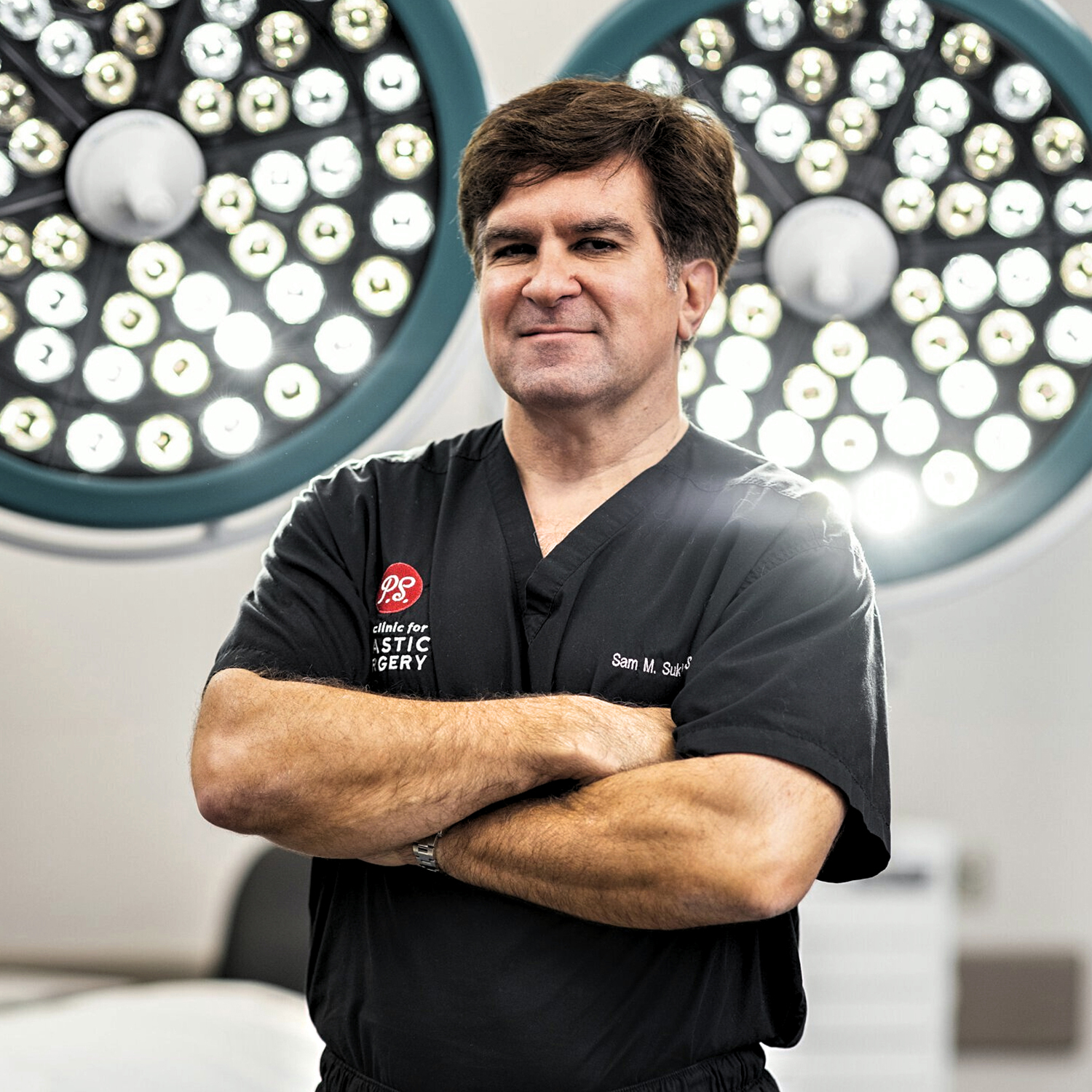
Dr. Sam Sukkar, MD, FACS is a highly respected Board-Certified Plastic Surgeon in Houston, Texas, known for his expertise in advanced cosmetic and reconstructive procedures. As the founder of The Clinic for Plastic Surgery, Dr. Sukkar has set a new standard for excellence, performing over 20,000 procedures with a focus on delivering natural, refined results.

Dr. Sukkar earned his Doctor of Medicine (M.D.) degree from Louisiana State University School of Medicine in 1992 after graduating summa cum laude with a Bachelor of Science in Microbiology. He then completed an intensive General Surgery Residency at the University of Texas Hermann Hospital before being selected for a highly competitive Plastic Surgery Fellowship at Northwestern University in Chicago, one of the most prestigious training programs in the country.

With more than 20 years of experience, Dr. Sukkar is a Diplomate of the American Board of Plastic Surgery and a Fellow of the American College of Surgeons (FACS). He is also an active member of the American Society of Plastic Surgeons (ASPS) and the Houston Society of Plastic Surgery (HSPS). His dedication to innovation and continuing education has solidified his reputation as a leading expert in aesthetic surgery, specializing in breast surgery, body contouring, facial procedures, and non-invasive treatments.

Dr. Sukkar’s expertise has been recognized by Houston Magazine, naming him one of Houston’s “Top Docs for Women,” and he has been featured among RealSelf’s America’s Top Doctors. Committed to his patients, he prioritizes personalized care, ensuring every individual feels informed, comfortable, and confident in their aesthetic journey.

Contact Dr. Sukkar today to schedule a consultation, visit DrSukkar.com to learn more, or call us directly at (281) 940-1535.

Denise Richards Facelift Looks Shockingly Natural

Denise Richards facelift chatter took off because she did something rare in modern pop culture: she showed the work and explained the why. In March 2026, the Wild Things star posted before and after photos, revealing a June 2025 facelift that looks noticeably refreshed.

Her results read “shockingly natural” because the approach focused on restoring structure (not freezing expression), paired with targeted tweaks like fat grafting and eyelid work instead of heavy filler. Richards also made the timeline clear, shared surgical markings, and set realistic expectations about “a little difference.”

Key Takeaways of Denise Richards Facelift Plastic Surgery

  • Denise Richards’ facelift results appear shockingly natural by focusing on restoring facial structure rather than freezing expressions.
  • Her transparency about the procedure, including before-and-after photos and surgical markings, helps set realistic expectations for a subtle yet refreshed look.
  • A modern facelift often involves a tailored plan including fat grafting, eyelid surgery, and deep-plane techniques to address aging signs and look younger without drastic change.
  • Recovery includes visible swelling and tightness initially, with a socially presentable look emerging within 1–2 weeks.
  • Celebrity openness about cosmetic surgery can educate the public, normalize aging, and promote safer, individualized consultation decisions.

What Sparked The Buzz Around Denise Richards’ New Look

The conversation didn’t start with a paparazzi shot. It started with Denise Richards choosing to put her cosmetic surgery story in the open, complete with side by side photos and clinical context.

The Moments That Fueled Speculation Online: Before and After Photos

In March 2026, Richards shared an Instagram carousel with photos of her facelift. The post showed multiple angles, six views that functioned like informal before and after photos, including pre-op surgical markings.

That mix of transparency and detail is exactly what fuels reality tv-style “detective work.” People zoomed in on her jawline, neck, and outer corners of the eyes, comparing her current look to older red carpet stills from her bond girl era and her time in the public eye.

The timing also mattered. The post landed after Richards spoke to Allure, which pushed the story beyond fan accounts into mainstream beauty coverage.

Why “Natural” Results Stand Out In Celebrity Beauty Cycles

Celebrity plastic surgery often gets judged in extremes. Richards’ result sat in the middle, which is why it popped. Fans described a “new lease” on her face, tighter under the jaw, less turkey neck, brighter eyes, without the telltale signs that trigger the “shocking facelift transformation” label.

It also helps that Richards isn’t just any name. She’s the Wild Thingsactress, a former tabloid fixture tied to actor Charlie Sheen, and now a reality star adjacent to The Real Housewives of Beverly Hills-level conversation. When someone with that history shows a subtle facelift transformation, people talk.

What Denise Richards Has Said About The Shocking Facelift Transformation

Richards didn’t frame her facelift as reinvention. She framed it as maintenance, “putting things back” as she said, which is a key reason the conversation stayed focused on technique and expectation instead of scandal.

The Key Details From Her Comments

In her comments to Allure, Richards said the procedure happened in June 2025. She described the motivation as personal, not performative. “My oldest daughters were not happy that I was doing it. I told them that this is something that I want to do, and you may not agree with my decision, but I just want your support. I understand that you feel the way you do, but please know that this is something that I want to do for me,” Denise Richards said.

Her expectation-setting was unusually specific for a celebrity cosmetic surgery story. She said she wasn’t trying to change the way she looks, address sagging skin and tiredness while keeping her recognizable.

In practical terms, that mindset aligns with what many patients request when booking a consultation: a refreshed look that still matches their own photos from five to ten years ago.

“Not Something I Could Hide”: Why Openness Matters Here

Richards also acknowledged a truth about healing and visibility. “Being in the public eye since my 20s, people know what I look like, a facelift is not something that I could hide” she mentioned. That statement lands because facelifts come with downtime, swelling, and sometimes bruising that can’t be airbrushed in real life.

Openness can also reduce the pressure to pretend it’s “just serums” or “all these lasers.” Patients who see a celebrity admit to surgery can approach cosmetic procedures with clearer expectations. A facelift is not the same as skincare, and pretending otherwise makes normal aging feel like a personal failure.

Why Her Facelift Reads As “Shockingly Natural”

“Natural” is not an accident. It’s usually the result of surgical planning that prioritizes anatomy and restraint, plus real-world factors like styling and lighting that shape how before-and-after comparisons feel.

Common Technical Choices That Create Subtle, Undone Results

Reporting around Richards’ recent facelift, are described as an advanced deep-plane approach with SMAS optimization, paired with restoration steps. The goal of many modern deep-plane facelifts is repositioning, not pulling.

Richards’ reported bundle included fat grafting, temporal brow lift for a softer brow position, and conservative upper blepharoplasty (upper eyelid surgery). It also referenced lower left eyelid fat repositioning and a lip lift at the Cupid’s corner.

That combination can read “undone” because it addresses the common giveaways of aging in the 40s–50s: descent in the midface, heaviness around the jawline, and eyelid changes. When volume is restored with fat rather than a lot of filler, the skin can look smoother without that overfilled look.

The narrative wasn’t about “incredible pleasure” from chasing trends. It was about choosing targeted cosmetic work so “stuff stays” believable.

Facelift 101: What A Modern Facelift Typically Involves

Celebrity stories can make a facelift sound like one single switch. A modern facelift is usually a plan: skin, deeper support, and often one or two complementary fixes tailored to the patient.

Mini Facelift Vs. Full Facelift: What The Terms Usually Mean

A “mini facelift” generally targets a narrower area, often the lower face, with shorter incisions and a more limited lift. It can help early jowling but won’t fully correct heavier neck laxity or more global descent.

A “full” facelift is broader. Many deep-plane techniques address the midface, jawline, and neck more comprehensively. In the reporting around the Denise Richards facelift, her result was described as more comprehensive than a mini lift, which fits the visible changes people noted at the jawline and neck.

Complementary Treatments Often Paired With A Lift (Without Overdoing It)

Patients often pair a facelift with eyelid surgery, fat restoration, or a brow adjustment. Richards’ reported combination, upper blepharoplasty, fat restoration, and a small lip lift, is a classic “refresh” package when done conservatively.

What tends to backfire is piling on too many aggressive cosmetic procedures at once, or masking structural change with lots of filler. After her facelift, she stayed at a dedicated recovery center where treatments included red light therapy, lymphatic massage, and other healing support methods. She mentioned spending about a week there using those services while recovering.

Other Procedures Richards’ Did

Before her recent facelift, Denise Richards had already been open about her long history with breast surgery, like augmentation and revision. She first got breast implants at just 19, later admitting she rushed into the decision and didn’t fully research it, which led to multiple corrective procedures in her early 20s.

Over the years, she underwent additional surgeries to adjust size and address complications, including a breast implant rupture in 2025 that required revision surgery, and eventually implant removal to improve comfort and health. Despite ongoing speculation about other treatments, she had consistently stated for years that her only major cosmetic procedures were related to her breasts prior to her later facial surgery.

About Denise Richards and Her Life

Denise Richards is an American actress, television personality, and former model born on February 17, 1971, in Downers Grove, Illinois. Raised alongside her sister Michelle Richards by their parents Irv and Joni Richards, Denise moved to California as a teenager and quickly pursued modeling before transitioning into acting.

Her breakout came in the late 1990s with back-to-back roles that put her on the map: the sci-fi blockbuster Starship Troopers in 1997 and the provocative thriller Wild Things in 1998. By 1999, she had landed the role of Bond girl Dr. Christmas Jones in The World Is Not Enough, cementing her status as one of Hollywood’s most recognizable faces of the era.

Beyond film, Richards built a lasting television career. She appeared in series like Spin City and Two and a Half Men before joining the cast of The Real Housewives of Beverly Hills, where she gave audiences a closer look at her personal life and earned a new wave of fans.

Personal Life

Her personal life has been just as widely followed as her career. She was married to actor Charlie Sheen from 2002 to 2006, and the couple has two daughters, Sami Sheen and Lola Rose Sheen. Richards later adopted her third daughter, Eloise Joni Richards, as a single parent, a decision she has spoken about with pride. In 2018, she married Aaron Phypers, adding another chapter to a life she has been remarkably open about sharing with the public.

Standing at 5’6″, Richards has remained a familiar presence in entertainment for nearly three decades, known as much for her resilience and candor off-screen as for her work on it. Motherhood, in particular, has become a defining part of her public identity, with Richards frequently discussing the joys and challenges of raising her three daughters.

The Denise Richards story isn’t only about one face lift. It’s about how celebrity honesty changes what people expect from aging, beauty, and cosmetic surgery, and what they ask for when they walk into a clinic.

Frequently Asked Questions about Denise Richards Facelift Looks Shockingly Natural

What type of facelift did Denise Richards have in June 2025?

Denise Richards underwent an advanced deep-plane facelift called AuraLyft. It involved SMAS optimization, fat restoration, eyelid work, a temporal brow restoration, and a subtle lip lift for a natural, refreshed look.

Why does Denise Richards’ facelift look so natural compared to other celebrity surgeries?

Her facelift looks naturally refreshed because the procedure focused on restoring facial structure with targeted tweaks. The surgery used fat grafting instead of heavy fillers and prioritized subtle repositioning over dramatic changes, resulting in a look that preserves her natural expressions.

How long does a modern facelift like Denise Richards’ usually last?

Modern facelifts typically last 10 to 15 years. The longevity depends on factors such as genetics, sun exposure, smoking habits, sleep quality, and maintaining a stable weight.

What is the difference between a mini facelift and a full facelift?

A mini facelift targets a limited area, often the lower face, with shorter incisions and a less comprehensive lift. A full facelift, like Denise Richards’, addresses broader areas including midface, jawline, and neck for more extensive sagging correction.

How does Denise Richards’ transparency about her facelift influence public perception?

Her openness provides realistic expectations about surgical recovery and outcomes. It normalizes cosmetic surgery as a personal choice, and helps reduce stigma by showing facelifts are about restoration rather than drastic change or secrecy.

Conclusion and Summary of Denise Richards Facelift Looks Shockingly Natural

Denise Richards didn’t just ignite a trend cycle, she provided a rare, practical case study in how a facelift can look refreshed without looking replaced. By sharing before and after photos, acknowledging downtime, and framing the goal as restoration, she helped shift the conversation from whispery speculation to informed choice.

For anyone considering a consultation in Beverly Hills or elsewhere in Los Angeles, the useful lesson isn’t to copy a celebrity. It’s to copy the strategy, define what bothers you (neck, jawline, eyes), and prioritize techniques that reposition and restore rather than overfill.

Your Trusted Destination for Facelift Surgery in Houston, Texas (TX)

Are you located in one of these Houston Metro Area cities?

Houston, The Woodlands, Sugar Land, Katy, Pearland, Pasadena, League City, Baytown, Conroe, Cypress, Spring, Kingwood, Humble, Missouri City, Friendswood, Bellaire, Clear Lake, Tomball, Galveston, Richmond, Rosenberg, Stafford, La Porte, Deer Park, Seabrook, Webster, Alvin, and Channelview.

Board-Certified Plastic Surgeon Dr. Sam Sukkar, MD, FACS, and the The Clinic for Plastic Surgery Team provide advanced facelift surgery solutions to rejuvenate and restore a more youthful, refreshed appearance.

If you are dealing with sagging skin, deep facial folds, jowls, volume loss, or a tired, aging appearance, we offer comprehensive facial rejuvenation options, including:

  • Facelift Surgery
  • Mini Facelift
  • Lower Facelift
  • Neck Lift Surgery
  • Facelift with Neck Lift
  • Customized Facial Rejuvenation Treatment Plans

Visit our modern 18,000+ sq. ft. plastic surgery center and med spa in Houston, Texas, designed for comfort, privacy, and results-driven care. From your first consultation through recovery, our talented team focuses on natural-looking rejuvenation with elegant, refreshed results.

For patients outside the Houston area or those with limited availability, schedule a virtual facelift surgery consultation.

Book Your Personalized Facelift Consultation today at DrSukkar.com or call (281) 940-1535.

About the Author – Meet Dr. Sam Sukkar, MD

Dr. Sam Sukkar, MD, FACS is a highly respected Board-Certified Plastic Surgeon in Houston, Texas, known for his expertise in advanced cosmetic and reconstructive procedures. As the founder of The Clinic for Plastic Surgery, Dr. Sukkar has set a new standard for excellence, performing over 20,000 procedures with a focus on delivering natural, refined results.

Dr. Sukkar earned his Doctor of Medicine (M.D.) degree from Louisiana State University School of Medicine in 1992 after graduating summa cum laude with a Bachelor of Science in Microbiology. He then completed an intensive General Surgery Residency at the University of Texas Hermann Hospital before being selected for a highly competitive Plastic Surgery Fellowship at Northwestern University in Chicago, one of the most prestigious training programs in the country.

With more than 20 years of experience, Dr. Sukkar is a Diplomate of the American Board of Plastic Surgery and a Fellow of the American College of Surgeons (FACS). He is also an active member of the American Society of Plastic Surgeons (ASPS) and the Houston Society of Plastic Surgery (HSPS). His dedication to innovation and continuing education has solidified his reputation as a leading expert in aesthetic surgery, specializing in breast surgery, body contouring, facial procedures, and non-invasive treatments.

Dr. Sukkar’s expertise has been recognized by Houston Magazine, naming him one of Houston’s “Top Docs for Women,” and he has been featured among RealSelf’s America’s Top Doctors. Committed to his patients, he prioritizes personalized care, ensuring every individual feels informed, comfortable, and confident in their aesthetic journey.

Contact Dr. Sukkar today to schedule a consultation, visit DrSukkar.com to learn more, or call us directly at (281) 940-1535.

Bradley Cooper Upper Bleph Eyelid Surgery: Did He Get It?

Bradley Cooper upper eyelid surgery (also known as an “upper blepharoplasty”) rumors often come down to one question: is there clear evidence he had facial surgery? The actor hasn’t publicly confirmed that he had eyelid surgery. When evaluating photos, eyes may appear more open, with increased upper-lid “tarsal show” or a more defined crease, but these findings alone are not sufficient to confirm that a procedure was performed.

Common “tells” people mention include less upper-lid hooding, a cleaner eyelid contour on camera, and no consistent sign of a major brow lift. However, lighting, camera angles, aging, skincare, and neuromodulators can create a similar refreshed appearance without surgery.

Key Takeaways of Bradley Cooper Upper Bleph Eyelid Surgery

Who is Bradley Cooper?

Bradley Cooper is an American actor, director, and producer known for balancing commercial success with critically recognized performances. He first gained widespread attention through comedic roles like The Hangover movie series, then expanded into more dramatic work with films such as Silver Linings Playbook, American Sniper, and A Star Is Born, where he also made his directorial debut. His ability to shift between genres has made him one of the most recognizable and bankable figures in Hollywood.

Beyond acting, Cooper has earned respect for his work behind the camera, particularly with Maestro, where he directed, produced, and starred as composer Leonard Bernstein. His career reflects a focus on character-driven storytelling and long-term artistic growth, while maintaining a consistent public image that blends professionalism with relatability, factors that contribute to the level of attention he receives regarding changes in his appearance over time.

What Upper Blepharoplasty Is And What It Changes

Upper blepharoplasty is a type of eyelid surgery that removes excess upper-lid skin and, in some cases, trims or repositions fat to reduce hooding and open the eyes. The goal is usually a rested look, not a “different person” result.

Common Reasons People Get Upper Eyelid Surgery

Most patients who ask about upper blepharoplasty are reacting to a practical, everyday issue: their upper lids feel heavy. That heaviness can be age-related, genetic, or simply how their features developed.

In a medical office consult, common concerns include looking tired in photos, makeup smudging on the upper lids, or the sense that the eyes look smaller over time. Some patients also want to look more confident in professional settings without changing their overall face.

A second driver is how eyelid hooding interacts with other facial features. When upper-lid skin drapes near the lash line, it can make the brow look lower and the eyes less “open,” even if the brow position did not actually drop.

Bradley Cooper Addresses Plastic Surgery Rumors. Video Source: Entertainment Tonight (ET)

Typical Visual And Structural Changes After Surgery

After blepharoplasty surgery, the most noticeable change is often increased visible eyelid between the lash line and crease. This is often described as increased “tarsal show,” which can create a clearer upper-lid platform.

The eyelid crease can look more defined, and the lid contour can appear smoother from inner corner to outer corner. When done with restraint, the eyes look more awake rather than “pulled” or aggressively altered.

Another key point: upper blepharoplasty should not automatically raise the brows. If brows look lifted, it may be from a separate brow lift, neuromodulators like Botox, or changes in posing and expression.

What People Point to in Bradley Cooper’s Before-and-After Photos

When fans search for “bradley cooper upper bleph” or “bradley cooper upper bleph eyelid surgery,” they’re usually comparing earlier film appearances to more recent red-carpet images. The discussion is largely driven by perceived changes around his upper lids and how open his eyes appear.

Upper Lid Crease Definition And Eyelid Show

One common comment in the speculation is that Cooper’s upper lids look less hooded in newer images. Observers point to a sharper crease and more visible eyelid skin when his eyes are open.

Photo-based analyses also mention that he had slight hooding earlier in his career, with asymmetry that could appear more obvious when he smiled. In some recent photos, the upper eyelids look more “uncovered,” which is consistent with the typical result profile of upper blepharoplasty.

That said, eyelids change with expression. A wide-eyed look for a camera can temporarily increase eyelid show, and a relaxed face can do the opposite. It’s why single “before-and-after” pairs can be misleading, even when the difference looks dramatic.

Brow Position Versus Eyelid Skin Redundancy

Another detail is whether his brow position has changed. A true brow lift can change the relationship between the brow and upper lid in a way that looks different than skin-only eyelid surgery.

There is no consistent, clear sign of a high or “surprised” brow that would suggest a brow lift. Instead, attention is placed on reduced eyelid skin redundancy, which aligns more with the appearance typically seen after an upper blepharoplasty.

In celebrity speculation, cheek volume also gets brought up. If cheeks look fuller or differently contoured, some people assume filler or other treatments. That can change how the midface supports the lower lids and overall eye area, even though it’s not the same as a facelift or lower face work.

Bradley Cooper Eyelid Surgery Speculation

Not every “refreshed” look requires cosmetic surgery. Especially for an actor and director working under changing lighting and camera conditions, small differences can add up fast.

Bradley Cooper Reveals Whether He’s Had Plastic Surgery. Video Source: E! News

Privacy and Speculation

The internet loves a clean answer. Did Bradley Cooper get surgery? Did he admit it? Is the change a sign of plastic surgery? Those are natural questions in a culture focused on appearance.

But without direct confirmation, it remains speculation. There has been no public statement or verified report confirming that he underwent upper blepharoplasty. Photos are not medical records, and celebrity images are often selected, edited, and lit to present a specific version of someone.

Media Attention Around Possible Cosmetic Procedures

In discussions around Bradley Cooper and possible eyelid surgery, the topic gained more attention after his appearance on the SmartLess podcast with Jason Bateman, Sean Hayes, and Will Arnett. During that conversation, the group openly addressed the ongoing plastic surgery rumors, with Arnett noting how widespread the speculation had become.

The exchange leaned toward dismissing the idea of confirmed procedures, reinforcing that public perception is often shaped by how someone appears on camera rather than verified information. This moment highlights how quickly visual changes can turn into assumptions, even when there is no confirmed surgical history.

Without confirmation from Bradley or a documented medical source, any conclusion about cosmetic surgery should be treated as opinion, not fact.

Lighting, Lenses, Angles, And High-Definition Retouching

Lighting is the quiet driver of a lot of “did he get plastic surgery?” talking points. Hard overhead light deepens shadows under the brow, making upper lids look heavier. Softer, frontal lighting can make the same eyelids look open.

Lens choice matters too. A longer lens flattens features, while a wider lens can exaggerate contours and make eyes look different. Add high-definition retouching for a magazine cover or a film still, and the skin texture and crease visibility can change dramatically.

Angles and expressions are the final piece. A slight chin tilt or raised brow can create the illusion of a lifted eyelid area. For public figures, that means one viral image can launch rumors, even if other appearances look unchanged.

Frequently Asked Questions About Bradley Cooper Upper Bleph Eyelid Surgery: Did He Get It?

Did Bradley Cooper get upper bleph eyelid surgery?

There’s no confirmed information that Bradley Cooper has had upper blepharoplasty. Changes in eyelid appearance seen in photos can be influenced by lighting, makeup, aging, weight changes, or natural variation over time. While some observers speculate based on recent appearances, it’s not possible to verify cosmetic procedures without direct confirmation.

What changes make people suspect Bradley Cooper upper bleph eyelid surgery?

Most Bradley Cooper eyelid surgery speculation focuses on three visual shifts: reduced eyelid skin redundancy near the lash line, more visible upper eyelid when his eyes are open (tarsal show), and a smoother lid contour across the crease. Commentators also note less obvious evidence of a major brow lift.

What is upper blepharoplasty and what does it actually change?

Upper blepharoplasty is eyelid surgery that removes excess upper-lid skin and sometimes trims or repositions fat to reduce hooding. It typically creates a more open, rested look by increasing visible eyelid and defining the crease. It shouldn’t automatically raise the brows unless combined with other treatments.

Can Botox or fillers mimic an upper bleph eyelid surgery result?

Yes. Botox can create a subtle “chemical brow lift” by relaxing muscles that pull the brow down, making the eyes look more open without removing skin. Cheek or temple fillers can improve support and light reflection around the eye area. Skin-tightening treatments can also improve texture, especially on camera.

How much does upper blepharoplasty cost in Houston, TX?

Upper blepharoplasty cost in Houston, Texas is around $5,000–$6,000, depending the surgery complexity. The Clinic for Plastic Surgery offers financing plans to make surgery more affordable, with monthly payments as low as $135 with approved credit.

Conclusion and Summary of Bradley Cooper Upper Bleph Eyelid Surgery: Did He Get It?

The most honest answer to “Did Bradley Cooper get eyelid surgery?” is that it cannot be proven from photos alone. Still, the specific changes people point to, more open eyes, increased upper-lid show, and a cleaner crease, fit what upper blepharoplasty often accomplishes, which is why the rumors persist.

What matters more than celebrity speculation is the decision-making framework. Upper blepharoplasty can be a precise, high-impact cosmetic surgery when it’s done with restraint by an expert surgical team. For patients considering eyelid surgery, the right next step is to schedule a focused consultation. This help to clear expectations, and tailor a plan to their own anatomy, not a red-carpet comparison.

Your Trusted Destination for Blepharoplasty Eyelid Surgery in Houston, Texas (TX)

Are you located in one of these Houston Metro Area cities?

Houston, The Woodlands, Sugar Land, Katy, Pearland, Pasadena, League City, Baytown, Conroe, Cypress, Spring, Kingwood, Humble, Missouri City, Friendswood, Bellaire, Clear Lake, Tomball, Galveston, Richmond, Rosenberg, Stafford, La Porte, Deer Park, Seabrook, Webster, Alvin, and Channelview.

Board-Certified Plastic Surgeon Dr. Sam Sukkar, MD, FACS, and the The Clinic for Plastic Surgery Team provide advanced eyelid surgery solutions to refresh and restore the appearance of the eyes.

If you are dealing with drooping eyelids, under-eye bags, puffiness, or tired-looking eyes, we offer comprehensive eyelid surgery options, including:

  • Upper Blepharoplasty (Upper Bleph)
  • Lower Blepharoplasty (Lower Bleph)
  • Eyelid Lift Surgery
  • Eyelid Surgery for Excess Skin or Fat
  • Combination Upper and Lower Eyelid Procedures
  • Customized Eye Rejuvenation Treatment Plans

Visit our modern 18,000+ sq. ft. plastic surgery center and med spa in Houston, Texas, designed for comfort, privacy, and results-driven care. From your first consultation through recovery, our talented team focuses on brighter, rested-looking eyes with natural results.

For patients outside the Houston area or those with limited availability, schedule a virtual eyelid surgery consultation.

Book Your Personalized Eyelid Consultation today at DrSukkar.com or call (281) 940-1535.

About the Author – Meet Dr. Sam Sukkar, MD

Dr. Sam Sukkar, MD, FACS is a highly respected Board-Certified Plastic Surgeon in Houston, Texas, known for his expertise in advanced cosmetic and reconstructive procedures. As the founder of The Clinic for Plastic Surgery, Dr. Sukkar has set a new standard for excellence, performing over 20,000 procedures with a focus on delivering natural, refined results.

Dr. Sukkar earned his Doctor of Medicine (M.D.) degree from Louisiana State University School of Medicine in 1992 after graduating summa cum laude with a Bachelor of Science in Microbiology. He then completed an intensive General Surgery Residency at the University of Texas Hermann Hospital before being selected for a highly competitive Plastic Surgery Fellowship at Northwestern University in Chicago, one of the most prestigious training programs in the country.

With more than 20 years of experience, Dr. Sukkar is a Diplomate of the American Board of Plastic Surgery and a Fellow of the American College of Surgeons (FACS). He is also an active member of the American Society of Plastic Surgeons (ASPS) and the Houston Society of Plastic Surgery (HSPS). His dedication to innovation and continuing education has solidified his reputation as a leading expert in aesthetic surgery, specializing in breast surgery, body contouring, facial procedures, and non-invasive treatments.

Dr. Sukkar’s expertise has been recognized by Houston Magazine, naming him one of Houston’s “Top Docs for Women,” and he has been featured among RealSelf’s America’s Top Doctors. Committed to his patients, he prioritizes personalized care, ensuring every individual feels informed, comfortable, and confident in their aesthetic journey.

Contact Dr. Sukkar today to schedule a consultation, visit DrSukkar.com to learn more, or call us directly at (281) 940-1535.

Best Blepharoplasty Surgeon in Houston, TX

The best blepharoplasty surgeon in Houston, TX is one who can safely correct excess eyelid skin, under-eye bags, and drooping eyelids while preserving natural eyelid anatomy. Choosing the right practice often means looking for extensive eyelid surgery experience, an accredited outpatient surgical facility, and consistent before-and-after results that look refreshed rather than overcorrected. At The Clinic for Plastic Surgery in Houston, eyelid surgery focuses on restoring a natural, well-rested appearance while maintaining the delicate balance of the eyelid structures.

For many patients, a refreshed look comes from a personalized treatment plan. Upper eyelid surgery can remove excess upper eyelid skin that weighs down the eyelids, while lower eyelid surgery often addresses fat pockets, dark circles, and fine wrinkles beneath the eyes. A thorough consultation at The Clinic for Plastic Surgery reviews candidacy, and a realistic recovery timeline designed to minimize swelling and support safe healing.

Key Takeaways of Best Blepharoplasty Surgeon in Houston, TX

  • The best blepharoplasty surgeon in Houston, TX is board-certified, performs high-volume eyelid surgery, and prioritizes natural-looking results over an “overdone” appearance.
  • A strong blepharoplasty plan is personalized, upper eyelid surgery targets hooding and excess skin, while lower eyelid blepharoplasty addresses under-eye bags, shadows, and lid-cheek contour.
  • Use eyelid surgery consultation time to confirm candidacy and safety by reviewing eye health, and a realistic recovery timeline.
  • Choosing The Clinic for Plastic Surgery in Houston for eyelid surgery means prioritizing natural-looking eyelid results, patient safety, and a personalized surgical plan based on detailed eyelid evaluation.
  • Blepharoplasty is tailored to each patient’s eyelid anatomy, helping achieve refreshed, natural-looking results while maintaining proper eyelid function.

Blepharoplasty And Who It Helps

Blepharoplasty is a surgical procedure that reshapes the eyelids by removing excess skin, adjusting muscle, and addressing excess fat to improve appearance or function. It’s commonly chosen when the aging process leads to sagging skin, under eye bags, or a tired appearance that makeup can’t fix.

Upper Vs. Lower Eyelid Surgery: What Each Treats

Upper blepharoplasty focuses on the upper eyelids, where excess upper eyelid skin can create hooding and drooping skin. In some patients, that hooding can contribute to vision obstruction, especially later in the day. During upper eyelid surgery, incisions are usually placed in the natural upper eyelid crease. That approach supports minimal scarring while allowing precise removing excess skin and, when appropriate, conservative contouring of excess fat.

Lower blepharoplasty targets the lower eyelids, where fat pockets can bulge forward and create under eye bags. It may also address skin laxity and fine wrinkles, depending on skin quality and the patient’s anatomy. Lower eyelid blepharoplasty can involve removal or repositioning of fat to smooth the lid-cheek junction. The goal is a rejuvenated appearance that still looks like the patient, not a tight or hollowed lower lid.

Signs You May Be A Good Candidate

Good eyelid surgery candidates often notice excess eyelid skin, drooping eyelids, or puffiness that makes them look tired even after sleep. Others are bothered by dark circles worsened by shadows from bulging fat or volume loss.

Candidacy also depends on health and eye status. Thyroid conditions, dry eye tendencies, light sensitivity, and contact lens use are carefully evaluated because these factors can affect comfort and healing after eyelid surgery.

Many blepharoplasty patients are non smokers or are willing to stop nicotine before and after blepharoplasty surgery. That matters because smoking increases risk and can delay healing, which may prolong swelling and compromise incisions.

Finally, the best outcomes come from realistic expectations and clear aesthetic goals. The procedure can improve appearance and create a more rested appearance, but it won’t stop aging or replace broader facial procedures when needed.

Choosing The Best Blepharoplasty Surgeon In Houston, Texas

Choosing the best blepharoplasty surgeon in Houston, TX is more about surgical experience, judgment, and strong safety protocols. At The Clinic for Plastic Surgery in Houston, eyelid surgery is approached with careful attention to eyelid anatomy, patient safety, and natural-looking results.

Credentials, Board Certification, And Eyelid Experience

At The Clinic for Plastic Surgery, patients are treated by a board-certified plastic surgeon with extensive experience performing eyelid surgery. This background is important because eyelid anatomy is delicate, and even small adjustments in skin removal, muscle handling, or eyelid support can influence comfort, symmetry, and the final appearance.

Experience across both cosmetic and reconstructive eyelid procedures can also be valuable. This broader surgical background often helps when anatomy is more complex or when patients have prior procedures or unique eyelid structures.

Patients visiting The Clinic for Plastic Surgery can also expect consistency in the surgical environment, including an experienced anesthesia team and coordinated surgical staff. A stable and experienced team helps support efficient procedures and careful patient monitoring.

Before-And-After Photos And Natural-Looking Results

At The Clinic for Plastic Surgery, before-and-after photos help patients understand the type of results possible with eyelid surgery. These images typically show improvements in excess eyelid skin, under-eye fullness, and eyelid heaviness while maintaining a natural, rested appearance.

Photos should show consistent lighting and multiple angles so patients can evaluate real surgical results rather than differences created by lighting, makeup, or facial expression.

A well-rounded photo gallery often includes a variety of procedures such as upper blepharoplasty, lower blepharoplasty, and combined upper and lower eyelid surgery. This range demonstrates the ability to select the appropriate technique for each patient’s anatomy.

Safety Standards: Facility And Surgical Team

At The Clinic for Plastic Surgery, patient safety begins with the surgical setting. Procedures are performed in an accredited outpatient facility equipped with appropriate monitoring systems, sterile protocols, and a recovery area designed for post-procedure care.

Patients also receive detailed postoperative instructions to guide healing. Early concerns such as swelling, irritation, or temporary blurred vision require clear communication and prompt guidance. Medication instructions are also part of the eyelid surgery recovery plan. Ointments and prescribed eye drops are commonly used to protect the eye surface and support proper healing after eyelid surgery.

What To Expect From A Blepharoplasty Consultation

A blepharoplasty consultation at The Clinic for Plastic Surgery in Houston focuses on evaluating eyelid anatomy, discussing patient concerns, and building a treatment plan that supports both safety and natural-looking results. During this visit, eyelid skin, fat distribution, and eyelid support are carefully assessed before recommending surgical options that match each patient’s goals.

Medical History, Eye Health, And Pre-Op Evaluation

At The Clinic for Plastic Surgery, the consultation usually begins with a detailed review of medical history and eye-specific health factors. Patients may be asked about medical conditions, previous cosmetic procedures, and medications that could increase bruising or affect healing.

Eye health also plays a major role in planning eyelid surgery. Questions often cover dry eye symptoms, light sensitivity, contact lens use, and any past infections or irritation involving the eyes.

A physical examination evaluates eyelid anatomy, excess skin, fat pockets, and how well the eyelids close. This step is important because removing too much skin can interfere with eyelid closure and comfort. The evaluation also includes discussion of factors such as sun exposure and baseline skin quality, which may influence incision healing and overall skin texture over time.

Personalized Surgical Plan And Options (Upper, Lower, Or Both)

After the evaluation, the team at The Clinic for Plastic Surgery outlines the most appropriate options. This may include upper eyelid surgery, lower eyelid blepharoplasty surgery, or treatment of both areas in a combined or staged plan. The final recommendation is based on eyelid anatomy and structural support rather than a simple checklist of concerns.

For upper eyelids, treatment often focuses on removing excess skin and adjusting fat when heaviness is present. The surgical plan carefully considers how much skin can be removed while preserving a natural eyelid crease.

Lower eyelid surgery may involve repositioning fat, transferring fat, or conservatively reducing excess fat. Repositioning techniques can soften shadows beneath the eyes that contribute to dark circles, especially when age-related volume loss is present.

Some patients may also benefit from additional support procedures to maintain proper lower eyelid position. During the consultation at The Clinic for Plastic Surgery, these options are explained clearly so patients understand how each step supports stable, long-term results.

Procedure Overview: Techniques, Anesthesia, And Timing

While blepharoplasty is often described as “minor,” it’s still a precise surgical procedure. Technique selection depends on eyelid anatomy, skin thickness, fat pockets, and the patient’s aesthetic goals.

Incision Placement And Scar Minimization

For upper blepharoplasty, the incision is typically hidden in the upper eyelid crease. This location allows removing excess skin while keeping the scar hard to see once healed.

A small amount of muscle or fat may also be adjusted when needed, depending on the level of fullness in the eyelid area. Conservative decisions help avoid a hollow or overly sharp look in the upper eyelids.

For lower eyelid surgery, incision options depend on skin laxity and the need for skin tightening. Some approaches place an incision just below the lash line, while others use an internal approach when skin removal isn’t needed.

Regardless of approach, careful closure and postoperative care help scars mature well. Patients still need patience, because incision lines can look pink before they fade.

Fat Repositioning vs. Removal For Under-Eye Bags

Under eye bags often come from bulging fat pockets rather than “extra fluid.” A blepharoplasty evaluation determines whether the best correction involves fat repositioning, removal, or a combination of both.

Fat repositioning can smooth the transition from lower eyelids to cheek. This can reduce shadowing that reads as dark circles, especially in patients with lost volume.

Fat removal can be appropriate when the fat is prominent and repositioning alone won’t flatten the contour. But too much removal can worsen a tired appearance by creating hollowing.

In select cases, fat transfer can complement lower blepharoplasty. It may restore volume loss in the midface and create a softer, more youthful appearance.

When Blepharoplasty Is Combined With Brow Lift Or Laser Resurfacing

Sometimes, what looks like “excess upper eyelid skin” is partly brow descent. In those cases, a brow lift (also called a forehead lift) may be discussed to support the upper lid and rebalance the upper face.

A combined plan can be more efficient than treating one area in isolation. But it should be chosen for anatomy and function, not because it sounds comprehensive.

Laser resurfacing may be considered for fine wrinkles and skin texture around the lower eyelids. It can improve skin quality, but it doesn’t replace structural correction of bulging fat.

Blepharoplasty Recovery And Aftercare Timeline

Recovery is usually straightforward, but it’s not instant. Most patients look “presentable” in a couple of weeks, while subtle swelling can take longer to fully settle.

First Week: Swelling, Bruising, And Activity Restrictions

Days 1–3 are often the peak for swelling and bruising. Patients are typically advised to rest, keep the head elevated, and use cold compresses as directed to reduce swelling.

Mild discomfort is common, but severe pain is not typical and should be reported. Patients should also watch for worsening blurred vision or increasing light sensitivity and call the office if concerned.

Heavy lifting and bending are usually avoided during the early recovery period, as these activities can increase pressure and bruising in the eyelid skin.

Patients may receive prescribed eye drops or ointment to protect the eye surface. Patients typically pause contact lens use until it is safe to resume wearing them.

Weeks Two To Six: Healing Milestones and Returning to Workouts

Around days 7–10, stitches are often removed when external incisions are used. Bruising continues to fade, and swelling becomes easier to conceal.

Many patients return to desk work within 7–14 days, depending on bruising and comfort. Jobs requiring public-facing appearances may warrant extra time.

Exercise returns in phases. Patients can usually start light walking earlier, while strenuous workouts typically wait until clearance to avoid prolonged swelling.

Sun exposure matters during this stage. Sunglasses and sunscreen help protect healing incisions and reduce the risk of prolonged redness.

Long-Term Results And How To Maintain Them

Final results evolve over months as swelling resolves and scar tissue softens. Many patients describe a rested appearance and a more rejuvenated appearance rather than a dramatic change.

Long-term maintenance is mostly about protecting skin quality. That means limiting sun exposure, using physician-approved skincare, and avoiding smoking.

The aging process continues, but eyelid lift results often last for years. Patients who protect their skin and maintain stable health tend to keep a refreshed appearance longer.

Costs, Financing, And Value Considerations In Houston

Blepharoplasty pricing in Houston can vary depending on the extent of treatment and whether the procedure involves the upper eyelids, lower eyelids, or both areas together. At The Clinic for Plastic Surgery in Houston, eyelid surgery costs reflect the complexity of the procedure, the accredited surgical setting, and the experience involved in performing delicate eyelid procedures with attention to natural-looking results.

What Influences Price

At The Clinic for Plastic Surgery, the cost of blepharoplasty depends on the specific surgical plan. Procedures that address only excess upper eyelid skin tend to differ in price from surgeries that involve both upper and lower eyelids or additional contouring work.

Typical pricing at The Clinic for Plastic Surgery includes:

These estimates generally reflect the surgical plan, facility standards, and anesthesia needs associated with eyelid surgery performed in a monitored outpatient setting.

Financing Options At The Clinic for Plastic Surgery

To make eyelid surgery more accessible, The Clinic for Plastic Surgery offers financing options for qualified patients. Monthly payment plans can make treatment more manageable, with payments starting as low as $135 per month depending on the procedure and approval terms.

Financing programs allow patients to move forward with treatment while spreading the cost over time. During the consultation process, patients can review available payment plans and determine which option best fits their budget and treatment goals.

Why Patients Consider The Clinic For Plastic Surgery For Blepharoplasty

Many patients in Houston consider The Clinic for Plastic Surgery for blepharoplasty because of its focus on natural-looking eyelid results and careful attention to eyelid anatomy. Treatment plans are based on a detailed evaluation of excess skin, fat distribution, and eyelid support to ensure the procedure improves appearance while maintaining proper eyelid function.

Patients also value the structured consultation process, accredited surgical setting, and clear guidance throughout recovery. This approach supports strong safety standards and sets realistic expectations for refreshed, balanced eyelid surgery results.

Frequently Asked Questions About Best Blepharoplasty Surgeon in Houston, TX

What’s the difference between upper and lower blepharoplasty?

Upper blepharoplasty removes excess upper eyelid skin that causes hooding or drooping, and it may improve vision obstruction in some patients. Lower blepharoplasty targets under-eye bags from bulging fat, plus laxity or wrinkles, often using fat repositioning (or conservative removal) to avoid a hollowed look.

Am I a good candidate for blepharoplasty eyelid surgery?

Good candidates for blepharoplasty often have drooping eyelids, excess eyelid skin, or under-eye puffiness that creates a tired appearance. The evaluation also considers eye health and comfort factors, including dry-eye tendencies, thyroid conditions, light sensitivity, and contact lens use. Being nicotine-free before surgery helps support safer healing and better scar quality.

What should I expect at a blepharoplasty consultation in Houston?

A quality blepharoplasty consult should feel medical, not sales-driven. Expect a review of your medical history, medications that increase bruising, and eye-specific symptoms (dryness, irritation, light sensitivity). The evaluation focuses on eyelid anatomy to determine whether treatment should involve the upper eyelids, lower eyelids, or both.

How long is blepharoplasty recovery, and when will I look normal again?

Blepharoplasty recovery is gradual. Swelling and bruising typically peak on days 1–3, then steadily improve. Patients look presentable within 1–2 weeks, and providers remove stitches when external incisions are used. Subtle swelling can take weeks to months to fully settle.

How much does blepharoplasty cost in Houston?

Blepharoplasty cost in Houston varies depending on the area treated. At The Clinic for Plastic Surgery, upper blepharoplasty typically ranges from $5,000 to $6,000, lower blepharoplasty cost from $7,000 to $8,000, and quad blepharoplasty (upper and lower eyelids) from $13,000 to $14,000. Financing options are available, with monthly payments starting as low as $135 for qualified patients.

Conclusion and Summary of Best Blepharoplasty Surgeon in Houston, TX

Choosing the best blepharoplasty surgeon in Houston, TX means looking for a practice with strong experience in eyelid procedures, careful attention to eyelid anatomy, and a commitment to patient safety. Patients who review credentials, evaluate before-and-after results, and take time to discuss goals during consultation are more likely to achieve eyelid surgery results that look natural, balanced, and refreshed.

At The Clinic for Plastic Surgery in Houston, blepharoplasty planning centers on detailed evaluation, personalized treatment plans, and procedures performed in an accredited surgical setting. With a focus on preserving natural eyelid structure while improving excess skin, under-eye bags, and eyelid heaviness, the clinic aims to deliver results that restore a well-rested appearance while maintaining comfort and long-term eyelid function. For patients considering eyelid surgery, a consultation provides the opportunity to review candidacy, understand treatment options, and create a clear plan for achieving natural-looking results.

Your Trusted Destination for Blepharoplasty Eyelid Surgery in Houston, Texas (TX)

Are you located in one of these Houston Metro Area cities?

Houston, The Woodlands, Sugar Land, Katy, Pearland, Pasadena, League City, Baytown, Conroe, Cypress, Spring, Kingwood, Humble, Missouri City, Friendswood, Bellaire, Clear Lake, Tomball, Galveston, Richmond, Rosenberg, Stafford, La Porte, Deer Park, Seabrook, Webster, Alvin, and Channelview.

Board-Certified Plastic Surgeon Dr. Sam Sukkar, MD, FACS, and the The Clinic for Plastic Surgery Team provide advanced eyelid surgery solutions to refresh and restore the appearance of the eyes.

If you are dealing with drooping eyelids, under-eye bags, puffiness, or tired-looking eyes, we offer comprehensive eyelid surgery options, including:

  • Upper Blepharoplasty (Upper Bleph)
  • Lower Blepharoplasty (Lower Bleph)
  • Eyelid Lift Surgery
  • Eyelid Surgery for Excess Skin or Fat
  • Combination Upper and Lower Eyelid Procedures
  • Customized Eye Rejuvenation Treatment Plans

Visit our modern 18,000+ sq. ft. plastic surgery center and med spa in Houston, Texas, designed for comfort, privacy, and results-driven care. From your first consultation through recovery, our talented team focuses on brighter, rested-looking eyes with natural results.

For patients outside the Houston area or those with limited availability, schedule a virtual eyelid surgery consultation.

Book Your Personalized Eyelid Consultation today at DrSukkar.com or call (281) 940-1535.

About the Author – Meet Dr. Sam Sukkar, MD

Dr. Sam Sukkar, MD, FACS is a highly respected Board-Certified Plastic Surgeon in Houston, Texas, known for his expertise in advanced cosmetic and reconstructive procedures. As the founder of The Clinic for Plastic Surgery, Dr. Sukkar has set a new standard for excellence, performing over 20,000 procedures with a focus on delivering natural, refined results.

Dr. Sukkar earned his Doctor of Medicine (M.D.) degree from Louisiana State University School of Medicine in 1992 after graduating summa cum laude with a Bachelor of Science in Microbiology. He then completed an intensive General Surgery Residency at the University of Texas Hermann Hospital before being selected for a highly competitive Plastic Surgery Fellowship at Northwestern University in Chicago, one of the most prestigious training programs in the country.

With more than 20 years of experience, Dr. Sukkar is a Diplomate of the American Board of Plastic Surgery and a Fellow of the American College of Surgeons (FACS). He is also an active member of the American Society of Plastic Surgeons (ASPS) and the Houston Society of Plastic Surgery (HSPS). His dedication to innovation and continuing education has solidified his reputation as a leading expert in aesthetic surgery, specializing in breast surgery, body contouring, facial procedures, and non-invasive treatments.

Dr. Sukkar’s expertise has been recognized by Houston Magazine, naming him one of Houston’s “Top Docs for Women,” and he has been featured among RealSelf’s America’s Top Doctors. Committed to his patients, he prioritizes personalized care, ensuring every individual feels informed, comfortable, and confident in their aesthetic journey.

Contact Dr. Sukkar today to schedule a consultation, visit DrSukkar.com to learn more, or call us directly at (281) 940-1535.

Asian Eyelid Surgery: Double Eyelid Procedure Options

Asian eyelid surgery (also called double eyelid surgery or Asian blepharoplasty) is a medical-office procedure that creates or refines an upper eyelid crease so the upper eyelid shows a more defined fold while still looking natural. It’s most often done for people of Asian descent with a single eyelid (a monolid) who want improved crease definition, better symmetry, and a balanced eye shape.

In practice, the outcome depends on three things: the patient’s eyelid anatomy (skin thickness, excess fat, and levator function), the right technique (incisional vs. suture vs. partial-incision), and careful crease planning to match the face. Careful planning, precise suturing, and detailed aftercare can help reduce common issues such as asymmetry or crease loss.

Key Takeaways of Asian Eyelid Surgery: Double Eyelid Procedure Options

  • Asian eyelid surgery (double eyelid surgery) creates or refines an upper-lid crease to improve definition and symmetry.
  • The best technique for Asian blepharoplasty depends on your eyelid anatomy, not on trends or a one-size-fits-all crease height.
  • If ptosis (droopy lid) or a prominent epicanthal fold affects lid show or balance, combining Asian eyelid surgery with ptosis repair or selective inner-corner work may produce a more consistent, functional result.
  • Expect eyelid surgery recovery in weeks to months: early swelling can make the crease look higher or uneven at first, and final refinement and scar maturation often take several months.
  • Reduce risks like asymmetry, crease loss, and dry eye by choosing The Clinic for Plastic Surgery, following aftercare strictly, and avoiding early judgment or revision before healing stabilizes.

What Asian Eyelid Surgery Is And Why It’s Done

Asian eyelid surgery is a type of blepharoplasty designed to create or enhance a visible eyelid crease in the upper lid. It’s done to improve eyelid fold definition, symmetry, and how the eyes frame the face, not to “westernize” features.

Monolid Vs. Double Eyelid Anatomy

Monolid eyes typically has no visible crease because the attachment between the levator tissue and the eyelid skin is different. The epicanthal fold at the inner corner can also cover part of the lid, which changes how the fold appears when the eyes are open.

A double eyelid has a natural fold where the skin tucks in as the lid elevates. That fold can be low and subtle or higher and more visible. In an exam, a surgeon focuses on lid thickness, fat distribution, and the way the lid moves.

Types Of Asian Eyelid Surgery

Surgeons choose a technique based on eyelid anatomy, the patient’s goals, and how stable the new fold needs to be. The three main approaches are incisional double eyelid surgery, non-incisional suture methods, and partial-incision hybrids.

Incisional Double Eyelid Surgery

Incisional double eyelid surgery uses an incision along the planned crease to create a durable fold. It allows the surgeon to address excess skin or remove or contour fat when needed.

This method is often chosen when the upper eyelid has thicker tissue, heavier fat pads, or lax skin. Because it reshapes tissue directly, it can be more predictable for long-term crease stability.

Healing takes longer than suture methods, and early swelling can make the crease look higher at first. Over weeks to months, the crease settles as swelling resolves and scar tissue matures. The goal is a natural crease that fits the patient’s anatomy.

Non-Incisional (Suture) Double Eyelid Surgery

Non-incisional techniques create the fold using buried sutures without a full skin incision. The surgeon places small passes through the lid to connect skin and deeper tissue, helping the crease form when the lid opens.

This approach can mean less visible scarring and a faster early recovery. It may be a good fit for patients with thinner eyelid skin and minimal excess fat or excess skin.

The tradeoff is that the crease can be less permanent in some people. If tissue is heavy or oily, or if the lid anatomy resists fold formation, the sutures may loosen over time and the crease may fade or “drop.” Good eyelid surgery candidacy matters as much as the method.

Partial-Incision Techniques

Partial-incision methods sit between fully incisional and fully non-incisional surgery. A shorter incision is used to assist crease formation and, in some cases, to make modest fat adjustments.

This hybrid can be useful when the eyelid needs more support than sutures alone can provide, but does not need extensive skin removal. It can also help with crease definition in moderately thick lids.

As with any type of asian upper eyelid surgery, careful marking and symmetry checks are critical. A small incision does not automatically mean a small change. The technique still needs to match the patient’s desired crease height and lid shape.

Additional Procedures Often Considered with Asian Blepharoplasty

Some individuals benefit from combining double eyelid creation with other targeted procedures. The decision depends on what limits the eye’s openness, symmetry, or the appearance of the inner corner.

Ptosis Repair

Ptosis is a drooping upper lid caused by weak levator function or stretched tendon attachment. If ptosis is present, creating a crease alone may not fix the “sleepy” look, and it can even make asymmetry more noticeable.

Ptosis repair tightens or repositions the levator to lift the lid margin. It’s planned carefully to avoid an overcorrected look and to protect blink function.

When done with asian blepharoplasty, ptosis repair can improve lid show and crease consistency. But, it can add complexity to planning and recovery. Patients should expect the surgeon to discuss measurable lid position and realistic targets.

Epicanthoplasty And Inner Corner Revision

The epicanthal fold is the skin fold covering the inner corner in many people of asian descent. Epicanthoplasty reshapes that fold to reveal more of the inner corner, which can change the perceived width and openness of the eyes.

This procedure is not “required” for a double eyelid. It’s considered when the inner corner coverage makes the crease look crowded or when patients want more visible medial sclera in a subtle way.

Because inner-corner skin can scar more noticeably, technique and postoperative care matter. Surgeons often favor conservative changes that respect the patient’s baseline anatomy, especially in scar-prone tissue.

Fat Repositioning Or Conservative Debulking

Some upper lids have prominent preaponeurotic fat that blunts crease definition. In those cases, conservative debulking can help create a cleaner fold without creating a hollow upper lid.

Repositioning, rather than removal, may be appropriate when the goal is a smooth, youthful contour. Too much fat removal can make the eyes look skeletonized over time, especially as aging reduces facial volume.

A careful surgeon treats fat as structural, not as something to “strip out.” The best blepharoplasty results usually come from small, targeted changes based on what is actually causing fullness in that specific lid.

Who’s A Good Candidate And How The Eyelid Crease Is Planned

Good outcomes start with matching the patient’s anatomy to the right plan. During consultation, the evaluation includes tissue thickness, eyelid movement, and the patient’s goals to design a crease that looks natural on that face.

Candidacy Factors: Skin Thickness, Fat, And Levator Function

Candidates vary widely, even within the same ethnic background. Lid thickness, the amount of excess fat, and whether there is excess skin influence which technique is most stable.

Levator function matters because the crease is tied to how the lid elevates. If the lid does not lift well due to ptosis, the crease may look uneven or inconsistent. Some patients may need ptosis repair to reach their desired outcome.

Prior eyelid surgery also affects planning. Scar tissue, altered tissue planes, or previous suture tracks can change which approach is most appropriate. Revision cases often require more conservative and detail-focused planning.

Crease Height And Shape: Natural-Fit Planning

Crease height is not one-size-fits-all. A crease that looks balanced on one person can appear harsh on another if brow position, orbital depth, or lid platform differ.

During consultation, different crease positions may be simulated using gentle pressure or temporary markings. The goal is a fold that becomes visible when the eyes are open but does not appear overly defined when the eyes are down.

Shape also matters. Some patients prefer a tapered crease that merges toward the inner corner, while others prefer a more parallel crease. Each shape interacts differently with the epicanthal fold and the natural eyelid anatomy.

Frequently Asked Questions About Asian Eyelid Surgery: Double Eyelid Procedure Options

What is asian eyelid surgery?

Asian eyelid surgery (double eyelid surgery / Asian blepharoplasty) creates or refines an upper eyelid crease to improve fold definition and symmetry while keeping results natural. The plan includes crease height and shape that fit the patient’s anatomy and preserve an authentically Asian appearance.

What’s the difference between incisional vs. non-incisional upper eyelid surgery?

Incisional asian eyelid surgery, is a surgical procedure performed under anesthesia. It uses a crease-line incision to create a more durable fold and can address thicker tissue, excess skin, or fat. Non-incisional (suture) methods use buried sutures with faster early recovery and minimal scarring, but the crease may loosen or fade in heavier lids. Partial-incision is a hybrid option.

Who is a good candidate for asian eyelid surgery in Houston, TX?

Good eyelid surgery candidates in Houston, are people whose goals match their eyelid anatomy. The evaluation includes skin thickness, fat distribution, excess skin, and levator function (how well the eyelid lifts). If ptosis (droopy lid) is present, crease surgery alone may not correct the “sleepy” look and can worsen asymmetry without ptosis repair.

How long is recovery after a male eyelid plastic surgery?

Male eyelid surgery recovery is usually measured in weeks, not days. Swelling and bruising peak in the first week; sutures (if external) often come out around days 5–7. From weeks 2–6, the crease settles and can look uneven day to day. Many look presentable by ~6 weeks, but refinement and scar maturation continue for months.

What are the most common risks of asian eyelid cosmetic surgery?

Common issues include temporary unevenness from swelling, longer-lasting asymmetry, crease loss (more likely with suture methods in thicker lids), and dry eye symptoms. Less common risks include infection, bleeding, and noticeable scarring.

Can asian eyelid surgery be combined with ptosis repair or epicanthoplasty?

Yes. Ptosis repair may be recommended when weak levator function causes droopy lids, because a crease alone won’t reliably improve lid show. Epicanthoplasty reshapes the inner-corner fold when it crowds the crease or when subtle inner-corner visibility is desired. Combining surgical procedures can improve balance but adds planning complexity and recovery variables.

Conclusion and Summary of Asian Eyelid Surgery: Double Eyelid Procedure Options

Asian eyelid surgery focuses on creating a balanced, natural-looking upper eyelid crease that fits the patient’s anatomy. The most successful outcomes come from careful evaluation of eyelid thickness, fat distribution, levator function, and the presence of features such as the epicanthal fold. Matching the right technique, to these anatomical factors helps produce a stable crease that blends naturally with the face.

Because healing and crease refinement take time, patients should expect gradual changes over several weeks to months as swelling resolves and the fold softens. When planning, technique selection, and aftercare align with the patient’s anatomy and goals, double eyelid surgery can improve eyelid definition, symmetry, and overall eye balance while preserving an authentic appearance.

Your Trusted Destination for Blepharoplasty Eyelid Surgery in Houston, Texas (TX)

Are you located in one of these Houston Metro Area cities?

Houston, The Woodlands, Sugar Land, Katy, Pearland, Pasadena, League City, Baytown, Conroe, Cypress, Spring, Kingwood, Humble, Missouri City, Friendswood, Bellaire, Clear Lake, Tomball, Galveston, Richmond, Rosenberg, Stafford, La Porte, Deer Park, Seabrook, Webster, Alvin, and Channelview.

Board-Certified Plastic Surgeon Dr. Sam Sukkar, MD, FACS, and the The Clinic for Plastic Surgery Team provide advanced eyelid surgery solutions to refresh and restore the appearance of the eyes.

If you are dealing with drooping eyelids, under-eye bags, puffiness, or tired-looking eyes, we offer comprehensive eyelid surgery options, including:

  • Upper Blepharoplasty (Upper Bleph)
  • Lower Blepharoplasty (Lower Bleph)
  • Eyelid Lift Surgery
  • Eyelid Surgery for Excess Skin or Fat
  • Combination Upper and Lower Eyelid Procedures
  • Customized Eye Rejuvenation Treatment Plans

Visit our modern 18,000+ sq. ft. plastic surgery center and med spa in Houston, Texas, designed for comfort, privacy, and results-driven care. From your first consultation through recovery, our talented team focuses on brighter, rested-looking eyes with natural results.

For patients outside the Houston area or those with limited availability, schedule a virtual eyelid surgery consultation.

Book Your Personalized Eyelid Consultation today at DrSukkar.com or call (281) 940-1535.

About the Author – Meet Dr. Sam Sukkar, MD

Dr. Sam Sukkar, MD, FACS is a highly respected Board-Certified Plastic Surgeon in Houston, Texas, known for his expertise in advanced cosmetic and reconstructive procedures. As the founder of The Clinic for Plastic Surgery, Dr. Sukkar has set a new standard for excellence, performing over 20,000 procedures with a focus on delivering natural, refined results.

Dr. Sukkar earned his Doctor of Medicine (M.D.) degree from Louisiana State University School of Medicine in 1992 after graduating summa cum laude with a Bachelor of Science in Microbiology. He then completed an intensive General Surgery Residency at the University of Texas Hermann Hospital before being selected for a highly competitive Plastic Surgery Fellowship at Northwestern University in Chicago, one of the most prestigious training programs in the country.

With more than 20 years of experience, Dr. Sukkar is a Diplomate of the American Board of Plastic Surgery and a Fellow of the American College of Surgeons (FACS). He is also an active member of the American Society of Plastic Surgeons (ASPS) and the Houston Society of Plastic Surgery (HSPS). His dedication to innovation and continuing education has solidified his reputation as a leading expert in aesthetic surgery, specializing in breast surgery, body contouring, facial procedures, and non-invasive treatments.

Dr. Sukkar’s expertise has been recognized by Houston Magazine, naming him one of Houston’s “Top Docs for Women,” and he has been featured among RealSelf’s America’s Top Doctors. Committed to his patients, he prioritizes personalized care, ensuring every individual feels informed, comfortable, and confident in their aesthetic journey.

Contact Dr. Sukkar today to schedule a consultation, visit DrSukkar.com to learn more, or call us directly at (281) 940-1535.

Eyelid Surgery Recovery: Timeline, Tips, & What to Expect

Eyelid surgery recovery usually follows a predictable timeline: the first week brings the most swelling and bruising, most patients feel presentable in 10 to 14 days, and the final results continue refining for months as scars fade. In the first 48 hours, the priority is simple, rest, use cold compresses, and keep your head elevated to reduce swelling around the eyes.

To make the male blepharoplasty recovery time smoother, patients should plan ahead for time off work, follow medication and avoid strenuous activities and heavy lifting early on. Those basics matter more than any “hack.”

Key Takeaways of Eyelid Surgery Recovery: Timeline, Tips, & What to Expect

  • Blepharoplasty removes or repositions excess skin and fat to reduce puffiness, correct drooping lids, and create a more refreshed, natural-looking eye appearance.
  • Eyelid surgery recovery is most intense in the first week, most people look presentable in 10–14 days, and final results keep refining.
  • For the first 48 hours, prioritize rest, cold compresses, and head elevation to reduce swelling around the eyes.
  • Follow your aftercare team’s medication, and cleaning instructions exactly, and avoid rubbing the eyelids to protect incisions and lower infection risk.
  • Limit activity early, no bending, heavy lifting, or strenuous workouts in week 1, then reintroduce light exercise around week 2 only if your aftercare team clears it.
  • Call the office if you have severe or worsening one-sided pain, sudden vision changes, excessive bleeding, or signs of infection such as increasing redness, warmth, or pus-like drainage.

What To Expect Right After Surgery

Right after blepharoplasty (eyelid surgery), patients typically notice tightness, watery eyes, and visible swelling and bruising around the eyes. Rest, keeping the head elevated, and gentle eyelid care support the earliest phase of healing.

Common Symptoms In The First 24–48 Hours

In the first 24–48 hours, bruising and swelling usually ramp up and can peak quickly. The eyelid skin may look puffy, uneven, or “overfull,” especially after upper blepharoplasty or combined upper and lower work.

Many people also report mild pain or soreness rather than sharp pain. Tearing, light sensitivity, and a gritty feeling in the eyes are common, and vision may feel slightly blurry from ointment or eye drops.

Some patients worry if one side looks worse. Mild asymmetry is normal early on because fluid shifts, bruising patterns, and tissue handling can differ between the upper lids and lower lids.

Medications, Eye Ointments, And Cold Compress Basics

Post surgery instructions often include a prescription pain medicine or a recommendation for an over-the-counter option. Patients should take medications exactly as directed and avoid adding supplements unless the aftercare team approves.

Antibiotic ointment or lubricating ointments are often used to protect incisions and help the eyes feel less dry. If eye drops are prescribed, they’re usually meant to reduce irritation and support comfort while blinking feels “tight.”

Cold compresses are a mainstay within the first 48 hours to reduce swelling. They should be applied gently around your eyes without pressing on the eyelids or the incisions, cooling is the goal, not pressure.

Week-By-Week Eyelid Surgery Recovery Timeline

A realistic recovery timeline helps patients plan time off, social events, and follow-up appointments. While each procedure differs, upper eyelid surgery, lower blepharoplasty, or both, most recovery follows a similar pattern.

Days 1–3: Swelling, Bruising, And Rest

Days 1–3 are usually the toughest part of eyelid surgery recovery. This is when swelling bruising tends to be most noticeable, and the eye area can feel tight.

Rest is the priority. Patients are typically advised to keep your head elevated (often 30–45 degrees) and avoid bending over, since that can increase swelling and sometimes raise blood pressure in the face.

Cold compresses are often used repeatedly during the first few days to help reduce swelling. Activity should stay minimal, no gym sessions, no long walks in heat, and no tasks that require straining.

Days 4–7: Stitches, Itching, And Early Healing

By days 4–7, bruising often starts to “travel” and change color as it heals. Swelling may begin to come down, though mornings can still look puffy around the eyes.

Itching is common during this stage, and it can be surprisingly distracting. A transition to warm compresses later in the week can support circulation and comfort, but follow the instructions closely.

Stitches are often removed around the end of the first week for many upper eyelid incisions, depending on the technique used. Light activities may be allowed, but strenuous activities are still off-limits.

Weeks 2–4: Returning To Work, Exercise, And Social Activities

For many people, one to two weeks marks a noticeable shift. Bruising tends to fade, and the eyelids start to look more like “themselves,” though not yet like the final results.

Desk jobs often feel doable in the 10 to 14 days window, especially if swelling is manageable and vision feels comfortable. Some patients schedule work return based on camera comfort, since lighting can highlight mild residual bruising.

Light exercise is commonly reintroduced in week 2, but it should be truly light, no heavy lifting, no high-impact workouts, and no breath-holding. Any activity that spikes blood pressure can worsen swelling and increase the risk of bleeding.

Months 1–3+: Scar Maturation And Final Results

From month 1 onward, the healing process becomes quieter but still meaningful. Patients may feel “mostly healed,” yet the eyelid skin continues to settle, soften, and refine.

A large portion of visible improvement appears by about month two, but scar maturation continues. Incision lines, especially in the upper eyelid crease, usually fade as collagen reorganizes.

Long term, final results take several months, and full healing may extend beyond that depending on skin quality, age, and whether the procedure involved the upper eyelids, lower eyelids, or both. Keep scheduled follow-up visits so healing progress can be properly monitored.

How To Reduce Swelling And Bruising Faster

Patients can’t “rush” the biology of recovery, but they can absolutely influence how smooth it feels. The best strategies to reduce swelling and bruising are boring on purpose: positioning, timing compresses correctly, and avoiding behaviors that prolong inflammation.

Sleeping Position, Head Elevation, And Activity Limits

Sleeping position matters more than most patients expect. Keeping the head elevated helps fluid drain away from the eyelids, which can reduce morning puffiness during the first week.

A 30–45° incline using a wedge pillow or extra pillows is commonly recommended. The goal is steady elevation, not a neck-craning angle that disrupts sleep.

Activity limits also protect early healing. Avoid bending, heavy lifting, and strenuous activities, especially during the first week.

A practical rule is to avoid lifting more than about 10 pounds early on unless different instructions are given. Straining increases facial pressure and can worsen bruising and swelling.

Heat Vs Cold: When To Switch And Why

Cold is usually most helpful within the first 48 hours because it can limit swelling. Cold compresses should feel cool, not painfully icy, and they should never press directly on incisions.

Warmth often becomes useful later. Around days 4 and beyond, warm compresses may help with stiffness, itching, and circulation as bruising starts to resolve.

The key is timing. Switching too early can worsen swelling, while staying cold too long can feel uncomfortable and may not help as much once bruising is already established.

Diet, Hydration, And Habits That Support Healing

Hydration supports circulation and tissue repair, so patients should drink water consistently rather than “catch up” at night. A steady routine tends to help swelling feel less dramatic day to day.

Meals can support recovery too. A balanced diet with adequate protein helps wound healing, and many patients do well focusing on minimally processed foods.

Certain habits can derail progress. Smoking is strongly linked to poor healing, and alcohol can worsen swelling and interfere with sleep quality during surgery recovery.

Wound Care And Scar Management

Good wound care is less about fancy products and more about consistency. Incisions heal best when they’re kept clean, protected, and not stressed by rubbing, sun exposure, or premature makeup use.

Cleaning The Incisions And Protecting The Eye Area

Clean the incision area exactly as instructed. That usually means gentle cleansing and careful drying, without scrubbing the eyelid skin.

Rubbing the eyes can disrupt delicate early healing, especially after upper eyelid surgery where the incision sits in the natural crease. If itching becomes intense, ask about safe ointment use instead of trying to “power through” and rubbing.

Protecting the eye area also includes simple choices. Patients should avoid dusty environments, be cautious with pets that shed, and keep hands clean before applying ointment or eye drops.

Sun Protection

Sun exposure can darken healing bruises and make scars more noticeable. Use shade and hats early on, then add sunscreen once the skin is ready.

Silicone, Massage, And Other Scar-Care Options

Scar-care options depend on incision location and how the skin is healing. Silicone gel or silicone sheets are sometimes used once incisions are fully closed, while other cases do well with simpler care.

Massage may be appropriate later, not during the fragile early days. If massage is appropriate, instructions will specify when to start and how much pressure to use.

Photos can be surprisingly helpful during this phase. Taking a weekly photo in the same lighting can show gradual improvements that are easy to miss day to day.

When You Can Resume Normal Life

Most patients want a clear answer to, “When can life go back to normal?” The truth is that activities resume at different speeds, based on swelling, incision strength, and visual comfort.

Screen Time, Reading, And Contact Lenses

Screens and reading can be tiring in the first week because the eyes may feel dry and blink mechanics can feel “off.” Short sessions with frequent breaks are often more comfortable than long stretches.

Patients should protect your eyes by using prescribed lubrication and avoiding environments that worsen dryness, like strong fans or low-humidity offices.

Contact lenses typically need to wait longer than many people expect. Contact lenses are often held for about 2–3 weeks after eyelid surgery, since inserting lenses can pull on healing eyelids.

Driving, Work, Travel, And Flying

Driving depends on safe vision and comfort, not just the calendar. If ointment, swelling, or light sensitivity affects vision, patients shouldn’t drive.

Work return depends on job demands and how public-facing the role is. Many patients plan one to two weeks off, with return to work commonly around 7–14 days for desk-based roles.

Travel and flying are often possible after about 1–2 weeks, but patients should confirm timing at the post-op visit. Dry cabin air can worsen irritation, so lubricating eye drops may help during flights if approved.

Exercise, Lifting, Swimming, And Sauna Guidelines

Exercise is usually phased. Light activity may be allowed around week 2, but strenuous activities are typically delayed until the aftercare team clears them.

Heavy lifting is commonly restricted early, especially in the first week, because straining can increase pressure and swelling around your eyes. Patients who lift for work should discuss a specific plan with their plastic post-opt care team.

Swimming and sauna use often need a longer pause. Is advise waiting at least 4 weeks, since soaking and heat can raise infection risk and worsen swelling during blepharoplasty recovery.

Frequently Asked Questions About Eyelid Surgery Recovery: Timeline, Tips, & What to Expect

What is the typical eyelid surgery recovery timeline after blepharoplasty?

Blepharoplasty surgery recovery is usually most intense in the first week, with swelling and bruising peaking early. Many patients feel presentable in about 10–14 days and can resume more normal routines in stages. Final refinement continues for months as scars mature and fade.

How can I reduce swelling and bruising during eyelid surgery recovery?

Prioritize rest for the first 48 hours, use cold compresses gently (cooling, not pressure), and sleep with your head elevated about 30–45 degrees. Avoid bending, straining, and heavy lifting (often over ~10 pounds) early on, since increased facial pressure can worsen swelling and bruising.

When can I wear contact lenses after blepharoplasty?

Contact lenses often need to wait longer than people expect, commonly about 2–3 weeks after eyelid surgery. Inserting lenses can tug on healing eyelids and disrupt early recovery. If your eyes feel dry or gritty, follow lubrication instructions and confirm timing at your post-op visit.

How long does it take to see final results after eyelid surgery?

You’ll usually see major improvement within weeks, but the final look takes longer as swelling fully resolves and scars soften. Most patients see about 80–90% of their results by around month two. Scar fading often continues for three to six months, and full healing may take six months or longer.

How much does eyelid surgery cost in Houston, Texas?

In Houston, Texas, upper blepharoplasty cost is around $5,000–$6,000, lower blepharoplasty cost is around $7,000–$8,000, and quad blepharoplasty (both upper and lower) is around $13,000–$14,000. The Clinic for Plastic Surgery also offers patient eyelid surgery financing with monthly payments as low as $135 to help make these procedures more affordable.

Conclusion and Summary of Eyelid Surgery Recovery: Timeline, Tips, & What to Expect

In Houston, TX, eyelid surgery recovery is usually straightforward when patients respect the timeline: protect the incisions, prioritize rest in the first week, and reintroduce normal activities in stages. Swelling and bruising can look dramatic early, but they typically improve steadily across two weeks, while scars and final results continue refining over months.

The biggest predictor of a smooth recovery is not willpower, it’s follow-through. Patients who keep the head elevated, use compresses correctly, avoid strenuous activities and heavy lifting, and communicate quickly about warning signs give their healing process the best odds. When questions come up, the simplest rule holds: if something feels off, contact the post-opt care team and get clear guidance for the next day’s care.

Your Trusted Destination for Blepharoplasty Eyelid Surgery in Houston, Texas (TX)

Are you located in one of these Houston Metro Area cities?

Houston, The Woodlands, Sugar Land, Katy, Pearland, Pasadena, League City, Baytown, Conroe, Cypress, Spring, Kingwood, Humble, Missouri City, Friendswood, Bellaire, Clear Lake, Tomball, Galveston, Richmond, Rosenberg, Stafford, La Porte, Deer Park, Seabrook, Webster, Alvin, and Channelview.

Board-Certified Plastic Surgeon Dr. Sam Sukkar, MD, FACS, and the The Clinic for Plastic Surgery Team provide advanced eyelid surgery solutions to refresh and restore the appearance of the eyes.

If you are dealing with drooping eyelids, under-eye bags, puffiness, or tired-looking eyes, we offer comprehensive eyelid surgery options, including:

  • Upper Blepharoplasty (Upper Bleph)
  • Lower Blepharoplasty (Lower Bleph)
  • Eyelid Lift Surgery
  • Eyelid Surgery for Excess Skin or Fat
  • Combination Upper and Lower Eyelid Procedures
  • Customized Eye Rejuvenation Treatment Plans

Visit our modern 18,000+ sq. ft. plastic surgery center and med spa in Houston, Texas, designed for comfort, privacy, and results-driven care. From your first consultation through recovery, our talented team focuses on brighter, rested-looking eyes with natural results.

For patients outside the Houston area or those with limited availability, schedule a virtual eyelid surgery consultation.

Book Your Personalized Eyelid Consultation today at DrSukkar.com or call (281) 940-1535.

About the Author – Meet Dr. Sam Sukkar, MD

Dr. Sam Sukkar, MD, FACS is a highly respected Board-Certified Plastic Surgeon in Houston, Texas, known for his expertise in advanced cosmetic and reconstructive procedures. As the founder of The Clinic for Plastic Surgery, Dr. Sukkar has set a new standard for excellence, performing over 20,000 procedures with a focus on delivering natural, refined results.

Dr. Sukkar earned his Doctor of Medicine (M.D.) degree from Louisiana State University School of Medicine in 1992 after graduating summa cum laude with a Bachelor of Science in Microbiology. He then completed an intensive General Surgery Residency at the University of Texas Hermann Hospital before being selected for a highly competitive Plastic Surgery Fellowship at Northwestern University in Chicago, one of the most prestigious training programs in the country.

With more than 20 years of experience, Dr. Sukkar is a Diplomate of the American Board of Plastic Surgery and a Fellow of the American College of Surgeons (FACS). He is also an active member of the American Society of Plastic Surgeons (ASPS) and the Houston Society of Plastic Surgery (HSPS). His dedication to innovation and continuing education has solidified his reputation as a leading expert in aesthetic surgery, specializing in breast surgery, body contouring, facial procedures, and non-invasive treatments.

Dr. Sukkar’s expertise has been recognized by Houston Magazine, naming him one of Houston’s “Top Docs for Women,” and he has been featured among RealSelf’s America’s Top Doctors. Committed to his patients, he prioritizes personalized care, ensuring every individual feels informed, comfortable, and confident in their aesthetic journey.

Contact Dr. Sukkar today to schedule a consultation, visit DrSukkar.com to learn more, or call us directly at (281) 940-1535.

Droopy Eyelid Surgery For Men: Options, Recovery, What to Expect

Droopy eyelid surgery for men is a set of outpatient eyelid surgery options, most commonly upper blepharoplasty and ptosis surgery, designed to lift droopy eyelids, remove excess eyelid skin, and, when needed, improve the field of vision. The right approach depends on whether the issue is excess upper eyelid skin (hooding) or a true eyelid muscle problem (ptosis), and a complete eye exam helps confirm the cause.

For most male patients, the fastest path to a natural, masculine result is a plan that preserves a male-appropriate natural crease, removes or repositions excess fat conservatively, and accounts for brow position and sagging eyebrows. Upper blepharoplasty directly addresses heavy upper lids by removing excess skin and refining contour while maintaining a natural appearance.

Key Takeaways of Droopy Eyelid (Ptosis) Surgery For Men

  • Droopy eyelid surgery for men works best when an eye exam confirms whether the problem is excess upper eyelid skin (hooding), true ptosis, brow descent, or a combination.
  • Upper blepharoplasty removes excess eyelid skin to open the eyes while preserving a natural, masculine crease.
  • Ptosis surgery repairs the eyelid muscle to restore lid height and can improve vision when drooping upper eyelids narrow the visual field.
  • Plan for visible swelling and bruising early on, with many men returning to desk work in about a week and looking notably better by 10–14 days.
  • Treat sudden or one-sided drooping as a medical issue that needs prompt evaluation, not a routine cosmetic consult.

What Causes Droopy Eyelids or Ptosis In Men

Drooping upper eyelids in men usually come from a mix of aging changes in delicate eyelid skin, shifting fat pads, and weakening support structures. The key is identifying whether the lid is low because of excess tissue or because the eyelid muscles are not lifting to a normal position.

How Ptosis Differs From Excess Upper Eyelid Skin

Ptosis is a functional eyelid problem. The eyelid sits low because the levator or related eyelid muscles do not elevate the lid properly. That can narrow the visual field and sometimes triggers forehead tension as the patient tries to compensate.

Excess upper eyelid skin is different. Here, the upper eyelids may lift normally, but excess skin and sagging skin fold over the lid margin, creating a “hooded” look. Men may also have possibly fat that bulges forward, which can make the eyelids look heavier even without true ptosis.

Both can coexist. A patient can have droopy upper eyelids from ptosis and also have excess eyelid skin. That’s why the surgical procedure choice is based on exam findings, not just photos.

Common Risk Factors: Aging, Genetics, Contact Lenses, Injury, And Medical Conditions

Aging is the most common driver. Sun exposure contributes to skin thinning and laxity, and over time the upper and lower eyelids can show more excess skin and excess fat.

Genetics also matters. Some men are born with heavier lids or lower-set brows, and the “tired” look shows up earlier. Chronic contact lenses use can be a factor in some patients, especially if there is long-term lid manipulation.

Injury and medical conditions can also cause drooping eyelids. Trauma can affect blood vessels, nerves, or the levator mechanism. Certain neurologic or muscular conditions can contribute, which is why a medical evaluation is part of responsible planning.

When Drooping Eyelids Are A Medical Issue Vs A Cosmetic Concern

Men often search for an eyelid lift because they look tired in photos or feel self-conscious in meetings. Clinically, the bigger question is whether drooping eyelids are purely cosmetic surgery territory, or whether they are causing functional limitations that may justify reconstructive surgery documentation.

Signs It May Affect Vision Or Eye Health

A functional issue is suspected when excess eyelid skin or a low lid margin reduces the field of vision. Patients may report needing to raise their eyebrows to see, or noticing shadows in the upper visual field.

Symptoms can also include irritated eyes from altered lid closure or changes in tear distribution. Some men describe blurred vision that improves when they manually lift the lid skin. Others notice headaches from constant brow lift elevation.

Clinics often document these complaints alongside objective testing. Visual field testing and standardized photos help show whether the lid position or excess tissue is obstructing vision.

When To Seek Evaluation For Sudden Or One-Sided Drooping

Sudden drooping eyelids, especially one-sided drooping, should be evaluated promptly. A new change can reflect a nerve-related issue rather than routine aging.

If drooping is paired with double vision, new weakness, speech changes, or severe headache, it warrants urgent medical attention. Practices should have clear triage guidance so front desks do not “schedule it out” like a routine cosmetic procedures consult.

Even when the cause is benign, early evaluation improves planning. The clinician can rule out serious causes and decide whether eye surgery is appropriate now or after stabilization.

Droopy Eyelid Surgery Options For Men in Houston, Texas

For droopy eyelid surgery, the best type of surgery depends on anatomy and goals: removing excess skin, reducing puffiness, or repairing muscle-driven droop. For male patients, conservative tissue handling and correct crease design are central to a masculine, refreshed appearance.

Upper Blepharoplasty (Skin And Fat Removal)

Upper blepharoplasty in Houston, TX, is a common upper eyelid surgery that removes excess eyelid skin and, when appropriate, removes excess skin and small amounts of excess fat. The incision is typically placed in the natural crease, which helps the scar hide.

Men often benefit from restraint. Over-resection can hollow the upper lid and change the character of the eyes. Selective fat management is often preferred, with fat repositioned rather than aggressively removed.

Clinically, upper blepharoplasty can be cosmetic surgery, functional, or both. When excess skin affects the visual field, documentation can support medical necessity depending on payer rules.

Ptosis Repair (Lifting The Eyelid Muscle)

Ptosis surgery targets the eyelid muscles, commonly by tightening or advancing the levator mechanism so the lid returns closer to a normal position. This is not simply “skin trimming,” and it is why a complete eye exam matters.

The planning focus is symmetry and lid contour. Small differences in muscle response can produce noticeable asymmetry, so lid height and function are carefully measured. The goal is to improve drooping upper eyelids without creating a startled look.

Ptosis repair is often categorized as reconstructive surgery when it addresses function. It may also be performed alongside skin removal if excess tissue is contributing to hooding.

Lower Eyelid Procedures And Under-Eye Bags: When They’re Combined

Lower eyelid surgery is used when bags under the eyes or under-eye fullness is a main concern. Depending on anatomy, excess fat is removed, fat is repositioned, or support structures are tightened to reduce bulging while avoiding a pulled-down look.

Some men benefit from combining upper blepharoplasty with lower eyelid surgery in one outpatient procedure. Combined upper and lower eyelids treatment can create balance, but it also increases the need for careful aftercare.

In certain patients, adjunct cosmetic procedures like skin resurfacing may be discussed for dark circles or crepey lower-lid texture. The decision should be individualized, because resurfacing changes downtime and irritation risk.

Candidacy And The Consultation Process

Candidacy for droopy eyelid surgery for men is established through medical history, eye measurements, and a discussion of goals.

Medical History, Eye Exam, And Photos For Surgical Planning

A detailed medical evaluation is the starting point. A review includes prior eye surgery, current symptoms, and any history of double vision, dry eye, or eyelid problems.

A complete eye exam (or coordinated ophthalmic evaluation) may include tear assessment, eyelid position measurements, and visual field testing when function is in question. Standardized photos help guide all the planning procedure.

Medications, Smoking, Dry Eye, And Other Factors That Affect Eligibility

Medication review needs specificity. Blood thinners can increase bleeding risk, and some herbal supplements can also affect blood clot. The patient should bring a list of all the medicines to the consult, including over-the-counter products.

Smoking can impair healing and worsen scarring. Stopping nicotine before and after eyelid surgery is often recommended because it can increase complication risk.

Dry eye is common, especially in older patients. A plan may include lubricating ointment and other tear-support strategies after surgery. In some cases, the amount of skin removed is modified to protect proper eyelid closure.

Recovery, Downtime, And Aftercare

Recovery is usually manageable, but it is visible at first. Men who plan work travel, on-camera meetings, or physical jobs need a realistic downtime plan and clear aftercare instructions to protect results.

Swelling, Bruising, And Milestones By Week

Swelling and bruising are expected, especially in the first few weeks. For many patients, bruising is most noticeable early and improves significantly by 10–14 days.

Many return to desk work in about a week, depending on bruising and comfort. Stitches, when used, are commonly removed within the first week per post-opt team preference.

After surgery, patients are typically advised to protect the eyelid skin from sun exposure. Wearing dark sunglasses outdoors helps, and it also keeps wind from irritating eyes.

Workouts, Work Travel, Contact Lenses, And Screen Time

Strenuous workouts can raise blood pressure and increase swelling or bleeding risk early on. Avoid heavy exercise and heat exposure for about 10–14 days, followed by a gradual return to normal activity.

Work travel is possible, but timing matters. Flights can worsen dryness, and early bruising can be more noticeable under harsh lighting. Planning important travel after the first week is often easier.

Contact lenses are often paused briefly to avoid manipulating the lids during early healing. Screen time may also need moderation, because reduced blinking can worsen irritation. Lubricating ointment may be recommended at night, with drops during the day as directed.

Frequently Asked Questions About Droopy Eyelid Surgery For Men: Options, Recovery, What to Expect

What is droopy eyelid plastic surgery for men?

Droopy eyelid surgery for men is usually upper blepharoplasty and/or ptosis repair to lift droopy eyelids, remove excess upper eyelid skin, and reduce heaviness that can make men look tired. When vision is blocked, it can also improve the upper visual field after proper testing and documentation.

What’s the difference between ptosis surgery and upper blepharoplasty for droopy eyelids in men?

Ptosis surgery fixes a muscle-lifting problem (the levator mechanism), where the eyelid sits low even if there isn’t much extra skin. Upper blepharoplasty mainly removes or repositions excess eyelid skin and sometimes fat causing hooding. Many men have both, so an exam guides the plan.

How long is recovery after droopy eyelid surgery for men?

Most men plan about a week of visible downtime, with swelling and bruising improving significantly by 10–14 days. Upper blepharoplasty or ptosis repair often takes 1–2 hours as an outpatient procedure. Heavy lifting, strenuous exercise, and heat exposure should be avoided for roughly 10–14 days.

When are droopy eyelids a medical issue vs cosmetic for men?

It’s more likely medical/functional when droopy eyelids or excess skin obstruct vision, men may raise their brows to see, notice shadows, or improve vision by lifting the lid skin.

Should I worry about sudden or one-sided droopy eyelid in men?

Yes. Sudden drooping, especially one-sided, should be evaluated promptly because it can be nerve-related rather than normal aging. If it comes with double vision, new weakness, speech changes, or severe headache, seek urgent medical attention. Even if benign, early evaluation helps rule out serious causes and plan safely.

How much does upper eyelid surgery cost in Houston, Texas?

Cost for upper eyelid surgery in Houston typically ranges from about $5,000 to $6,000. Prices for eyelid surgery depends on eyelid anatomy, operating setting, and whether functional correction is also required. At The Clinic for Plastic Surgery, payment options are available through financing programs. Cherry financing has monthly payments starting as low as about $135 for qualified patients.

Conclusion and Summary of Droopy Eyelid Surgery For Men: Options, Recovery, What to Expect

Droopy eyelid surgery for men works best when the diagnosis is precise: skin hooding, ptosis, brow descent, or a combination. Upper blepharoplasty can remove excess eyelid skin, ptosis surgery can restore lid height, and lower eyelid surgery can address bags under the eyes through careful fat removal or fat repositioning.

If a patient’s drooping eyelids are new, one-sided, or paired with double vision, the next step is not a cosmetic consult, it’s prompt clinical evaluation. And when the issue is longstanding, a well-planned eyelid lift can deliver a refreshed appearance without sacrificing a masculine, natural look.

Your Trusted Destination for Blepharoplasty Eyelid Surgery in Houston, Texas (TX)

Are you located in one of these Houston Metro Area cities?

Houston, The Woodlands, Sugar Land, Katy, Pearland, Pasadena, League City, Baytown, Conroe, Cypress, Spring, Kingwood, Humble, Missouri City, Friendswood, Bellaire, Clear Lake, Tomball, Galveston, Richmond, Rosenberg, Stafford, La Porte, Deer Park, Seabrook, Webster, Alvin, and Channelview.

Board-Certified Plastic Surgeon Dr. Sam Sukkar, MD, FACS, and the The Clinic for Plastic Surgery Team provide advanced eyelid surgery solutions to refresh and restore the appearance of the eyes.

If you are dealing with drooping eyelids, under-eye bags, puffiness, or tired-looking eyes, we offer comprehensive eyelid surgery options, including:

  • Upper Blepharoplasty (Upper Bleph)
  • Lower Blepharoplasty (Lower Bleph)
  • Eyelid Lift Surgery
  • Eyelid Surgery for Excess Skin or Fat
  • Combination Upper and Lower Eyelid Procedures
  • Customized Eye Rejuvenation Treatment Plans

Visit our modern 18,000+ sq. ft. plastic surgery center and med spa in Houston, Texas, designed for comfort, privacy, and results-driven care. From your first consultation through recovery, our talented team focuses on brighter, rested-looking eyes with natural results.

For patients outside the Houston area or those with limited availability, schedule a virtual eyelid surgery consultation.

Book Your Personalized Eyelid Consultation today at DrSukkar.com or call (281) 940-1535.

About the Author – Meet Dr. Sam Sukkar, MD

Dr. Sam Sukkar, MD, FACS is a highly respected Board-Certified Plastic Surgeon in Houston, Texas, known for his expertise in advanced cosmetic and reconstructive procedures. As the founder of The Clinic for Plastic Surgery, Dr. Sukkar has set a new standard for excellence, performing over 20,000 procedures with a focus on delivering natural, refined results.

Dr. Sukkar earned his Doctor of Medicine (M.D.) degree from Louisiana State University School of Medicine in 1992 after graduating summa cum laude with a Bachelor of Science in Microbiology. He then completed an intensive General Surgery Residency at the University of Texas Hermann Hospital before being selected for a highly competitive Plastic Surgery Fellowship at Northwestern University in Chicago, one of the most prestigious training programs in the country.

With more than 20 years of experience, Dr. Sukkar is a Diplomate of the American Board of Plastic Surgery and a Fellow of the American College of Surgeons (FACS). He is also an active member of the American Society of Plastic Surgeons (ASPS) and the Houston Society of Plastic Surgery (HSPS). His dedication to innovation and continuing education has solidified his reputation as a leading expert in aesthetic surgery, specializing in breast surgery, body contouring, facial procedures, and non-invasive treatments.

Dr. Sukkar’s expertise has been recognized by Houston Magazine, naming him one of Houston’s “Top Docs for Women,” and he has been featured among RealSelf’s America’s Top Doctors. Committed to his patients, he prioritizes personalized care, ensuring every individual feels informed, comfortable, and confident in their aesthetic journey.

Contact Dr. Sukkar today to schedule a consultation, visit DrSukkar.com to learn more, or call us directly at (281) 940-1535.

How Much Does an Upper Blepharoplasty Cost In Houston, TX?

Upper blepharoplasty cost in Houston, TX typically ranges from about $5,000 to $6,000 for straightforward upper eyelid surgery. That total cost usually includes anesthesia fees, and facility fees at an accredited surgical center, plus pre- and post-operative care. In other words, patients can expect a several-thousand-dollar investment that varies with case complexity, and what’s bundled in the quote.

Most people searching this topic want to know what’s actually included in the final price. The key points are: pricing in Houston can vary widely, upper eyelid surgery is generally less expensive than lower eyelid or combined procedures. For many patients, The Clinic for Plastic Surgery offers financing payment plans to make the surgical procedure more manageable.

Key Takeaways of How Much Does an Upper Blepharoplasty Cost In Houston, TX?

  • Most patients can expect the upper blepharoplasty cost in Houston, TX to range from about $5,000 to $6,000 for straightforward upper eyelid surgery.
  • Upper eyelid surgery is generally less expensive than lower blepharoplasty or quad (upper and lower) procedures, which can range up to $14,000 when done together.
  • Multiple factors shape your final upper blepharoplasty procedure cost in Houston, TX, including the surgical experience, anesthesia choice, and the complexity or customization of your case.
  • Insurance considers upper eyelid surgery functional only when excess skin obstructs vision and formal visual field testing documents the limitation. Unfortunately, The Clinic for Plastic Surgery doesn’t accept insurance for this procedure.
  • The Clinic for Plastic Surgery provides payment plans and medical financing options so patients can spread the cost over time.

What Is Upper Blepharoplasty And Who Is It For?

Upper blepharoplasty is a surgical procedure that removes excess skin, and sometimes fat or muscle, from the upper eyelids to treat droopy eyelids and a tired appearance.

Types Of Upper Eyelid Concerns Addressed

Upper eyelid surgery is designed to remove excess skin and redundant skin that can hang over the lash line. In some people, this hooding actually blocks part of the upper visual field.

Patients may also have sagging eyelids, fat bulges, or under eye bags that begin near the inner corner of the upper lids. These issues can create a heavy, aged look even though good overall health.

For some, drooping eyelids cause real functional problems, such as difficulty seeing traffic lights or reading. In those cases, a visual field test may be used to document medical necessity.

Typical Recovery Timeline And Time Off Work

After undergoing blepharoplasty on the upper lids, most patients notice swelling and bruising for the first week. Mild discomfort is common but usually well controlled with prescribed medication.

Many people feel comfortable returning to computer-based work in about seven to ten days. For more public or physically demanding jobs, a recovery period closer to two weeks is often recommended.

Patients are usually advised to sleep with the head elevated, use cold compresses to reduce swelling, and avoid strenuous exercise for at least two weeks. Final refinement of the eyelids can take several months.

Average Cost Of Upper Blepharoplasty In Houston, TX

In Houston, the average cost of eyelid surgery for the upper lids alone typically falls between $5,000 and $6,000.

Price Ranges For Upper Eyelid Surgery In Houston

Upper eyelid surgery cost in Houston, TX starts around $5,000 to $6,000 for straightforward cases. Complex procedures can climb toward $14,000 when upper and lower eyelid surgery are combined.

Patients should always clarify whether a quote is an all‑inclusive blepharoplasty cost, or if anesthesia fees and facility fees are billed separately. That distinction can significantly change the final price.

Cost Differences: Upper Vs. Lower Blepharoplasty And Combined Procedures

Upper eyelid surgery usually costs less than lower eyelid procedures in Houston, Texas. Lower blepharoplasty often runs from about $7,000 to $8,000 or more in Houston because it tends to be more complex.

Lower eyelid procedures can involve fat repositioning, skin tightening, and smoothing the transition to the cheek for a smoother contour. Those advanced techniques add time in the operating room and raise the surgery cost.

When patients combine upper or lower eyelids into one session, sometimes called quad blepharoplasty, the total cost can range from roughly $13,000 to $14,000. Patients may save on anesthesia and facility fees compared with staging separate surgeries.

Key Factors That Influence Upper Blepharoplasty Pricing

Even within Houston, upper eyelid surgery prices vary widely because multiple factors shape the associated costs.

Surgeon Experience, Training, And Board Certification

A skilled surgeon with extensive experience in cosmetic eyelid surgery usually charges more than someone early in practice. That higher surgeon’s fee reflects years of focused training and consistent eyelid surgery results.

Board-certified often have advanced expertise in upper or lower eyelids. Their fees may fall in the $6,000 to $7,000 range or higher for upper blepharoplasty, especially for complex procedures.

Patients should weigh experience, before-and-after photos, and revision surgery rates alongside price. Paying less up front but needing revision surgery later can increase the total cost significantly.

Complexity Of Your Case And Customization Of The Procedure

Some patients need only a small amount of excess skin removed to refresh their upper lids. Others have more redundant skin, significant fat prolapse, or prior scars that complicate the plan.

More complex procedures often require longer operating times and specialized techniques, which increase the final cost. Revision surgery after previous blepharoplasty usually falls into this higher-fee category.

Custom additions, such as combining a brow lift or addressing lower eyelids in the same session, also increase the final price. Patients should expect itemized quotes for each added component.

Additional Expenses To Budget For

On top of the main blepharoplasty surgery cost, patients should budget for several additional costs that may or may not appear in the first quote.

Pre-Operative Consultations And Medical Clearance

Most practices charge either a separate consultation fee or apply that amount toward the final cost if the patient proceeds. This visit covers examination, photos, and discussion of goals.

Some patients need medical tests, such as blood work or a physical exam from a primary doctor, especially if they have health conditions.

If there are questions about medical necessity, a visual field test to document how eyelid drooping affects the upper visual field it may be ordered.

Post-Operative Visits, Medications, And Supplies

After upper blepharoplasty surgery, patients usually attend several follow-up visits to monitor the recovery process. Patients also need to budget for prescription medications, ointments, and lubricating drops. Over-the-counter supplies like cold packs add small but real costs.

While these additional costs are modest compared with the main surgical fees, they should still be considered when planning the total budget for cosmetic procedures.

Insurance, Financing, And Saving On Your Procedure

The Clinic for Plastic Surgery does not accept insurance for this procedure. However, flexible monthly payment plans are available with approved credit, making the cost more manageable. Whether insurance will help cover cosmetic eyelid surgery is a major concern for many patients, as is finding realistic financing options for the remaining balance.

When Insurance May Cover Upper Blepharoplasty

Most health insurance plans do not cover cosmetic surgery that is purely for appearance. But, they may cover cosmetic procedures that are deemed medically necessary in specific circumstances.

For upper eyelid surgery, that usually means drooping skin is interfering with vision or daily activities. Documentation often includes photographs and a visual field test showing blocked peripheral vision.

Even when insurance coverage applies, patients remain responsible for deductibles, and copays fees that exceed the insurance allowance. Lower eyelid surgery is rarely covered because it is almost always cosmetic.

Financing Options In Houston for Upper Eyelid Surgery

The Clinic for Plastic Surgery works with established medical financing companies to help patients manage procedure costs. Through partnerships with Cherry, CareCredit, and Prosper HealthCare Lending, the total fee can be divided into predictable monthly payments, sometimes as low as $135 for qualified applicants.

The practice also accepts multiple payment methods, including major credit cards, personal checks, and cashier’s checks. During the consultation, the patient coordinator reviews available payment and financing choices and explains how each plan fits the proposed treatment.

Before selecting a financing plan, patients should carefully review interest rates, promotional periods, and fees. Financing can make surgery more accessible, but the total amount paid over time may exceed the upfront price.

Frequently Asked Questions About How Much Does an Upper Blepharoplasty Cost In Houston, TX?

What is the average upper blepharoplasty cost in Houston, TX?

In Houston, upper blepharoplasty cost typically ranges from $5,000 to $6,000 for straightforward cases, with complex or revision surgeries reaching $14,000.

What factors affect the total price of upper eyelid surgery in Houston?

Upper eyelid surgery costs vary based on the surgical experience, the facility type, anesthesia choice, and the complexity of your case. Revision surgery, significant excess skin or fat, and adding procedures like a brow lift can all increase the final blepharoplasty cost.

How does upper blepharoplasty cost compare to lower or combined eyelid surgery?

Upper blepharoplasty is usually less expensive than lower eyelid surgery cost, which often runs $7,000 to $8,000 or more in Houston due to added complexity like fat repositioning and skin tightening. Combined upper and lower (quad) blepharoplasty can range from about $13,000 to $14,000 but may save on anesthesia and facility fees overall.

Does insurance ever cover upper blepharoplasty cost in Houston, TX?

Insurance may help cover upper blepharoplasty when drooping lids obstruct vision or daily activities. Documentation of medical necessity usually includes photographs and visual field testing. Even when approved, patients remain responsible for deductibles, copays, and any portion of the fee that exceeds the insurer’s allowance; lower eyelid surgery is rarely covered.

Conclusion and Summary of How Much Does an Upper Blepharoplasty Cost In Houston, TX?

For patients considering upper blepharoplasty cost in Houston, TX, realistic expectations fall between roughly $5,000 and $6,000 for most straightforward upper eyelid cases, with higher fees for complex or combined procedures. That total cost includes multiple factors: facility quality, anesthesia approach, and the extent of work needed to remove excess skin safely.

By understanding how quotes are structured, what additional costs to expect, and when health insurance might help, patients can plan confidently. Choosing the Clinic for Plastic Surgery offers the best chance of achieving a smoother contour around the eyes and a more youthful appearance with minimal surprises on the final bill.

Your Trusted Destination for Blepharoplasty Eyelid Surgery in Houston, Texas (TX)

Are you located in one of these Houston Metro Area cities?

Houston, The Woodlands, Sugar Land, Katy, Pearland, Pasadena, League City, Baytown, Conroe, Cypress, Spring, Kingwood, Humble, Missouri City, Friendswood, Bellaire, Clear Lake, Tomball, Galveston, Richmond, Rosenberg, Stafford, La Porte, Deer Park, Seabrook, Webster, Alvin, and Channelview.

Board-Certified Plastic Surgeon Dr. Sam Sukkar, MD, FACS, and the The Clinic for Plastic Surgery Team provide advanced eyelid surgery solutions to refresh and restore the appearance of the eyes.

If you are dealing with drooping eyelids, under-eye bags, puffiness, or tired-looking eyes, we offer comprehensive eyelid surgery options, including:

  • Upper Blepharoplasty (Upper Bleph)
  • Lower Blepharoplasty (Lower Bleph)
  • Eyelid Lift Surgery
  • Eyelid Surgery for Excess Skin or Fat
  • Combination Upper and Lower Eyelid Procedures
  • Customized Eye Rejuvenation Treatment Plans

Visit our modern 18,000+ sq. ft. plastic surgery center and med spa in Houston, Texas, designed for comfort, privacy, and results-driven care. From your first consultation through recovery, our talented team focuses on brighter, rested-looking eyes with natural results.

For patients outside the Houston area or those with limited availability, schedule a virtual eyelid surgery consultation.

Book Your Personalized Eyelid Consultation today at DrSukkar.com or call (281) 940-1535.

About the Author – Meet Dr. Sam Sukkar, MD

Dr. Sam Sukkar, MD, FACS is a highly respected Board-Certified Plastic Surgeon in Houston, Texas, known for his expertise in advanced cosmetic and reconstructive procedures. As the founder of The Clinic for Plastic Surgery, Dr. Sukkar has set a new standard for excellence, performing over 20,000 procedures with a focus on delivering natural, refined results.

Dr. Sukkar earned his Doctor of Medicine (M.D.) degree from Louisiana State University School of Medicine in 1992 after graduating summa cum laude with a Bachelor of Science in Microbiology. He then completed an intensive General Surgery Residency at the University of Texas Hermann Hospital before being selected for a highly competitive Plastic Surgery Fellowship at Northwestern University in Chicago, one of the most prestigious training programs in the country.

With more than 20 years of experience, Dr. Sukkar is a Diplomate of the American Board of Plastic Surgery and a Fellow of the American College of Surgeons (FACS). He is also an active member of the American Society of Plastic Surgeons (ASPS) and the Houston Society of Plastic Surgery (HSPS). His dedication to innovation and continuing education has solidified his reputation as a leading expert in aesthetic surgery, specializing in breast surgery, body contouring, facial procedures, and non-invasive treatments.

Dr. Sukkar’s expertise has been recognized by Houston Magazine, naming him one of Houston’s “Top Docs for Women,” and he has been featured among RealSelf’s America’s Top Doctors. Committed to his patients, he prioritizes personalized care, ensuring every individual feels informed, comfortable, and confident in their aesthetic journey.

Contact Dr. Sukkar today to schedule a consultation, visit DrSukkar.com to learn more, or call us directly at (281) 940-1535.

Facelift at 57 in Houston, TX: Petite Woman’s Facial Rejuvenation

Facelift Success Story Series by Dr. Sam Sukkar, MD in Houston, TX | Case Study #6776


This is part of our series featuring real patient transformations at The Clinic for Plastic Surgery. Each case study provides an in-depth look at actual procedures, recovery experiences, and results from Houston patients who’ve undergone facelift surgery with Dr. Sam M. Sukkar.


At 57, Rebecca* stood in front of her bathroom mirror and made a decision. The reflection staring back, jowls softening her jawline, deep nasolabial folds, sagging upper eyelids obscuring her eyes, no longer matched how vibrant she felt inside.

Two decades of Houston sun, gravity, and natural aging had taken their toll. She wasn’t chasing youth. She wanted to look as energetic as she felt.

That’s when she scheduled her consultation at The Clinic for Plastic Surgery.
*The patient’s name was changed to protect their privacy. All medical details and photographic before and after results are from actual Patient Case #6776. Individual results may vary based on body type, surgical approach, and adherence to post-operative instructions.

Rebecca’s Path to Facial Rejuvenation

What Brought Rebecca to My Houston Office

Rebecca* came to me with clear, specific concerns that many women in their late 50s share. At 4’11″ and 140 pounds, her petite frame meant facial changes were particularly noticeable, there was less structure to disguise volume loss and skin laxity.

Her primary frustrations centered on three areas: heavy upper eyelids that made her look perpetually tired, jowling along her jawline that blurred her once-defined profile, and deep creases from nose to mouth that aged her appearance significantly. She’d tried skincare, injectables, even laser treatments. Nothing addressed the fundamental issue: her facial tissues had descended, and no topical solution could lift them back.

Rebecca wasn’t seeking dramatic transformation. She wanted natural refinement, to look like herself, just refreshed. During our consultation, I explained that her concerns required structural correction, not surface treatments. Her facial anatomy was sound, her skin quality reasonable despite sun exposure, and her overall health excellent. She was an ideal candidate for comprehensive facelift surgery.

Facelift at 57: Petite Houston Woman’s Facial Rejuvenation - Facelift Success Story Series by Dr. Sam Sukkar, MD in Houston, Texas

Rebecca’s Pre-Surgery Expectations

Recovery concerns topped Rebecca’s list. As a professional with limited time off, she needed realistic timelines. How long before she could return to work? When would swelling subside? Could she hide evidence of surgery?

Scarring worried her. She’d seen poorly placed facelift incisions on acquaintances and feared visible marks.

Natural results were non-negotiable. Rebecca emphasized repeatedly that she didn’t want to look “done” or drastically different, just rested and refined.

I addressed each concern directly. Recovery would require 10-14 days away from public-facing work, with residual swelling persisting for weeks. My incision placement technique hides scars within the hairline and natural ear contours. And after 25+ years performing facial rejuvenation procedures, my philosophy prioritizes subtle enhancement over obvious alteration. We weren’t creating a new face, we were restoring her original architecture.

Tailoring Facelift Surgery to Rebecca’s Facial Anatomy

The Multi-Procedure Approach for Comprehensive Rejuvenation

Rebecca’s transformation required four complementary procedures, each addressing specific aging concerns while creating harmonious overall results:

1. Facelift (Rhytidectomy)

  • Deep plane technique to reposition descended facial fat pads
  • SMAS layer manipulation for long-lasting structural support
  • Skin redraping without tension to ensure natural appearance

2. Upper Blepharoplasty (Upper Eyelid Lift)

3. Buccal Fat Pad Removal

  • Strategic removal of deep cheek fat for refined lower face contours
  • Particularly effective for petite patients like Rebecca
  • Subtle definition enhancement without creating gaunt appearance

4. Laser Peel to Under-Eye Area

  • Resurfacing treatment for fine lines and texture irregularities
  • Skin tightening complement to surgical corrections
  • Careful intensity calibration for delicate periorbital skin

This combination addressed every layer of Rebecca’s concerns, from deep structural support (facelift SMAS work) to surface refinement (laser treatment). The buccal fat removal worked synergistically with the facelift to create definition, while upper blepharoplasty opened her eye area dramatically.

Why This Surgical Strategy Made Sense

For petite-framed patients like Rebecca, facial proportions require careful consideration. Her 4’11″ stature meant her facial features sat closer together, making even minor asymmetries or disproportions more noticeable. Standard facelift techniques wouldn’t suffice.

I opted for deep plane facelift methodology rather than traditional SMAS application. Why? Deep plane technique repositions fat pads and muscles as a unified layer, creating more natural transitions and longer-lasting results. For Rebecca’s descended midface tissues, this approach restored youthful volume distribution without adding fillers.

The buccal fat removal decision stemmed from her specific facial anatomy. Some patients need volume addition in their 50s. Rebecca had retained fullness in her lower cheeks that, combined with jowling, created a heavy lower face appearance. Strategic removal refined her contours without creating the hollowed look that concerns many patients.

Upper blepharoplasty was essential. No amount of lower face lifting would address her hooded upper lids. By treating both areas simultaneously, we ensured balanced rejuvenation across her entire face.

The under-eye laser peel completed the picture. Surgery repositions tissues; lasers improve skin quality. The combination yields results neither achieves alone. Throughout my career performing thousands of facial procedures, I’ve learned that comprehensive approaches, addressing structure, volume, and skin quality together, deliver the most satisfying outcomes.

Rebecca’s Facelift Recovery: Patience Rewarded

The First Two Weeks: Managing Expectations

Rebecca left surgery with bandages, surgical drains, and significant swelling. I’m direct with patients: the first 72 hours test your resolve. You look worse before you look better. Bruising peaks around day two. Swelling obscures your new contours. Discomfort (not pain, we manage that with medication) makes rest essential.

Rebecca followed post-operative protocols meticulously: head elevated 30 degrees around the clock, ice packs rotated every 20 minutes while awake, minimal facial movement, and absolutely no bending or straining. Drains were removed on day two. By day three, she transitioned from prescription pain management to over-the-counter medication.

Weeks 1-2: Early Progress Emerges

Sutures came out on day seven for the eyelids, day ten for facial incisions. Rebecca reported feeling “presentable with strategic scarf placement” by day twelve, not camera-ready, but capable of brief public appearances if necessary.

Critical recovery rules for this phase included: No strenuous activity whatsoever. No direct sun exposure. Continued sleeping elevation. Gentle skincare only, no scrubbing, pulling, or rubbing. Patience with asymmetric swelling (completely normal as each side resolves at its own pace).

By week two, Rebecca saw glimpses of her new contours. The dramatic initial swelling had subsided enough to reveal a refined jawline and lifted midface. Her upper eyelids showed immediate improvement, no more hooding.

Weeks 3-8: Watching Transformation Unfold

Rebecca resumed most normal activities, work, social engagements, light exercise. Residual swelling persisted, particularly in the mornings. Makeup camouflaged fading bruises. She wore sunscreen religiously (non-negotiable for laser-treated skin).

The psychological shift during this phase fascinates me. Patients transition from recovery mode to appreciating results. Rebecca noticed strangers no longer asking if she was tired. Colleagues commented she looked “well-rested” without suspecting surgery.

Months 2-3: Final Results Crystallize

True final results after facelift surgery emerge around the three-month mark. Subtle swelling resolves. Tissues settle into their new positions. Scars fade from pink to barely perceptible white lines.

At three months post-op, Rebecca’s transformation was complete: sharply defined jawline, smooth nasolabial folds, bright open eyes, and refined lower face contours. The buccal fat removal created a subtle cheek definition that photographs beautifully. Her under-eye area showed improved texture and reduced fine lines from the laser treatment.

Most importantly, she looked unmistakably like herself, just the version from fifteen years earlier.

Rebecca’s Facelift Outcome: Natural Rejuvenation Achieved

Verified Results at Three Months Post-Procedure

Rebecca’s case exemplifies what comprehensive facial rejuvenation can accomplish when surgical planning matches patient anatomy. Her results included:

Structural improvements: Elevated midface tissues, eliminated jowling, restored jawline definition, and smoothed nasolabial folds.

Eyelid transformation: Upper lid hooding completely resolved, creating wider, more alert eye appearance without looking “surprised” or overdone.

Contour refinement: Buccal fat removal created a subtle lower face definition appropriate for her petite frame.

Skin quality enhancement: Laser resurfacing improved under-eye texture, reducing fine lines and creating smoother skin tone.

Beyond the Physical Changes

Rebecca returned for her six-month follow-up appointment beaming. She’d recently attended her college reunion and received numerous compliments, not on “looking different,” but on “looking fantastic.” That distinction matters immensely.

She reported renewed confidence in professional settings, no longer self-conscious about photographs, and genuine satisfaction when catching her reflection. The psychological impact of feeling aligned with your appearance shouldn’t be underestimated.

What Made Rebecca’s Results Exceptional

Several factors contributed to Rebecca’s outstanding outcome:

  • Patient selection and realistic expectations. Rebecca understood surgery’s capabilities and limitations. She sought improvement, not perfection.
  • Comprehensive treatment approach. Addressing multiple aging concerns simultaneously created harmonious results no single procedure could achieve.
  • Anatomically tailored technique. Rebecca’s petite frame and specific facial structure required customized surgical planning, not cookie-cutter methodology.
  • Meticulous surgical execution. Deep plane facelift technique demands precision. Sloppy execution creates unnatural results or complications.
  • Exemplary post-operative compliance. Rebecca followed every protocol without exception. Patient cooperation directly impacts outcomes, particularly in complex facial surgery where premature activity can compromise results.

Frequently Asked Questions About Rebecca’s Facelift Journey in Houston, TX

Is combining facelift with buccal fat removal too much for one surgery?

Not for appropriately selected patients. Rebecca’s case required addressing both descended tissues (facelift) and excess volume (buccal fat removal) for balanced results. Combining procedures means one recovery period rather than two separate surgeries. The key is thorough pre-operative assessment to ensure you’re a safe candidate for longer surgical time. Rebecca’s excellent health and specific anatomy made the combination ideal.

At 57, will facelift results last, or will aging quickly reverse them?

Facelift surgery doesn’t stop aging, it turns back the clock then continues forward from that point. With proper technique, particularly deep plane methodology, results typically last 10-15 years. Rebecca will continue aging, but she’ll maintain significant improvement over her pre-surgery appearance for years to come. Sun protection, healthy lifestyle, and appropriate skincare extend longevity.

Why was laser treatment needed if the facelift addressed skin?

Facelift repositions skin and underlying tissues but doesn’t improve skin quality, texture, fine lines, sun damage. The laser peel complemented surgical lifting by refining surface appearance, particularly in the delicate under-eye area where surgical intervention is limited. Think of it this way: surgery handles structure, lasers handle surface.

Ready to Write Your Own Facelift Success Story in Houston, TX?

For years, Rebecca saw aging accelerate in the mirror. She felt vibrant and energetic but looked perpetually exhausted. After comprehensive facial rejuvenation, she finally looks the way she feels. Three months later, her results continue drawing compliments, the kind that don’t hint at “work done,” just acknowledge she looks wonderful.

Your concerns might differ. Perhaps you’re troubled by neck laxity Rebecca didn’t have, considering fat grafting for volume loss, or wondering if you’re “too young” or “too old” for facelift surgery.

But the fundamental truth remains: You deserve to feel confident and comfortable in your own skin. Aging is natural, but you don’t have to accept every change it brings. If visible aging signs are affecting your quality of life, transformation is possible.

Schedule Your Personalized Consultation here, or call us today at (281) 940-1535 and take the first step toward your own transformation journey!

Your Premier Destination for Plastic Surgery in Houston, Texas (TX)

Are you located in one of these Houston Metro Area cities?

Houston, The Woodlands, Sugar Land, Katy, Pearland, Pasadena, League City, Baytown, Conroe, Cypress, Spring, Kingwood, Humble, Missouri City, Friendswood, Bellaire, Clear Lake, Tomball, Galveston, Richmond, Rosenberg, Stafford, La Porte, Deer Park, Seabrook, Webster, Alvin, and Channelview.

Board-Certified Plastic Surgeon Dr. Sam Sukkar, MD, FACS, and The Clinic for Plastic Surgery Team are here to help you achieve refined, natural-looking results.

Offering expert cosmetic enhancements in:

  • Breast Augmentation, Breast Lifts, and Breast Reduction
  • Tummy Tucks, Mommy Makeovers, and Liposuction
  • Facelifts, Neck Lifts, and Rhinoplasty
  • Body Contouring and Skin Tightening Procedures
  • Non-Surgical Aesthetic Treatments

Visit our modern 18,000+ sq.ft. luxurious plastic surgery center and med spa in Houston, Texas, where expertise meets artistry. Our highly skilled and compassionate team ensures a seamless experience, from consultation to recovery.

For patients outside of the Houston area or those with a busy schedule, Schedule a Virtual Consultation.

Schedule your personalized consultation today at DrSukkar.com or call (281) 940-1535.

About the Author – Meet Dr. Sam Sukkar, MD

Dr. Sam Sukkar, MD, FACS is a highly respected Board-Certified Plastic Surgeon in Houston, Texas, known for his expertise in advanced cosmetic and reconstructive procedures. As the founder of The Clinic for Plastic Surgery, Dr. Sukkar has set a new standard for excellence, performing over 20,000 procedures with a focus on delivering natural, refined results.

Dr. Sukkar earned his Doctor of Medicine (M.D.) degree from Louisiana State University School of Medicine in 1992 after graduating summa cum laude with a Bachelor of Science in Microbiology. He then completed an intensive General Surgery Residency at the University of Texas Hermann Hospital before being selected for a highly competitive Plastic Surgery Fellowship at Northwestern University in Chicago, one of the most prestigious training programs in the country.

With more than 20 years of experience, Dr. Sukkar is a Diplomate of the American Board of Plastic Surgery and a Fellow of the American College of Surgeons (FACS). He is also an active member of the American Society of Plastic Surgeons (ASPS) and the Houston Society of Plastic Surgery (HSPS). His dedication to innovation and continuing education has solidified his reputation as a leading expert in aesthetic surgery, specializing in breast surgery, body contouring, facial procedures, and non-invasive treatments.

Dr. Sukkar’s expertise has been recognized by Houston Magazine, naming him one of Houston’s “Top Docs for Women,” and he has been featured among RealSelf’s America’s Top Doctors. Committed to his patients, he prioritizes personalized care, ensuring every individual feels informed, comfortable, and confident in their aesthetic journey.

Contact Dr. Sukkar today to schedule a consultation, visit DrSukkar.com to learn more, or call us directly at (281) 940-1535.

How to Qualify for Eyelid Surgery: Best Candidates for Blepharoplasty

How to qualify for eyelid surgery depends on a combination of medical safety, eye health, and whether droopy eyelids actually affect vision or appearance. In most cases, a strong candidate for blepharoplasty surgery is in good overall health, has excess eyelid skin or bags that interfere with vision or confidence, and holds realistic expectations about subtle, natural looking results. The core steps are simple: get a thorough eye and medical evaluation, document any vision problems from droopy lids, and review whether goals are functional, cosmetic, or a combination of both.

To deliver the best eyelid surgery results, the evaluation focuses on specific factors: the condition of the upper and lower eyelids, skin elasticity, eye health, and medical history. Patients are often advised to stop smoking, stabilize chronic illnesses, and plan for recovery. These steps reduce risk, support smooth healing, and help achieve a refreshed appearance without looking overdone.

Key Takeaways of How to Qualify for Eyelid Surgery?

  • How to qualify for eyelid surgery starts with a full medical and eye evaluation that confirms good overall health, stable vision, and specific eyelid concerns that affect function or appearance.
  • Candidates for eyelid surgery must meet medical safety requirements, including controlled chronic illnesses, acceptable bleeding risk, healthy eye surface, and willingness to follow recovery instructions.
  • Functional eyelid surgery is considered when droopy lids or excess skin block the visual field, cause fatigue or headaches, and can be documented through visual field testing and medical photographs.
  • Cosmetic candidates for eyelid surgery need realistic expectations, adequate skin elasticity and eyelid support, and an understanding that blepharoplasty refreshes the eye area but does not correct every wrinkle, dark circle, or brow droop.
  • A thorough in-person consultation is essential to match your goals to the right procedure, determine if now is the safest time for surgery, or decide if you should wait or consider non-surgical alternatives.

What Eyelid Surgery Can And Cannot Do

Eyelid surgery, also called blepharoplasty, is a surgical procedure designed to improve the upper eyelids, lower lids, or both, but it has clear limits patients should understand.

Medical vs. Cosmetic Eyelid Surgery

When someone asks how to qualify for eyelid surgery, the first step is determining whether the main goal is medical or cosmetic. Functional eyelid surgery focuses on droopy eyelids or excess skin that interferes with vision or causes fatigue and strain.

In these cases, the evaluation measures how much excess eyelid skin hangs over the lashes or pupil and whether it blocks the visual field. Findings may include ptosis, where lid muscle function is weak, or dermatochalasis, where stretched skin hooding the eyes limits sight.

Cosmetic eyelid surgery, by contrast, is a cosmetic procedure meant to enhance appearance. Patients often want to eliminate puffy bags, soften signs of aging, and refresh the eye area so they look more awake and less tired. Both functional and cosmetic cases require good health and realistic expectations.

Upper Vs. Lower Eyelid Surgery

Upper eyelid surgery, or upper blepharoplasty, targets the upper lids and the excess eyelid skin that can droop or hood over the eyes. The procedure removes extra skin, sometimes a small amount of fat, and may tighten underlying muscle to open the eye area.

This upper procedure can improve vision when skin or tissue blocks the line of sight. It can also enhance appearance by reducing heaviness and creating a more defined upper eyelid crease.

Lower eyelid surgery addresses under-eye bags, fat pads, and loose lower eyelids that create a tired or swollen look. Fat may be repositioned or removed and the skin tightened, depending on anatomy and goals.

Neither upper nor lower eyelid surgery treats forehead skin droop, crow’s feet, or deep under-eye dark circles. In some cases, a brow lift, laser resurfacing, or other facial procedures may be recommended along with blepharoplasty to achieve the desired combination of improvements.

General Candidacy Checklist For Eyelid Surgery

Anyone exploring how to qualify for eyelid surgery should start with a candidacy checklist that covers age, symptoms, health, lifestyle, and emotional readiness.

1. Age And Stage Of Aging

Most patients seeking eyelid surgery are at least in their mid-thirties, when aging skin and tissue changes become more noticeable. Over time, elasticity decreases, and fat can bulge or shift, especially around the eyes.

But, age alone does not determine who is a good candidate for eyelid surgery. Some younger people develop droopy lids or bags due to genetics, ptosis, or early stretching of skin and muscle tissue.

A patient in good health with stable vision, strong eyelid support, and realistic expectations can be a strong candidate for surgery even if younger than 35, especially when functional problems exist.

2. Common Symptoms That May Qualify You

Common symptoms that push patients to ask about eyelid surgery include droopy eyelids, puffiness, and a heavy feeling that worsens through the day. Some people notice they raise their brows constantly to keep their eyes open.

Others see excess skin resting on the lashes or feel that their field of vision is narrowed, especially when driving or reading. Headaches and fatigue from straining the forehead muscles can also appear.

Lower eyelid concerns usually involve under-eye bags, bulging fat, or sagging lower lids that reveal more of the white of the eye. While these issues are often cosmetic, they may still affect confidence.

When symptoms interfere with daily tasks, vision, or quality of life, functional eyelid surgery may be considered appropriate.

3. Lifestyle And Skin Factors

Lifestyle and skin quality play a major role in whether someone is a good candidate. The assessment reviews elasticity, sun damage, and how the skin has responded to aging so far.

Smoking increases the risk of delayed healing, infection, and scarring. Patients are commonly instructed to stop smoking several weeks before and after surgery to reduce complications.

The consultation also includes discussion of sleep habits, stress, and overall health habits, since these affect healing and long-term results. Stable weight and proper nutrition support smoother recovery.

During the visit, gentle eyelid traction helps assess tone and support. If the tissue is very lax or the lower lid pulls away easily, the surgical plan may be adjusted or supportive techniques added to protect eye function.

Medical Requirements: Health Conditions That Matter

Even when cosmetic goals are clear, medical requirements eventually decide how to qualify for eyelid surgery safely and responsibly.

4. Chronic Illnesses And Bleeding Risks

Chronic illnesses are carefully reviewed before planning any eyelid surgery. Uncontrolled diabetes, hypertension, or thyroid disease can increase surgical risk and impair healing.

Bleeding risk is another major concern. Certain medications, including blood thinners and some herbal supplements, can increase bruising and bleeding during and after the procedure.

The care team works together to determine which medications can be safely paused and when. No one should ever stop important medications without medical guidance.

5. Eye Health, Dry Eye, And Vision Concerns

Because blepharoplasty directly involves the eye area, pre-existing eye conditions matter a great deal. Screening includes issues such as severe dry eye, glaucoma, or active infections.

If dry eye symptoms are significant, removing too much skin or tightening the lids excessively can worsen irritation. The plan aims to protect the eye surface while improving appearance or vision.

Vision testing helps document whether droopy lids or excess skin interfere with sight. A visual field test can show how much the upper lids block the view when lifted or left at rest.

Patients with stable vision and manageable eye conditions are usually stronger candidates. Those with progressive disease may need coordination with an ophthalmologist before any procedure is performed.

How Doctors Document Visual Obstruction For Eyelid Surgery Insurance in Houston, TX

Unfortunately, The Clinic for Plastic Surgery does not accept insurance for this procedure, but offers convenient monthly financing options with approved credit.

To show that eyelid surgery is functional rather than purely cosmetic, specific measurements and tests are collected. Insurers in Houston, Texas often require standardized visual field testing.

In this test, the patient looks into a dome and presses a button when lights appear. Vision may be measured with the lids in their natural position and then taped up for comparison.

If the results show significant improvement with the lids lifted, that supports the case for medically necessary surgery. Photographs also document how much skin or tissue covers the lashes or pupil.

A detailed clinical note describes symptoms such as impaired vision, fatigue, and interference with work or driving. This documentation helps insurers determine whether they will cover the procedure.

Frequently Asked Questions About How to Qualify for Eyelid Surgery: Best Candidates for Blepharoplasty

Who is eligible for blepharoplasty facial plastic surgery?

Men may qualify for eyelid surgery in Houston, TX if you are in good overall health, have stable vision, and experience droopy lids, excess skin, or bags that affect your appearance or vision. The evaluation also considers realistic expectations, non-smoking status, and manageable medical conditions such as diabetes, blood pressure, or thyroid disease.

What are the main signs that eyelid surgery is medically necessary?

Functional eyelid surgery may be medically necessary when upper eyelid skin or the lid margin hangs over the pupil, blocks your visual field, or forces you to constantly lift your brows or tilt your head back. Visual field testing, photos, and documented symptoms like headaches and eye strain help prove medical necessity to insurers.

Who is a good candidate for upper eyelid surgery in Houston, Texas?

A good candidate is someone bothered by drooping upper eyelid skin that makes the eyes look tired, heavy, or older and may even interfere with vision. Ideal patients are in generally good health, do not have uncontrolled eye disease, and have realistic expectations about improvement rather than perfection.

How much does blepharoplasty procedure cost in Houston, Texas?

In Houston, upper or lower eyelid surgery commonly ranges from about $5,000 to $8,000 depending on complexity, and whether both upper and lower lids are treated. The Clinic for Plastic Surgery offers flexible payment plans to help make eyelid surgery costs more manageable.

Conclusion and Summary of How to Qualify for Eyelid Surgery: Best Candidates for Blepharoplasty

Qualifying for eyelid surgery is less about chasing a trend and more about careful, individualized evaluation. The evaluation reviews overall health, eye conditions, symptoms, and skin quality, before recommending any procedure.

For some, functional upper eyelid surgery can relieve real vision problems and fatigue. For others, cosmetic blepharoplasty offers a way to subtly enhance the eye area and restore a rested appearance.

The most important step is an in-person consultation. With honest discussion and thorough testing, patients can determine whether now is the right time to move forward and what results they can realistically expect.

Your Trusted Destination for Blepharoplasty Eyelid Surgery in Houston, Texas (TX)

Are you located in one of these Houston Metro Area cities?

Houston, The Woodlands, Sugar Land, Katy, Pearland, Pasadena, League City, Baytown, Conroe, Cypress, Spring, Kingwood, Humble, Missouri City, Friendswood, Bellaire, Clear Lake, Tomball, Galveston, Richmond, Rosenberg, Stafford, La Porte, Deer Park, Seabrook, Webster, Alvin, and Channelview.

Board-Certified Plastic Surgeon Dr. Sam Sukkar, MD, FACS, and the The Clinic for Plastic Surgery Team provide advanced eyelid surgery solutions to refresh and restore the appearance of the eyes.

If you are dealing with drooping eyelids, under-eye bags, puffiness, or tired-looking eyes, we offer comprehensive eyelid surgery options, including:

  • Upper Blepharoplasty (Upper Bleph)
  • Lower Blepharoplasty (Lower Bleph)
  • Eyelid Lift Surgery
  • Eyelid Surgery for Excess Skin or Fat
  • Combination Upper and Lower Eyelid Procedures
  • Customized Eye Rejuvenation Treatment Plans

Visit our modern 18,000+ sq. ft. plastic surgery center and med spa in Houston, Texas, designed for comfort, privacy, and results-driven care. From your first consultation through recovery, our talented team focuses on brighter, rested-looking eyes with natural results.

For patients outside the Houston area or those with limited availability, schedule a virtual eyelid surgery consultation.

Book Your Personalized Eyelid Consultation today at DrSukkar.com or call (281) 940-1535.

About the Author – Meet Dr. Sam Sukkar, MD

Dr. Sam Sukkar, MD, FACS is a highly respected Board-Certified Plastic Surgeon in Houston, Texas, known for his expertise in advanced cosmetic and reconstructive procedures. As the founder of The Clinic for Plastic Surgery, Dr. Sukkar has set a new standard for excellence, performing over 20,000 procedures with a focus on delivering natural, refined results.

Dr. Sukkar earned his Doctor of Medicine (M.D.) degree from Louisiana State University School of Medicine in 1992 after graduating summa cum laude with a Bachelor of Science in Microbiology. He then completed an intensive General Surgery Residency at the University of Texas Hermann Hospital before being selected for a highly competitive Plastic Surgery Fellowship at Northwestern University in Chicago, one of the most prestigious training programs in the country.

With more than 20 years of experience, Dr. Sukkar is a Diplomate of the American Board of Plastic Surgery and a Fellow of the American College of Surgeons (FACS). He is also an active member of the American Society of Plastic Surgeons (ASPS) and the Houston Society of Plastic Surgery (HSPS). His dedication to innovation and continuing education has solidified his reputation as a leading expert in aesthetic surgery, specializing in breast surgery, body contouring, facial procedures, and non-invasive treatments.

Dr. Sukkar’s expertise has been recognized by Houston Magazine, naming him one of Houston’s “Top Docs for Women,” and he has been featured among RealSelf’s America’s Top Doctors. Committed to his patients, he prioritizes personalized care, ensuring every individual feels informed, comfortable, and confident in their aesthetic journey.

Contact Dr. Sukkar today to schedule a consultation, visit DrSukkar.com to learn more, or call us directly at (281) 940-1535.