How to Qualify for Eyelid Surgery: Best Candidates for Blepharoplasty

How to qualify for eyelid surgery depends on a combination of medical safety, eye health, and whether droopy eyelids actually affect vision or appearance. In most cases, a strong candidate for blepharoplasty surgery is in good overall health, has excess eyelid skin or bags that interfere with vision or confidence, and holds realistic expectations about subtle, natural looking results. The core steps are simple: get a thorough eye and medical evaluation, document any vision problems from droopy lids, and review whether goals are functional, cosmetic, or a combination of both.

To deliver the best eyelid surgery results, the evaluation focuses on specific factors: the condition of the upper and lower eyelids, skin elasticity, eye health, and medical history. Patients are often advised to stop smoking, stabilize chronic illnesses, and plan for recovery. These steps reduce risk, support smooth healing, and help achieve a refreshed appearance without looking overdone.

Key Takeaways of How to Qualify for Eyelid Surgery?

  • How to qualify for eyelid surgery starts with a full medical and eye evaluation that confirms good overall health, stable vision, and specific eyelid concerns that affect function or appearance.
  • Candidates for eyelid surgery must meet medical safety requirements, including controlled chronic illnesses, acceptable bleeding risk, healthy eye surface, and willingness to follow recovery instructions.
  • Functional eyelid surgery is considered when droopy lids or excess skin block the visual field, cause fatigue or headaches, and can be documented through visual field testing and medical photographs for possible insurance coverage.
  • Cosmetic candidates for eyelid surgery need realistic expectations, adequate skin elasticity and eyelid support, and an understanding that blepharoplasty refreshes the eye area but does not correct every wrinkle, dark circle, or brow droop.
  • A thorough in-person consultation is essential to match your goals to the right procedure, determine if now is the safest time for surgery, or decide if you should wait or consider non-surgical alternatives.

What Eyelid Surgery Can And Cannot Do

Eyelid surgery, also called blepharoplasty, is a surgical procedure designed to improve the upper eyelids, lower lids, or both, but it has clear limits patients should understand.

Medical Vs. Cosmetic Eyelid Surgery

When someone asks how to qualify for eyelid surgery, the first step is determining whether the main goal is medical or cosmetic. Functional eyelid surgery focuses on droopy eyelids or excess skin that interferes with vision or causes fatigue and strain.

In these cases, the evaluation measures how much excess eyelid skin hangs over the lashes or pupil and whether it blocks the visual field. Findings may include ptosis, where lid muscle function is weak, or dermatochalasis, where stretched skin hooding the eyes limits sight.

Cosmetic eyelid surgery, by contrast, is a cosmetic procedure meant to enhance appearance. Patients often want to eliminate puffy bags, soften signs of aging, and refresh the eye area so they look more awake and less tired.

Both functional and cosmetic cases require good health and realistic expectations. Insurance may cover functional upper eyelid surgery when documentation proves the lids truly interfere with daily activities, but cosmetic changes are usually self-pay.

Upper Vs. Lower Eyelid Surgery

Upper eyelid surgery, or upper blepharoplasty, targets the upper lids and the excess eyelid skin that can droop or hood over the eyes. The procedure removes extra skin, sometimes a small amount of fat, and may tighten underlying muscle to open the eye area.

This upper procedure can improve vision when skin or tissue blocks the line of sight. It can also enhance appearance by reducing heaviness and creating a more defined upper eyelid crease.

Lower eyelid surgery addresses under-eye bags, fat pads, and loose lower eyelids that create a tired or swollen look. Fat may be repositioned or removed and the skin tightened, depending on anatomy and goals.

Neither upper nor lower eyelid surgery treats forehead skin droop, crow’s feet, or deep under-eye dark circles. In some cases, a brow lift, laser resurfacing, or other facial procedures may be recommended along with blepharoplasty to achieve the desired combination of improvements.

General Candidacy Checklist For Eyelid Surgery

Anyone exploring how to qualify for eyelid surgery should start with a candidacy checklist that covers age, symptoms, health, lifestyle, and emotional readiness.

1. Age And Stage Of Aging

Most patients seeking eyelid surgery are at least in their mid-thirties, when aging skin and tissue changes become more noticeable. Over time, elasticity decreases, and fat can bulge or shift, especially around the eyes.

But, age alone does not determine who is a good candidate for eyelid surgery. Some younger people develop droopy lids or bags due to genetics, ptosis, or early stretching of skin and muscle tissue.

A patient in good health with stable vision, strong eyelid support, and realistic expectations can be a strong candidate for surgery even if younger than 35, especially when functional problems exist.

2. Common Symptoms That May Qualify You

Common symptoms that push patients to ask about eyelid surgery include droopy eyelids, puffiness, and a heavy feeling that worsens through the day. Some people notice they raise their brows constantly to keep their eyes open.

Others see excess skin resting on the lashes or feel that their field of vision is narrowed, especially when driving or reading. Headaches and fatigue from straining the forehead muscles can also appear.

Lower eyelid concerns usually involve under-eye bags, bulging fat, or sagging lower lids that reveal more of the white of the eye. While these issues are often cosmetic, they may still affect confidence.

When symptoms interfere with daily tasks, vision, or quality of life, functional eyelid surgery may be considered appropriate. Documentation of these symptoms and their impact becomes important for insurance review.

3. Lifestyle And Skin Factors

Lifestyle and skin quality play a major role in whether someone is a good candidate. The assessment reviews elasticity, sun damage, and how the skin has responded to aging so far.

Smoking increases the risk of delayed healing, infection, and scarring. Patients are commonly instructed to stop smoking several weeks before and after surgery to reduce complications.

The consultation also includes discussion of sleep habits, stress, and overall health habits, since these affect healing and long-term results. Stable weight and proper nutrition support smoother recovery.

During the visit, gentle eyelid traction helps assess tone and support. If the tissue is very lax or the lower lid pulls away easily, the surgical plan may be adjusted or supportive techniques added to protect eye function.

Medical Requirements: Health Conditions That Matter

Even when cosmetic goals are clear, medical requirements eventually decide how to qualify for eyelid surgery safely and responsibly.

4. Chronic Illnesses And Bleeding Risks

Chronic illnesses are carefully reviewed before planning any eyelid surgery. Uncontrolled diabetes, hypertension, or thyroid disease can increase surgical risk and impair healing.

Bleeding risk is another major concern. Certain medications, including blood thinners and some herbal supplements, can increase bruising and bleeding during and after the procedure.

The care team works together to determine which medications can be safely paused and when. No one should ever stop important medications without medical guidance.

5. Eye Health, Dry Eye, And Vision Concerns

Because blepharoplasty directly involves the eye area, pre-existing eye conditions matter a great deal. Screening includes issues such as severe dry eye, glaucoma, or active infections.

If dry eye symptoms are significant, removing too much skin or tightening the lids excessively can worsen irritation. The plan aims to protect the eye surface while improving appearance or vision.

Vision testing helps document whether droopy lids or excess skin interfere with sight. A visual field test can show how much the upper lids block the view when lifted or left at rest.

Patients with stable vision and manageable eye conditions are usually stronger candidates. Those with progressive disease may need coordination with an ophthalmologist before any procedure is performed.

How Doctors Document Visual Obstruction For Eyelid Surgery Insurance in Houston, TX

To show that eyelid surgery is functional rather than purely cosmetic, specific measurements and tests are collected. Insurers in Houston, Texas often require standardized visual field testing.

In this test, the patient looks into a dome and presses a button when lights appear. Vision may be measured with the lids in their natural position and then taped up for comparison.

If the results show significant improvement with the lids lifted, that supports the case for medically necessary surgery. Photographs also document how much skin or tissue covers the lashes or pupil.

A detailed clinical note describes symptoms such as impaired vision, fatigue, and interference with work or driving. This documentation helps insurers determine whether they will cover the procedure.

Frequently Asked Questions About How to Qualify for Eyelid Surgery: Best Candidates for Blepharoplasty

Who is eligible for blepharoplasty facial plastic surgery?

Men may qualify for eyelid surgery in Houston, TX if you are in good overall health, have stable vision, and experience droopy lids, excess skin, or bags that affect your appearance or vision. The evaluation also considers realistic expectations, non-smoking status, and manageable medical conditions such as diabetes, blood pressure, or thyroid disease.

What are the main signs that eyelid surgery is medically necessary?

Functional eyelid surgery may be medically necessary when upper eyelid skin or the lid margin hangs over the pupil, blocks your visual field, or forces you to constantly lift your brows or tilt your head back. Visual field testing, photos, and documented symptoms like headaches and eye strain help prove medical necessity to insurers.

Who is a good candidate for upper eyelid surgery in Houston, Texas?

A good candidate is someone bothered by drooping upper eyelid skin that makes the eyes look tired, heavy, or older and may even interfere with vision. Ideal patients are in generally good health, do not have uncontrolled eye disease, and have realistic expectations about improvement rather than perfection.

What are the criteria for insurance to cover blepharoplasty in Houston, TX?

Insurance usually covers upper eyelid surgery in Houston,Texas only when it is considered functional, not cosmetic. This typically requires documented visual obstruction from excess upper eyelid skin confirmed by a visual field test, clinical photographs, and medical notes showing the skin blocks peripheral vision or interferes with daily activities.

How much does blepharoplasty procedure cost in Houston, Texas?

In Houston, upper or lower eyelid surgery commonly ranges from about $5,000 to $8,000 depending on complexity, and whether both upper and lower lids are treated. The Clinic for Plastic Surgery offers payment plans, and functional cases approved by insurance may reduce out-of-pocket eyelid surgery costs significantly.

Conclusion and Summary of How to Qualify for Eyelid Surgery: Best Candidates for Blepharoplasty

Qualifying for eyelid surgery is less about chasing a trend and more about careful, individualized evaluation. The evaluation reviews overall health, eye conditions, symptoms, and skin quality, before recommending any procedure.

For some, functional upper eyelid surgery can relieve real vision problems and fatigue. For others, cosmetic blepharoplasty offers a way to subtly enhance the eye area and restore a rested appearance.

The most important step is an in-person consultation. With honest discussion and thorough testing, patients can determine whether now is the right time to move forward and what results they can realistically expect.

Your Trusted Destination for Blepharoplasty Eyelid Surgery in Houston, Texas (TX)

Are you located in one of these Houston Metro Area cities?

Houston, The Woodlands, Sugar Land, Katy, Pearland, Pasadena, League City, Baytown, Conroe, Cypress, Spring, Kingwood, Humble, Missouri City, Friendswood, Bellaire, Clear Lake, Tomball, Galveston, Richmond, Rosenberg, Stafford, La Porte, Deer Park, Seabrook, Webster, Alvin, and Channelview.

Board-Certified Plastic Surgeon Dr. Sam Sukkar, MD, FACS, and the The Clinic for Plastic Surgery Team provide advanced eyelid surgery solutions to refresh and restore the appearance of the eyes.

If you are dealing with drooping eyelids, under-eye bags, puffiness, or tired-looking eyes, we offer comprehensive eyelid surgery options, including:

  • Upper Blepharoplasty (Upper Bleph)
  • Lower Blepharoplasty (Lower Bleph)
  • Eyelid Lift Surgery
  • Eyelid Surgery for Excess Skin or Fat
  • Combination Upper and Lower Eyelid Procedures
  • Customized Eye Rejuvenation Treatment Plans

Visit our modern 18,000+ sq. ft. plastic surgery center and med spa in Houston, Texas, designed for comfort, privacy, and results-driven care. From your first consultation through recovery, our talented team focuses on brighter, rested-looking eyes with natural results.

For patients outside the Houston area or those with limited availability, schedule a virtual eyelid surgery consultation.

Book Your Personalized Eyelid Consultation today at DrSukkar.com or call (281) 940-1535.

About the Author – Meet Dr. Sam Sukkar, MD
Dr. Sam Sukkar, MD, FACS is a highly respected Board-Certified Plastic Surgeon in Houston, Texas, known for his expertise in advanced cosmetic and reconstructive procedures. As the founder of The Clinic for Plastic Surgery, Dr. Sukkar has set a new standard for excellence, performing over 20,000 procedures with a focus on delivering natural, refined results.

Dr. Sukkar earned his Doctor of Medicine (M.D.) degree from Louisiana State University School of Medicine in 1992 after graduating summa cum laude with a Bachelor of Science in Microbiology. He then completed an intensive General Surgery Residency at the University of Texas Hermann Hospital before being selected for a highly competitive Plastic Surgery Fellowship at Northwestern University in Chicago, one of the most prestigious training programs in the country.

With more than 20 years of experience, Dr. Sukkar is a Diplomate of the American Board of Plastic Surgery and a Fellow of the American College of Surgeons (FACS). He is also an active member of the American Society of Plastic Surgeons (ASPS) and the Houston Society of Plastic Surgery (HSPS). His dedication to innovation and continuing education has solidified his reputation as a leading expert in aesthetic surgery, specializing in breast surgery, body contouring, facial procedures, and non-invasive treatments.

Dr. Sukkar’s expertise has been recognized by Houston Magazine, naming him one of Houston’s “Top Docs for Women,” and he has been featured among RealSelf’s America’s Top Doctors. Committed to his patients, he prioritizes personalized care, ensuring every individual feels informed, comfortable, and confident in their aesthetic journey.

Contact Dr. Sukkar today to schedule a consultation, visit DrSukkar.com to learn more, or call us directly at (281) 940-1535.

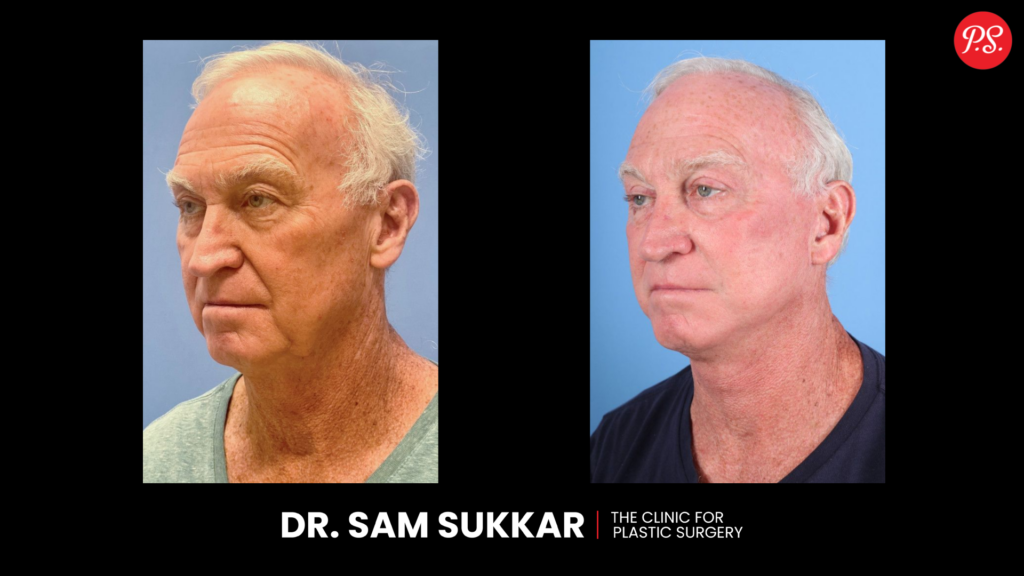
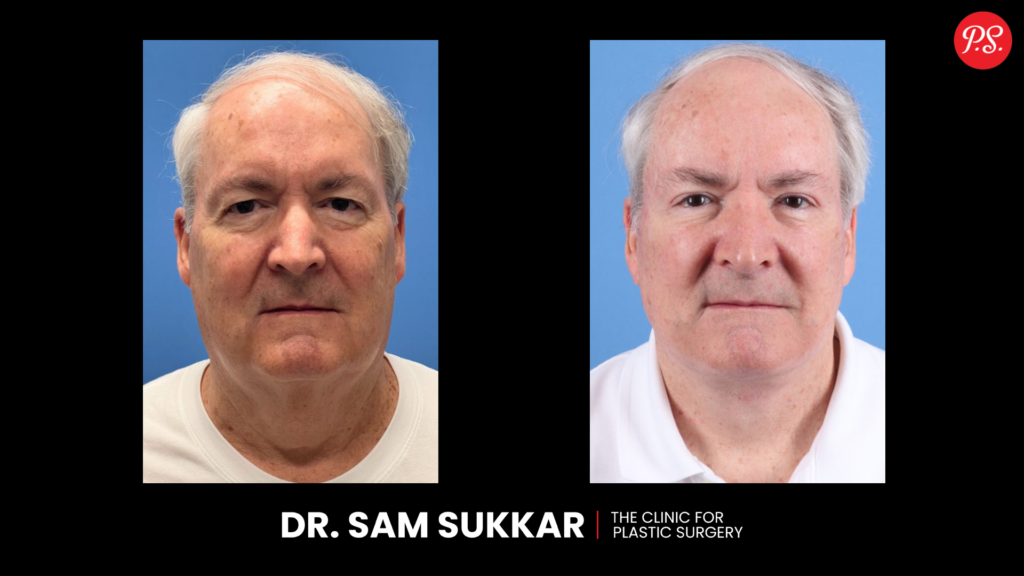
Houston Facelift at 63: Male Executive’s Transformation

Facelift Success Story Series by Dr. Sam Sukkar, MD in Houston, TX | Case Study #6743


This is part of our series featuring real patient transformations at The Clinic for Plastic Surgery. Each case study provides an in-depth look at actual procedures, recovery experiences, and results from Houston patients who’ve undergone facelift surgery with Dr. Sam M. Sukkar.


Robert* sat across from me in my Houston consultation room, his frustration evident. At 63, he was a successful executive who’d spent decades building his career, but lately, the mirror showed someone who looked far more exhausted than he felt. “I’m competing with people twenty years younger,” he said. “I need to look as sharp as I perform.”

His concern wasn’t vanity. In Houston’s competitive business landscape, appearance matters. The jowling along his jawline, the deep creases running from nose to mouth, and the loose skin beneath his chin had begun to undermine the confidence he’d cultivated over decades of professional success.

This wasn’t about chasing youth. This was about alignment, bringing his external appearance in line with his internal vitality.

*The patient’s name was changed to protect their privacy. All medical details and photographic before and after results are from actual Patient Case #6743. Individual results may vary based on body type, surgical approach, and adherence to post-operative instructions.

What Brought Robert* to Consider Facelift Surgery

Robert’s* Professional Image Concerns

Robert* had watched his face change gradually over the past decade. The transformation wasn’t sudden, it never is. But the cumulative effect had become impossible to ignore.

His primary concerns centered on three visible aging patterns: pronounced jowling that obscured his once-defined jawline, deep nasolabial folds that made him appear perpetually tired, and loose skin beneath his chin that no amount of exercise could address. He’d maintained his fitness, kept his weight stable, and taken care of his health, but gravity and genetics had their own agenda.

“I look at photos from five years ago, and I barely recognize myself,” he explained during our first meeting. “I don’t want to look thirty again. I just want to look like me, the version that matches how I actually feel.”

His expectations were refreshingly realistic. He understood that facelift surgery wouldn’t stop the aging process, but it could reset the clock and address the structural changes that had accumulated over decades.

Pre-Surgery Considerations for Male Facelift Patients

Male facelift patients face unique concerns that differ significantly from female patients, and Robert* voiced several of them during our consultation.

Maintaining Masculine Features: Robert* was adamant that he wanted to preserve his masculine appearance. Male faces have different anatomical proportions than female faces, stronger jawlines, broader facial structures, and different fat distribution patterns. My approach needed to respect these differences while addressing his aging concerns.

Scarring and Hair Loss: As with many male patients, Robert* worried about visible scarring, particularly around the ears and hairline. Male pattern baldness and shorter hairstyles mean less camouflage for incisions. I explained my precise incision placement techniques that follow natural skin creases and hide within the ear’s anatomy.

Recovery Timeline: Robert* had a demanding professional schedule. He needed to understand the realistic recovery timeline, not the “back to work in a week” myths he’d read online, but the honest truth about when he could return to client meetings and public-facing responsibilities without obvious signs of surgery.

Natural Results: His greatest fear? Looking “done.” He’d seen overly tight, windswept results on other men and wanted nothing to do with that aesthetic. His goal was improvement, not transformation, looking refreshed rather than radically different.

Dr. Sukkar’s Customized Surgical Approach for Robert*

The Comprehensive Facelift Procedure

For Robert*, I designed a comprehensive facelift procedure that would address all visible aging concerns while maintaining his masculine features and ensuring natural-looking results.

1. Facelift (Deep Plane Rhytidectomy)

  • Repositioning of the SMAS (superficial musculoaponeurotic system) layer to provide structural, long-lasting lift
  • Careful redraping of skin without excessive tension to avoid that “pulled” appearance
  • Strategic incision placement beginning in the temporal hairline, following the natural ear contours, and extending into the posterior hairline

This wasn’t a simple “skin tightening” procedure. The deep plane facelift approach addresses the underlying muscular and fascial structures that truly support the face. By lifting these deeper layers, we achieve results that look natural immediately and continue to look natural years later, rather than the tight, obvious appearance that comes from pulling skin alone.

The deep plane technique is particularly advantageous for male patients because it respects the natural masculine facial contours. Rather than simply pulling everything back, we’re repositioning structures to restore the youthful facial proportions that time and gravity have altered.

Robert’s* procedure would directly address his jowling by repositioning the sagging tissue along his jawline back to its original position. The deep nasolabial folds would soften as we lifted the midface structures. And the loose skin beneath his chin would be addressed through careful excision and redraping.

The Strategic Reasoning Behind This Approach

Male facelift surgery requires a different aesthetic approach than female facelift surgery. The masculine face has distinct characteristics that must be preserved: a strong, angular jawline; a relatively square face shape; and specific proportions between facial thirds.

My decision to use the deep plane technique for Robert* was deliberate. This approach provides several critical advantages:

Longer-Lasting Results: By repositioning the deeper structural layers rather than just pulling skin, the results resist gravity more effectively over time. For a 63-year-old man who wanted this to be his only facelift, longevity was essential.

Natural Facial Movement: The deep plane approach maintains natural facial expressions. Robert* would continue to look like himself when he smiled, frowned, or showed emotion, just a refreshed version of himself. This is particularly important for professionals who rely on facial communication in business settings.

Reduced Tension on Incision Lines: Because we’re not relying on skin tension for the lift, the incisions heal with minimal tension, resulting in finer, less visible scars, critical for male patients with shorter hairstyles and less ability to conceal incision sites.

Masculine Jawline Preservation: The deep plane technique allows me to restore the sharp, defined jawline that’s essential to masculine facial aesthetics. Rather than creating a soft, rounded jawline (which can appear feminizing), we restore the angular definition that characterized Robert’s* face in his younger years.

Robert’s* Facelift Recovery: The Executive’s Timeline

The First Two Weeks: Managing Expectations

Robert* went home the evening of his surgery with surgical dressings in place, drainage tubes (which would be removed within 24-48 hours), and a detailed care protocol. I don’t minimize what those first few days entail.

The initial recovery from facial plastic surgery involves swelling, bruising, and discomfort, not severe pain (which we manage effectively with medication), but a tight, heavy sensation as tissues begin healing. Robert* experienced all of this, as expected.

He kept his head elevated at a 30-45 degree angle for the first 72 hours, used cold compresses strategically to minimize swelling, and avoided any activity that increased blood pressure. No bending, lifting, straining, or rushing.

Weeks 1-2: The Impatient Phase

By the end of week one, Robert* had his sutures removed. The bruising had begun transitioning through its colorful spectrum, from dark purple to greenish-yellow, and the swelling had decreased noticeably.

But he didn’t look “ready” yet. Most patients underestimate how long residual swelling persists. Robert* could see improvement, but strangers would still notice he’d had something done. His face appeared fuller than normal, particularly around the cheeks and jawline.

Robert* returned to light office work (behind the scenes, no client meetings) after ten days. He wore button-up shirts to avoid pulling anything over his head and scheduled his days to include frequent rest breaks. The fatigue that accompanies major surgery is real, even when you’re feeling mentally sharp.

Weeks 3-8: The Transformation Becomes Visible

By week three, Robert* looked presentable enough to attend essential business meetings. The obvious bruising had resolved, and the swelling had decreased to the point where he simply looked “refreshed” rather than “post-surgical.”

He still had residual tightness and occasional numbness along his jawline and around his ears, completely normal as nerves regenerate. But the dramatic improvement in his jawline definition was already apparent. The jowling that had bothered him for years was gone, replaced by the clean, angular contour he’d had in his forties.

His colleagues commented that he looked well-rested. Several asked if he’d been on vacation. No one suspected surgery, exactly as he’d hoped.

Final Results Phase: Months 2-3

The true final results of a facelift emerge gradually as residual swelling completely resolves and tissues settle into their new positions. By three months post-operative, Robert* saw his final outcome.

His jawline was sharply defined. The deep creases that had framed his mouth had softened dramatically, not erased (that would look unnatural), but reduced to age-appropriate lines rather than deep folds. The loose skin beneath his chin was gone, revealing the neck contour that had disappeared over the past decade.

Perhaps most importantly, he looked like himself. Not a younger version trying to pass for forty. Not an obviously “worked on” executive with that telltale surgical appearance. Just a well-preserved, confident professional in his early sixties who took care of himself.

Robert’s* Facelift Results at Six Months Post-Operative

Six months after surgery, Robert* returned for his final follow-up appointment. The transformation was remarkable, not because he looked radically different, but because he looked authentically better.

His redefined jawline restored the masculine facial structure that had deteriorated over years of aging. The angular definition that characterizes male facial aesthetics was back, creating the strong profile he’d lost. The jowling that had blurred his jaw-neck distinction was gone entirely.

The nasolabial folds that had made him appear perpetually tired had softened significantly. They hadn’t disappeared, completely smooth faces look artificial at any age, but they’d been reduced from deep creases to natural expression lines appropriate for a man in his sixties.

The loose skin beneath his chin that no amount of exercise could address had been eliminated, revealing a clean neck contour that conveyed vitality and self-care.

But beyond the measurable physical changes, something else had shifted. Robert* carried himself differently. The confidence he’d always possessed in professional settings now extended to his comfort with his appearance. He no longer avoided cameras at company events or felt self-conscious in video conferences.

“I look at my reflection now and see the person I recognize,” he told me at that six-month visit. “Not the person from twenty years ago, but the version of myself that matches how I feel, experienced, capable, and still in my prime.”

Why This Facelift Achieved Exceptional Results

Several factors contributed to Robert’s* outstanding outcome, elements that any prospective facelift patient should understand.

Realistic Expectations and Clear Communication: From our first consultation, Robert* articulated exactly what bothered him and what he hoped to achieve. He wasn’t chasing an unrealistic ideal, he wanted specific improvements to specific concerns. This clarity allowed me to design a surgical plan that directly addressed his goals.

Optimal Candidate Characteristics: Robert* was an ideal facelift candidate. He maintained good overall health, didn’t smoke, had realistic expectations, and understood that facial rejuvenation would enhance rather than radically transform his appearance. These factors significantly impact surgical outcomes.

Strategic Deep Plane Technique for Male Anatomy

The surgical approach mattered enormously. The deep plane facelift respects masculine facial proportions while providing structural, long-lasting lift. This technique prevented the overly tight, feminized appearance that can result from more superficial approaches that simply pull skin without addressing deeper structures.

Meticulous Attention to Incision Placement: For male patients, incision concealment requires extra precision. Men have shorter hairstyles, less facial hair to hide scars in certain areas, and different hairline patterns than women. My incision placement followed natural skin creases and ear anatomy to minimize visibility, critical for Robert’s* comfort in professional settings.

Strict Adherence to Post-Operative Protocol: Robert* followed every recovery instruction precisely. He elevated his head, avoided strenuous activity, protected his incisions from sun exposure, and attended all follow-up appointments. Patient compliance isn’t just a suggestion, it’s a determining factor in final results and complication avoidance.

Over 25 years of performing facial rejuvenation procedures has taught me that exceptional results come from the intersection of surgical skill, appropriate patient selection, and meticulous attention to individual anatomical characteristics. Robert’s* outcome exemplifies what’s possible when all these elements align.

Common Questions About Male Facelift Surgery

Can a facelift look natural on men, or will I have that “done” appearance?

Natural results on male patients require a surgeon who understands masculine facial aesthetics. The male face should maintain its angular, defined characteristics, not adopt the softer, rounder contours sometimes seen in female facelift results. I use the deep plane technique specifically because it lifts deeper structural layers while maintaining natural facial proportions. The key is subtle enhancement rather than dramatic transformation, you should look refreshed and well-rested, not “worked on.”

Will facelift scars be visible with my shorter hairstyle?

Scar visibility is a primary concern for male patients, and rightfully so. I place incisions strategically within the natural ear anatomy and along hairlines where they’re least visible. For men with receding hairlines or minimal hair around the temples, I adjust incision placement to avoid visible scarring in exposed areas. With proper healing and my scar care protocol, most men find their scars virtually undetectable within several months. The combination of precise surgical technique and strategic placement means colleagues and clients won’t spot telltale signs of surgery.

How long before I can return to work after a facelift?

The timeline depends on your profession and public visibility. Robert* returned to behind-the-scenes office work after ten days but waited three weeks before attending client-facing meetings. If your work involves video conferences or public presentations, plan for 2-3 weeks before you’ll look “normal” enough to resume those activities comfortably. Most residual swelling resolves within the first month, but subtle fullness may persist for 6-8 weeks. I provide realistic timelines during consultation because understanding the recovery commitment is essential for planning this procedure around professional obligations.

Ready to Write Your Own Facelift Success Story?

Robert* walked into my Houston office carrying the weight of years, visible aging that undermined the confidence he’d built over decades of professional success. Three months later, he walked into boardrooms looking like the sharp, capable executive he’d always been, just without the visual evidence of exhaustion and time.

Your concerns might be different. Maybe you’re worried about maintaining professional credibility in a competitive market, wondering whether facial rejuvenation can look natural on male anatomy, or trying to understand what recovery actually involves for someone with professional obligations.

But the fundamental truth remains: You deserve to look as vital and capable as you feel. Your face should reflect your experience and competence, not work against the confidence you’ve earned.

If aging signs are affecting your professional confidence or personal satisfaction, transformation is possible.

Schedule Your Personalized Consultation here, or call us today at (281) 940-1535 and discover what’s possible for your unique body and goals in Houston!

Your Premier Destination for Plastic Surgery in Houston, Texas (TX)

Are you located in one of these Houston Metro Area cities?

Houston, The Woodlands, Sugar Land, Katy, Pearland, Pasadena, League City, Baytown, Conroe, Cypress, Spring, Kingwood, Humble, Missouri City, Friendswood, Bellaire, Clear Lake, Tomball, Galveston, Richmond, Rosenberg, Stafford, La Porte, Deer Park, Seabrook, Webster, Alvin, and Channelview.

Board-Certified Plastic Surgeon Dr. Sam Sukkar, MD, FACS, and The Clinic for Plastic Surgery Team are here to help you achieve refined, natural-looking results.

Offering expert cosmetic enhancements in:

  • Breast Augmentation, Breast Lifts, and Breast Reduction
  • Tummy Tucks, Mommy Makeovers, and Liposuction
  • Facelifts, Neck Lifts, and Rhinoplasty
  • Body Contouring and Skin Tightening Procedures
  • Non-Surgical Aesthetic Treatments

Visit our modern 18,000+ sq.ft. luxurious plastic surgery center and med spa in Houston, Texas, where expertise meets artistry. Our highly skilled and compassionate team ensures a seamless experience, from consultation to recovery.

For patients outside of the Houston area or those with a busy schedule, Schedule a Virtual Consultation.

Schedule your personalized consultation today at DrSukkar.com or call (281) 940-1535.

About the Author – Meet Dr. Sam Sukkar, MD

Dr. Sam Sukkar, MD, FACS is a highly respected Board-Certified Plastic Surgeon in Houston, Texas, known for his expertise in advanced cosmetic and reconstructive procedures. As the founder of The Clinic for Plastic Surgery, Dr. Sukkar has set a new standard for excellence, performing over 20,000 procedures with a focus on delivering natural, refined results.

Dr. Sukkar earned his Doctor of Medicine (M.D.) degree from Louisiana State University School of Medicine in 1992 after graduating summa cum laude with a Bachelor of Science in Microbiology. He then completed an intensive General Surgery Residency at the University of Texas Hermann Hospital before being selected for a highly competitive Plastic Surgery Fellowship at Northwestern University in Chicago, one of the most prestigious training programs in the country.

With more than 20 years of experience, Dr. Sukkar is a Diplomate of the American Board of Plastic Surgery and a Fellow of the American College of Surgeons (FACS). He is also an active member of the American Society of Plastic Surgeons (ASPS) and the Houston Society of Plastic Surgery (HSPS). His dedication to innovation and continuing education has solidified his reputation as a leading expert in aesthetic surgery, specializing in breast surgery, body contouring, facial procedures, and non-invasive treatments.

Dr. Sukkar’s expertise has been recognized by Houston Magazine, naming him one of Houston’s “Top Docs for Women,” and he has been featured among RealSelf’s America’s Top Doctors. Committed to his patients, he prioritizes personalized care, ensuring every individual feels informed, comfortable, and confident in their aesthetic journey.

Contact Dr. Sukkar today to schedule a consultation, visit DrSukkar.com to learn more, or call us directly at (281) 940-1535.

Blepharoplasty for Men Near Me In Houston, Texas: The Clinic For Plastic Surgery

Searching for “blepharoplasty near me” in Houston, Texas usually means someone is ready to fix droopy eyelids, puffy bags, or vision problems around the eyes. Blepharoplasty, or eyelid surgery, can remove excess skin and fatty tissue from the upper or lower eyelids to restore a more youthful appearance and, in some cases, improve visual function. At The Clinic for Plastic Surgery in Houston, personalized treatment plans address both cosmetic appearance and eye health in a safe medical office setting.

The essential steps are straightforward. First, the eyelids, peripheral vision, and medical history are evaluated. Then upper eyelid blepharoplasty, lower eyelid surgery, or combined upper and lower procedures may be recommended based on functional and cosmetic needs. Finally, a carefully planned outpatient procedure is performed using local anesthesia or general anesthesia, followed by a guided recovery period.

Key Takeaways of Blepharoplasty for Men Near Me In Houston, Texas

  • Searching for “blepharoplasty near me” in Houston, Texas may lead you to The Clinic for Plastic Surgery, where both cosmetic and functional eyelid procedures are planned to match your needs.
  • Blepharoplasty at this Houston clinic can address droopy upper lids, puffy under-eye bags, and vision obstruction, often resulting in a more youthful, rested appearance.
  • During consultation, the eyelids, vision, medical history, and personal goals are reviewed to create a personalized plan.
  • Most blepharoplasty procedures are outpatient and involve hidden incisions for natural-looking results with final results in about 2–3 months.
  • The Clinic for Plastic Surgery emphasizes safety, and detailed aftercare, so patients can protect their eyes, manage swelling, and maintain long-term results.

What Is Blepharoplasty And Who Is It For?

Blepharoplasty is a type of eye surgery that removes or repositions excess skin, muscle, and fatty tissue from the eyelids to improve function and facial aesthetics. It is commonly performed for signs of aging such as droopy eyelids, sagging skin, and puffy bags. Also, blepharoplasty surgery may be a medical treatment when drooping upper eyelids interfere with vision.

Upper vs. Lower Eyelid Surgery

Upper eyelid surgery focuses on the upper lids where excess upper eyelid skin can hang over the natural crease and sometimes the eyelashes. Many patients notice that this excess skin makes them look tired and may even limit their peripheral vision. Upper eyelid blepharoplasty, also called upper blepharoplasty, is designed to remove excess skin, tighten skin, and reshape the natural contours of the upper eyelids. The goal is to open the eyes, reduce drooping upper eyelids, and create a smoother, rested appearance without changing the patient’s natural look.

Lower eyelid surgery focuses on the lower lid, where puffy bags and fatty tissue often collect with aging. Lower blepharoplasty can be performed through an incision just below the lashes or inside the lower eyelid, depending on anatomy and goals. Fatty tissue may be repositioned or removed, skin may be tightened, and the surrounding structures of the eye socket may be supported.

Cosmetic vs. Functional Blepharoplasty

Cosmetic eyelid surgery is chosen for cosmetic reasons when patients want to reverse signs of aging around the eyes. Typical concerns include puffy bags, mild sagging skin, or uneven contours of the upper or lower eyelid. The goal is to enhance cosmetic appearance, restore a more youthful appearance, and help patients find a brighter, more rested look.

Functional blepharoplasty, on the other hand, is considered reconstructive surgery. It is recommended when vision problems or eye irritation arise from drooping upper eyelids or severe excess skin. In these cases, excess upper eyelid skin can block the upper visual field and strain the eyes, affecting daily activities such as driving, reading, or computer work.

Benefits Of Eyelid Surgery For Houston Patients

For Houston patients searching for “blepharoplasty near me,” eyelid surgery offers more than surface-level changes. It can refresh facial aesthetics, improve comfort and vision, and support long-term eye health when performed in a qualified medical setting.

A More Youthful, Refreshed Appearance

One of the most sought-after benefits of eyelid surgery is a more youthful appearance around the eyes. The upper and lower eyelids often show the earliest signs of aging, including sagging skin, fine lines, and puffy bags. By removing or reshaping excess skin and fatty tissue, blepharoplasty softens those age markers and helps restore smoother, more defined eyelid contours.

Upper eyelid blepharoplasty can reduce heavy folds that make makeup difficult and create a shadowed, tired look. Lower eyelid surgery can minimize puffy bags and creases under the eyes that no cream can fix. When done together, upper and lower eyelid procedures often provide a balanced, rested appearance that matches how patients actually feel.

Improved Vision And Comfort

For some patients in Houston, blepharoplasty is more than a cosmetic procedure. When drooping upper eyelids hang over the lashes, they can narrow the field of vision and interfere with daily tasks. Removing excess skin from the upper lids can restore peripheral vision and reduce the need to constantly raise the brows to see better.

Improved eyelid position can also lessen eye strain, headaches, and irritation from skin rubbing on the surface of the eye. In some cases, adjusting the eyelid structure helps reduce excessive tearing by restoring better support for the tear drainage system. Patients often report that their eyes feel more comfortable and open.

The Clinic for Plastic Surgery places strong emphasis on both vision and appearance. Visual function, eye health, and the surrounding structures of the eye socket are carefully assessed before any procedure is recommended. This thorough evaluation helps protect long-term comfort and function.

Boosted Confidence In Social And Professional Settings

The eyes are one of the first features people notice, so changes there can strongly influence confidence. Cosmetic eyelid surgery that improves sagging, droopy eyelids or visible puffy bags can have a positive effect on self-image. Many patients feel more comfortable making eye contact and appearing in photos after blepharoplasty surgery.

In professional settings, a more rested appearance can also influence how others perceive energy and alertness. Patients find that looking less tired can support their presence during presentations, meetings, and client interactions. While surgery cannot change life circumstances, feeling better about one’s appearance often encourages more active participation in daily life.

Why Choose The Clinic For Plastic Surgery In Houston

Choosing where to have eyelid surgery is just as important as deciding to have the procedure itself. The Clinic for Plastic Surgery in Houston offers a focused blend of experience, technology, and individualized care tailored to both cosmetic and functional eyelid concerns.

Board-Certified Surgeon And Advanced Techniques

At The Clinic for Plastic Surgery, blepharoplasty is performed by board-certified surgeon with specific training in facial surgery and eyelid procedures. The experience with upper or lower eyelid surgery, as well as complex cases, helps plan safe, precise operations.

Advanced techniques are used to conceal incisions within natural creases and lash lines whenever possible. For some lower eyelid cases, a hidden incision on the inside of the lid can provide access to fatty tissue while preserving the external skin. Careful tissue handling helps reduce swelling and supports a smoother recovery period.

Because reconstructive surgery is also managed for conditions such as orbital tumors and eyelid malpositions, familiarity with the full spectrum of eyelid anatomy is maintained. This depth of experience allows each treatment option, from nonsurgical care to full blepharoplasty, to be tailored for both safety and aesthetics.

State-Of-The-Art Facility And Patient Safety

The Clinic for Plastic Surgery operates in a modern facility equipped for outpatient procedure care, including eye surgery with local anesthesia or general anesthesia. Safety protocols cover every step, from preoperative medical history review to postoperative monitoring and follow-up.

Before scheduling surgery, the team reviews medications such as blood thinners and certain oral medications that may affect bleeding or healing. Patients are given clear instructions about when to pause specific drugs and when to resume them after surgery, always in coordination with their prescribing physician.

During blepharoplasty, the anesthesia team focuses on patient comfort and stable vital signs. After surgery, staff monitor early recovery to ensure that symptoms like mild blurred vision, tearing, or temporary dryness are completely normal and resolving as expected. Any concerning issues are addressed promptly.

Personalized Care And Natural-Looking Results

No two eyelids are identical, so a one-size-fits-all approach rarely works. At The Clinic for Plastic Surgery, each treatment plan begins with the patient’s unique anatomy, goals, and lifestyle. The amount of excess skin, the location of fatty tissue, and the way the brows and cheeks contribute to the overall appearance are carefully evaluated.

The priority is to remove excess skin and tighten skin only where necessary, preserving a natural crease and natural contours. This helps avoid an overdone or “surprised” look. Patients are encouraged to bring photos of themselves at a younger age to guide discussion toward realistic, harmonious outcomes.

Personalized care also extends into the recovery period. Patients receive tailored aftercare instructions for sleeping with the head elevated, managing swelling, and gradually returning to daily activities in Houston’s warm climate.

Your Blepharoplasty Consultation in Houston, TX At The Clinic For Plastic Surgery

The first step toward eyelid surgery at The Clinic for Plastic Surgery is a detailed consultation in the Houston office. This visit allows patients to understand their options while candidacy and safety are carefully assessed.

Evaluating Your Concerns And Medical History

During the consultation, the process begins by listening to the patient’s specific concerns. These may include droopy eyelids, puffy bags, vision problems, or difficulty applying makeup due to excess skin. Photos and a focused examination of the upper and lower eyelids help document baseline appearance.

A thorough medical history is also essential. The evaluation carefully reviews conditions that may affect healing, such as bleeding disorders, diabetes, or scarring issues. Questions about dry eyes, previous eye surgery, and any history of orbital tumors or trauma help guide the treatment plan.

The review includes current medications and supplements, including blood thinners and herbal products, since these can increase bleeding risk. This information helps determine candidacy for blepharoplasty or point toward a safer alternative treatment option.

Creating A Customized Surgical Plan

After confirming candidacy, the process outlines the recommended approach, whether upper eyelid blepharoplasty, lower eyelid surgery, or a combination of both. Each option explains how it addresses sagging skin, fatty tissue, or functional vision concerns. Visual field testing can assess whether drooping skin affects peripheral vision.

The surgical plan considers both cosmetic appearance and eye health. For example, when the brows sit low, combining blepharoplasty with a brow lift may offer a more balanced and lasting result. In some cases, discussions include nonsurgical options such as injectables or skin resurfacing as complementary treatments or temporary alternatives.

Patients can review before-and-after photos of similar cases and ask detailed questions about expected results, scarring, and the recovery timeline. The goal is to ensure each patient fully understands the plan and feels confident moving forward.

What To Expect During Blepharoplasty Surgery

Understanding the steps of blepharoplasty surgery helps reduce anxiety and sets realistic expectations. At The Clinic for Plastic Surgery, each case follows a structured process focused on safety and precision.

Incisions, And Surgical Steps

On the day of surgery, patients check in at the Houston facility and meet the surgical team. Upper eyelid surgery begins with marking the natural crease and planned skin-removal areas while the patient sits upright. The procedure places incisions within that crease so scars blend naturally as healing progresses. The process then removes excess skin and shapes or repositions underlying muscle and fatty tissue.

Lower eyelid blepharoplasty uses incisions just beneath the lash line or inside the lower lid. These openings provide direct access to puffy under-eye bags and allow smoothing or repositioning of the fatty tissue for a flatter contour. When needed, the technique tightens the skin and supports the lower lid to protect the eye surface and maintain normal tear drainage.

Recovery, Results, And Aftercare Tips In Houston’s Climate

Recovery after eyelid surgery is usually straightforward but requires careful attention to instructions. The Clinic for Plastic Surgery guides each patient through every stage until complete recovery.

Recovery and Healing

Swelling and bruising are expected during the first week after blepharoplasty. Many patients feel well enough to resume light activities within a few days, but visible bruising can last seven to ten days. Keeping the head elevated, even while sleeping, helps reduce swelling.

In the early days after surgery, cold compresses can significantly reduce swelling and bruising when used as directed. The clinic provides specific instructions on how often to apply them and how long to continue. Mild discomfort is common but generally well controlled with prescribed or over-the-counter oral medications.

Temporary blurred vision, light sensitivity, or watery eyes can be completely normal in the first days. Care teams recommend lubricating drops or ointments to protect the eye surface while the eyelids heal. Patients should avoid rubbing the eyes or pulling on the lids, since this can disturb the incisions.

Frequently Asked Questions About Blepharoplasty for Men Near Me In Houston, Texas: The Clinic For Plastic Surgery

What is blepharoplasty plastic procedure?

Blepharoplasty is a surgical procedure that removes or repositions excess eyelid skin and fat to improve vision and create a smoother, more youthful eye appearance.

How does The Clinic for Plastic Surgery perform upper vs. lower eyelid blepharoplasty?

Upper eyelid blepharoplasty uses an incision hidden in the natural crease to remove excess skin and adjust muscle, opening the eyes and reducing heaviness. Lower eyelid surgery uses an incision under the lashes or inside the lid to smooth puffy bags, refine contours, and support the lower lid while protecting eye health.

Am I a good candidate for blepharoplasty near me in Houston?

You may be a good candidate if you’re a generally healthy adult with droopy upper lids, excess skin, or under-eye bags that make you look tired or affect vision. During consultation, your medical history, eye health, medications, and goals are review to determine whether eyelid surgery or an alternative is safest.

How much does blepharoplasty cost in Houston at The Clinic for Plastic Surgery?

Typical blepharoplasty near Houston range from about $5,000 to $14,000, depending on whether upper lids, lower lids, or both are treated and if additional procedures are added. Lower eyelids surgery cost in Houston range between $7000-$8000. Upper eyelid surgery cost in Houston range between $5,000-$6,000. Functional eyelid surgery that improves documented vision problems may qualify for partial insurance coverage. Purely cosmetic blepharoplasty is usually self-pay.

What is recovery like after eyelid surgery in Houston’s climate?

Most patients experience swelling and bruising for about 7–10 days after eyelid surgery. Light activities resume within a few days, and many return to desk work in one to two weeks. In Houston, strict sun protection with large sunglasses and a hat is essential while healing. Final blepharoplasty results typically appear in two to three months.

What risks or side effects should I know about before blepharoplasty?

Blepharoplasty is generally safe, but potential risks include infection, bleeding, dry eyes, asymmetry, visible scarring, or temporary blurred vision. Rarely, more serious complications can affect eye function. Choosing a board-certified plastic surgeon, following pre-op instructions, and attending all follow-ups significantly reduces these risks.

Conclusion and Summary of Blepharoplasty for Men Near Me In Houston, Texas: The Clinic For Plastic Surgery

For patients searching “blepharoplasty near me” in Houston, Texas, The Clinic for Plastic Surgery provides careful medical evaluation and refined cosmetic planning. From the first assessment and visual field testing through surgery and follow-up care, the focus remains on both appearance and long-term eye function.

Blepharoplasty can remove excess skin, smooth puffy bags, and support clearer vision while creating a more youthful, rested look that still appears natural. With board-certified physicians, a modern surgical facility, and individualized care, many patients view eyelid surgery as a precise way to refresh their appearance.

Anyone considering eyelid surgery in Houston can benefit from scheduling a consultation to review treatment options, risks, and expected results. An in-person evaluation is the safest way to determine whether blepharoplasty matches personal goals and eye health needs.

Your Trusted Destination for Blepharoplasty Eyelid Surgery in Houston, Texas (TX)

Are you located in one of these Houston Metro Area cities?

Houston, The Woodlands, Sugar Land, Katy, Pearland, Pasadena, League City, Baytown, Conroe, Cypress, Spring, Kingwood, Humble, Missouri City, Friendswood, Bellaire, Clear Lake, Tomball, Galveston, Richmond, Rosenberg, Stafford, La Porte, Deer Park, Seabrook, Webster, Alvin, and Channelview.

Board-Certified Plastic Surgeon Dr. Sam Sukkar, MD, FACS, and the The Clinic for Plastic Surgery Team provide advanced eyelid surgery solutions to refresh and restore the appearance of the eyes.

If you are dealing with drooping eyelids, under-eye bags, puffiness, or tired-looking eyes, we offer comprehensive eyelid surgery options, including:

  • Upper Blepharoplasty (Upper Bleph)
  • Lower Blepharoplasty (Lower Bleph)
  • Eyelid Lift Surgery
  • Eyelid Surgery for Excess Skin or Fat
  • Combination Upper and Lower Eyelid Procedures
  • Customized Eye Rejuvenation Treatment Plans

Visit our modern 18,000+ sq. ft. plastic surgery center and med spa in Houston, Texas, designed for comfort, privacy, and results-driven care. From your first consultation through recovery, our talented team focuses on brighter, rested-looking eyes with natural results.

For patients outside the Houston area or those with limited availability, schedule a virtual eyelid surgery consultation.

Book Your Personalized Eyelid Consultation today at DrSukkar.com or call (281) 940-1535.

About the Author – Meet Dr. Sam Sukkar, MD

Dr. Sam Sukkar, MD, FACS is a highly respected Board-Certified Plastic Surgeon in Houston, Texas, known for his expertise in advanced cosmetic and reconstructive procedures. As the founder of The Clinic for Plastic Surgery, Dr. Sukkar has set a new standard for excellence, performing over 20,000 procedures with a focus on delivering natural, refined results.

Dr. Sukkar earned his Doctor of Medicine (M.D.) degree from Louisiana State University School of Medicine in 1992 after graduating summa cum laude with a Bachelor of Science in Microbiology. He then completed an intensive General Surgery Residency at the University of Texas Hermann Hospital before being selected for a highly competitive Plastic Surgery Fellowship at Northwestern University in Chicago, one of the most prestigious training programs in the country.

With more than 20 years of experience, Dr. Sukkar is a Diplomate of the American Board of Plastic Surgery and a Fellow of the American College of Surgeons (FACS). He is also an active member of the American Society of Plastic Surgeons (ASPS) and the Houston Society of Plastic Surgery (HSPS). His dedication to innovation and continuing education has solidified his reputation as a leading expert in aesthetic surgery, specializing in breast surgery, body contouring, facial procedures, and non-invasive treatments.

Dr. Sukkar’s expertise has been recognized by Houston Magazine, naming him one of Houston’s “Top Docs for Women,” and he has been featured among RealSelf’s America’s Top Doctors. Committed to his patients, he prioritizes personalized care, ensuring every individual feels informed, comfortable, and confident in their aesthetic journey.

Contact Dr. Sukkar today to schedule a consultation, visit DrSukkar.com to learn more, or call us directly at (281) 940-1535.

Lower Blepharoplasty Cost In Houston, Texas: How To Budget

Lower Blepharoplasty Cost In Houston, Texas: How To Budget

Lower blepharoplasty cost in Houston, Texas typically ranges from $7,000 to $8,000, depending on case complexity, and what’s included in the quote. For most patients, straightforward lower eyelid surgery to improve under eye bags falls in the $7,000-$8,000, while more complex blepharoplasty surgery with fat repositioning or combined procedures can reach up to $14,000.

Why does pricing vary?

Lower eyelid surgery costs depend on several factors, including the severity of under-eye bags, whether fat repositioning is required, if skin tightening is needed, and whether the procedure is combined with other facial surgeries. Surgical facility fees, anesthesia, and post-operative care may also affect the final quote.

Lower blepharoplasty is almost always considered cosmetic, so health insurance does not cover it unless a rare functional issue is present. The good news is that flexible financing options are available (upon approved credit), with monthly payments as low as $189, allowing patients to move forward now and pay over time.

Key Takeaways of Lower Blepharoplasty Cost In Houston, Texas

  • Lower blepharoplasty cost in Houston, Texas typically ranges from $7,000 to $8,000.
  • Your quote should clearly itemize each expenses so you understand exactly what you’re paying for and avoid hidden costs.
  • Case complexity is the main factor that drive differences in lower blepharoplasty cost in Houston, Texas.
  • Health insurance almost never covers lower eyelid surgery because it is considered cosmetic, so patients should plan for out-of-pocket payment.
  • The Clinic for Plastic Surgery offers several financing options, with Cherry being the most commonly chosen, featuring monthly payments as low as $189.

What Is Lower Blepharoplasty And Who Is It For?

Is a surgical procedure on the lower eyelid designed to reduce under eye bags, loose skin, and a chronically tired appearance.

Lower eyelid surgery for under eye bags and excess skin

Lower eyelid surgery focuses on the area beneath the lower eyelid, where excess skin and fat can create puffiness and shadows. During the blepharoplasty procedure, excess skin and fat are removed or the fat pads are repositioned to smooth the contour.

The goal is a refreshed appearance, not a pulled or overdone look. Lower blepharoplasty can deliver a more youthful appearance that still looks natural. Many patients say they look more rested and feel more self confidence in photos and social settings.

Who are good candidates for eyelid surgery on the lower lids?

Ideal candidates for this type of eyelid surgery have good general health and realistic expectations. They are usually bothered by under eye bags, excess skin, fine wrinkles, or a hollowed groove under the lower eyelid.

Many patients are in their forties, fifties, or sixties, but younger patients with strong genetic under eye bags can also benefit. Someone might also choose combined upper and lower eyelids surgery if they have sagging eyelids above and under eye bags below.

A thorough initial consultation helps determine if lower blepharoplasty, upper eyelid surgery, or upper and lower eyelids together will give the best, most balanced result.

Typical Cost Of Lower Blepharoplasty In Houston

In Houston, the average lower blepharoplasty cost generally falls between $7,000 and $8,000, with most straightforward cases landing around the middle of that range.

Average lower blepharoplasty cost ranges in Houston, Texas

For a basic lower eyelid surgery focused mainly on removing or smoothing under eye bags, total fees lands between $7,000 and $8,000. These cases usually involve modest fat removal or contouring and limited skin tightening.

More complex blepharoplasty surgery, such as lower eyelid surgery with fat repositioning, skin and muscle tightening, or combined upper blepharoplasty and lower blepharoplasty, can increase the final cost to $13,000–$14,000. When quoted at the higher end, the price typically reflects greater complexity.

How lower eyelid surgery cost compares to upper eyelid surgery

In most practices, upper eyelid surgery alone is somewhat less expensive than surgery on the lower eyelid. Upper blepharoplasty is often a simpler procedure, reducing anesthesia fees and facility fees.

When a patient chooses upper and lower eyelids surgery in one session, the overall cost is higher than either surgery alone. But, the combined surgery cost typically is lower than doing each blepharoplasty procedure separately, because there is a single set of facility and anesthesia charges.

What Factors Influence Lower Blepharoplasty Cost In Houston?

Multiple factors influence lower blepharoplasty cost in Houston, Texas, and understanding them helps patients interpret very different quotes.

Surgeon’s expertise, training, and proven track record

One of the biggest drivers of blepharoplasty cost is the expertise and experience. With extensive training in eyelid surgery and a proven track record the fee is up than less experienced providers.

That higher fee reflects years of training, a lower risk of complications, and a greater chance of a natural, rejuvenated appearance. Revision surgery to correct a poor result can be far more expensive than choosing a qualified surgeon the first time.

Patients should consider credentials, blepharoplasty before‑and‑after photos, and patient reviews alongside the quoted surgery cost. A slightly higher price for a surgeon with strong eyelid experience may be a better long‑term value.

Procedure complexity & anesthesia type

Case complexity affects cost as well. A simple pinch of excess skin under the lower eyelid will be less expensive than a full lower blepharoplasty with fat repositioning, muscle tightening, and significant skin tightening.

The type of anesthesia also plays a role. Some lower eyelid procedures use local anesthesia with light sedation, which typically results in lower anesthesia fees. More complex surgery may require general anesthesia, increasing both anesthesia and facility fees.

How Insurance & Financing Affect Your Out‑Of‑Pocket Cost

Most lower blepharoplasty procedures in Houston qualify as elective cosmetic surgery, so patients should plan to pay out of pocket.

When does health insurance cover eyelid surgery?

Lower eyelid surgery for under eye bags is almost always cosmetic. That means medical insurance and standard health insurance plans will not cover the procedure, even if the patient feels self conscious or has a tired appearance.

In rare cases, upper eyelid surgery becomes medically necessary when excess upper eyelid skin blocks peripheral vision and interferes with daily activities. In those cases, health insurance may cover upper blepharoplasty or part of it.

But, lower blepharoplasty covered by insurance is extremely rare, because under eye bags seldom interfere with improved vision or safety. Patients should not expect insurance reimbursement for lower blepharoplasty and should budget for it like any other elective cosmetic procedure.

Financing options for blepharoplasty cost

Because lower blepharoplasty cost is usually out of pocket, many Houston practices offer financing options through third‑party companies such as CareCredit or Cherry. These allow patients to spread the overall cost into monthly payments, sometimes starting near $135 per month, depending on credit and term length.

Some patients prefer to use personal savings or low‑interest credit cards instead of medical financing. Whatever the method, it is important to choose a payment plan that will not create financial stress during the recovery time.

Frequently Asked Questions About Lower Blepharoplasty Cost In Houston, Texas: How To Budget

What does male lower blepharoplasty cost in Houston, Texas?

The average lower male blepharoplasty cost in Houston, Texas typically ranges from $7,000 to $8,000. Most complex cases with fat repositioning or combined upper and lower eyelid surgery can reach $13,000–$14,000.

What does a lower blepharoplasty surgery price in Houston usually include?

A typical Houston lower blepharoplasty quote includes the surgeon’s fee, anesthesia fees, and facility fees. Additional costs can include pre-op lab work, prescriptions, and optional add-ons like fillers or combined procedures. It’s important to request an itemized, written estimate.

Does health insurance cover lower blepharoplasty?

Lower eyelid surgery for under-eye bags is almost always cosmetic, so health insurance typically does not cover it. In rare cases, insurance coverage applies more often to upper eyelid surgery when sagging skin interferes with vision. Patients should plan to pay lower blepharoplasty cost out of pocket, using savings, financing, or credit.

How can I reduce lower blepharoplasty cosmetic surgery cost in Houston, Texas?

To manage lower blepharoplasty cost in Houston, Texas safely, financing plans are available. With monthly payment plans starting as low as $189 (upon approved credit). Avoid choosing based solely on the lowest price, which can increase revision risk.

Conclusion and Summary of Lower Blepharoplasty Cost In Houston, Texas: How To Budget

Lower blepharoplasty in Houston offers a reliable way to address under eye bags and a tired appearance. Understanding blepharoplasty cost and value is essential. For most patients, several factors determine the final cost of lower eyelid surgery. These factors includes experience, case complexity, anesthesia type, facility quality, and any additional procedures included. While it can be tempting to chase the lowest price, long‑term satisfaction usually depends on the expertise and safety of the surgical setting.

By asking for itemized quotes, and planning a realistic budget and recovery schedule, patients can approach blepharoplasty with confidence. The right combination of clear financial planning, and careful aftercare can lead to a natural, more youthful appearance.

Your Trusted Destination for Blepharoplasty Eyelid Surgery in Houston, Texas (TX)

Are you located in one of these Houston Metro Area cities?

Houston, The Woodlands, Sugar Land, Katy, Pearland, Pasadena, League City, Baytown, Conroe, Cypress, Spring, Kingwood, Humble, Missouri City, Friendswood, Bellaire, Clear Lake, Tomball, Galveston, Richmond, Rosenberg, Stafford, La Porte, Deer Park, Seabrook, Webster, Alvin, and Channelview.

Board-Certified Plastic Surgeon Dr. Sam Sukkar, MD, FACS, and the The Clinic for Plastic Surgery Team provide advanced eyelid surgery solutions to refresh and restore the appearance of the eyes.

If you are dealing with drooping eyelids, under-eye bags, puffiness, or tired-looking eyes, we offer comprehensive eyelid surgery options, including:

  • Upper Blepharoplasty (Upper Bleph)
  • Lower Blepharoplasty (Lower Bleph)
  • Eyelid Lift Surgery
  • Eyelid Surgery for Excess Skin or Fat
  • Combination Upper and Lower Eyelid Procedures
  • Customized Eye Rejuvenation Treatment Plans

Visit our modern 18,000+ sq. ft. plastic surgery center and med spa in Houston, Texas, designed for comfort, privacy, and results-driven care. From your first consultation through recovery, our talented team focuses on brighter, rested-looking eyes with natural results.

For patients outside the Houston area or those with limited availability, schedule a virtual eyelid surgery consultation.

Book Your Personalized Eyelid Consultation today at DrSukkar.com or call (281) 940-1535.

About the Author – Meet Dr. Sam Sukkar, MD

Dr. Sam Sukkar, MD, FACS is a highly respected Board-Certified Plastic Surgeon in Houston, Texas, known for his expertise in advanced cosmetic and reconstructive procedures. As the founder of The Clinic for Plastic Surgery, Dr. Sukkar has set a new standard for excellence, performing over 20,000 procedures with a focus on delivering natural, refined results.

Dr. Sukkar earned his Doctor of Medicine (M.D.) degree from Louisiana State University School of Medicine in 1992 after graduating summa cum laude with a Bachelor of Science in Microbiology. He then completed an intensive General Surgery Residency at the University of Texas Hermann Hospital before being selected for a highly competitive Plastic Surgery Fellowship at Northwestern University in Chicago, one of the most prestigious training programs in the country.

With more than 20 years of experience, Dr. Sukkar is a Diplomate of the American Board of Plastic Surgery and a Fellow of the American College of Surgeons (FACS). He is also an active member of the American Society of Plastic Surgeons (ASPS) and the Houston Society of Plastic Surgery (HSPS). His dedication to innovation and continuing education has solidified his reputation as a leading expert in aesthetic surgery, specializing in breast surgery, body contouring, facial procedures, and non-invasive treatments.

Dr. Sukkar’s expertise has been recognized by Houston Magazine, naming him one of Houston’s “Top Docs for Women,” and he has been featured among RealSelf’s America’s Top Doctors. Committed to his patients, he prioritizes personalized care, ensuring every individual feels informed, comfortable, and confident in their aesthetic journey.

Contact Dr. Sukkar today to schedule a consultation, visit DrSukkar.com to learn more, or call us directly at (281) 940-1535.

Lower Blepharoplasty: What This Eye Procedure Corrects

Lower blepharoplasty is a surgical procedure that removes or repositions under‑eye fat and tightens loose skin to improve lower eyelid bags and dark circles. For most healthy adults bothered by eye bags or sagging lower eyelids, it’s the most effective way to achieve long‑lasting, natural‑looking rejuvenation when creams and cosmetic procedures are no longer enough. Modern lower blepharoplasty techniques can smooth the lid cheek junction, reduce puffiness, and refresh the face while keeping changes subtle.

In practical terms, it usually involves reshaping fat pads, tightening lower eyelid skin, and sometimes combining laser skin resurfacing for crepey skin.

Key Takeaways of Lower Blepharoplasty

  • Lower blepharoplasty is a surgical eyelid procedure that reduces under-eye bags, excess fat, and loose skin to create a smoother, more refreshed lower eyelid area.
  • Ideal candidates for lower blepharoplasty are healthy adults with persistent puffiness, sagging skin, or tear trough hollows that no longer respond to skincare or non-surgical treatments.
  • Modern lower blepharoplasty techniques include transconjunctival (scarless) and subciliary (skin incision) approaches, often with fat repositioning and optional laser resurfacing for crepey skin.
  • Recovery from lower blepharoplasty typically involves 1–2 weeks of noticeable swelling and bruising, with most people returning to work in about 7–14 days and final results maturing over several months.
  • Choosing The Clinic for Plastic Surgery and understanding realistic longevity of results is essential for a safe, natural-looking outcome.

What Lower Blepharoplasty Is And How It Works

Lower blepharoplasty is a type of eyelid surgery that targets the lower eyelids to improve eye bags, excess skin, and a tired or aged appearance.

Common Concerns Treated By Lower Eyelid Lift Surgery

Lower eyelid blepharoplasty focuses on several common age‑related changes. The most obvious is the development of lower eyelid bags caused by protruding fat pads behind the orbital septum. These fat bulges can make someone look tired even when they feel rested.

The procedure can also address excess eyelid skin and skin redundancy that create wrinkles and crepey skin under the eyes. In some patients, loose skin and lower eyelid laxity expose more of the white of the eye, which can make the eyes look rounded or sad. Lower eyelid surgery is designed to tighten and support this area.

Another frequent concern is the tear trough or tear trough deformity, where a hollow groove forms between the lower lids and the upper cheek. Lower blepharoplasty techniques that reposition fat can soften this lid cheek junction and improve dark circles that are shadow‑based rather than pigment‑based.

In select patients, lower blepharoplasty may also play a small role in functional improvement. When upper and lower lids are treated together, smoothing the area can complement upper blepharoplasty that improves peripheral vision limited by excess upper eyelid skin.

Lower Versus Upper Blepharoplasty

Upper blepharoplasty targets the upper eyelid and usually removes excess skin that droops over the lash line. It can lift heavy upper lids, open the eyes, and in some cases improve peripheral vision when tissue hangs over the lashes.

Lower blepharoplasty, by contrast, concentrates on the lower lids and under eye bags. Instead of only skin removal, lower eyelid surgery often involves fat removal, fat repositioning, or fat grafting to smooth contours. It is more about reshaping the lower eyelid and cheek transition than “lifting” the eyelid itself.

Many patients choose upper and lower blepharoplasty together for full eyelid rejuvenation. In combined blepharoplasty surgery, fat removal and skin excision on both upper and lower lids are carefully balanced to maintain eye shape, symmetry, and proper support from underlying eye muscles and connective tissue.

Ideal Candidates And When To Consider Surgery

Not everyone with dark circles or fine lines needs lower eyelid surgery. Understanding who benefits most helps set realistic expectations.

Who Is A Good Candidate

Ideal candidates are generally healthy adults who are bothered by persistent lower eyelid bags, excess fat, or sagging skin that doesn’t respond to skincare or non‑surgical treatments. They usually have stable facial structure and no major untreated eye disease.

People who benefit most often notice puffiness from protruding fat, loose skin, and a tired look even after good sleep. Their lower eyelid laxity is mild to moderate, and the position of the lower lids is reasonably normal. They want subtle, natural improvements, not a completely different face.

Good candidates also understand that lower blepharoplasty is surgery, not a quick facial or temporary filler. They are prepared for swelling and bruising, short downtime, and the need to protect the skin from sun exposure as it heals. They also commit to follow‑up visits and aftercare instructions.

When Surgery May Not Be Recommended

Lower blepharoplasty may not be appropriate for people with significant eye surface disease, uncontrolled dry eye, or certain muscle and nerve problems that affect eyelid closure. If the lower lids are already very loose or pulled down, surgery must be planned extremely carefully or avoided.

Patients with unrealistic expectations, such as wanting perfectly smooth skin with no lines at all, may not be good candidates. Those seeking the least painful cosmetic procedures but unwilling to accept any recovery are usually better served with non‑surgical options like fillers or laser resurfacing instead.

Finally, individuals with unregulated medical conditions, such as uncontrolled hypertension, bleeding disorders, or poorly controlled diabetes, may be asked to stabilize their health first.

Surgical Techniques For Lower Blepharoplasty

Lower blepharoplasty surgery is tailored to the patient’s anatomy. Approach selection is based on several main techniques depending on skin, fat, and eyelid support.

Transconjunctival (Scarless) Lower Blepharoplasty

Transconjunctival lower blepharoplasty places the incision inside the lower eyelid rather than through the skin. This modern lower blepharoplasty approach is often chosen for younger patients with eye bags from excess fat but minimal loose skin.

Through the inner eyelid incision, excess fat can be removed or fat pads repositioned without creating a visible scar along the lash line. Because the skin is not cut, the risk of pulling the eyelid down is reduced when lower eyelid laxity is mild.

Subciliary (Skin Incision) Lower Blepharoplasty

Subciliary lower blepharoplasty uses an incision just beneath the lower lash line. This allows direct access to excess skin, protruding fat, and underlying muscle. The small incision usually heals into a thin line that is hard to see once matured.

This approach is often preferred when there is significant excess skin or skin redundancy that truly requires removal. Excess skin and sometimes a strip of muscle are carefully removed while the lower lid is supported to avoid distortion. Fat removal or fat repositioning can be done through the same opening.

Fat Repositioning Versus Fat Removal

Earlier blepharoplasty techniques focused primarily on fat removal. Excess fat would be removed aggressively to flatten bags, but this sometimes left a hollowed appearance. Modern techniques emphasize balance.

Today, modern approaches favor repositioning fat rather than simply removing excess fat. Tight areas are released and fat is swung into the tear trough to fill hollows. This preserves youthful volume and helps improve dark circles caused by shadowing.

Combining Lower Blepharoplasty With Other Procedures

Lower blepharoplasty is frequently combined with other facial plastic procedures to address multiple concerns at once. Common pairings include upper blepharoplasty, a brow lift to elevate heavy brows, or laser resurfacing to improve fine wrinkles.

Some patients also combine lower eyelid blepharoplasty with midface lifts or non‑surgical cosmetic procedures, such as targeted fillers away from the surgical site. The combination plan depends on facial structure, Fitzpatrick skin type, and individual goals.

Recovery Timeline And Aftercare Tips

Recovery after lower blepharoplasty is usually measured in weeks, not months. Most people resume light activities in about two weeks, while fine healing continues longer.

What To Expect In The First Week

Immediately after surgery, it’s normal to feel tightness and mild discomfort around the incision areas. Vision can be temporarily blurry due to ointments and swelling. Swelling and bruising are most noticeable during days one to five and often peak in this window. Cold compresses during the first 48 hours and keeping the head elevated on two to three pillows help reduce swelling.

Avoiding water directly on the incision sites for four to five days is advised. Patients should also avoid heavy lifting, bending, and strenuous activity. Sunglasses help protect the eyes from wind and bright light when outdoors.

Suture removal usually happens between days six and ten when external stitches are used. Many patients begin to feel presentable for social contact by the end of the first week, though some bruising may linger.

Healing Over The First Month And Beyond

By weeks two to three, about 80% of swelling and bruising has usually resolved. Makeup can often be used, with medical approval, to camouflage any remaining discoloration. Most people return to work or light activities within seven to ten days, depending on their comfort level and the extent of surgery. Gentle walking is encouraged, but intense exercise should wait for medical clearance.

From weeks four to six, residual swelling continues to fade. Incision lines soften and the lower eyelids start to look and feel more natural. Many patients feel largely recovered around the one‑month mark.

Beyond six weeks, people typically resume higher‑impact exercise like running or weightlifting if swelling is minimal and medical clearance is given.

Results, Longevity, And Realistic Expectations

Lower blepharoplasty can create a fresher, less tired look, but it doesn’t freeze time. Understanding typical longevity helps align expectations with reality.

How Long Results Typically Last

In most patients, lower blepharoplasty results last many years. Fat pads that are repositioned or reduced usually stay improved, and tightness of the skin and muscle persists long term.

But, the natural aging process continues. Skin will keep thinning, and new fine lines can appear. People with significant sun exposure or smoking habits may notice changes sooner.

Results often last ten years or more, though this varies among patients. Good skincare, sun protection, and a healthy lifestyle can extend the benefit of the initial blepharoplasty procedure.

Scarring And Final Cosmetic Outcome

With transconjunctival blepharoplasty, there is no external incision, so there’s no visible scar. With a subciliary approach, a fine line beneath the lashes initially appears pink, then fades over months.

Most patients find the scar becomes hard to see once matured, especially when placed precisely just under the lash line. People with higher Fitzpatrick skin type may require extra attention to pigment changes and strict sun avoidance.

The final cosmetic outcome is usually assessed several months after surgery, once swelling has fully resolved and scars have softened. When done conservatively, lower blepharoplasty should refresh the under eye area while preserving natural eye shape and expression.

Frequently Asked Questions About Lower Blepharoplasty: What This Eye Procedure Corrects

What is lower blepharoplasty and what problems does it treat?

Lower blepharoplasty is eyelid surgery that targets under‑eye bags, excess fat, and excess eyelid skin on the lower lids. By removing or repositioning fat and tightening skin, it can smooth puffiness, soften the lid‑cheek junction, and improve shadow‑based dark circles, giving a more rested, natural‑looking appearance.

What is the typical recovery time after lower blepharoplasty?

Most swelling and bruising from lower blepharoplasty peak in the first five days and improve significantly by two weeks. Many people feel comfortable returning to work or light activities in 7–10 days. Fine swelling, scar softening, and the final cosmetic result continue to evolve over two to three months.

What are the main risks and side effects of lower eyelid surgery?

Common short‑term effects include bruising, swelling, tightness, eye dryness, and temporary blurry vision. Less common risks are infection, bleeding, asymmetry, contour irregularities, visible scars, or lower eyelid retraction. Very rare complications include double vision or vision‑threatening problems.

How long do lower blepharoplasty results usually last?

Results from lower blepharoplasty often last many years, and in many patients a decade or more. Repositioned or reduced fat pads typically remain improved, and tightened skin and muscle maintain better support. However, aging, sun exposure, and lifestyle factors like smoking can gradually bring back fine lines or mild laxity over time.

How much does lower blepharoplasty cost in Houston, TX?

Lower blepharoplasty cost in Houston, Texas ranges from about $7,000 to $8,000 for the lower lids. Price depends on the procedure extend, and whether it’s combined with upper blepharoplasty or other procedures.

Conclusion and Summary of Lower Blepharoplasty: What This Eye Procedure Corrects

Lower blepharoplasty can significantly improve lower eyelid bags, excess skin, and dark circles when performed using modern techniques. It remains one of the most precise ways to refresh the under eye area and restore a rested look.

For anyone considering this surgery, the next step is scheduling a detailed consultation. An individualized plan, clear understanding of recovery, and realistic expectations are the foundation of a safe, satisfying outcome.

Your Trusted Destination for Blepharoplasty Eyelid Surgery in Houston, Texas (TX)

Are you located in one of these Houston Metro Area cities?

Houston, The Woodlands, Sugar Land, Katy, Pearland, Pasadena, League City, Baytown, Conroe, Cypress, Spring, Kingwood, Humble, Missouri City, Friendswood, Bellaire, Clear Lake, Tomball, Galveston, Richmond, Rosenberg, Stafford, La Porte, Deer Park, Seabrook, Webster, Alvin, and Channelview.

Board-Certified Plastic Surgeon Dr. Sam Sukkar, MD, FACS, and the The Clinic for Plastic Surgery Team provide advanced eyelid surgery solutions to refresh and restore the appearance of the eyes.

If you are dealing with drooping eyelids, under-eye bags, puffiness, or tired-looking eyes, we offer comprehensive eyelid surgery options, including:

  • Upper Blepharoplasty (Upper Bleph)
  • Lower Blepharoplasty (Lower Bleph)
  • Eyelid Lift Surgery
  • Eyelid Surgery for Excess Skin or Fat
  • Combination Upper and Lower Eyelid Procedures
  • Customized Eye Rejuvenation Treatment Plans

Visit our modern 18,000+ sq. ft. plastic surgery center and med spa in Houston, Texas, designed for comfort, privacy, and results-driven care. From your first consultation through recovery, our talented team focuses on brighter, rested-looking eyes with natural results.

For patients outside the Houston area or those with limited availability, schedule a virtual eyelid surgery consultation.

Book Your Personalized Eyelid Consultation today at DrSukkar.com or call (281) 940-1535.

About the Author – Meet Dr. Sam Sukkar, MD

Dr. Sam Sukkar, MD, FACS is a highly respected Board-Certified Plastic Surgeon in Houston, Texas, known for his expertise in advanced cosmetic and reconstructive procedures. As the founder of The Clinic for Plastic Surgery, Dr. Sukkar has set a new standard for excellence, performing over 20,000 procedures with a focus on delivering natural, refined results.

Dr. Sukkar earned his Doctor of Medicine (M.D.) degree from Louisiana State University School of Medicine in 1992 after graduating summa cum laude with a Bachelor of Science in Microbiology. He then completed an intensive General Surgery Residency at the University of Texas Hermann Hospital before being selected for a highly competitive Plastic Surgery Fellowship at Northwestern University in Chicago, one of the most prestigious training programs in the country.

With more than 20 years of experience, Dr. Sukkar is a Diplomate of the American Board of Plastic Surgery and a Fellow of the American College of Surgeons (FACS). He is also an active member of the American Society of Plastic Surgeons (ASPS) and the Houston Society of Plastic Surgery (HSPS). His dedication to innovation and continuing education has solidified his reputation as a leading expert in aesthetic surgery, specializing in breast surgery, body contouring, facial procedures, and non-invasive treatments.

Dr. Sukkar’s expertise has been recognized by Houston Magazine, naming him one of Houston’s “Top Docs for Women,” and he has been featured among RealSelf’s America’s Top Doctors. Committed to his patients, he prioritizes personalized care, ensuring every individual feels informed, comfortable, and confident in their aesthetic journey.

Contact Dr. Sukkar today to schedule a consultation, visit DrSukkar.com to learn more, or call us directly at (281) 940-1535.

Blepharoplasty Before & After Transformations in Men

Blepharoplasty before and after photos show how eyelid surgery can reduce hooded upper eyelids and under‑eye bags, creating a younger, more refreshed look. In most patients, upper eyelid blepharoplasty lifts heavy upper lids, while lower blepharoplasty smooths fat bags and dark circles over a few months. The basic pattern is predictable: visible change within weeks, and refined, natural results by three to six months.

Patients usually want three things: eyes that look more open, less tired, and still completely natural. They want to know how fast swelling fades, how long results last, and what “normal” bruising looks like. Proper planning, realistic expectations and follow all aftercare instructions make the biggest difference.

Key Takeaways of Blepharoplasty Before And After

  • Blepharoplasty before and after photos typically show less upper‑lid hooding, smoother under‑eye bags, and a refreshed but natural look.
  • Good candidates for eyelid surgery are healthy adults with tired‑looking, heavy, or baggy eyelids who have realistic expectations.
  • Thorough consultation, and stopping certain medications and smoking all help maximize your blepharoplasty before and after results.
  • The recovery timeline moves from peak bruising and swelling in the first week to more natural‑looking eyes by weeks two to four.
  • Final eyelid surgery contour and scars mature over several months.

Understanding Blepharoplasty And Typical Before-And-After Changes

Blepharoplasty is eyelid surgery that removes or repositions excess skin and fat in the upper and lower eyelids, softening heaviness, bags, and festoons for a rested appearance.

Common Reasons People Choose Eyelid Surgery

Most patients considering blepharoplasty share a similar complaint. Their eyes look tired or closed, even when they feel wide awake. Heavy upper eyelids can hang over the lashes, creating hooded upper eyelids that hide eye makeup and make them look older.

Some develop true upper eyelid ptosis, where the lid margin actually droops lower over the pupil. Others mainly notice extra skin and fullness in the upper lid, especially toward the outer corner. They describe a sense of heaviness that makes it harder to keep the eyes fully open by evening.

Lower eyelids bring a different set of issues. Genetic fat bags, puffiness, and dark circles can appear even in a younger patient, sometimes in their 30s. Over time, the ligament support weakens and bags stand out more.

Many patients bring old photos to the consultation. They point to the upper and lower eyelids and say they “want those eyes back,” not a different face. They are usually bothered by specific things: under‑eye bags, festoons, shadowing, and sagging skin. Both male and female patients often mention that colleagues think they are tired or upset.

Blepharoplasty Before & After Transformations 1 by Dr. Sam Sukkar, MD
Image Illustration by: Dr. Sam Sukkar, MD, The Clinic for Plastic Surgery.
Types Of Blepharoplasty And How They Affect Results

The type of eyelid surgery strongly shapes blepharoplasty before and after results.

Upper Eyelid Surgery

Upper eyelid surgery focuses on removing excess skin and carefully adjusting fat to reduce hooding. When there is upper eyelid ptosis, surgeons may add upper eyelid ptosis repair to lift the lid margin itself.

Upper blepharoplasty incisions usually sit in the natural upper lid crease. After healing, the scar is often hard to see with the eye open. Bilateral upper eyelid blepharoplasty is common, since almost every patient needs both eyes treated for symmetry. When combined with ptosis repair, the eyes often look more open and alert, but still natural.

Lower Eyelid Surgery

Lower blepharoplasty targets the bags and dark circles under the eyes. Fat is removed or reposition, smooth the eyelid–cheek junction, and tighten loose skin. In some cases, a combination lower lid blepharoplasty with a chemical peel to refine crepey wrinkles and pigment. This combination can soften dark circles and improve skin texture at the same time.

Quad Eyelid Surgery

Many patients undergo quad blepharoplasty, meaning upper and lower blepharoplasty in one procedure. This treats the upper and lower eyelids together for a balanced result. A brow lift, chin or cheek procedures, or Botox can be added separately if needed, but are not required for everyone.

Across these types, the pattern is similar. At one month, early results are shown: less hooding and smoother bags, though some swelling remains. By three to six months, eyelid surgery results usually look refined and very natural, with a long‑lasting refreshed look.

Am I A Good Candidate For Blepharoplasty?

Good candidates for eyelid blepharoplasty are healthy adults with excess eyelid skin, fat, or ptosis that makes the eyes look tired, closed, or older than they feel.

Medical And Lifestyle Factors To Consider

Age alone does not decide who can have blepharoplasty. Regular patients are from their mid‑30s through their 70s who want improvement in the upper and lower eyelids. What matters more is overall health and realistic goals.

During consultation, medical history, medications, and eye health are reviewed. Conditions like uncontrolled high blood pressure, bleeding disorders, or poorly managed diabetes may increase risk. Severe dry eye, prior eye surgery, or eyelid ptosis can also influence the type of procedure or whether surgery is recommended.

Lifestyle matters too. Smoking reduces blood flow and delays healing. Most surgeons ask patients to stop smoking several weeks before and after surgery. Blood‑thinning medications and supplements must be reviewed carefully. Some, like certain anti‑inflammatories and herbal products, are often stopped to reduce bruising.

Eyebrow position is evaluated and the upper lid together. Sometimes heavy upper eyelids come partly from brow descent rather than only excess lid skin. In those cases, a brow lift may be discussed as a complementary treatment, though many patients do well with lid blepharoplasty alone.

Realistic Expectations For Your Before-And-After Outcome

The best blepharoplasty before and after photos show natural results, not a different person. Patients should expect a refreshed look, not a pulled or hollowed appearance. Eyelid surgery softens heaviness and bags: it does not erase every fine line or change eye shape dramatically.

In the first days, bruising and swelling can be striking in photos. By two to four weeks, most people feel comfortable in public with makeup. At this stage, lids look improved but still slightly full. Full refinement takes longer. From two to six months, swelling fades, scars mature, and the final contour appears.

How To Prepare For The Best Before-And-After Results

Good preparation sets the stage for smoother recovery and the most predictable blepharoplasty before and after outcome.

Preoperative Consultations And Planning

The consultation is where planning begins. The upper and lower lids are reviewed, brow position, cheek support, and overall facial balance. Patient goals are asked: upper lid hooding, lower bags, dark circles, or a combination.

Patients are encouraged to bring old photos. These helps to see how the upper and lower eyelids looked years earlier. The goal is often to return to that more open, rested appearance rather than create a new look. Together, they decide whether upper eyelid surgery, lower blepharoplasty, or upper and lower blepharoplasty makes sense.

If there is true upper eyelid ptosis, the plan may include ptosis repair plus to skin and fat adjustment. When the eyebrow has descended significantly, a brow lift might also be discussed. Not every patient needs it, but for some, raising the brow improves heavy upper lids more effectively.

Medications, Habits, And Skin Care To Adjust

In the weeks before surgery, patients typically receive a detailed preparation list. It often includes instructions to stop certain blood thinners and herbal supplements that increase bleeding risk. Aspirin, some anti‑inflammatory medications, and vitamin E are common examples, though the exact list varies.

Smoking is strongly discouraged. Is important that smokers quit several weeks before and after surgery to promote better healing. Excess alcohol use is also limited. Good control of chronic conditions, like blood pressure, is emphasized.

Basic skin care around the eyes should be gentle. Harsh products or aggressive treatments near the eyelids are usually paused before surgery. For those planning a chemical peel with lower lid blepharoplasty, specific pre‑treatment regimens are provided.

Blepharoplasty Before & After Transformations 2 by Dr. Sam Sukkar, MD
Image Illustration by: Dr. Sam Sukkar, MD, The Clinic for Plastic Surgery.
Blepharoplasty Before & After Transformation

Blepharoplasty before and after photos play a central role in helping patients understand what eyelid surgery can realistically achieve. These images show how removing excess upper-eyelid skin, reducing under-eye puffiness, or correcting drooping lids can restore a rested, alert appearance. Because changes around the eyes are often subtle yet highly visible, before and after images help set clear expectations about eyelid shape, symmetry, incision placement, and how natural the final result can look once swelling resolves.

Equally important, before and after comparisons allow patients to evaluate consistency and eyelid technique across multiple cases. They highlight how eyelid surgery can refresh the eye area without changing a person’s natural identity. Reviewing a range of outcomes also helps patients understand healing timelines, scar visibility, and differences between upper, lower, or combined blepharoplasty. For anyone considering eyelid surgery, these visual references support informed decisions.

Frequently Asked Questions About Blepharoplasty Before & After Transformations in Men

What do typical blepharoplasty before and after results look like?

Most patients see noticeable improvement in hooded upper lids and under‑eye bags within a few weeks. Swelling and bruising are most visible in the first 3–7 days, look much better by 2–4 weeks, and usually appear refined and very natural between three and six months after eyelid surgery.

How long do blepharoplasty before and after results usually last?

Upper eyelid blepharoplasty results often last many years, and in some patients a decade or longer, depending on genetics and aging. Lower eyelid improvements are also long‑lasting, but the face continues to age naturally. The goal is a refreshed, rested look, not a permanent freeze in time.

What should I expect in the first week after eyelid surgery?

During days 1–7, bruising and swelling typically peak within 48–72 hours. Upper lids may look overly full or round and lower lids quite puffy. Mild discomfort, tightness, and blurry vision from ointment are common. Stitches are usually removed around days 5–7, and light activities at home are allowed.

How much does blepharoplasty typically cost and is it ever covered by insurance?

Blepharoplasty costs vary widely by whether you have upper, lower, or quad blepharoplasty. In Houston, TX, fees commonly range from $5,000 TO $14,000. Cosmetic blepharoplasty is usually self‑pay, but insurance may help if documented visual field obstruction from upper eyelid drooping exists.

Are there non‑surgical alternatives to blepharoplasty before and after results?

Non‑surgical treatments can improve milder concerns but usually cannot match surgical blepharoplasty results. Options may include dermal fillers for tear troughs, chemical peels or laser for fine lines and pigment, and Botox for brow position or crow’s feet. These can complement or delay surgery but won’t remove significant extra skin or large bags.

Conclusion and Summary of Blepharoplasty Before & After Transformations in Men

Blepharoplasty before and after changes follow a predictable pattern: early swelling and bruising, steady improvement over weeks, and refined, natural results by three to six months. By understanding candidacy, preparation, the surgical day, and the full recovery timeline, patients can set realistic expectations and evaluate their results fairly.

The most satisfying eyelid surgery outcomes share two traits. The eyes look brighter and more open, and the person still looks like themselves, simply more rested and younger. For anyone bothered by heavy lids or under‑eye bags, a consultation is the safest next step to explore whether blepharoplasty is an appropriate treatment.

Your Trusted Destination for Blepharoplasty Eyelid Surgery in Houston, Texas (TX)

Are you located in one of these Houston Metro Area cities?

Houston, The Woodlands, Sugar Land, Katy, Pearland, Pasadena, League City, Baytown, Conroe, Cypress, Spring, Kingwood, Humble, Missouri City, Friendswood, Bellaire, Clear Lake, Tomball, Galveston, Richmond, Rosenberg, Stafford, La Porte, Deer Park, Seabrook, Webster, Alvin, and Channelview.

Board-Certified Plastic Surgeon Dr. Sam Sukkar, MD, FACS, and the The Clinic for Plastic Surgery Team provide advanced eyelid surgery solutions to refresh and restore the appearance of the eyes.

If you are dealing with drooping eyelids, under-eye bags, puffiness, or tired-looking eyes, we offer comprehensive eyelid surgery options, including:

  • Upper Blepharoplasty (Upper Bleph)
  • Lower Blepharoplasty (Lower Bleph)
  • Eyelid Lift Surgery
  • Eyelid Surgery for Excess Skin or Fat
  • Combination Upper and Lower Eyelid Procedures
  • Customized Eye Rejuvenation Treatment Plans

Visit our modern 18,000+ sq. ft. plastic surgery center and med spa in Houston, Texas, designed for comfort, privacy, and results-driven care. From your first consultation through recovery, our talented team focuses on brighter, rested-looking eyes with natural results.

For patients outside the Houston area or those with limited availability, schedule a virtual eyelid surgery consultation.

Book Your Personalized Eyelid Consultation today at DrSukkar.com or call (281) 940-1535.

About the Author – Meet Dr. Sam Sukkar, MD

Dr. Sam Sukkar, MD, FACS is a highly respected Board-Certified Plastic Surgeon in Houston, Texas, known for his expertise in advanced cosmetic and reconstructive procedures. As the founder of The Clinic for Plastic Surgery, Dr. Sukkar has set a new standard for excellence, performing over 20,000 procedures with a focus on delivering natural, refined results.

Dr. Sukkar earned his Doctor of Medicine (M.D.) degree from Louisiana State University School of Medicine in 1992 after graduating summa cum laude with a Bachelor of Science in Microbiology. He then completed an intensive General Surgery Residency at the University of Texas Hermann Hospital before being selected for a highly competitive Plastic Surgery Fellowship at Northwestern University in Chicago, one of the most prestigious training programs in the country.

With more than 20 years of experience, Dr. Sukkar is a Diplomate of the American Board of Plastic Surgery and a Fellow of the American College of Surgeons (FACS). He is also an active member of the American Society of Plastic Surgeons (ASPS) and the Houston Society of Plastic Surgery (HSPS). His dedication to innovation and continuing education has solidified his reputation as a leading expert in aesthetic surgery, specializing in breast surgery, body contouring, facial procedures, and non-invasive treatments.

Dr. Sukkar’s expertise has been recognized by Houston Magazine, naming him one of Houston’s “Top Docs for Women,” and he has been featured among RealSelf’s America’s Top Doctors. Committed to his patients, he prioritizes personalized care, ensuring every individual feels informed, comfortable, and confident in their aesthetic journey.

Contact Dr. Sukkar today to schedule a consultation, visit DrSukkar.com to learn more, or call us directly at (281) 940-1535.

Blepharoplasty Cost in Houston, Texas: Is It Worth It?

Blepharoplasty surgery pricing varies depending on whether the upper eyelids, lower eyelids, or all four eyelids are treated. In Houston, upper blepharoplasty typically ranges from $5,000 to $6,000, while lower blepharoplasty generally falls between $7,000 and $8,000. A quad blepharoplasty, which includes both upper and lower eyelids, usually ranges from $13,000 to $14,000.

Why does blepharoplasty pricing vary?

The cost of eyelid surgery depends on several important factors. These factors includes the patient’s anatomy, degree of eyelid drooping or under-eye fullness, surgical complexity, and whether fat repositioning is needed. Each procedure is tailored to the individual, which is why pricing is not one-size-fits-all.

The good news is that flexible and affordable financing options are available (upon approved credit), with payments as low as $135 per month. Patients can address tired-looking or heavy eyelids now and spread the cost over time with manageable monthly payments.

Patients interested in undergoing blepharoplasty surgery mainly want to know two things: how much does blepharoplasty cost, and what really makes it go up or down. In Houston, prices vary based on the complexity of the case, and whether it is upper eyelid surgery, lower eyelid surgery, or both. Insurance may help only when droopy eyelids are deemed medically necessary and documented by a visual field test.

Key Takeaways of Blepharoplasty Cost

  • Blepharoplasty cost in Houston, Texas typically ranges from about $5,000 to $14,000 in total, with upper eyelid surgery at the lower end and quad blepharoplasty at the higher end.
  • Your final eyelid surgery cost depends on factors like case complexity, and the facility fees.
  • Upper eyelid blepharoplasty may be partially covered by insurance when droopy lids clearly block vision, but lower eyelid and cosmetic upgrades usually remain out-of-pocket expenses.
  • Financing options such as medical credit lines, and payment plans, can make blepharoplasty more affordable.
  • Choosing The Clinic for Plastic Surgery helps you balance blepharoplasty cost in Houston, Texas with safety and natural-looking results.

What Is Blepharoplasty And Why Do Costs Vary So Much?

Blepharoplasty is an eyelid surgery that removes or repositions excess skin and fat from the upper or lower eyelids to improve vision, appearance, or both.

Upper and lower eyelid surgery basics

Blepharoplasty is a surgical procedure performed in an accredited surgical center. For upper eyelid surgery, excess skin and sometimes fat are removed to address droopy eyelids or sagging skin.

Lower eyelid surgery often focuses on under-eye bags and loose lower eyelids. Fat may be removed or repositioned, and the skin is tightened. Some cases combine lower blepharoplasty with laser skin resurfacing or skin tightening to improve overall smoothness.

In some patients, drooping eyelids interfere with peripheral vision. When this is clearly documented, upper eyelid blepharoplasty may be classified as reconstructive rather than purely cosmetic.

Why Blepharoplasty Cost Can Vary So Widely

Blepharoplasty costs vary because each case is unique. Some patients need a straightforward upper eyelid procedure, while others require treatment of both upper and lower lids or additional corrections.

Several factors influence eyelid surgery cost, including facility type, anesthesia, and case complexity. Together, these elements determine the total cost a patient pays.

Average Blepharoplasty Cost in Houston, Texas

In Houston, the average cost range for blepharoplasty typically falls between $5,000 and $14,000, depending on the extent of correction and whether the upper eyelids, lower eyelids, or all four eyelids are treated.

At The Clinic for Plastic Surgery, blepharoplasty pricing is based on the specific surgical plan and the level of correction required. Upper eyelid blepharoplasty generally ranges from $5,000 to $6,000, while lower eyelid blepharoplasty typically falls between $7,000 and $8,000, depending on factors such as under-eye fullness, fat repositioning, and skin laxity.

For patients who require treatment of both the upper and lower eyelids, quad blepharoplasty commonly ranges from $13,000 to $14,000. This approach addresses drooping upper lids and under-eye concerns in a single procedure for a more complete eye rejuvenation.

Quotes are clearly outlined and reflect the full surgical plan, including professional care, facility use, and anesthesia. During consultation, patients receive a personalized cost breakdown so they understand exactly what is included and what to expect before moving forward.

Cost Breakdown by Type of Eyelid Surgery

The blepharoplasty procedure type matters a lot. Upper eyelid surgery, lower eyelid surgery, combined cases, and revision eyelid surgery each fall into different price brackets.

Upper Eyelid Blepharoplasty

Eyelid surgery in the upper part in Houston typically costs less than lower eyelid procedures. Pricing for upper eyelid blepharoplasty generally falls between $5,000 and $6,000. It depends on the degree of excess skin and the complexity of correction required.

Many patients seek upper eyelid surgery to remove excess skin that causes droopy or sagging eyelids. When this excess tissue significantly interferes with peripheral vision and proper documentation is obtained, upper eyelid blepharoplasty may qualify as medically necessary, and insurance may cover a portion of the procedure.

Lower Eyelid Blepharoplasty

Lower eyelid surgery is typically more technically involved than upper eyelid procedures, which is why the cost of lower blepharoplasty is usually higher. Pricing for lower eyelid surgery commonly starts around $7,000 to $8,000 and may increase based on the level of correction needed.

Lower eyelid blepharoplasty most often addresses under-eye bags, hollowing, and sagging lower lids. Because lower eyelid surgery is cosmetic in most situations, health insurance typically does not contribute to the cost. Patients should plan for the full procedure fee, with financing options available to help make treatment more manageable.

Combined Upper And Lower Eyelid Surgery

Combined upper and lower eyelid surgery can be efficient because there is only one recovery process and one trip to the operating room. In Houston, combined blepharoplasty cost commonly falls between $13,000 and $14,000.

Combined cases sometimes save money compared with staging upper and lower surgeries separately. Still, more complex procedures that add brow lift, facial fat transfer, or other facial cosmetic surgery will increase the overall cost. Every added procedure means more time, more resources, and higher surgical fees.

Revision Eyelid Surgery

Revision eyelid surgery is typically more complex and costly than first-time blepharoplasty. Eyelid revision procedures receive pricing after an in-person evaluation because the required level of correction varies significantly between patients.

Revision blepharoplasty may involve releasing scar tissue, repositioning fat, correcting asymmetry, or addressing changes from prior eyelid surgery. These cases often require more time, advanced technique, and careful planning, which can increase overall surgical costs.

Because of the added complexity and technical demands, revision eyelid surgery is usually priced at the higher end of the typical blepharoplasty cost range. A personalized surgical plan and detailed cost breakdown are provided during consultation.

Insurance Coverage and Financing Options for Blepharoplasty Surgery

For many patients, the biggest questions around blepharoplasty cost involve insurance coverage, financing, and avoiding unexpected expenses.

When does insurance partially cover a blepharoplasty procedure?

Health insurance may help when providers deem upper eyelid surgery medically necessary. This usually requires clear documentation that sagging eyelids significantly block peripheral vision. To determine medical necessity, visual field testing and standardized eyelid photographs are required. When drooping eyelids rest close to or over the lashes, the likelihood of insurance coverage may improve.

When approved, insurance coverage may cover cosmetic surgery only in its functional part, meaning the reconstructive surgery component of upper eyelid correction. Cosmetic refinements and lower eyelid work remain self‑pay.

Patients should check directly with their insurance provider about requirements for preauthorization, medical tests, and documentation. Not all policies cover cosmetic procedures, even with functional impact..

Blepharoplasty Financing Options at The Clinic for Plastic Surgery

At The Clinic for Plastic Surgery, we understand that cost is an important part of planning your eyelid surgery. To help make blepharoplasty more accessible, we offer a range of flexible financing and payment options tailored to fit your budget. With low payment starting at $135 for qualifying patients.

Available Financing Partners:

We proudly partner with trusted medical financing companies such as Cherry, CareCredit, and Prosper HealthCare Lending, which allow you to break the total cost into manageable monthly payments. Some plans offer interest-free promotions for qualifying patients.

Payment Options We Accept:

In addition to financing plans, we accept a variety of payment methods including major credit cards (American Express, VISA, MasterCard, Discover), personal checks, and cashier’s checks.

Our team is here to help you explore these options and determine the one that best fits your financial needs. During your consultation, we’ll review payment and financing possibilities so you can move forward with confidence.

Frequently Asked Questions About Blepharoplasty Cost in Houston, Texas: Is It Worth It?

What does blepharoplasty typically cost in Houston, Texas?

Blepharoplasty cost in Houston, Texas typically ranges from about $5,000 to $14,000 for the full treatment course. Upper eyelid surgery alone is often near the lower end, while lower eyelids or combined upper and lower blepharoplasty fall toward the higher end, especially with complex cases.

What does a Houston blepharoplasty price quote typically include?

Most blepharoplasty quotes bundle the facility fees, anesthesia fees, standard pre‑op visits, basic post‑operative medications, and routine follow‑ups. However, extra medical tests, imaging, recovery supplies, and any future revision surgery separately, so patients should request an itemized written estimate.

When does insurance cover blepharoplasty?

Insurance may partially cover upper eyelid blepharoplasty when drooping lids clearly obstruct peripheral vision and are documented as medically necessary. Standardized photographs and a visual field test are usually provided. Even with approval, patients are still responsible for deductibles, copays, and any non‑covered cosmetic portions.

How long is recovery after eyelid surgery?

Most patients experience noticeable swelling and bruising for 1–2 weeks after eyelid surgery, with final refinement over several months.

Conclusion and Summary of Blepharoplasty Cost in Houston, Texas: Is It Worth It?

Blepharoplasty cost in Houston, Texas generally falls between $5,000 and $14,000, with some cases higher, depending on eyelids treated. Upper eyelid surgery alone often sits at the lower end of that range, while lower blepharoplasty and combined procedures trend higher due to greater complexity and time.

Patients can navigate these numbers confidently by seeking itemized quotes, clarifying what fees cover, and checking possible insurance coverage for medically necessary upper eyelid surgery. Financing options are widely available and can make payments more manageable.

Most importantly, patients should prioritize experience, accredited surgical settings, and natural-looking results over choosing the cheapest option. With thoughtful planning, eyelid surgery in Houston can be both a sound investment and a meaningful improvement in function or appearance.

Your Trusted Destination for Blepharoplasty Eyelid Surgery in Houston, Texas (TX)

Are you located in one of these Houston Metro Area cities?

Houston, The Woodlands, Sugar Land, Katy, Pearland, Pasadena, League City, Baytown, Conroe, Cypress, Spring, Kingwood, Humble, Missouri City, Friendswood, Bellaire, Clear Lake, Tomball, Galveston, Richmond, Rosenberg, Stafford, La Porte, Deer Park, Seabrook, Webster, Alvin, and Channelview.

Board-Certified Plastic Surgeon Dr. Sam Sukkar, MD, FACS, and the The Clinic for Plastic Surgery Team provide advanced eyelid surgery solutions to refresh and restore the appearance of the eyes.

If you are dealing with drooping eyelids, under-eye bags, puffiness, or tired-looking eyes, we offer comprehensive eyelid surgery options, including:

  • Upper Blepharoplasty (Upper Bleph)
  • Lower Blepharoplasty (Lower Bleph)
  • Eyelid Lift Surgery
  • Eyelid Surgery for Excess Skin or Fat
  • Combination Upper and Lower Eyelid Procedures
  • Customized Eye Rejuvenation Treatment Plans

Visit our modern 18,000+ sq. ft. plastic surgery center and med spa in Houston, Texas, designed for comfort, privacy, and results-driven care. From your first consultation through recovery, our talented team focuses on brighter, rested-looking eyes with natural results.

For patients outside the Houston area or those with limited availability, schedule a virtual eyelid surgery consultation.

Book Your Personalized Eyelid Consultation today at DrSukkar.com or call (281) 940-1535.

About the Author – Meet Dr. Sam Sukkar, MD

Dr. Sam Sukkar, MD, FACS is a highly respected Board-Certified Plastic Surgeon in Houston, Texas, known for his expertise in advanced cosmetic and reconstructive procedures. As the founder of The Clinic for Plastic Surgery, Dr. Sukkar has set a new standard for excellence, performing over 20,000 procedures with a focus on delivering natural, refined results.

Dr. Sukkar earned his Doctor of Medicine (M.D.) degree from Louisiana State University School of Medicine in 1992 after graduating summa cum laude with a Bachelor of Science in Microbiology. He then completed an intensive General Surgery Residency at the University of Texas Hermann Hospital before being selected for a highly competitive Plastic Surgery Fellowship at Northwestern University in Chicago, one of the most prestigious training programs in the country.

With more than 20 years of experience, Dr. Sukkar is a Diplomate of the American Board of Plastic Surgery and a Fellow of the American College of Surgeons (FACS). He is also an active member of the American Society of Plastic Surgeons (ASPS) and the Houston Society of Plastic Surgery (HSPS). His dedication to innovation and continuing education has solidified his reputation as a leading expert in aesthetic surgery, specializing in breast surgery, body contouring, facial procedures, and non-invasive treatments.

Dr. Sukkar’s expertise has been recognized by Houston Magazine, naming him one of Houston’s “Top Docs for Women,” and he has been featured among RealSelf’s America’s Top Doctors. Committed to his patients, he prioritizes personalized care, ensuring every individual feels informed, comfortable, and confident in their aesthetic journey.

Contact Dr. Sukkar today to schedule a consultation, visit DrSukkar.com to learn more, or call us directly at (281) 940-1535.

Double Eyelid Surgery is Trending Now: But Why?

Double eyelid surgery, also called Asian blepharoplasty, is a cosmetic procedure that creates a defined upper eyelid crease to make the eyes look larger and more open. It does this by connecting the eyelid skin to deeper structures so a permanent eyelid crease forms when the eyes open. For most patients, the result is a more defined eyelid fold, improved symmetry, and an eyelid appearance that better matches their aesthetic goals.

People usually consider a double eyelid procedure to reduce excess upper eyelid skin, soften a heavy or puffy look, or enhance a barely visible natural lid crease. Recovery often takes one to two weeks for most daily activities.

Key Takeaways of Double Eyelid Surgery in Houston ,Texas

  • Double eyelid surgery creates a defined upper eyelid crease by connecting the skin to deeper eyelid structures. This technique helps the eyes look larger, brighter, and more open.

  • Different double eyelid surgery techniques incisional, non-incisional, and hybrid are chosen based on eyelid anatomy, and the amount of excess skin or fat present.

  • Ideal candidates have healthy eyelids, clear goals, and realistic expectations.

  • Surgical experience and reviewing before-and-after photos are critical for achieving a natural-looking double eyelid crease.
  • Recovery from double eyelid surgery typically takes one to two weeks for daily activities, and long-term results generally lasting many years.

What Is Double Eyelid Surgery?

Double eyelid surgery is a type of eyelid surgery that creates an upper eyelid crease, converting a single eyelid into a defined double eyelid.

Understanding the eyelid crease and eyelid anatomy

In many Asian eyelids, the upper eyelid skin attaches low or not at all to the levator aponeurosis, so there is no visible supratarsal crease. These single eyelids are often called monolids. Double eyelid surgery creates a new eyelid crease by linking the upper lid skin to the tarsal plate or levator muscle.

During the double eyelid operation, a lid crease is designed at a measured distance above the upper eyelid margin. They then use sutures, with or without incisions, to fix the eyelid structures together. This crease formation lets the skin fold into a double fold when the eye opens.

The procedure can also remove excess skin, excess fat, or thin strips of orbicularis oculi muscle to refine the upper lid. In some patients, this improves functional concerns such as mild visual obstruction from excess upper eyelid skin.

Double eyelid surgery vs. other eyelid procedures

Asian eyelid surgery focuses on the shape, height, and stability of the new eyelid crease rather than simply removing sagging skin. Traditional upper blepharoplasty in non Asian eyelids usually targets skin laxity and bulging orbital fat due to aging.

In Asian upper blepharoplasty, the goal is often a natural, stable crease that matches the patient’s facial features and ethnic identity. A successful corrective Asian blepharoplasty preserves the characteristic eyelid anatomy while improving eye appearance. In some cases, the procedure may be combined with ptosis repair or a brow lift when brow ptosis or eyelid droop contributes to hooding.

Why People Choose Double Eyelid Surgery

Patients choose double eyelid surgery for many reasons, often blending cosmetic goals with practical concerns about eyelid heaviness or asymmetry.

Cosmetic motivations and desired outcome

Many Asian patients want a more defined eyelid crease so the eyes look brighter, larger, or more symmetrical. Some already have a faint or uneven lid crease and want a more stable, balanced upper eyelid crease.

Common aesthetic goals include reducing a puffy upper lid, softening prominent epicanthal folds, or matching the crease shape of the opposite eye. Others want to move beyond temporary tools like eyelid tape, which can irritate thin eyelid skin and offer inconsistent results.

Functional and emotional reasons

For some, excess upper eyelid skin or excess fat on the upper lid gives a tired or sad appearance. Creating a reliable upper lid crease can reduce hooding and open the palpebral fissure slightly, which may help peripheral vision in select cases.

Emotionally, patients often describe feeling more confident with an eyelid appearance that matches how they feel inside. Being able to apply eye makeup more easily is a frequent bonus. When done thoughtfully, Asian blepharoplasty can support self expression rather than erase ethnic features.

Types of Double Eyelid Surgery Techniques

Several surgical techniques can create a double eyelid, and each method suits different eyelid anatomy, skin thickness, and goals.

Incisional (Cutting) Method

The incisional method is the most traditional form of upper eyelid surgery for creating a stable double eyelid. The planned upper eyelid crease is marked, followed by a continuous incision along that line.

Through this incision, excess skin, excess fat, and sometimes a strip of orbicularis oculi muscle can be removed. This allows reshaping of thick or sagging skin and better control of crease shape. The levator aponeurosis, tarsal plate, and skin are then sutured together for strong crease formation.

Because the incision method addresses excess upper eyelid skin, it is common in patients with skin laxity, thicker eyelid skin, or more significant hooding. It is also preferred when there is asymmetry, old scarring, or the need for revision surgery.

The trade off is a visible scar in the new eyelid crease, especially in patients with very thin skin. Over time, the scar usually softens and hides within the fold.

Non‑Incisional (Suture) Method

The non-incisional method, sometimes called the suture method, uses several tiny openings in the upper eyelid instead of a full incision. Through these small punctures, sutures are placed to connect the upper eyelid skin to the levator muscle or tarsal plate, creating a defined eyelid crease without cutting the skin.

Because there is minimal tissue disruption, visible scarring is uncommon and swelling often resolves more quickly. Many patients return to light activities sooner, and makeup may be allowed earlier depending on post-procedure instructions.

However, the non-incisional approach does not remove excess skin or significant fat. It works best for younger patients with thin eyelid skin, minimal sagging, and good levator function. In some cases, the created eyelid crease may loosen over time, which can require suture removal or revision.

Partial Incision and Hybrid Techniques

Partial incision, or hybrid, techniques fall between the full-incision and non-incisional methods. This approach uses three to five small incisions along the planned eyelid crease, with sutures placed through these openings to secure the crease and create definition.

These techniques allow for limited removal of orbital fat or thin strips of muscle while keeping scars relatively short. For patients with moderate eyelid thickness or mild excess skin, a partial incision often provides a more stable and durable double fold than sutures alone.

Hybrid methods also allow finer control of the crease by adjusting the medial and lateral portions separately. This can reduce the risk of an unnatural appearance and help address concerns such as a low fusion point near the inner corner of the eye while still limiting scar length.

Who Is a Good Candidate?

Good candidates for double eyelid surgery have suitable eyelid anatomy, clear motivations, and realistic expectations about benefits and limitations.

Medical and Anatomical Considerations

A patient’s medical history is first reviewed, including bleeding disorders, dry eye, meibomian gland dysfunction, or uncontrolled medical conditions. These factors can affect healing and comfort after eyelid surgery.

On examination, an assessment is made in the eyelid anatomy, including the upper lid margin position, levator function, skin thickness, and the amount of excess skin or excess fat. Brow ptosis, lower lids laxity, and lower eyelid position also influence the overall eye appearance.

Patients with thin eyelid skin and minimal sagging often do well with a non incisional method. Those with thicker skin, significant sagging skin, or previous eyelid procedures may need an incisional method or upper blepharoplasty. When true ptosis is present, ptosis repair may be recommended at the same time.

Aesthetic Goals and Expectations

The evaluation also considers whether a patient’s goals can realistically be achieved. Some Japanese women, for example, may prefer a very low, tapered crease that preserves the natural Asian eyelid character, while others may request a higher, parallel crease for a more dramatic change.

Patients should understand that natural eyelid asymmetry is common and that perfect symmetry is not achievable. The final appearance may also shift slightly as swelling resolves and scar tissue matures over time.

A good candidate recognizes that double eyelid surgery can enhance eye appearance but cannot guarantee a specific celebrity look. Being prepared for a healing period that includes temporary swelling and bruising is essential before the final result becomes visible.

What Happens During the Double Eyelid Surgery in Houston, Texas

On surgery day, patients can expect careful marking, anesthesia, and a stepwise approach tailored to their chosen technique.

Step‑By‑Step Overview of Surgery Day

After check-in and consent review, the planned eyelid crease is re-drawn and the design is confirmed with the patient. Pre-operative photographs are usually taken at this stage. In the operating room or office procedure room, the area is cleansed and sterile drapes are applied. Local anesthesia is then injected into the upper eyelid to numb the skin and deeper tissues.

For the incisional method, the planned incision is made, excess skin and orbital fat are adjusted as needed, and fixation is created between the skin, orbicularis oculi muscle, and tarsal plate. For the non-incisional method, buried sutures are placed through small puncture sites to form the crease.

Once the crease is secured, any incisions are closed with fine sutures along the eyelid crease. Ointment is applied, and the patient rests briefly before discharge with written post-procedure instructions.

Anesthesia and Procedure Duration

Most double eyelid surgeries use local anesthesia, sometimes combined with mild oral or intravenous sedation. This approach keeps patients comfortable and allows real-time assessment of crease position during the procedure.

The exact duration depends on whether the surgery is incisional, non incisional, or partial incision and whether other procedures like ptosis repair or brow lift are added. Many stand alone double eyelid procedures take about 30 to 90 minutes for both eyes.

After surgery, patients spend a short time in recovery before going home the same day. They must have an adult escort for safety, especially if sedation was used.

Recovery Timeline and Aftercare

Healing after double eyelid surgery happens in stages, and knowing what to expect can reduce anxiety during the early swollen phase.

Normal Healing vs. Warning Signs

In the first week, most patients experience swelling, bruising, tightness, and mild discomfort around the upper eyelids. The eyelid crease may look higher or more dramatic than expected at first.

These changes usually improve noticeably between days three and ten. It is normal for the two eyes to heal at slightly different speeds, leading to temporary asymmetry. Mild dryness, light sensitivity, and watery eyes can also occur.

Warning signs that require a prompt call to the post-opt care team include sudden severe pain, rapidly increasing swelling, heavy bleeding, pus like discharge, or vision changes. Fever or worsening redness may indicate infection and needs urgent review.

Swelling, Bruising, and Scar Management

Cold compresses in the first 48 hours, combined with keeping the head elevated, can help reduce swelling and bruising. Most patients feel comfortable returning to desk work after about a week, though this varies.

For incisional methods, sutures are usually removed around five to seven days after surgery. After suture removal, gentle scar care may begin as directed, sometimes including massage or silicone products.

Scars often appear pink or firm at first but typically soften and fade over several months. Because the visible scar lies within the new eyelid crease, it usually becomes difficult to see when the eyes are open.

Results, Longevity, and Revision Surgery

Most patients enjoy long lasting changes in eyelid appearance after double eyelid surgery, though aging and individual healing can alter results over time.

How Long Results Typically Last

For incisional techniques, the connection between skin, muscle, and tarsal plate tends to be durable. Many patients keep a stable upper eyelid crease for many years.

Aging continues after surgery, so skin laxity and sagging skin may gradually increase. Some patients later choose an upper blepharoplasty to address age related excess skin while preserving the original double fold.

When Revision or Touch‑Ups May Be Needed

Revision surgery may be considered if there is persistent asymmetry, an undesired crease height, or loss of the crease on one or both sides. Is recommended to wait several months to a year before deciding.

During revision planning, eyelid anatomy gets reassesses, scar tissue, and levator function. They may switch from a non incisional method to an incisional method for more secure crease formation.

Most patients undergoing revision aim for a more natural crease shape, smoother lid margin contour, and better balance between the upper eyelid and lower eyelid.

Frequently Asked Questions About Double Eyelid Surgery is Trending Now: But Why?

What is double eyelid surgery and how does it work?

Double eyelid surgery, or Asian blepharoplasty, is a cosmetic procedure that creates a defined upper eyelid crease. The eyelid skin is connected to deeper structures such as the tarsal plate or levator muscle, allowing it to naturally fold into a permanent double eyelid when the eyes open.

Who is a good candidate for double eyelid surgery?

Good candidates have healthy eyes, suitable eyelid anatomy, and realistic expectations. People with thin skin and minimal sagging may suit a non-incisional method, while those with thicker or droopy skin often need an incisional approach. A thorough evaluation of eyelid position, brow position, and medical history is essential.

What is the typical recovery timeline after double eyelid surgery?

Most patients experience swelling and bruising for the first week, with noticeable improvement by days three to ten. Many return to desk work in about one to two weeks. Scars and crease shape continue to refine over several months, and final results are usually judged after three to six months of healing.

What are the main risks and complications of double eyelid surgery?

Common temporary effects include swelling, bruising, mild pain, dryness, and short-term asymmetry. Less common but serious complications include infection, significant bleeding, problems fully closing the eyes, or an unnatural-looking crease. In some cases, undercorrection or multiple creases require revision surgery. Choosing an experienced surgeon reduces these risks.

Are there non-surgical alternatives to double eyelid surgery in Houston, TX?

Yes. Eyelid tape, eyelid glue, and some temporary thread techniques can create a short-term double eyelid effect without surgery. However, results are not permanent and may irritate the thin eyelid skin over time. For a stable, long-lasting crease, surgical double eyelid surgery remains the most reliable option.

Conclusion and Summary of Double Eyelid Surgery is Trending Now: But Why?

Double eyelid surgery can create a defined upper eyelid crease, refine excess skin or fat, and enhance the overall eye appearance when performed thoughtfully. Success depends heavily on proper candidate selection, a clear discussion of desired outcome, and great skills in Asian blepharoplasty techniques.

Anyone considering this cosmetic procedure schedule a consultation, and understand the full recovery timeline and risks. With realistic expectations and expert care, most patients achieve a natural looking double eyelid that aligns with both their features and their personal sense of beauty.

Your Trusted Destination for Blepharoplasty Eyelid Surgery in Houston, Texas (TX)

Are you located in one of these Houston Metro Area cities?

Houston, The Woodlands, Sugar Land, Katy, Pearland, Pasadena, League City, Baytown, Conroe, Cypress, Spring, Kingwood, Humble, Missouri City, Friendswood, Bellaire, Clear Lake, Tomball, Galveston, Richmond, Rosenberg, Stafford, La Porte, Deer Park, Seabrook, Webster, Alvin, and Channelview.

Board-Certified Plastic Surgeon Dr. Sam Sukkar, MD, FACS, and the The Clinic for Plastic Surgery Team provide advanced eyelid surgery solutions to refresh and restore the appearance of the eyes.

If you are dealing with drooping eyelids, under-eye bags, puffiness, or tired-looking eyes, we offer comprehensive eyelid surgery options, including:

  • Upper Blepharoplasty (Upper Bleph)
  • Lower Blepharoplasty (Lower Bleph)
  • Eyelid Lift Surgery
  • Eyelid Surgery for Excess Skin or Fat
  • Combination Upper and Lower Eyelid Procedures
  • Customized Eye Rejuvenation Treatment Plans

Visit our modern 18,000+ sq. ft. plastic surgery center and med spa in Houston, Texas, designed for comfort, privacy, and results-driven care. From your first consultation through recovery, our talented team focuses on brighter, rested-looking eyes with natural results.

For patients outside the Houston area or those with limited availability, schedule a virtual eyelid surgery consultation.

Book Your Personalized Eyelid Consultation today at DrSukkar.com or call (281) 940-1535.

About the Author – Meet Dr. Sam Sukkar, MD

Dr. Sam Sukkar, MD, FACS is a highly respected Board-Certified Plastic Surgeon in Houston, Texas, known for his expertise in advanced cosmetic and reconstructive procedures. As the founder of The Clinic for Plastic Surgery, Dr. Sukkar has set a new standard for excellence, performing over 20,000 procedures with a focus on delivering natural, refined results.

Dr. Sukkar earned his Doctor of Medicine (M.D.) degree from Louisiana State University School of Medicine in 1992 after graduating summa cum laude with a Bachelor of Science in Microbiology. He then completed an intensive General Surgery Residency at the University of Texas Hermann Hospital before being selected for a highly competitive Plastic Surgery Fellowship at Northwestern University in Chicago, one of the most prestigious training programs in the country.

With more than 20 years of experience, Dr. Sukkar is a Diplomate of the American Board of Plastic Surgery and a Fellow of the American College of Surgeons (FACS). He is also an active member of the American Society of Plastic Surgeons (ASPS) and the Houston Society of Plastic Surgery (HSPS). His dedication to innovation and continuing education has solidified his reputation as a leading expert in aesthetic surgery, specializing in breast surgery, body contouring, facial procedures, and non-invasive treatments.

Dr. Sukkar’s expertise has been recognized by Houston Magazine, naming him one of Houston’s “Top Docs for Women,” and he has been featured among RealSelf’s America’s Top Doctors. Committed to his patients, he prioritizes personalized care, ensuring every individual feels informed, comfortable, and confident in their aesthetic journey.

Contact Dr. Sukkar today to schedule a consultation, visit DrSukkar.com to learn more, or call us directly at (281) 940-1535.

Facelift at 61: Houston Patient’s Natural Rejuvenation

Facelift Success Story Series by Dr. Sam Sukkar, MD | Case Study #6741


This is part of our series featuring real patient transformations at The Clinic for Plastic Surgery. Each case study provides an in-depth look at actual procedures, recovery experiences, and results from Houston patients who’ve undergone facelift surgery with Dr. Sam M. Sukkar.

The photograph didn’t lie, but it didn’t tell the truth either. When Rebecca* looked at herself in pictures from her daughter’s wedding, she saw a stranger, someone whose face carried exhaustion she didn’t feel, whose jawline had softened into something unfamiliar, whose neck told a story that didn’t match her energy.

At 61, she wasn’t trying to turn back the clock entirely. She just wanted her reflection to align with how alive she felt inside. That’s what brought her to my Houston office on a humid Tuesday afternoon, wedding photo in hand, ready to have a conversation she’d been rehearsing for months.

*The patient’s name was changed to protect their privacy. All medical details and photographic before and after results are from actual Patient Case #6741. Individual results may vary based on body type, surgical approach, and adherence to post-operative instructions.

Rebecca’s* Path to Facial Rejuvenation

What Rebecca* Wanted to Address

Rebecca* came to me with concerns that many patients in their sixties share, but with clarity about what she wanted that made our consultation refreshingly straightforward. She’d noticed progressive changes over the past decade: jowling along her jawline, deepening nasolabial folds, looseness in her neck that bothered her every time she caught her profile in a mirror. She wasn’t interested in looking drastically different or “done.” She wanted natural refinement that would let her look refreshed rather than transformed.

What struck me during our initial meeting was how specific she was about her goals. She’d done her research, understood the difference between surgical facelifts and non-surgical alternatives, and knew that at this stage of facial aging, surgery would deliver the comprehensive correction she was seeking. She wanted to address the mid-face, lower face, and neck in one procedure, a full facelift approach that would create harmonious improvement across all these interconnected areas.

Rebecca’s* Pre-Surgery Questions

Three concerns dominated Rebecca’s* mind as we discussed her upcoming procedure:

Recovery time and visibility: She wanted to know exactly how long she’d need to plan for recovery, when she could resume social activities, and how noticeable the healing process would be to others. This is one of the most common worries I encounter with facelift patients, and I appreciate the honesty, it allows us to set realistic expectations from the start.

Natural results: Rebecca* was adamant that she didn’t want to look “pulled” or artificially tight. She’d seen results on friends that made her hesitant, and she needed reassurance that modern facelift techniques prioritize natural-looking outcomes. I explained that my approach focuses on repositioning deeper tissue layers rather than simply pulling skin, which creates results that look like a refreshed version of yourself rather than a different person.

Scarring: Like most patients, Rebecca* wanted to understand where incisions would be placed and how visible scars would be long-term. I walked her through my incision pattern, carefully placed within the natural contours around the ears and hairline where they become virtually imperceptible once healed.

Facelift at 62: Houston Patient’s Natural Rejuvenation - Facelift Success Story Series in Houston, TX by Dr. Sam Sukkar, MD

Customizing Rebecca’s* Facelift Strategy

The Surgical Approach for Comprehensive Rejuvenation

Rebecca’s* anatomy and aging patterns called for a comprehensive approach that would address multiple facial zones simultaneously. After careful assessment, I developed a surgical plan tailored specifically to her facial structure and aesthetic goals.

1. Full Facelift (Rhytidectomy)

  • Deep plane technique to reposition the SMAS (superficial musculoaponeurotic system) layer for long-lasting, natural results
  • Extended incision pattern from temple hairline, around the ear, to the lower scalp to access all treatment areas
  • Careful attention to maintaining natural contours and avoiding over-correction

2. Neck Lift (Platysmaplasty)

  • Tightening of platysma muscles to eliminate vertical neck bands
  • Removal of excess skin to create a smooth, defined jawline and neck contour
  • Submental incision to address central neck concerns

3. Face and Neck Liposuction

  • Targeted removal of submental and jowl fat deposits
  • Refined contouring to enhance the jawline definition created by the lift

This combination addresses the full spectrum of Rebecca’s* concerns. The facelift corrects mid-face and lower face laxity, the neck lift eliminates loose skin and bands, and the strategic liposuction removes stubborn fat deposits that wouldn’t be corrected by tissue repositioning alone. It’s a comprehensive approach that creates harmonious improvement rather than isolated corrections that might look disconnected.

Why This Multi-Layered Technique Works

The decision to combine these procedures stems from understanding how the face ages as a complete unit rather than in isolated sections. In my 25+ years performing facial rejuvenation procedures, I’ve learned that addressing only one layer, say, tightening skin without repositioning deeper structures, creates results that don’t last and often look unnatural.

Rebecca’s* deep plane facelift approach means I’m working with the structural foundation of the face, not just the surface. By repositioning the SMAS layer (the connective tissue that supports facial structures), we achieve lift that looks natural because we’re restoring tissues to where they existed in youth rather than simply stretching skin tighter. This technique also means results last significantly longer, typically 10-15 years rather than the 5-7 years some skin-only lifts provide.

The neck lift component was essential for Rebecca* because neck aging often progresses independently of facial aging. Addressing one without the other creates an obvious disconnect, a refreshed face sitting atop an aged neck, or vice versa. By treating both areas, we maintain the natural continuity that makes results look like rejuvenation rather than surgery.
Healing and Recovery: Rebecca’s* Experience

Days 1-3: The Reality of Early Recovery

Rebecca* was honest with me afterward, those first few days were harder than she’d anticipated, even though we’d discussed what to expect. Swelling and bruising peaked around day two, and while the discomfort was manageable with prescribed medication, she felt self-conscious about her appearance. This is the reality of facelift recovery: the first 72 hours require patience and trust in the process.

I saw her for her first post-operative appointment on day three. The swelling was significant but expected, distributed across her cheeks, jaw, and neck. She wore her compression garment as instructed, essential for minimizing swelling and supporting the healing tissues. We discussed the importance of keeping her head elevated (sleeping in a recliner for the first week), avoiding any strenuous activity, and following the detailed care instructions for her incision sites.

Week 1-2: Visible Progress

By day seven, when I removed Rebecca’s* sutures, the transformation was already becoming visible beneath the remaining swelling. The defined jawline was emerging, the neck appeared smoother, and her facial contours showed the lift we’d created. She still had bruising, now transitioning from purple to greenish-yellow as it resolved, but felt comfortable enough to venture out with strategic makeup and scarves.

Critical Recovery Rules Rebecca Followed:*

  • No strenuous activity for three weeks (no exercise, heavy lifting, or activities that elevate blood pressure)
  • Sleep elevated at a 30-45 degree angle to minimize swelling
  • Avoid sun exposure on healing incisions for at least three months
  • Follow scar care protocol once incisions were healed (silicone gel and gentle massage)
  • Attend all follow-up appointments for monitoring and guidance

Weeks 3-4: Back to Normal Life

By week three, Rebecca* returned to most normal activities. Residual swelling was minimal and easily concealed with makeup. The incisions were healing beautifully, thin pink lines that would continue fading over the coming months. She told me she felt “like herself again,” but a significantly refreshed version. Friends commented that she looked rested and healthy, but couldn’t quite pinpoint what had changed, exactly the natural result we’d aimed for.

Months 2-3: The Final Picture

At her three-month follow-up, Rebecca’s* results had fully matured. All swelling had resolved, incisions had faded to nearly imperceptible white lines hidden in natural contours, and the final contours of her facelift were evident. Her jawline was crisp and defined, her neck smooth and youthful, her mid-face restored to a position that eliminated the tired appearance that had bothered her.

She brought updated photos to compare with the wedding picture that had initially motivated her, the difference was striking not because she looked dramatically different, but because she looked like herself again, the version she remembered from ten years earlier.

Facelift at 62: Houston Patient’s Natural Rejuvenation - Facelift Success Story Series in Houston, Texas by Dr. Sam Sukkar, MD

Rebecca’s* Transformation: Three Months Post-Operative

The documented results from Rebecca’s* case tells a clear story of successful facial rejuvenation. Her before and after photographs demonstrate the kind of natural improvement that makes facelift surgery so rewarding to perform.

Verified Outcomes:

  • Elimination of jowling with restoration of crisp jawline definition
  • Smooth, youthful neck contour with no visible bands or loose skin
  • Lifted mid-face position that softened nasolabial folds
  • Natural facial contours without over-tightened or artificial appearance
  • Well-healed, barely visible scars placed in natural skin creases

Beyond the physical measurements, Rebecca* reported profound satisfaction with her decision. She told me at her final follow-up that the procedure had restored not just her facial appearance but her confidence in professional and social settings. She no longer avoided photographs or felt self-conscious about her profile. The investment, both financial and in recovery time, had delivered exactly what she’d hoped for.

The Elements That Made This Outcome Exceptional

Several factors contributed to Rebecca’s* outstanding result, and they’re worth highlighting for anyone considering facial rejuvenation surgery:

Realistic expectations from the start: Rebecca* understood that facelift surgery creates rejuvenation, not perfection. She wasn’t trying to look 30 again at 61, she wanted to look like the best version of her current self. This mindset allowed her to appreciate her results fully without disappointment over remaining normal signs of maturity.

Comprehensive approach: By addressing the full face and neck in one procedure, we created harmonious improvement across all areas. Isolated corrections, say, lifting only the lower face without addressing the neck, would have created obvious discontinuity.

Surgical technique matters: The deep plane facelift approach repositions deeper tissue layers, creating results that look natural because we’re working with the structural foundation rather than just stretching skin. This technique also provides longer-lasting results than more superficial approaches.

Meticulous post-operative care: Rebecca* followed every instruction precisely, wearing her compression garment, sleeping elevated, avoiding activity that could compromise healing, and attending all follow-up appointments. Patient compliance significantly impacts both the quality of results and the speed of recovery.

Appropriate timing: At 61, Rebecca* had significant enough aging changes to benefit dramatically from surgical correction, but skin quality that still had good elasticity for optimal healing. Timing facelift surgery when you have both motivation and appropriate anatomy creates the best outcomes.

Facelift Questions: Answers from Rebecca’s* Case

Can facelift surgery look natural after 60, or will it be obvious I had work done?

Absolutely, when performed with appropriate technique, facelift surgery in your sixties creates natural rejuvenation rather than an obvious “surgical look.” The key is using deep plane techniques that reposition facial structures to their more youthful position rather than simply pulling skin tight. Rebecca’s* case demonstrates this perfectly, her results show someone who looks refreshed and well-rested, not someone who’s had obvious cosmetic surgery. Friends notice improvement but can’t identify what changed, which is the hallmark of excellent facelift work.

How long does it take to really see final results after combining facelift with neck lift and liposuction?

With this comprehensive approach, you’ll see dramatic improvement immediately, but final results emerge gradually over three to six months as all swelling resolves and tissues settle into their new position. Rebecca* looked noticeably better by week two despite swelling, but the refined, final contours didn’t fully appear until month three. The incisions continue improving for up to a year as they fade from pink to white and become virtually invisible. Patience during this maturation process is essential, the results are worth the wait.

Is the recovery from full facelift, neck lift, and liposuction significantly harder than a mini facelift?

The recovery is more extensive than a limited procedure, but for patients with Rebecca’s* level of aging, the comprehensive approach delivers dramatically better results that justify the additional healing time. The first week is the most challenging period regardless of procedure extent, you’ll have swelling, bruising, and activity restrictions with any facelift. A full facelift adds perhaps an extra week of social downtime compared to a mini lift, but corrects areas that limited procedures simply can’t address. For someone with significant neck laxity and jowling like Rebecca* had, a mini facelift would have been inadequate and disappointing.

Ready to Write Your Own Facelift Success Story?

Rebecca* came to me carrying a photograph and a question: could she look like herself again? Not decades younger, not like someone else entirely, just like the person she recognized when she thought of her own face. Three months after her comprehensive facelift procedure, she had her answer.

Your concerns might be different. Perhaps you’re wondering whether you’re too old for facelift surgery, questioning whether results will look natural, or trying to understand the difference between deep plane facelifts and other techniques you’ve heard about.

But the fundamental question is the same: You deserve to feel confident and comfortable in your own body. Aging is natural, but you don’t have to accept every change, especially when surgical techniques exist that can restore your appearance to match your vitality. If facial aging is affecting your quality of life, transformation is possible.

Schedule Your Personalized Consultation here, or call us today at (281) 940-1535 and discover what’s possible for your unique body and goals in Houston!

Your Premier Destination for Plastic Surgery in Houston, Texas (TX)

Are you located in one of these Houston Metro Area cities?

Houston, The Woodlands, Sugar Land, Katy, Pearland, Pasadena, League City, Baytown, Conroe, Cypress, Spring, Kingwood, Humble, Missouri City, Friendswood, Bellaire, Clear Lake, Tomball, Galveston, Richmond, Rosenberg, Stafford, La Porte, Deer Park, Seabrook, Webster, Alvin, and Channelview.

Board-Certified Plastic Surgeon Dr. Sam Sukkar, MD, FACS, and The Clinic for Plastic Surgery Team are here to help you achieve refined, natural-looking results.

Offering expert cosmetic enhancements in:

  • Breast Augmentation, Breast Lifts, and Breast Reduction
  • Tummy Tucks, Mommy Makeovers, and Liposuction
  • Facelifts, Neck Lifts, and Rhinoplasty
  • Body Contouring and Skin Tightening Procedures
  • Non-Surgical Aesthetic Treatments

Visit our modern 18,000+ sq.ft. luxurious plastic surgery center and med spa in Houston, Texas, where expertise meets artistry. Our highly skilled and compassionate team ensures a seamless experience, from consultation to recovery.

For patients outside of the Houston area or those with a busy schedule, Schedule a Virtual Consultation.

Schedule your personalized consultation today at DrSukkar.com or call (281) 940-1535.

About the Author – Meet Dr. Sam Sukkar, MD

Dr. Sam Sukkar, MD, FACS is a highly respected Board-Certified Plastic Surgeon in Houston, Texas, known for his expertise in advanced cosmetic and reconstructive procedures. As the founder of The Clinic for Plastic Surgery, Dr. Sukkar has set a new standard for excellence, performing over 20,000 procedures with a focus on delivering natural, refined results.

Dr. Sukkar earned his Doctor of Medicine (M.D.) degree from Louisiana State University School of Medicine in 1992 after graduating summa cum laude with a Bachelor of Science in Microbiology. He then completed an intensive General Surgery Residency at the University of Texas Hermann Hospital before being selected for a highly competitive Plastic Surgery Fellowship at Northwestern University in Chicago, one of the most prestigious training programs in the country.

With more than 20 years of experience, Dr. Sukkar is a Diplomate of the American Board of Plastic Surgery and a Fellow of the American College of Surgeons (FACS). He is also an active member of the American Society of Plastic Surgeons (ASPS) and the Houston Society of Plastic Surgery (HSPS). His dedication to innovation and continuing education has solidified his reputation as a leading expert in aesthetic surgery, specializing in breast surgery, body contouring, facial procedures, and non-invasive treatments.

Dr. Sukkar’s expertise has been recognized by Houston Magazine, naming him one of Houston’s “Top Docs for Women,” and he has been featured among RealSelf’s America’s Top Doctors. Committed to his patients, he prioritizes personalized care, ensuring every individual feels informed, comfortable, and confident in their aesthetic journey.

Contact Dr. Sukkar today to schedule a consultation, visit DrSukkar.com to learn more, or call us directly at (281) 940-1535.

Blepharoplasty Surgery: Eye Lift Everyone’s Talking About

Blepharoplasty surgery is a surgical procedure that removes or repositions excess skin, fat, and sometimes muscle from the eyelids to improve vision or appearance. In medical practice, it’s used to treat sagging skin, puffy bags, and drooping lids that can block peripheral vision or make someone look constantly tired. The core idea is simple: carefully reshape the upper and lower eyelids to create a more open, youthful appearance while protecting eye function.

Blepharoplasty or eyelid surgery is one of the most commonly performed plastic surgery procedures, with solid data on safety and outcomes. Expertise routinely help patients return to normal activities in about a week to about two weeks, with swelling and bruising steadily fading.

Key Takeaways of Blepharoplasty Surgery in Houston, Texas

  • Blepharoplasty surgery removes or repositions excess eyelid skin and fat to improve a tired appearance.
  • Good candidates for eyelid surgery are healthy adults with realistic expectations, stable eye health, and no uncontrolled conditions like severe dry eye, major heart disease, or bleeding disorders.

  • Upper and lower blepharoplasty procedures use discreet incisions to address sagging skin, puffy bags, and dark circles.
  • Eye lid surgery can be combined with other plastic surgery procedures like brow lift or facelift for more complete facial rejuvenation.
  • Recovery from blepharoplasty surgery usually involves one to two weeks of visible swelling and bruising. Most discomfort is managed with cold compresses, head elevation, and prescribed eye care.

What Is Blepharoplasty Surgery?

Blepharoplasty surgery is an eyelid surgery procedure that removes or repositions excess skin, excess fat, and sometimes certain muscles from the upper and lower eyelids.

Cosmetic Versus Functional Blepharoplasty

Cosmetic eyelid surgery focuses on appearance. It targets sagging eyelid skin, puffy bags under the eyes, and fine wrinkles that create tired or aged expressions. Many patients want a more youthful appearance or simply a rested appearance that matches how they actually feel.

Cosmetic upper blepharoplasty usually reshapes the upper lids by removing extra skin and protruding fat and defining the natural crease. Lower blepharoplasty focuses more on bags under the eyes, eye bags, and skin discoloration or dark circles. These cosmetic procedure goals are about refinement, not changing someone’s basic facial identity.

Functional blepharoplasty is different. Here, the main goal is to improve vision, especially peripheral vision blocked by drooping skin or heavy upper lids. In these cases, excess skin can literally hang over the lashes, acting like a curtain.

Who Is a Good Candidate for Blepharoplasty?

The best candidates for blepharoplasty surgery are healthy adults with bothersome eyelid changes and realistic expectations about what surgery can and cannot achieve.

Medical And Lifestyle Factors to Consider

  • Most patients seeking an eye lift are in their forties or older, noticing progressive signs of aging. Good candidates have excess skin, sagging eyelid skin, puffy bags, or excess fat around the upper or lower eyelids. They should be free of uncontrolled medical problems and have stable vision.
  • Medical history is reviewed in detail. The evaluation includes thyroid problems, circulatory disorders, bleeding disorders, and prior eye conditions such as glaucoma or a detached retina. Tear production and existing dryness are important considerations, since treatment can temporarily worsen dry eye symptoms.

  • Lifestyle matters too. Smoking, vaping, and certain herbal supplements can impair healing and increase the risk of circulatory disorders or poor scars. Blood thinners such as aspirin, warfarin, or some newer agents raise bleeding risk during and after surgery procedures.

When Blepharoplasty May Not Be Appropriate

Blepharoplasty is not right for everyone.

  • People with uncontrolled high blood pressure, serious heart disease, or major bleeding disorders may face higher risks than benefits. Those with untreated thyroid problems or severe dry eyes may also need to avoid or delay surgery.

  • Active eye infections, recent other surgeries near the eyes, or a history of poor wound healing are red flags. Some patients with unrealistic expectations, body dysmorphic disorder, or pressure from others to “fix” their face are also poor candidates.

In these cases, other treatment options may be suggested, like skin resurfacing for fine wrinkles, or medical treatment for dryness first. The goal is always safety, comfort, and emotionally healthy reasons for surgery.

Types of Blepharoplasty Procedures Available in Houston, TX

Different blepharoplasty procedure types focus on the upper eyelid, lower eyelids, or both, and may be combined with other surgeries for balanced results.

Upper Eyelid Blepharoplasty

Upper eyelid surgery, or upper blepharoplasty, targets excess skin and fat on the upper lids. An incision is placed in the natural crease, where it hides well once healed. Through this opening, they can remove excess skin, remove excess fat, and sometimes trim certain muscles.

This surgical procedure is usually straightforward and often performed as an outpatient procedure. For functional cases, extra skin that blocks peripheral vision may be removed. Sometimes they also repair eyelid droop, known as ptosis repair, at the same time.

Lower Eyelid Blepharoplasty

Lower eyelid surgery is more complex and must be tailored carefully. There are two main incision choices. A skin incision just below the lash line, or a transconjunctival incision hidden inside the lower lids, leaving no external scar.

When eye bags are mainly from protruding fat, a transconjunctival approach is preferred and reposition fat instead of just removing it. This can smooth puffy bags and reduce hollowing at the same time. If there is extra skin or drooping skin, they may combine this with a conservative skin pinch under the lashes.

Lower blepharoplasty can also address fine wrinkles and mild skin discoloration. In some cases, gentle skin resurfacing, such as laser treatment or a chemical peel, is added to tighten remaining eyelid skin. Careful technique is critical, since overly aggressive lower eyelid surgery can pull the lid down.

Double Eyelid (Asian) Blepharoplasty

Double eyelid surgery creates or defines a natural crease in patients who lack a visible upper lid fold. This is more common in East Asian eyelids. The goal is not to Westernize the eye, but to enhance the patient’s own anatomy.

Suture techniques or small incisions can be used to attach the eyelid skin to deeper structures. This creates a new or more defined crease while maintaining a natural appearance. Fat removal is typically conservative to avoid a hollowed look.

Combining Blepharoplasty With Other Procedures

Blepharoplasty surgery is often combined with other surgeries for more complete rejuvenation. A brow lift can raise a drooping forehead that pushes the upper lids down. Without lifting the brows, removing too much eyelid skin might look unnatural.

Some patients pair eyelid lift surgery with facelift, neck lift, or nonsurgical skin resurfacing to treat fine wrinkles and sun damage. Combining procedures can mean a single anesthesia event and one recovery period.

What Happens During the Blepharoplasty Procedure

Understanding each step of the blepharoplasty procedure helps patients feel calmer on surgery day and know what is normal.

Step-By-Step Overview of the Surgery

Incision lines are marked along natural creases and just beneath the lower lashes. Precise cuts are made through the skin and, in some cases, a thin strip of muscle. In the upper eyelids, excess skin and protruding fat pockets are removed or reshaped to restore a smoother contour.

In the lower eyelids, a transconjunctival incision may be used to reposition fat over the bony rim. This technique reduces puffy bags while preserving a smooth, natural transition. When extra skin is present, a fine strip may be carefully trimmed beneath the lashes.

Bleeding is controlled using delicate cautery. Skin incisions are closed with very fine sutures, and ointment is applied to keep the eyelids and eyes well lubricated. In some cases, small paper tapes are placed to provide temporary support to the lower eyelids during early healing.

Duration, Discomfort, and Immediate Aftercare

Most standalone blepharoplasty surgeries take one to two hours. Combined operations may be longer. Patients rarely feel pain during the procedure, only pressure or tugging. After surgery, there may be slight discomfort, tightness, and blurred vision from ointment. Staff review instructions on cold compresses, eye drops, and how to reduce swelling. Patients leave the center the same day once fully awake.

They are advised to wear dark sunglasses on the way home to protect from light and wind. Written instructions cover when to use cold compresses, how to clean the eyelids, and what signs of trouble require a call.

Recovery Timeline, Risks, and Potential Complications

Recovery after eyelid surgery is usually smooth, but it follows a predictable arc with normal side effects and rare complications.

Normal Healing: What To Expect Day by Day

In the first 24 to 48 hours, swelling and bruising peak. Cold compresses and keeping the head elevated are the main tools to reduce swelling. Vision may be a little blurry from ointment or mild dryness.

By about a week, most patients feel comfortable outside with dark sunglasses. Stitches, if not dissolvable, are often removed around this time. Bruising shifts from deep purple to yellow‑green.

Over the first few weeks, eyelids gradually settle. Tightness, mild asymmetry, and small bumps along the incision usually fade. Final results are closer at four to six weeks, while subtle refinement continues for several months.

Short-Term Side Effects and How To Manage Them

Common short‑term issues after blepharoplasty surgery include swelling and bruising, mild pain, dry eyes, tearing, and sensitivity to light. Cold compresses in the first two days, then occasional warm compresses later, can ease discomfort.

Artificial tears support tear production and comfort. Is recommended that patients sleep with their head elevated and avoid rubbing their eyes. They may instruct them to wear dark sunglasses outdoors for a few weeks.

Long-Term Results and How To Maintain Them

Blepharoplasty offers long‑lasting improvement, but it does not stop the natural aging process around the eyes.

Scarring, Longevity of Results, and Aging

Incisions for upper eyelid surgery hide in the natural crease, while lower eyelid scars sit under the lashes or inside the lid. In most patients, scars fade to thin, pale lines over several months. Good surgical technique and healthy healing are key.

The results of upper and lower eyelid surgery typically last many years. Extra skin and puffy bags removed or reshaped rarely return quickly. Still, gravity, sun exposure, and genetics continue to influence eyelid skin and deeper tissues.

Some people may later notice new fine wrinkles or mild sagging as they age. These changes are usually milder than before surgery. Non‑surgical treatments or, much later, a touch‑up procedure may be options.

Lifestyle Habits That Support Better Outcomes

Protecting the delicate eyelid skin helps preserve results. Daily sunscreen around the eyes, wearing dark sunglasses outdoors, and avoiding tanning beds all slow photoaging. Sun damage is a major driver of wrinkles and skin discoloration.

Avoiding smoking and managing overall health also matters. Stable thyroid function, controlled blood pressure, and regular eye exams support long‑term eyelid health. Gentle skin care and occasional skin resurfacing can help maintain texture without additional surgery. Patients who follow their long‑term care advice tend to enjoy a refreshed appearance and rested appearance for many years after their blepharoplasty procedure.

Frequently Asked Questions About Blepharoplasty Surgery: Eye Lift Everyone’s Talking About

What is blepharoplasty surgery?

Blepharoplasty surgery is an eyelid procedure that removes or repositions excess skin, fat, and sometimes muscle from the lids. It can improve sagging eyelid skin, puffy under‑eye bags, hooded eyes, and in functional cases, can restore blocked peripheral vision.

Who is a good candidate for blepharoplasty surgery?

Good candidates are generally healthy adults, usually in their 40s or older, who have sagging eyelid skin, excess fat, or puffy bags that bother them functionally or cosmetically. They should have stable vision, controlled medical conditions, realistic expectations, and be willing to stop smoking and adjust blood‑thinning medications before surgery.

How long does it take to recover from eyelid blepharoplasty?

Most people return to normal daily activities about one to two weeks after eyelid blepharoplasty. Swelling and bruising peak in the first 48 hours, then steadily fade. Stitches are often removed around a week, and lids continue to soften and settle over four to six weeks, with subtle refinements over several months.

What are the main risks and side effects of blepharoplasty surgery?

Common short‑term effects include swelling, bruising, mild pain, dry eyes, tearing, and light sensitivity. Rare but serious risks include heavy bleeding, infection, trouble closing the eyes, and sudden vision changes. Rapidly increasing swelling, persistent bright‑red bleeding, severe pain, or vision loss require urgent contact with your post-opt care team.

What is the best age to get blepharoplasty surgery?

There is no single “best” age for blepharoplasty surgery. Many patients seek treatment in their 40s to 60s when sagging skin and bags become more noticeable, but some younger people with hereditary eye bags are candidates. Timing depends on anatomy, symptoms, health, and personal goals rather than a strict age cutoff.

Are there non-surgical alternatives to eyelid blepharoplasty in Houston, TX?

Non-surgical options can help mild concerns but cannot duplicate blepharoplasty results. Laser or chemical peels can improve fine wrinkles and texture, and injectable fillers may soften hollows or tear troughs. Topical creams and energy devices offer modest tightening. When extra skin or significant bags are present, surgery is usually the most effective solution.

Conclusion and Summary of Blepharoplasty Surgery: Eye Lift Everyone’s Talking About

Blepharoplasty surgery is a well-established procedure that can improve both appearance and function of the eyelids. By carefully removing or repositioning excess skin and fat, eyelid surgery helps reduce a tired or heavy look. When planned thoughtfully, results look natural rather than overdone.

The best outcomes come from proper candidate selection, detailed medical evaluation, and a clear understanding of what blepharoplasty can and cannot achieve. Recovery is usually straightforward, with most swelling and bruising resolving within one to two weeks, and long-term results that last for many years. While aging continues, eyelids typically age more gracefully after surgery.

For individuals bothered by sagging eyelid skin, puffy bags, or functional vision issues, blepharoplasty remains one of the most reliable facial procedures available. When approached with realistic expectations, and careful aftercare, it can deliver a refreshed, rested appearance while preserving eye comfort and safety.

Your Trusted Destination for Blepharoplasty Eyelid Surgery in Houston, Texas (TX)

Are you located in one of these Houston Metro Area cities?

Houston, The Woodlands, Sugar Land, Katy, Pearland, Pasadena, League City, Baytown, Conroe, Cypress, Spring, Kingwood, Humble, Missouri City, Friendswood, Bellaire, Clear Lake, Tomball, Galveston, Richmond, Rosenberg, Stafford, La Porte, Deer Park, Seabrook, Webster, Alvin, and Channelview.

Board-Certified Plastic Surgeon Dr. Sam Sukkar, MD, FACS, and the The Clinic for Plastic Surgery Team provide advanced eyelid surgery solutions to refresh and restore the appearance of the eyes.

If you are dealing with drooping eyelids, under-eye bags, puffiness, or tired-looking eyes, we offer comprehensive eyelid surgery options, including:

  • Upper Blepharoplasty (Upper Bleph)
  • Lower Blepharoplasty (Lower Bleph)
  • Eyelid Lift Surgery
  • Eyelid Surgery for Excess Skin or Fat
  • Combination Upper and Lower Eyelid Procedures
  • Customized Eye Rejuvenation Treatment Plans

Visit our modern 18,000+ sq. ft. plastic surgery center and med spa in Houston, Texas, designed for comfort, privacy, and results-driven care. From your first consultation through recovery, our talented team focuses on brighter, rested-looking eyes with natural results.

For patients outside the Houston area or those with limited availability, schedule a virtual eyelid surgery consultation.

Book Your Personalized Eyelid Consultation today at DrSukkar.com or call (281) 940-1535.

About the Author – Meet Dr. Sam Sukkar, MD

Dr. Sam Sukkar, MD, FACS is a highly respected Board-Certified Plastic Surgeon in Houston, Texas, known for his expertise in advanced cosmetic and reconstructive procedures. As the founder of The Clinic for Plastic Surgery, Dr. Sukkar has set a new standard for excellence, performing over 20,000 procedures with a focus on delivering natural, refined results.

Dr. Sukkar earned his Doctor of Medicine (M.D.) degree from Louisiana State University School of Medicine in 1992 after graduating summa cum laude with a Bachelor of Science in Microbiology. He then completed an intensive General Surgery Residency at the University of Texas Hermann Hospital before being selected for a highly competitive Plastic Surgery Fellowship at Northwestern University in Chicago, one of the most prestigious training programs in the country.

With more than 20 years of experience, Dr. Sukkar is a Diplomate of the American Board of Plastic Surgery and a Fellow of the American College of Surgeons (FACS). He is also an active member of the American Society of Plastic Surgeons (ASPS) and the Houston Society of Plastic Surgery (HSPS). His dedication to innovation and continuing education has solidified his reputation as a leading expert in aesthetic surgery, specializing in breast surgery, body contouring, facial procedures, and non-invasive treatments.

Dr. Sukkar’s expertise has been recognized by Houston Magazine, naming him one of Houston’s “Top Docs for Women,” and he has been featured among RealSelf’s America’s Top Doctors. Committed to his patients, he prioritizes personalized care, ensuring every individual feels informed, comfortable, and confident in their aesthetic journey.

Contact Dr. Sukkar today to schedule a consultation, visit DrSukkar.com to learn more, or call us directly at (281) 940-1535.