How Long Does a Hair Transplant Last?

A hair transplant typically lasts a lifetime, because the transplanted hair follicles are taken from a genetically resistant donor area (usually the back and sides) and keep growing long-term. The transplanted follicles are generally permanent, but the overall look can still change as native hair continues to thin from genetic hair loss.
Practically, lasting results depend on three things: strong graft survival (often ~90–95%), realistic planning for future thinning, and a medical therapy plan to protect non transplanted hair. Hair restoration cases see the same pattern repeatedly: great early density, then gradual shifts years later if ongoing hair loss isn’t addressed.
Key Takeaways of How Long Does a Hair Transplant Last?
- A hair transplant typically lasts a lifetime because transplanted follicles come from DHT-resistant donor areas and keep growing long-term.
- When people ask how long does a hair transplant last, the key nuance is that transplanted grafts are usually permanent while native hair may keep thinning and change the overall look over time.
- Expect a predictable timeline: shedding often happens in weeks 2–8, new growth starts around months 3–6, and results usually stabilize by 9–18 months.
- FUT, FUE, and DHI can all deliver long-lasting results; longevity depends more on graft survival and proper donor selection than on the technique itself.
- Long-term natural results rely on conservative planning that anticipates future hair loss and protects limited donor supply.
- To keep results looking better for longer, support native hair with evidence-based treatments like Platelet rich plasma (PRP), finasteride or minoxidil, follow aftercare to maximize graft survival, and consider touch-ups if pattern loss progresses.
What “Lasting” Means In Hair Transplant Results
“Lasting” in hair transplant results doesn’t mean hair never changes. It means the transplanted follicles that survive the hair transplant procedure should continue producing hair for decades because they keep the donor area’s genetic programming.
Transplanted Hair Vs. Native Hair: Why They Age Differently
Transplanted hair is usually harvested as a follicular unit from the back or sides of the scalp. Those areas are often genetically resistant to DHT, which drives male pattern baldness and many cases of androgenetic alopecia.
Once moved, transplanted hair behaves like it did in the donor region. It continues to follow a normal hair growth cycle and is far less likely to miniaturize from pattern loss. That’s why a hair transplant is often described as a permanent outcome, meaning permanent for the transplanted follicles.
Native hair (also called existing hair or surrounding native hair) is different. It keeps the genetics of the recipient site. Over time, that hair can still thin, especially in a thinning crown or behind a receding hairline.
This is where many long-term appearance changes come from. Patients don’t usually “lose” the transplanted grafts. They lose hair that wasn’t moved.
Typical Timelines: When Growth Starts And When Results Stabilize
The early hair growth timeline is predictable enough that offices can pre-schedule check-ins. But it still surprises patients, especially during the first shedding phase.
In the first few weeks, the scalp heals and the grafts anchor. Many patients then see shedding from weeks 2–8. This is commonly called shock shedding, and it’s part of the natural growth cycle of transplanted follicles entering a resting phase.
Typical milestones in a well-executed hair transplant surgery look like this:
- Months 0–3: Shedding and resting phase is common.
- Months 3–6: Early new hair growth begins. Density may look like 20–50%.
- Months 6–9: Visible thickening and more consistent coverage, often 60–80%.
- Months 9–18: Results stabilize around 90–95% in many patients.
The crown often lags. A hair transplant timeline for a crown case can trail frontal growth by several months. By 12–18 months, most patients have a stable baseline for long-term comparisons.
How Long Different Hair Transplants Last (FUT, FUE, DHI)
Technique matters for scarring patterns and how grafts are harvested, but it matters less for whether hair transplants last. FUT, FUE, and DHI can all provide long-term growth if grafts survive and donor selection is appropriate.
What Changes Over Time (Density, Hairline, And Scalp Coverage)
With a FUT hair transplant (strip harvest), the donor area often heals with a linear scar. With a FUE hair transplant, individual follicular units are extracted, often leaving tiny dot scars. DHI places grafts using implanter pens, but the biology is the same: living follicles either survive or they don’t.
So what actually changes over time? Usually it’s not the transplanted grafts failing. It’s the patient’s natural ageing process and progression of future hair loss in areas that still contain native hair.
Over years, density can look different because:
- The hairline may soften slightly with age, even if it remains natural.
- Surrounding hair can thin, creating contrast with transplanted zones.
- Crown loss can expand, making the same number of hair grafts look “less dense.”
Good planning aims for a natural hairline and natural looking results that still look credible at 10–20 years. A hairline built too low or too dense can look less natural as facial features mature.
Graft Survival And Why It Matters For Longevity
Longevity starts with graft survival. High survival is often achievable when the team controls graft handling time, temperature, hydration, and placement technique.
Survival rates around 90–95% are often cited with a skilled surgical approach. That difference isn’t academic. If survival drops, the patient doesn’t just get “slightly less density.” They may need more than one procedure to reach the original aesthetic goal.
Graft survival also affects how soon a practice can confidently show “final” results. If a patient has unexpected poor growth, it may trigger a workup. The team may review medication adherence, smoking status, nutrition, and any post-op complications.
The Biggest Factors That Determine How Long A Hair Transplant Lasts
When patients ask how long do hair transplants last, the best medical answer includes biology, planning, and long-term loss management. The grafts can be permanent, but the aesthetic outcome depends on what happens around them.
Pattern Hair Loss Progression And Donor Area Limitations
Most candidates have pattern loss such as androgenetic alopecia, including male pattern baldness and female pattern hair loss. Those conditions tend to progress, even after successful hair transplantation.
The limiting factor is donor supply. The donor hair region is finite. Only a limited number of individual hair follicles can be moved without visibly thinning the donor zone.
This becomes critical in advanced balding patterns. If the crown continues to thin, it may not be possible to “chase” every new area of loss forever. A smart plan prioritizes framing the face and building coverage that stays believable as further hair loss occurs.
It also helps set expectations early. Some patients will eventually want a second hair transplant, not because the first failed, but because the pattern progressed.
Planning: Hairline Design, Graft Placement, And Density Strategy
Long hair transplant longevity is often determined before the first graft is placed. The best outcomes come from conservative, long-term planning that considers the patient’s likely loss pattern.
Hairline design should match age, facial proportions, and likely progression. An aggressive hairline can look impressive at year one. But it may look unnatural at year ten if the mid-scalp and crown continue thinning.
Placement and density strategy matter too. Higher density may be placed in the frontal zone, then feathered behind it. This can protect the illusion of fullness while preserving donor supply for future needs.
Age, Genetics, And Medical Conditions That Affect Long-Term Outcomes
Age at surgery is a major variable. Younger patients may still be early in their genetic hair loss curve. Their visible loss can accelerate later, which changes overall appearance.
Genetics and diagnosis matter as well. Female pattern baldness can present as diffuse thinning, which may require different density and a careful donor assessment. Some medical conditions can also affect healing and the apparent density over time.
Medication history matters. Patients on hair loss medications often stabilize better because they reduce miniaturization in non-transplanted zones. Without stabilization, the transplant can remain intact while the surrounding area thins.
This is why many practices frame the surgery as one part of a broader treatment plan. It’s still a powerful permanent solution for moved follicles, but it isn’t a standalone cure for every form of hair loss.
How To Make A Hair Transplant Last Longer
To make a transplant “last longer” aesthetically, the goal is to protect existing hair and maintain scalp health. The grafts are usually durable. The surrounding non transplanted hair is the vulnerable part.
Evidence-Based Medications And Therapies That Protect Native Hair
Many hair transplant treatment plans combine advance hair restoration surgery with medical therapy to help prevent future hair loss and reduce the need for revision procedures.
Common evidence-based options include:
- Finasteride for many men with androgenetic alopecia.
- Minoxidil to support hair caliber and growth in some patients.
These hair loss treatments don’t “lock in” the transplant. They primarily protect native hair so the overall look stays balanced for years.
Clear expectations matter. Medications typically work over months, not days, and adherence matters. Patients who stop and start often see more variability in density.
Aftercare And Scalp Health Habits That Support Long-Term Results
Aftercare affects early healing and graft survival. Long-term, basic scalp health supports the appearance of healthy hair and reduces inflammation that can worsen shedding.
In the immediate post-op period, guidance usually emphasizes gentle washing, avoiding friction, and following activity restrictions. This protects grafts during the vulnerable early stage.
Over the long term, offices often counsel on:
- Avoiding smoking, which can impair healing and circulation.
- Nutrition that supports recovery and hair fiber quality.
- Routine follow-ups to document progress with consistent photos.
These habits don’t change the genetics of balding. But they can reduce complications and support more predictable hair growth after surgery.
When A Second Procedure Or Touch-Up Makes Sense
A second procedure can be appropriate when the patient’s pattern advances or when the initial design needs refinement. This is common in higher Norwood patterns and in some diffuse loss cases.
Minor touch up procedures may address:
- A crown that thinned further after the first transplant.
- A desire for higher hair density in a specific zone.
- Small asymmetries in a hairline after full maturation.
Patients should understand that “permanent follicles” does not always mean “one-and-done aesthetics,” especially with progressive ongoing hair loss.
Signs Your Results Are Changing And When To Seek Follow-Up Care in Houston, Texas
A well-run practice doesn’t just perform surgery. It monitors outcomes and teaches patients what’s normal versus what needs evaluation. That protects both the patient experience and the long-term reputation of the clinic.
Normal Shedding And Texture Changes Vs. True Loss Of Transplanted Hair
Early shedding is normal and expected. Patients often panic when hairs fall out after surgery, but the follicle can remain alive under the skin and later restart its cycle.
Texture changes can also be normal. New hairs may come in finer at first. They often thicken over multiple cycles as results mature. This can make the year-one look better than the month-six look, even when everything is on track.
True loss of transplanted follicles is less common once results stabilize. If a patient sees worsening after 12–18 months, the evaluation should determine whether the change reflects progression of future hair loss in surrounding native hair. Photography helps. Comparing standardized images often reveals that the transplant zone is stable, while nearby areas thinned.
Red Flags: Scarring, Overharvesting, And Unnatural Hairline Changes
Some changes warrant prompt follow-up. Patients should report concerns rather than waiting for an annual visit.
Red flags can include:
- Concerning scarring or thickened areas that don’t improve.
- Signs of overharvesting in the donor zone, including visible patchiness.
- A hairline that looks unnatural as time passes, especially if it was designed too low or too straight.
Visible scarring patterns differ by technique. FUT may leave a linear scar. FUE may leave scattered dots. Either can be acceptable when planned well, but unexpected severity should be assessed.
When these issues appear, the next step is a structured evaluation. That often includes a scalp exam, donor review, and discussion of medical therapy or corrective options in a staged plan.
Frequently Asked Questions About How Long Does a Hair Transplant Last?
How long does a hair transplant last?
In most cases, a hair transplant lasts a lifetime because transplanted follicles come from DHT-resistant donor areas (back and sides) and keep their genetic programming. However, your overall look can change over time as surrounding native hair continues to thin from ongoing genetic hair loss.
When will I see full results, and how long does a hair transplant take to settle?
Most patients see shedding at weeks 2–8, then new growth starting around months 3–6. Noticeable thickening often appears by months 6–9, and results usually stabilize by months 9–18 (often around 90–95% of final growth). Crown results commonly lag several months behind the front.
Do FUT, FUE, and DHI hair transplants last the same amount of time?
Yes, FUT, FUE, and DHI can all deliver long-term, potentially lifelong results if the grafts survive and the donor hair is appropriate. The main differences are how follicles are harvested and the scarring pattern, not how long transplanted follicles can continue growing once established.
Is it normal to shed after surgery, and when should I worry about hair transplant loss?
Early shedding is normal, often weeks 2–8, as follicles enter a resting phase and later restart growth. Texture can also change as hairs mature. True loss of transplanted follicles is uncommon after results stabilize (around 12–18 months). Seek follow-up for red flags like significant scarring, donor patchiness, or an increasingly unnatural-looking hairline.
How much does FUE hair transplant surgery cost in Houston, TX?
At The Clinic for Plastic Surgery, FUE hair restoration cost falls within the $10,000–$15,000 range. Financing options are available with monthly payments starting at around $270 for qualified patients. Pricing usually includes hairline design, graft extraction and placement, and post-procedure follow-up, though add-ons like PRP injections or specialized products may affect the total hair transplant cost.
Conclusion and Summary of How Long Does a Hair Transplant Last?
So, how long does a hair transplant last? In most cases, the transplanted follicles last for life because they keep the genetic resistance of the donor area and continue producing hair. What changes over time is the surrounding native hair, and that gradual loss is what reshapes the appearance at 5, 10, and 20+ years.
The most reliable results come from two factors: precise surgical placement and a long-term plan for ongoing thinning. That includes realistic expectations about the growth cycle, tracking progress over time, and using medical therapy when appropriate to protect existing hair. When the procedure and maintenance work together, the transplant ages naturally instead of looking outdated, and patients keep a balanced, consistent appearance for decades.
Your Trusted Destination for Complete Hair Restoration Treatments and Hair Transplant Surgery in Houston, Texas (TX)
Are you located in one of these Houston Metro Area cities?
Houston, The Woodlands, Sugar Land, Katy, Pearland, Pasadena, League City, Baytown, Conroe, Cypress, Spring, Kingwood, Humble, Missouri City, Friendswood, Bellaire, Clear Lake, Tomball, Galveston, Richmond, Rosenberg, Stafford, La Porte, Deer Park, Seabrook, Webster, Alvin, and Channelview.
Board-Certified Plastic Surgeon Dr. Sam Sukkar, MD, FACS, and the The Clinic for Plastic Surgery Team provide advanced surgical and non-surgical hair loss solutions for both men and women.
If you are suffering from a receding hairline, bald spots, or chronic pattern baldness, we offer comprehensive hair restoration and transplant options, including:
- Hair Transplant Surgery
- Follicular Unit Extraction (FUE)
- Follicular Unit Transplantation (FUT)
- Non-Surgical Hair Restoration Treatments
- PRP Hair Treatments for Thinning Hair
- Medical Hair Loss Treatments and Scalp Care
- Customized Hair Treatment Plans
Visit our modern 18,000+ sq. ft. plastic surgery center and med spa in Houston, Texas, designed for comfort, privacy, and results-driven care. From your first consultation through long-term hair management, our highly skilled team focuses on realistic outcomes and personalized treatment planning.
For patients outside the Houston area or those with limited availability, schedule a virtual hair restoration consultation.
Book Your Personalized Hair Consultation today at DrSukkar.com or call (281) 940-1535.
About the Author – Meet Dr. Sam Sukkar, MD
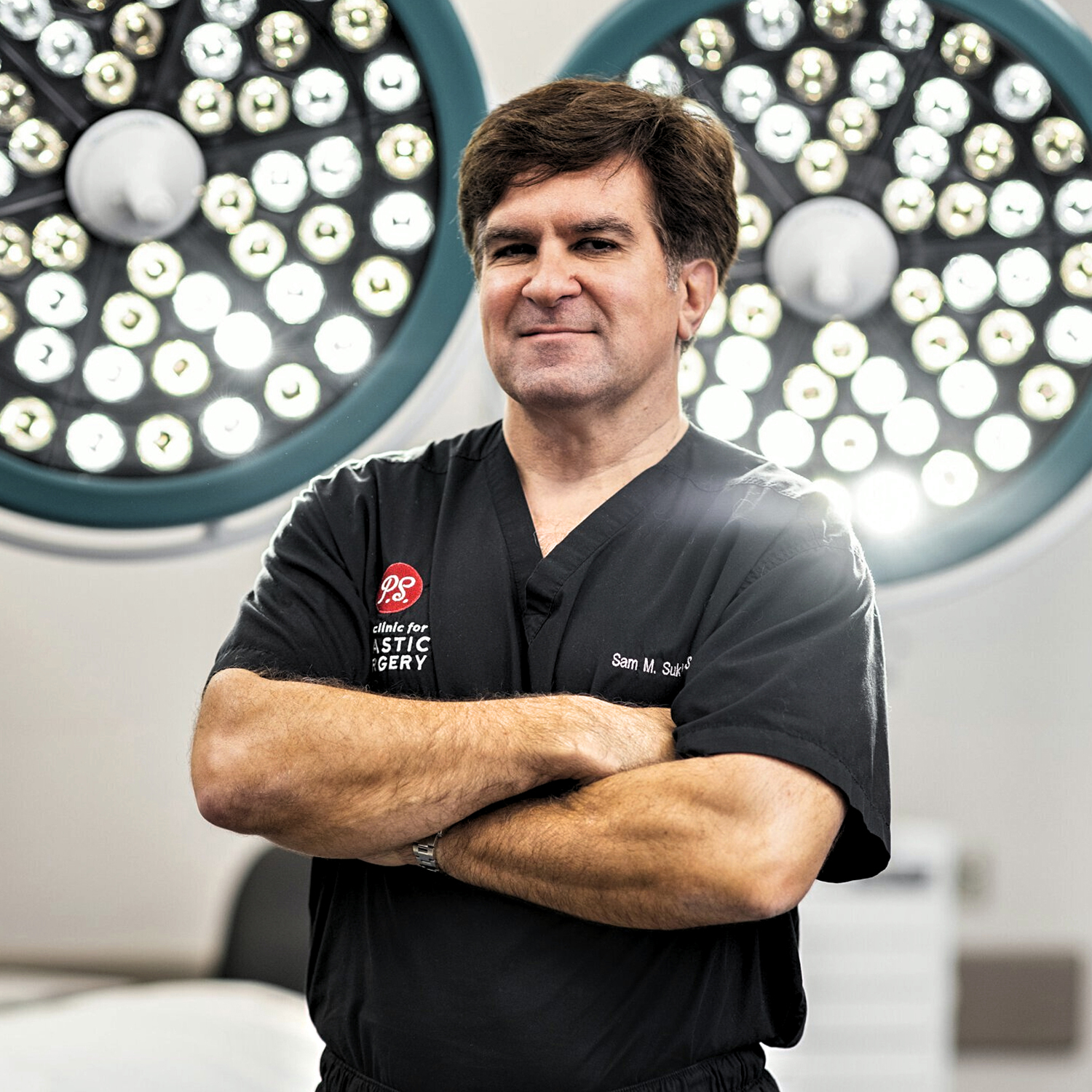
Dr. Sam Sukkar, MD, FACS is a highly respected Board-Certified Plastic Surgeon in Houston, Texas, known for his expertise in advanced cosmetic and reconstructive procedures. As the founder of The Clinic for Plastic Surgery, Dr. Sukkar has set a new standard for excellence, performing over 20,000 procedures with a focus on delivering natural, refined results.
Dr. Sukkar earned his Doctor of Medicine (M.D.) degree from Louisiana State University School of Medicine in 1992 after graduating summa cum laude with a Bachelor of Science in Microbiology. He then completed an intensive General Surgery Residency at the University of Texas Hermann Hospital before being selected for a highly competitive Plastic Surgery Fellowship at Northwestern University in Chicago, one of the most prestigious training programs in the country.
With more than 20 years of experience, Dr. Sukkar is a Diplomate of the American Board of Plastic Surgery and a Fellow of the American College of Surgeons (FACS). He is also an active member of the American Society of Plastic Surgeons (ASPS) and the Houston Society of Plastic Surgery (HSPS). His dedication to innovation and continuing education has solidified his reputation as a leading expert in aesthetic surgery, specializing in breast surgery, body contouring, facial procedures, and non-invasive treatments.
Dr. Sukkar’s expertise has been recognized by Houston Magazine, naming him one of Houston’s “Top Docs for Women,” and he has been featured among RealSelf’s America’s Top Doctors. Committed to his patients, he prioritizes personalized care, ensuring every individual feels informed, comfortable, and confident in their aesthetic journey.
Contact Dr. Sukkar today to schedule a consultation, visit DrSukkar.com to learn more, or call us directly at (281) 940-1535.
Cover Image Illustration by: Dr. Sam Sukkar, MD, The Clinic for Plastic Surgery.