Breast Lift Success: 49-Year-Old’s Houston Transformation

Breast Lift Success Story Series by Dr. Sam Sukkar, MD | Case Study #3304


This is part of our series featuring real patient transformations at The Clinic for Plastic Surgery. Each case study provides an in-depth look at actual procedures, recovery experiences, and results from Houston patients who’ve undergone breast lift surgery with Dr. Sam M. Sukkar.


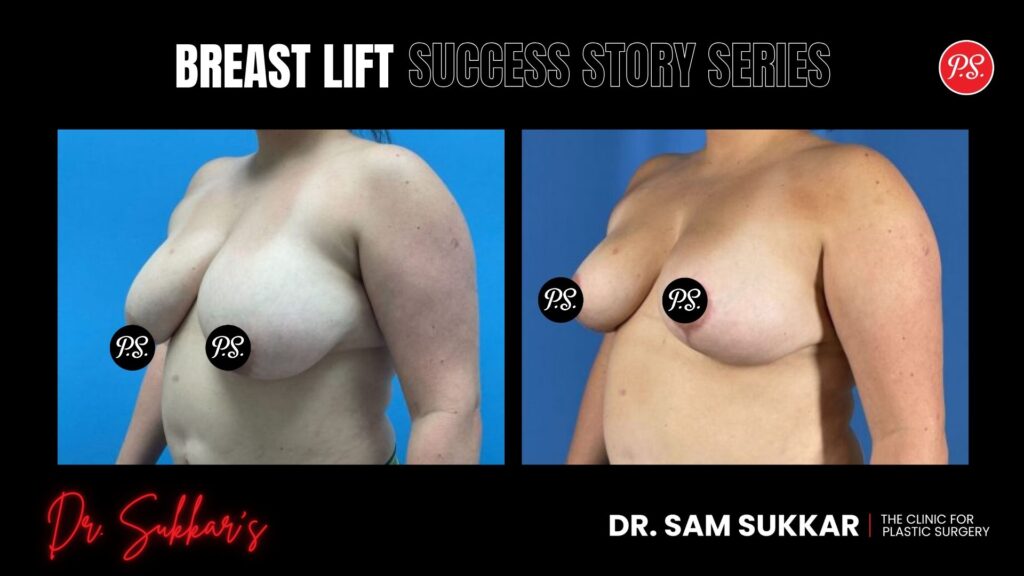
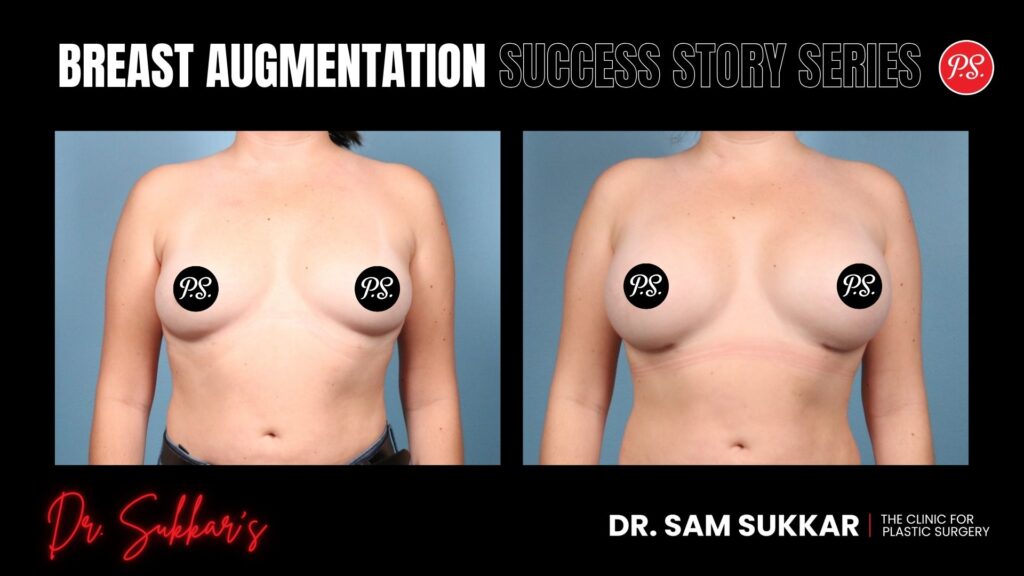
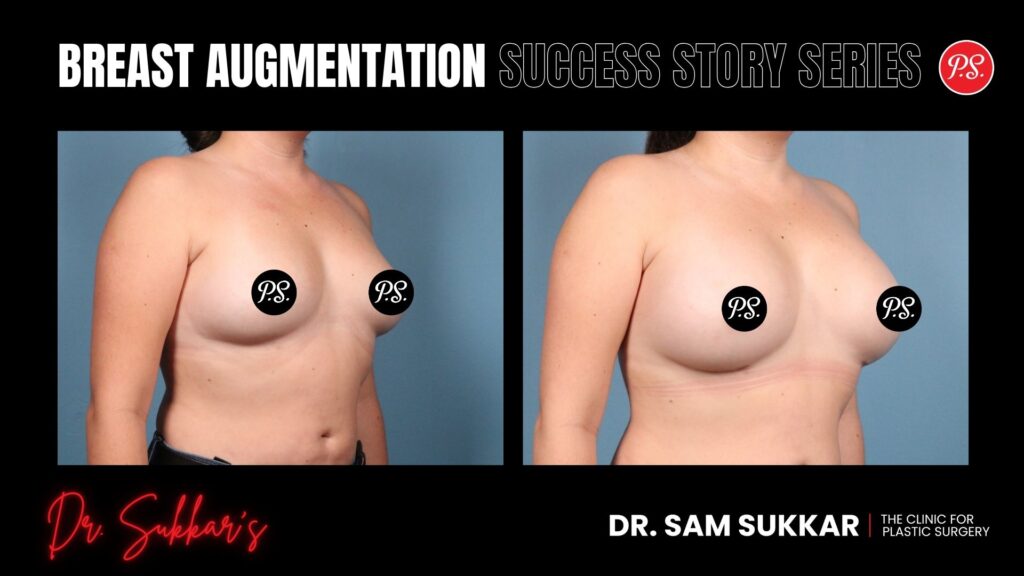
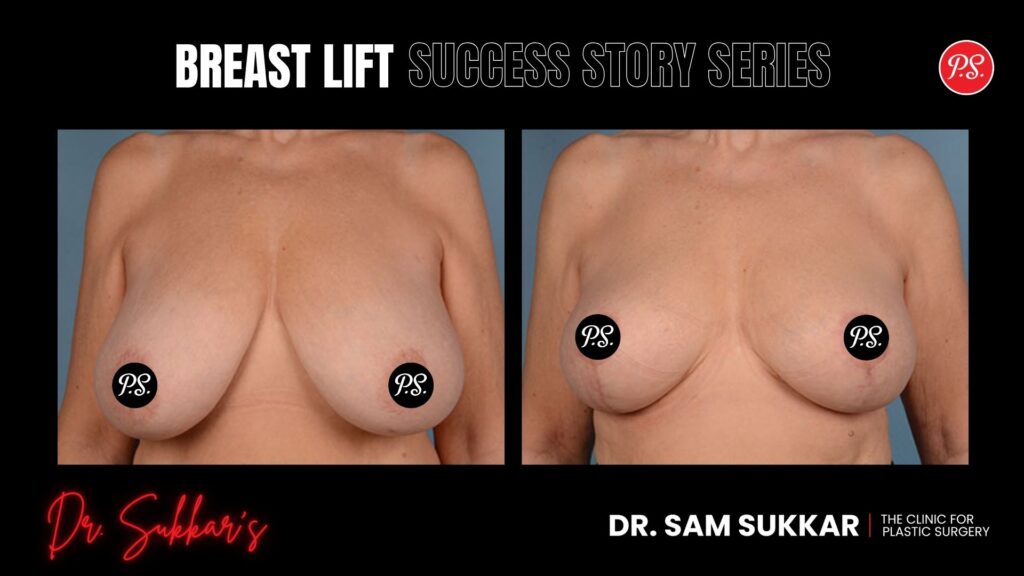
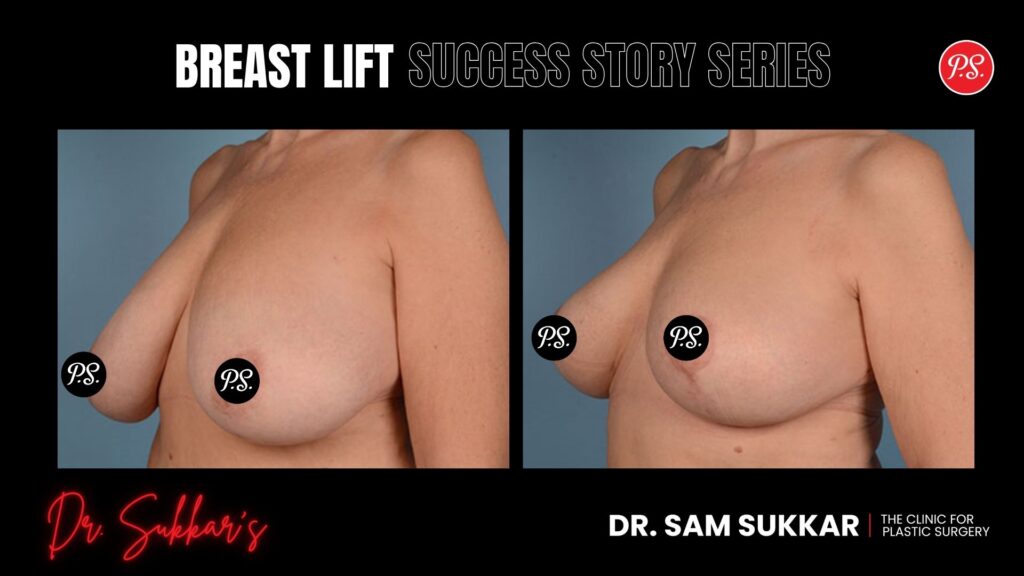
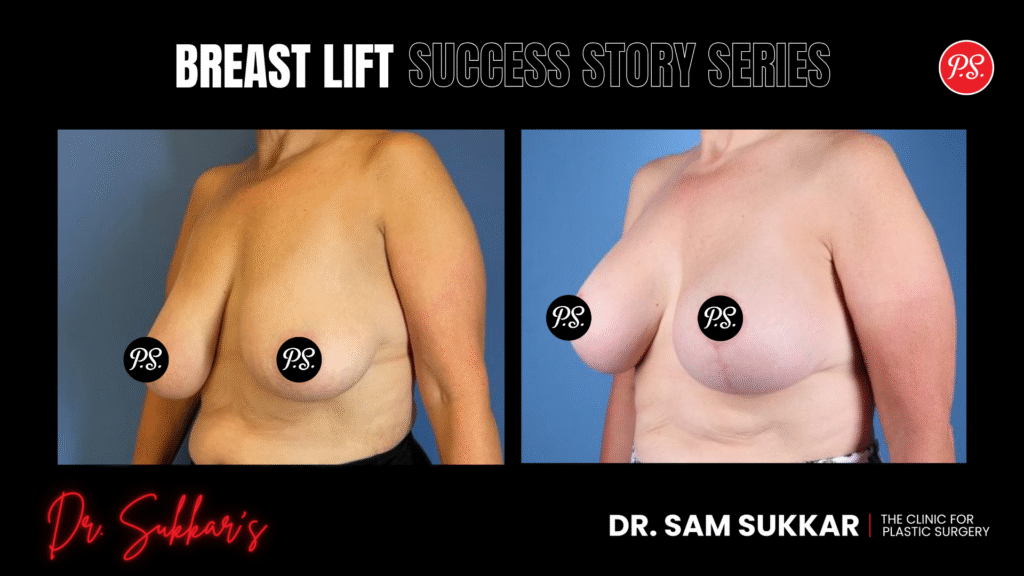
At 49, Sarah* stood in front of her mirror and barely recognized herself. Despite maintaining a healthy weight of 158 lbs through consistent exercise and careful eating, her B-cup breasts appeared deflated, a stark reminder of motherhood’s physical toll. Her abdomen protruded despite her best efforts at the gym.

But Sarah wasn’t alone in feeling this way. Three of her closest friends had already undergone mommy makeover surgery with board-certified plastic surgeon Dr. Sam M. Sukkar. Their transformations weren’t just visible, they radiated confidence Sarah desperately wanted to reclaim.

*The patient’s name was changed to protect their privacy. All medical details and photographic before and after results are from actual Patient Case #3304. Individual results may vary based on body type, surgical approach, and adherence to post-operative instructions.

Sarah’s* Journey: Why Friends’ Transformations Sparked Her Decision

What Led to Consultation

Sarah’s* concerns went deeper than aesthetics. After years of breastfeeding and natural aging, her breasts had lost volume and position, changes that affected how clothes fit and how she felt in her own skin. At 158 lbs and maintaining a disciplined fitness routine, she’d done everything within her control. Yet stubborn abdominal protrusion persisted despite core work, and her deflated breast tissue seemed immune to exercise.

The turning point came when her third friend shared post-surgical photos from Dr. Sukkar’s practice. The natural-looking results and enthusiastic referrals convinced Sarah that transformation was possible. She scheduled her consultation ready to discuss combining breast surgery with body contouring.

Pre-Surgery Concerns Sarah Addressed

Recovery downtime. As a working professional, Sarah worried about extended absence from her responsibilities. I assured her that my use of EXPAREL®, an innovative long-acting pain medication, would keep her comfortable for 72 hours post-operatively, significantly easing early recovery.

Scarring visibility. Sarah asked detailed questions about breast lift scars and abdominal incision placement. I explained my meticulous closure techniques and strategic incision placement to minimize visible scarring while maximizing aesthetic outcomes.

Natural-looking results. Having seen obviously augmented results elsewhere, Sarah emphasized wanting proportional, natural-appearing breasts. This aligned perfectly with my surgical philosophy, creating results that look like you, just enhanced.

Breast Lift Success: 49-Year-Old’s Houston Transformation - Breast Lift Success Story Series in Houston, Texas by Dr. Sam Sukkar, MD

Dr. Sukkar’s Customized Surgical Plan for Sarah

Combining Breast Enhancement with Body Contouring

Sarah’s* case required addressing both upper body deflation and lower abdominal concerns. After comprehensive evaluation, I designed a mommy makeover approach combining:

1. Breast Augmentation with Lift (Augmentation Mastopexy)

  • 350cc moderate profile implants placed bilaterally
  • Anchor-pattern lift technique to reposition nipples and remove excess skin
  • Subglandular placement for natural upper pole fullness

2. Abdominoplasty (Tummy Tuck)

  • Full abdominal wall tightening with muscle repair
  • Strategic skin excision targeting protruding lower abdomen
  • Low horizontal incision placement for discreet scarring

The combination allowed Sarah to address multiple concerns during one surgical session, one recovery period rather than two separate procedures spaced months apart. This approach is particularly effective for patients like Sarah whose concerns span multiple body areas affected by motherhood and aging.

Strategic Reasoning Behind This Approach

Why 350cc implants specifically? Sarah’s* B-cup starting point and frame required careful volumetric calculation. Larger implants would have created top-heavy proportions; smaller implants wouldn’t have achieved the fullness Sarah desired. The 350cc volume placed her solidly in D-cup territory, proportional to her height and providing the projection she’d lost.

The lift component was non-negotiable. Without addressing skin laxity and nipple position, implants alone would have created a “ball-in-sock” appearance rather than the youthful, lifted breast contour Sarah sought. By combining augmentation with mastopexy, I restored both volume and position, two key components of aesthetically pleasing breast appearance.

For the abdominal component, full abdominoplasty was necessary rather than a mini procedure. Sarah’s* concerns extended above the belly button, requiring comprehensive muscle tightening and skin removal. The combined approach meant Sarah would undergo one anesthesia session, one recovery period, and achieve comprehensive transformation, far more efficient than staging procedures.

My 25+ years performing complex combination procedures informed every technical decision. From implant pocket dissection to muscle plication technique to skin closure, decades of experience ensured Sarah’s* safety and optimal aesthetic outcome.

Recovery Timeline: Sarah’s* Healing Experience

The First Two Weeks: Managing Post-Operative Discomfort

Days 1-3 presented the expected challenges. Sarah woke from surgery in our recovery suite, immediately noting the EXPAREL® medication’s effectiveness, she described sensation as “tight and swollen” rather than sharp pain. The long-acting anesthetic I’d administered during surgery provided 72 hours of comfort, allowing Sarah to focus on rest rather than pain management.

She followed critical early recovery protocols: sleeping elevated at 45 degrees, taking short walks every two hours while awake, and avoiding any upper body lifting. The compression garments I’d placed, surgical bra and abdominal binder, felt restrictive but provided necessary support.

Week 1-2 brought gradual improvement. By day five, Sarah discontinued prescription pain medication, transitioning to over-the-counter options. Swelling peaked around day four before slowly subsiding. She maintained restrictions: no driving while taking narcotics, no lifting objects over five pounds, no reaching overhead.

Critical Recovery Rules Sarah Followed:

  • Incision care: Daily gentle cleansing with mild soap, patting dry, no submerging
  • Activity restrictions: No upper body exercises, core work, or abdominal straining
  • Garment compliance: 24/7 compression wear except during showering
  • Sleep positioning: Elevated upper body, no stomach sleeping

I saw Sarah for her first post-operative visit at day seven. Incisions showed excellent healing, swelling remained within expected parameters, and she reported manageable discomfort. Most importantly, she already noticed the dramatic difference in breast position and abdominal contour, even beneath swelling and surgical garments.

Weeks 3-8: Returning to Normal Activities

By week three, Sarah felt markedly better. Swelling had decreased significantly, allowing her to appreciate her new silhouette more clearly. I cleared her for light walking and basic daily activities, though upper body and core exercises remained restricted. The compression garments transitioned from 24/7 wear to nighttime-only for the abdominal binder.

Weeks 5-8 marked the final healing phase. At six weeks post-op, I cleared Sarah for all normal activities including exercise. She gradually reintroduced core work and upper body training, careful not to overdo intensity initially. The breast implants had begun settling into their final position, the initially high placement descending to create natural breast slopes.

At her three-month follow-up appointment, Sarah presented with exceptional results. Her weight had decreased to 148 lbs, the 10-pound reduction coming from excised abdominal tissue and gradual return to full fitness routines. But the transformation extended far beyond the scale.

Three-Month Results: Sarah’s* Complete Transformation

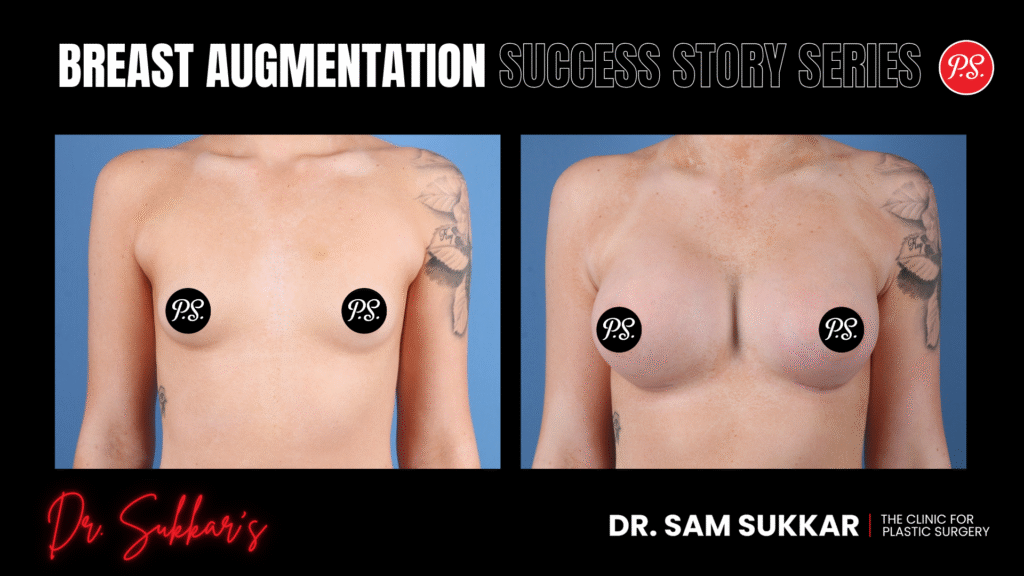
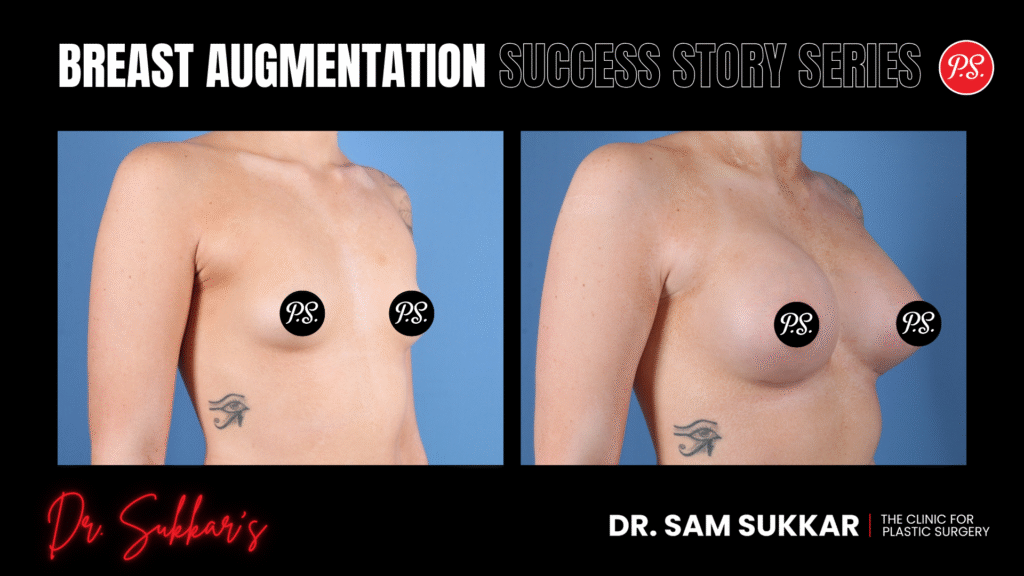
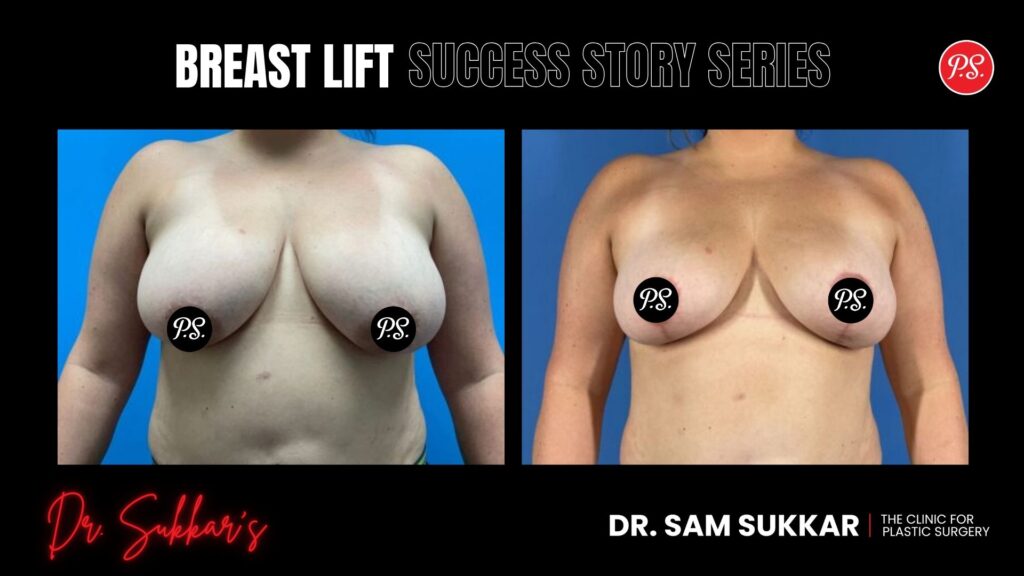
Sarah’s* breast measurements told part of the story: B-cup to D-cup, 350cc moderate profile implants bilaterally, improved projection and position. Her abdominal profile had flattened dramatically, the protruding lower abdomen now smooth and toned despite unchanged fitness routines.

But transformation extended beyond measurements. Sarah reported renewed confidence in fitted clothing, swimwear comfort for the first time in years, and the elimination of self-consciousness that had shadowed her for so long. The referral pattern continued, Sarah became the fourth friend in her circle to achieve mommy makeover results, creating her own referral network.

Breast Lift Success: 49-Year-Old’s Houston Transformation - Breast Lift Success Story Series in Houston, TX by Dr. Sam Sukkar, MD

What Made Sarah’s* Result Exceptional

Comprehensive single-stage approach. Rather than staging breast and body procedures separately, the combined surgery meant one recovery period, one anesthesia exposure, and simultaneous transformation of multiple concerns. This efficiency appeals to busy patients wanting maximum results with minimal life disruption.

Pain management innovation. EXPAREL® administration during surgery provided 72-hour comfort without excessive narcotic dependence. This allowed Sarah to focus on healing rather than pain control, contributing to her positive recovery experience and potentially faster return to normal activities.

Natural proportionality. The 350cc implant size achieved Sarah’s* fullness goals without creating obviously augmented appearance. Combined with the lift component, results appeared as though Sarah had simply “turned back the clock” rather than undergone obvious surgical enhancement.

Meticulous technique refinement. Every technical detail, from implant pocket precision to muscle plication suturing to skin closure, reflected decades of experience. My approach to breast lift with augmentation prioritizes natural appearance and long-term stability, contributing to Sarah’s* outstanding outcome.

Patient compliance excellence. Sarah followed every post-operative instruction precisely, garment wear, activity restrictions, incision care, follow-up attendance. This partnership between surgeon skill and patient commitment creates optimal conditions for excellent results.

Procedures like Sarah’s*, combining breast augmentation and lift with full tummy tuck, typically represent an investment of $15,000 to $22,000 in the Houston market, depending on specific techniques required. Given the comprehensive nature addressing multiple body areas in one surgery, many patients find this cost-effective compared to staging procedures separately, with financing options starting around $200-$300 monthly making transformation accessible.

Questions About Breast Lift with Augmentation

Can I achieve lift with just implants, or is the mastopexy component necessary?

In cases like Sarah’s* where significant deflation and nipple descent have occurred, implants alone cannot achieve optimal results. The breast lift (mastopexy) component removes excess skin and repositions the nipple-areola complex to appropriate height. Without this step, placing implants in deflated breast tissue creates unnatural contours rather than the youthful appearance patients desire. I evaluate each patient’s degree of ptosis (sagging) and skin quality to determine whether lift is necessary alongside augmentation.

How does combining breast and body procedures affect recovery compared to staging them separately?

The combined approach means one recovery period rather than two, which appeals to patients wanting comprehensive transformation without multiple surgical experiences. However, the initial recovery is more demanding, you’re healing from both upper and lower body procedures simultaneously. Strategic pain management with EXPAREL® and carefully structured activity restrictions make this manageable for appropriately selected candidates. Realistic mommy makeover recovery expectations involve 6-8 weeks before full activity clearance, but most patients return to desk work within 2-3 weeks.

Will the breast lift scars be visible with the types of clothing I typically wear?

The anchor-pattern technique I used in Sarah’s* case creates incisions around the areola, vertically down to the breast crease, and along the inframammary fold. While these are more extensive than implant-only incisions, strategic placement and meticulous closure techniques minimize visibility. Scars mature over 12-18 months, fading to thin white lines. Most clothing, including moderate necklines and swimwear, conceals these incisions. I provide detailed scar management protocols including silicone sheeting and scar creams to optimize healing.

Ready to Write Your Own Breast Lift Success Story?

Sarah hesitated for years watching her body changes accumulate. She researched surgeons, consulted with friends who’d undergone procedures, and finally took the step that transformed not just her appearance but her confidence. Three months later, she joined the ranks of satisfied patients who’ve experienced the life-changing impact of comprehensive mommy makeover surgery.

Your concerns might differ from Sarah’s*. Perhaps you’re focused primarily on breast deflation without significant abdominal concerns, or maybe you’re wondering if breast lift without implants could achieve your goals. Some patients debate between breast lift versus implants alone, while others explore mini breast lift options for less extensive concerns.

But the common thread is this: You deserve to feel confident and comfortable in your own body. Motherhood is beautiful, but the physical changes don’t have to be permanent.

If post-pregnancy changes or natural aging are affecting your quality of life, transformation is possible.

Your Premier Destination for Plastic Surgery in Houston, Texas (TX)

Are you located in one of these Houston Metro Area cities?

Houston, The Woodlands, Sugar Land, Katy, Pearland, Pasadena, League City, Baytown, Conroe, Cypress, Spring, Kingwood, Humble, Missouri City, Friendswood, Bellaire, Clear Lake, Tomball, Galveston, Richmond, Rosenberg, Stafford, La Porte, Deer Park, Seabrook, Webster, Alvin, and Channelview.

Board-Certified Plastic Surgeon Dr. Sam Sukkar, MD, FACS, and The Clinic for Plastic Surgery Team are here to help you achieve refined, natural-looking results.

Offering expert cosmetic enhancements in:

  • Breast Augmentation, Breast Lifts, and Breast Reduction
  • Tummy Tucks, Mommy Makeovers, and Liposuction
  • Facelifts, Neck Lifts, and Rhinoplasty
  • Body Contouring and Skin Tightening Procedures
  • Non-Surgical Aesthetic Treatments

Visit our modern 18,000+ sq.ft. luxurious plastic surgery center and med spa in Houston, Texas, where expertise meets artistry. Our highly skilled and compassionate team ensures a seamless experience, from consultation to recovery.

For patients outside of the Houston area or those with a busy schedule, Schedule a Virtual Consultation.

Schedule your personalized consultation today at DrSukkar.com or call (281) 940-1535.

About the Author – Meet Dr. Sam Sukkar, MD
Dr. Sam Sukkar, MD, FACS is a highly respected Board-Certified Plastic Surgeon in Houston, Texas, known for his expertise in advanced cosmetic and reconstructive procedures. As the founder of The Clinic for Plastic Surgery, Dr. Sukkar has set a new standard for excellence, performing over 20,000 procedures with a focus on delivering natural, refined results.

Dr. Sukkar earned his Doctor of Medicine (M.D.) degree from Louisiana State University School of Medicine in 1992 after graduating summa cum laude with a Bachelor of Science in Microbiology. He then completed an intensive General Surgery Residency at the University of Texas Hermann Hospital before being selected for a highly competitive Plastic Surgery Fellowship at Northwestern University in Chicago, one of the most prestigious training programs in the country.

With more than 20 years of experience, Dr. Sukkar is a Diplomate of the American Board of Plastic Surgery and a Fellow of the American College of Surgeons (FACS). He is also an active member of the American Society of Plastic Surgeons (ASPS) and the Houston Society of Plastic Surgery (HSPS). His dedication to innovation and continuing education has solidified his reputation as a leading expert in aesthetic surgery, specializing in breast surgery, body contouring, facial procedures, and non-invasive treatments.

Dr. Sukkar’s expertise has been recognized by Houston Magazine, naming him one of Houston’s “Top Docs for Women,” and he has been featured among RealSelf’s America’s Top Doctors. Committed to his patients, he prioritizes personalized care, ensuring every individual feels informed, comfortable, and confident in their aesthetic journey.

Contact Dr. Sukkar today to schedule a consultation, visit DrSukkar.com to learn more, or call us directly at (281) 940-1535.

Breast Augmentation at 31: Houston Mom’s 550cc Transformation

Breast Augmentation Success Story Series by Dr. Sam Sukkar, MD | Case Study #03


This is part of our series featuring real patient transformations at The Clinic for Plastic Surgery. Each case study provides an in-depth look at actual procedures, recovery experiences, and results from Houston patients who’ve undergone breast augmentation with Dr. Sam M. Sukkar.


When Rebecca* walked into my consultation room, she carried something I see often in my Houston practice, not just physical concerns, but years of feeling invisible in her own body. At 31, this mother of two had spent the better part of a decade watching her figure change with each pregnancy, each breastfeeding journey, each passing year. What started as naturally modest proportions had become deflated tissue that left her feeling anything but confident in fitted clothing or swimwear.

“I just want to feel like myself again,” she told me during our first meeting. “Not someone else. Just… me, but better.”

That conversation led to a transformation that would restore not just volume, but the confidence she’d been missing. Three months post-surgery, Rebecca* stands as proof that the right surgical approach, customized to your unique anatomy and goals, can deliver results that feel completely natural, even with significant enhancement.

*The patient’s name was changed to protect their privacy. All medical details and photographic before and after results are from actual Patient Case #03. Individual results may vary based on body type, surgical approach, and adherence to post-operative instructions.

Rebecca’s* Path to Breast Enhancement in Houston

What Brought Rebecca* to Consider Augmentation

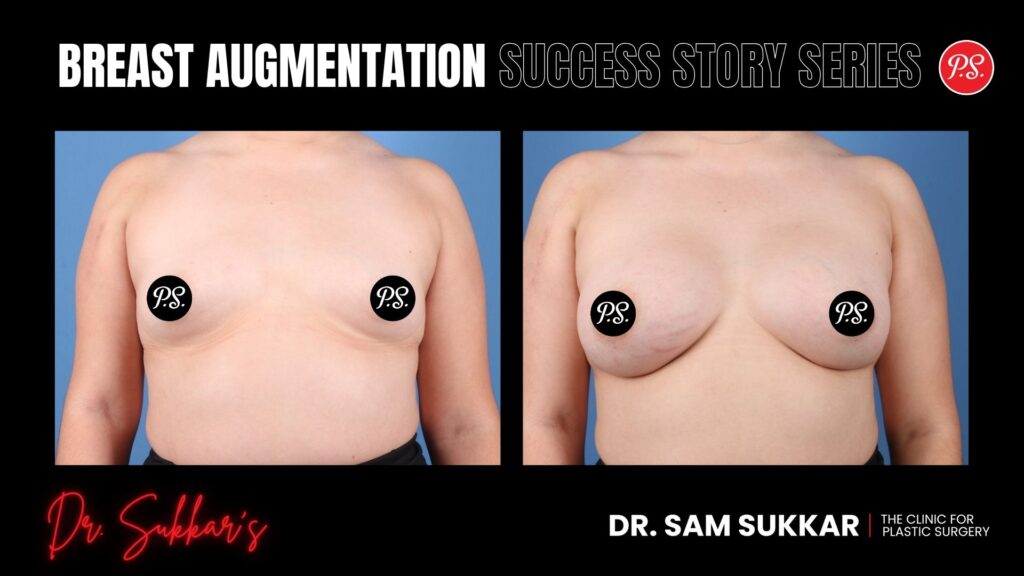
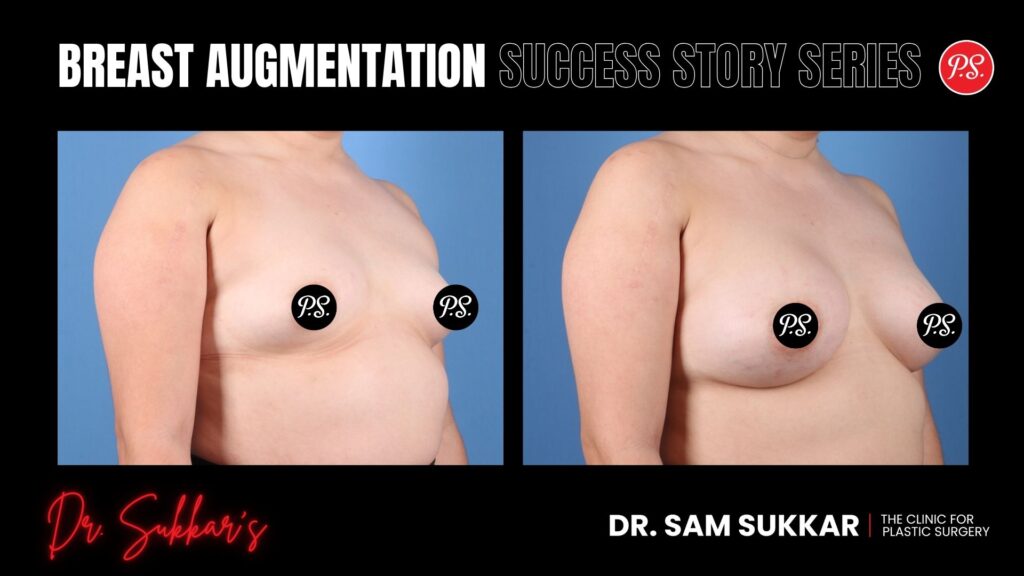
Rebecca’s* story isn’t uncommon among the Houston moms I treat. Standing 5’6″ and weighing 183 pounds, she carried her figure well, athletic build, proportional frame, and healthy lifestyle. But her breasts told a different story. Two pregnancies and extended breastfeeding had left her with deflated upper poles, minimal projection, and tissue that simply didn’t fill her bras the way it once did.

“I’d gone from a full B-cup before kids to barely filling an A,” she explained. “Every time I got dressed, I felt like I was compensating, layering, padding, avoiding certain necklines entirely.”

The emotional toll was real. She avoided shopping for swimsuits. Intimate moments carried self-consciousness she hadn’t felt in her twenties. Even simple wardrobe choices became exercises in hiding rather than expressing her style. She wanted breast augmentation that looked natural, proportional to her frame, complementary to her lifestyle, and authentic to who she was.

Addressing Pre-Surgical Questions

During our consultation, Rebecca* voiced concerns I hear frequently:

“Will they look fake?” This topped her list. She’d seen results on friends that looked obviously augmented, too round, too high, too “done.” She wanted enhancement that appeared like her natural tissue, just fuller and more youthful.

“How do I choose the right size?” She’d researched online, tried the rice-in-a-sock trick, and still felt overwhelmed by implant options. Should she go conservative or embrace the change she wanted?

“What about recovery with two young kids?” As a hands-on mom, she worried about managing pain, lifting restrictions, and maintaining her household routine during healing.

These weren’t just logistical questions, they reflected deeper concerns about making the right choice for her body and her life. Addressing them thoroughly became the foundation of her surgical plan.

Breast Augmentation at 31: Houston Mom’s 550cc Transformation - Breast Augmentation Success Story Series in Houston, Texas by Dr. Sam Sukkar, MD
Photo Illustration by: Dr. Sam Sukkar, MD, The Clinic for Plastic Surgery.
Dr. Sukkar’s Surgical Strategy for Rebecca’s* Augmentation

The Procedure Breakdown

Rebecca’s* transformation required precision matching of implant characteristics to her body’s proportions and her aesthetic goals. After comprehensive measurements, 3D imaging analysis, and discussion of her lifestyle needs, we designed an approach that would deliver the natural-looking fullness she wanted.

1. Bilateral Augmentation Mammoplasty (Breast Augmentation Surgery)

  • Inframammary fold (IMF) incision approach, chosen for optimal access, hidden scarring in the natural breast crease, and future revision flexibility
  • Subpectoral (submuscular) implant placement, positioning implants beneath the pectoralis major muscle for more natural upper pole contour, reduced rippling visibility, and improved mammogram imaging
  • Precise pocket creation customized to her chest wall dimensions and existing breast tissue distribution

2. High-Profile Silicone Implants (550cc Bilateral)

  • Cohesive silicone gel for natural feel and movement
  • High-profile design to maximize forward projection while minimizing base width, critical for her proportional frame
  • 550cc volume selected after dimensional analysis showed this would achieve her desired fullness without overwhelming her 5’6″ build

The IMF incision approach gave me direct visualization for symmetrical pocket creation while hiding the scar in her natural breast fold. Subpectoral placement provided that coveted natural upper pole transition she wanted, avoiding the obvious roundness that concerned her.

Why This Approach Worked for Rebecca*

Every breast augmentation surgery I perform reflects 25+ years of surgical refinement, but more importantly, it reflects the patient sitting across from me. Rebecca’s* case required balancing several factors:

Proportional Enhancement: Her 5’6″ frame and athletic build meant we needed significant volume (550cc) delivered through a profile that wouldn’t extend too far laterally. High-profile implants achieve maximum projection with a narrower base diameter, perfect for creating dramatic results that remain proportional.

Natural Upper Pole Transition: Submuscular placement was non-negotiable for the natural appearance she wanted. The muscle coverage creates a gradual slope from collarbone to breast, eliminating that obvious “implant shelf” look.

Longevity and Safety: Silicone gel implants offer superior natural feel compared to saline, with modern cohesive gel technology that maintains shape integrity for years. For someone in her early thirties, durability mattered.

Future Flexibility: The IMF approach preserves nipple sensation (critical for many patients) and allows straightforward revision access if her goals change in future years, something I always consider in younger patients.

I’ve performed over 20,000 procedures, and the technical execution becomes second nature. What never becomes routine is understanding which technical approach serves each individual patient’s unique combination of anatomy, lifestyle, and aesthetic vision.

Rebecca’s* Breast Augmentation Recovery Experience

Early Recovery: The First Two Weeks

Rebecca’s* early recovery followed the typical pattern for submuscular augmentation, which I’m always honest about upfront. The first 48 hours brought significant tightness and soreness across her chest. Not unbearable pain, but definite awareness that her pectoral muscles had been stretched to accommodate new implants underneath.

She managed discomfort with prescribed medication and kept movement minimal those first days. Sleep happened in a reclined position (wedge pillow became her best friend). The compression garment felt restrictive but provided reassurance that everything was supported as healing began.

Week 1-2: Gradual Improvement

By day four, Rebecca* noticed real improvement. The initial muscle spasm sensation eased. She could dress herself without assistance. Light household tasks became manageable with modified movements. Her implants sat high and tight against her chest wall, exactly as expected immediately post-op.

Critical recovery rules she followed:

  • No lifting over 10 pounds (goodbye, picking up toddlers)
  • Arms below shoulder height (reaching into cabinets waited)
  • Sleep elevated (gravity helps with swelling)
  • Compression garment 24/7 (except showering)
  • Short walks daily (circulation matters)

She returned to work (desk job) at day ten with energy levels nearly normal. The tightness remained, but discomfort had become mere awareness. Her recovery timeline progressed exactly as anticipated for submuscular placement.

Later Recovery: Watching Results Emerge

The transformation really started showing around week three. Her implants began their descent, “dropping and fluffing” in patient terminology, as the muscle gradually relaxed and breast tissue adapted to its new volume. The upper pole fullness that initially looked almost too high started filling in more naturally.

Rebecca* could resume normal arm movements, light exercise (walking, gentle yoga), and most daily activities without restriction. She graduated from the surgical bra to supportive wireless bralettes during the day.

Months 2-3: Final Results Revealed

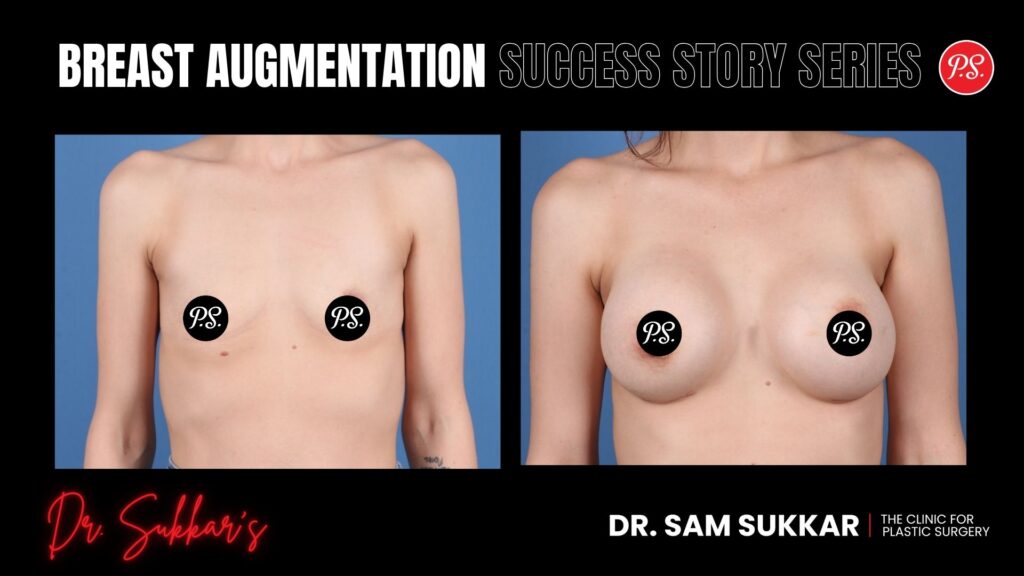
At her three-month follow-up, Rebecca’s* results had fully materialized. Her implants had settled into their final position, beautiful projection, natural upper pole slope, symmetrical positioning. The IMF scars had faded to thin pink lines barely visible in the breast crease.

Most significantly, she’d achieved exactly what she wanted: proportional enhancement that looked like her natural tissue, just fuller and more youthful. Her 550cc implants delivered the dramatic improvement she desired while maintaining the natural aesthetic that was non-negotiable for her.

Three-Month Transformation: Rebecca’s* Final Results

Standing at her three-month mark, Rebecca’s* transformation speaks for itself through measurable improvements and life-changing confidence restoration.

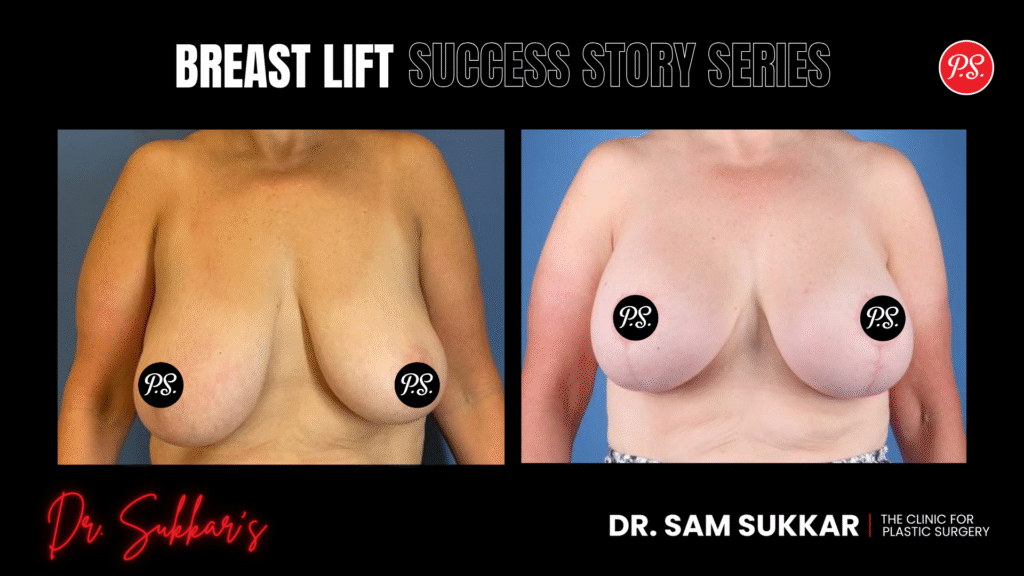
Rebecca* went from minimal breast volume, depleted by pregnancy and breastfeeding, to proportional, feminine curves that complemented her athletic 5’6″ frame. Her 550cc high-profile silicone implants created forward projection that filled out tops and swimwear naturally, eliminated the need for padding, and restored the youthful fullness she remembered from her pre-pregnancy years.

Beyond measurements, Rebecca’s* satisfaction manifested in tangible ways. She started wearing fitted tops she’d avoided for years. Shopping for swimsuits transformed from a dreaded task to an enjoyable experience. Most importantly, she felt present in her body again, not constantly aware of what she was hiding, but confident in what she was showing.

“I don’t think about my chest anymore,” she told me at follow-up. “Not because there’s nothing there, but because I finally feel proportional. I feel like me.”

Breast Augmentation at 31: Houston Mom’s 550cc Transformation - Breast Augmentation Success Story Series in Houston, TX by Dr. Sam Sukkar, MD
Photo Illustration by: Dr. Sam Sukkar, MD, The Clinic for Plastic Surgery.
What Made Rebecca’s* Result Exceptional

Several factors contributed to her outstanding outcome:

Precise Implant Selection: Choosing 550cc high-profile implants rather than moderate-profile alternatives gave Rebecca* maximum projection without excessive width. This dimensional balance proved critical for her frame, dramatic enhancement that remained proportional.

Strategic Pocket Creation: Submuscular placement required meticulous pocket dissection to ensure symmetrical implant positioning and optimal muscle coverage. Twenty-five years of surgical refinement means I can predictably achieve natural upper pole transitions that avoid obvious augmentation appearance.

Patient Compliance: Rebecca* followed post-operative instructions perfectly. She avoided premature activity, maintained compression garment wear, and attended all follow-up appointments. Recovery success depends as much on patient adherence as surgical technique.

Realistic Expectations: From our first consultation, Rebecca* understood the healing timeline for submuscular augmentation. She knew implants would sit high initially, that settling takes weeks, and that final results emerge around three months. This realistic perspective eliminated anxiety during normal healing phases.

Anatomical Advantage: Her existing breast tissue, though depleted, provided excellent coverage over the implants. Combined with muscle coverage, this created the natural appearance she prioritized.

Frequently Asked Questions About Rebecca’s* Breast Augmentation Results Journey in Houston, TX

Will 550cc implants look too large on a 5’6″ frame?

Not when properly selected using dimensional analysis. Rebecca’s* chest width, breast base diameter, and existing tissue distribution were carefully measured during consultation. High-profile 550cc implants deliver significant projection with a narrower base width, meaning they project forward rather than extending laterally. This creates dramatic enhancement that appears proportional rather than overwhelming. Implant selection isn’t about arbitrary volume numbers, it’s about matching implant dimensions to your unique anatomy for harmonious results.

How long does submuscular placement take to look natural?

Rebecca’s* timeline was typical: initial high, tight appearance for 2-3 weeks, gradual settling through weeks 4-8, and final positioning by month three. Submuscular augmentation requires patience as the pectoral muscle adapts to implants underneath. The trade-off for this longer settling period is superior natural appearance, reduced rippling visibility, and better mammogram imaging. Patients who prioritize natural aesthetics over immediate results find submuscular placement worth the extended healing timeline.

Can you breastfeed after IMF incision augmentation?

Yes. The inframammary fold approach doesn’t involve cutting through breast tissue, milk ducts, or nipple structures. Incisions remain below the breast in the natural crease, preserving breastfeeding capability. While I can’t guarantee future breastfeeding success (many factors affect lactation), the surgical approach itself doesn’t compromise milk production pathways. This made IMF incision ideal for Rebecca*, who was 31 and might consider future pregnancies.

Ready to Write Your Own Breast Augmentation Success Story?

Rebecca* walked into my Houston office carrying years of self-consciousness about deflated, post-pregnancy breast tissue. She walked out three months later with proportional, feminine curves that restored her confidence and eliminated the constant mental burden of hiding her figure.

Your concerns might differ. Maybe you’re wondering about implant size selection, questioning whether you’ll look “done,” or trying to understand recovery demands with a busy lifestyle. But the common thread is this: You deserve to feel confident and comfortable in your own body. The body you want is within reach with the right surgical approach.

If post-pregnancy changes, natural breast asymmetry, or simply wanting fuller proportions are affecting your quality of life, transformation is possible.

Your Premier Destination for Plastic Surgery in Houston, Texas (TX)

Are you located in one of these Houston Metro Area cities?

Houston, The Woodlands, Sugar Land, Katy, Pearland, Pasadena, League City, Baytown, Conroe, Cypress, Spring, Kingwood, Humble, Missouri City, Friendswood, Bellaire, Clear Lake, Tomball, Galveston, Richmond, Rosenberg, Stafford, La Porte, Deer Park, Seabrook, Webster, Alvin, and Channelview.

Board-Certified Plastic Surgeon Dr. Sam Sukkar, MD, FACS, and The Clinic for Plastic Surgery Team are here to help you achieve refined, natural-looking results.

Offering expert cosmetic enhancements in:

  • Breast Augmentation, Breast Lifts, and Breast Reduction
  • Tummy Tucks, Mommy Makeovers, and Liposuction
  • Facelifts, Neck Lifts, and Rhinoplasty
  • Body Contouring and Skin Tightening Procedures
  • Non-Surgical Aesthetic Treatments

Visit our modern 18,000+ sq.ft. luxurious plastic surgery center and med spa in Houston, Texas, where expertise meets artistry. Our highly skilled and compassionate team ensures a seamless experience, from consultation to recovery.

For patients outside of the Houston area or those with a busy schedule, Schedule a Virtual Consultation.

Schedule your personalized consultation today at DrSukkar.com or call (281) 940-1535.

About the Author – Meet Dr. Sam Sukkar, MD

Dr. Sam Sukkar, MD, FACS is a highly respected Board-Certified Plastic Surgeon in Houston, Texas, known for his expertise in advanced cosmetic and reconstructive procedures. As the founder of The Clinic for Plastic Surgery, Dr. Sukkar has set a new standard for excellence, performing over 20,000 procedures with a focus on delivering natural, refined results.

Dr. Sukkar earned his Doctor of Medicine (M.D.) degree from Louisiana State University School of Medicine in 1992 after graduating summa cum laude with a Bachelor of Science in Microbiology. He then completed an intensive General Surgery Residency at the University of Texas Hermann Hospital before being selected for a highly competitive Plastic Surgery Fellowship at Northwestern University in Chicago, one of the most prestigious training programs in the country.

With more than 20 years of experience, Dr. Sukkar is a Diplomate of the American Board of Plastic Surgery and a Fellow of the American College of Surgeons (FACS). He is also an active member of the American Society of Plastic Surgeons (ASPS) and the Houston Society of Plastic Surgery (HSPS). His dedication to innovation and continuing education has solidified his reputation as a leading expert in aesthetic surgery, specializing in breast surgery, body contouring, facial procedures, and non-invasive treatments.

Dr. Sukkar’s expertise has been recognized by Houston Magazine, naming him one of Houston’s “Top Docs for Women,” and he has been featured among RealSelf’s America’s Top Doctors. Committed to his patients, he prioritizes personalized care, ensuring every individual feels informed, comfortable, and confident in their aesthetic journey.

Contact Dr. Sukkar today to schedule a consultation, visit DrSukkar.com to learn more, or call us directly at (281) 940-1535.

Breast Lift at 48: Houston Woman’s Journey to Restored Confidence

Breast Lift Success Story Series by Dr. Sam Sukkar, MD | Case Study #3196


This is part of our series featuring real patient transformations at The Clinic for Plastic Surgery. Each case study provides an in-depth look at actual procedures, recovery experiences, and results from Houston patients who’ve undergone breast lift surgery with Dr. Sam M. Sukkar.


When Rachel* walked into my Houston office, she carried something most women her age know intimately: the weight of time’s effect on her body. At 48, she’d lived through decades of gravity’s relentless pull, hormonal shifts, and the aftermath of a breast biopsy that left her with an asymmetrical scar on her left breast. She wasn’t asking for dramatic change, she wanted what many of my patients seek: to look in the mirror and recognize the woman she felt like inside.

Her consultation wasn’t about vanity. It was about restoration. And the unique challenge of her previous biopsy incision became the cornerstone of a surgical plan that would give her natural, lifted results while strategically concealing old scars within new ones.

*The patient’s name was changed to protect their privacy. All medical details and photographic before and after results are from actual Patient Case #3196. Individual results may vary based on body type, surgical approach, and adherence to post-operative instructions.

What Brought Rachel* to Consider Breast Lift Surgery

Rachel’s Concerns About Breast Position and Scarring

Rachel* was straightforward during our consultation. Her breasts had lost their youthful position over the years, settling lower on her chest wall and creating a deflated appearance that clothes couldn’t fix. But the complicating factor was that previous biopsy incision on her left breast, a reminder of a health scare that, thankfully, had resolved with a benign diagnosis.

“I don’t want to look like I’m 25 again,” she told me. “I just want to feel proportionate. And I’m worried about ending up with even more scars.” Standing at a height many women share and having experienced natural tissue changes common in her age group, Rachel’s* concerns reflected what I hear from countless patients in their late 40s: gravity takes its toll, and any surgical intervention needs to enhance, not complicate, their existing anatomy.

This case required more than textbook breast lift surgery in Houston Texas. It demanded strategic scar placement that would work with her previous incision, not against it. I’ve performed over 20,000 procedures in my 25+ years of practice, and cases like Rachel’s* showcase why individualized surgical planning matters more than cookie-cutter approaches.

Understanding Her Pre-Surgery Questions

Rachel* came prepared with questions about the breast lift procedure, exactly what I encourage from every patient:

Will my existing scar be more noticeable after surgery? She worried that adding new incisions would create a patchwork appearance. I explained that by incorporating her biopsy scar into the lift design, we’d actually camouflage the old scar within new surgical lines that would heal more predictably.

How long will results last at my age? Age-related concerns are valid. I was honest: gravity never stops, but proper technique creates lasting support. With quality breast tissue and realistic expectations, breast lift results at her age typically maintain excellent position for years, especially with stable weight and proper support garment use.

What’s recovery like for someone in their late 40s? Rachel* had demanding responsibilities at work and home. I outlined a realistic 2-week restricted activity timeline with gradual return to normal function, emphasizing that her tissue quality and overall health made her an ideal candidate despite her age.

Customized Breast Lift Approach for Rachel’s Unique Anatomy

The Surgical Technique: Strategic Scar Integration

Rachel’s* breast lift procedure required a specialized approach I don’t use with every mastopexy patient. Her previous biopsy incision on the left breast became a surgical advantage rather than a limitation.

Anchor-Pattern Mastopexy with Scar Revision

  • Designed new nipple-areola position to intersect with existing biopsy scar
  • Created vertical and horizontal incisions that absorbed the old scar into new surgical lines
  • Removed excess skin envelope to restore upper pole fullness
  • Reshaped breast tissue to create natural projection
  • Achieved symmetry between breasts despite starting anatomical differences
Breast Lift at 48: Houston Woman’s Journey to Restored Confidence - Mommy Makeover Success Story Series by Dr. Sam Sukkar, MD in Houston, Texas
Photo Illustration by: Dr. Sam Sukkar, MD, The Clinic for Plastic Surgery.
The technique is sometimes called an anchor lift or inverted-T mastopexy, it addresses moderate to significant ptosis (sagging) while providing maximum reshaping capability. By placing Rachel’s* new nipple position strategically, the old biopsy scar essentially disappeared into the periareolar (around the areola) portion of her lift incisions.

After removing the predetermined amount of skin, I reshaped her breast tissue to create a more youthful contour. The internal suturing technique I use provides structural support that doesn’t rely solely on skin tension, this is critical for longevity of results in patients over 40. The procedure took approximately 2.5 hours, performed under general anesthesia as an outpatient surgery at our accredited surgical facility.

For patients wondering about breast lift scars, Rachel’s* case demonstrates that proper planning transforms necessary incisions into nearly imperceptible lines over time.

Why This Approach Made Sense for Rachel

The decision to use an anchor-pattern lift rather than a less invasive technique came down to three factors:

First, the degree of ptosis Rachel* presented required more than a simple periareolar or crescent lift could provide. Her nipples had descended below the inframammary fold, and significant skin removal was necessary for optimal repositioning.

Second, the existing scar demanded incorporation into any surgical plan. Leaving it isolated would have created two separate scar systems, the old biopsy line and new lift incisions. By designing her new areola position to overlap with that scar, we achieved a single, cohesive result.

Third, long-term support structure was paramount at her age. The internal suturing and tissue reshaping I performed creates a foundation that resists gravitational descent more effectively than skin-only lifts. This isn’t about fighting aging, it’s about working with mature tissue in ways that respect its characteristics while maximizing longevity.

Rachel’s* case also benefited from not requiring implants. Some patients considering breast lift vs implants wonder which is better, the answer depends entirely on individual goals. Rachel* had adequate breast volume; she simply needed repositioning. This kept her procedure straightforward and recovery uncomplicated by implant placement.

I’ve seen too many surgeons default to one-size-fits-all approaches. Rachel’s* results came from treating her as the individual case she was, with unique anatomy, specific concerns, and realistic goals that guided every surgical decision I made.

Rachel’s Breast Lift Recovery: Week by Week Progress

The Early Days: Managing Discomfort and Following Protocol

Rachel* described the first 72 hours as “uncomfortable but manageable”, far from unbearable, but definitely requiring the prescribed pain medication. She experienced tightness across her chest, moderate soreness at incision sites, and the strange sensation of her breasts sitting higher than she’d felt in years.

Days 1-3 brought expected post-operative symptoms: swelling that made her breasts appear fuller than their final size would be, some bruising (more on the left breast where tissue manipulation was more extensive), and general fatigue from anesthesia wearing off. She kept her surgical bra on continuously, slept propped up at 45 degrees, and limited arm movement above shoulder height.

The discomfort wasn’t what concerned her most, it was the appearance. “They looked swollen and uneven,” she admitted during her first follow-up. I assured her this was temporary. Early healing always involves asymmetric swelling, and comparing breasts during the first week is an exercise in patience, not judgment.

Week 1-2 marked steady improvement. Rachel* transitioned from prescription pain medication to over-the-counter Tylenol by day 5. She noticed her energy returning and started short walks around her neighborhood by day 7. The critical recovery rules applied strictly:

No lifting anything over 10 pounds (this includes groceries, laundry baskets, and pets)
Sleep elevated for 2 full weeks to minimize swelling
Wear compression garment 24/7 except during showering
No underwire bras for 6 weeks minimum

By day 10, Rachel* returned to work at a desk job, though she still tired easily by mid-afternoon. Her incisions were healing well with no signs of infection or wound separation, both excellent indicators for final breast lift recovery time outcomes.

For patients researching breast reduction recovery tips by leading Houston plastic surgeon, many of the same principles apply to mastopexy healing.

Weeks 3-8: Watching Results Emerge

Weeks 3-4 brought Rachel* a turning point. The worst swelling had subsided, revealing the actual breast shape beneath. She could shower without feeling dizzy, sleep on her side comfortably, and perform most daily activities without thinking twice. Light exercise, walking, gentle yoga, was approved at week 3.

“I finally felt like myself again,” she said at her one-month follow-up. “Not the pre-surgery version, better. Just myself without constantly thinking about my chest.”

Final Results Phase (Weeks 5-8) showed continued refinement. Scar lines that had appeared pink and slightly raised began flattening and fading. The integration of her old biopsy scar into the new periareolar incision was particularly successful, by week 6, even I had trouble distinguishing where the old scar ended and new tissue began.

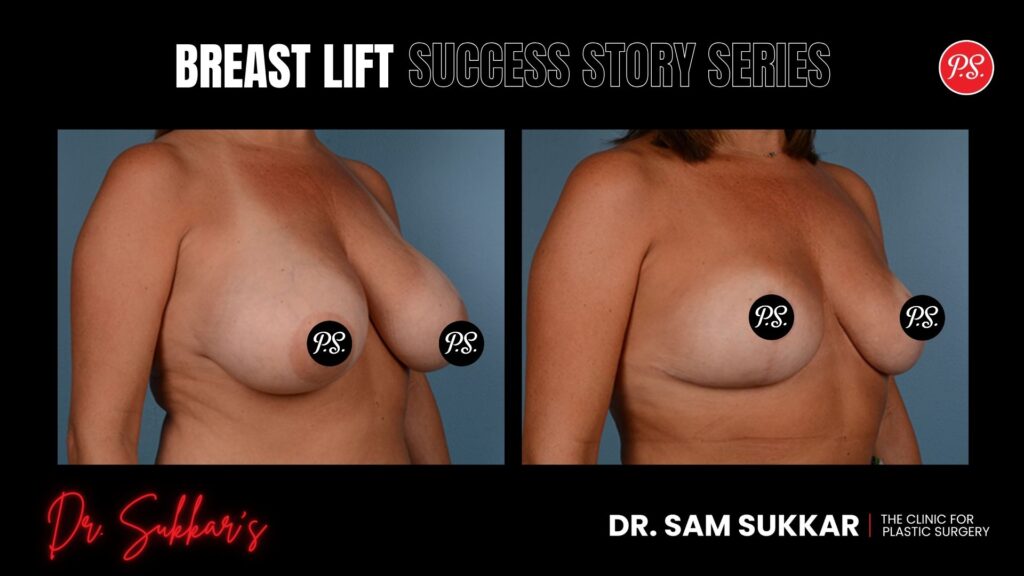
Rachel’s* breasts settled into their final position: nipples centered on the breast mound, upper pole fullness restored, and a natural teardrop shape that looked entirely proportionate to her frame. The symmetry between breasts had equalized as swelling resolved completely.

By 8 weeks post-op, she was cleared for all activities including high-impact exercise and underwire bras. Her compliance with post-operative instructions, particularly keeping incisions moisturized and protected from sun exposure, contributed significantly to her excellent scar healing.

Rachel’s Transformation: 6-Month Results

Verified Outcome Measurements

At her 6-month follow-up, Rachel’s* results had fully matured. Her breast position remained stable with nipples sitting 2-3 centimeters above the inframammary fold, the ideal aesthetic position for natural-looking results. The anchor-pattern scars had faded to thin white lines barely visible even under close inspection.

The incorporation of her previous biopsy scar was so successful that she brought a friend to her follow-up appointment specifically to show how “the old scar just vanished into the new ones.” From a technical standpoint, this outcome validated the surgical planning we’d discussed during consultation, proof that treating each patient’s unique anatomy yields superior results compared to standardized techniques.

Breast Lift at 48: Houston Woman’s Journey to Restored Confidence - Mommy Makeover Success Story Series by Dr. Sam Sukkar, MD in Houston, TX
Photo Illustration by: Dr. Sam Sukkar, MD, The Clinic for Plastic Surgery.

Beyond the Physical: Confidence Restored

Rachel’s* satisfaction extended beyond measurable changes. “I stopped avoiding certain tops,” she explained. “I actually bought a bikini for the first time in 15 years.” These aren’t trivial concerns, they’re quality-of-life improvements that justified her decision to undergo surgery.

She also noted improved posture. When breasts sit in their proper position, women unconsciously stand straighter, roll shoulders back, and carry themselves with renewed confidence. It’s a cascade effect I’ve observed in hundreds of breast lift before and after Houston success stories.

The lasting nature of her results reflects several success factors working in concert.

What Made Rachel’s Result Exceptional

Individualized surgical design: Rather than applying a template approach, I designed Rachel’s* lift to work with her existing anatomy, including that biopsy scar that could have been a liability but became an asset.

Age-appropriate expectations: Rachel* never asked to look 25 again. She wanted restoration of what time had taken, and realistic goals always produce higher satisfaction than aspirational ones.

Excellent tissue quality: Despite being 48, Rachel* had good skin elasticity and dense breast tissue, both factors that support long-term position maintenance after mastopexy.

Strict recovery compliance: She followed every post-operative instruction without deviation. Patients who take shortcuts with compression garment wear or activity restrictions often compromise their results.

Strategic scar management: The decision to incorporate her biopsy scar into the lift design eliminated what could have been two separate scar systems, creating a cohesive, less noticeable outcome.

For patients exploring options like mini breast lift versus full anchor lifts, Rachel’s* case demonstrates that extent of procedure should match extent of concern, less invasive isn’t always better if it doesn’t address the actual problem.

Common Questions About Breast Lift Surgery at 48

Can a breast lift address an existing scar from a previous biopsy?
Yes, and Rachel’s* case proves it. When designing her lift, I positioned the new nipple-areola complex to intersect with her existing biopsy scar. The old incision essentially became part of the periareolar (around the areola) portion of her lift incisions. This technique works because breast lift surgery already requires strategic incision placement, incorporating an existing scar into that design makes it far less noticeable than if left separate. Not every biopsy scar location allows this approach, but when anatomy permits, it’s an elegant solution that reduces overall scarring rather than adding to it.

Is 48 too old for a breast lift to have lasting results?
Not at all. Rachel’s* excellent tissue quality and realistic expectations made her an ideal candidate despite her age. What matters more than chronological age is skin elasticity, breast tissue density, and lifestyle factors like weight stability and smoking status (Rachel* was a non-smoker with stable weight). The internal suturing techniques I use create structural support that doesn’t rely solely on skin tension, this approach works particularly well for mature patients. Many women in their 40s and 50s maintain beautiful breast lift results for a decade or more, especially when they follow post-operative care instructions and wear proper support garments during high-impact activities.

Ready to Write Your Own Breast Lift Success Story?

Rachel* came to my Houston office carrying concerns about aging, asymmetry, and an unwanted scar that reminded her of a difficult chapter. Six months later, she stood in front of the mirror seeing the woman she felt like inside, confident, proportionate, and free from the constant awareness of sagging breasts.

Your concerns might center on different issues. Perhaps you’re wondering whether a breast lift without breast implants can achieve your goals, or you’re researching how much is a breast lift in Houston TX to understand financial investment.

You deserve to feel confident and comfortable in your own body. Aging is natural, but you don’t have to accept every change it brings, especially when proven surgical techniques can restore what time has taken.

If breast position, sagging, or existing scars are affecting your quality of life, transformation is possible.

Your Premier Destination for Plastic Surgery in Houston, Texas (TX)

Are you located in one of these Houston Metro Area cities?

Houston, The Woodlands, Sugar Land, Katy, Pearland, Pasadena, League City, Baytown, Conroe, Cypress, Spring, Kingwood, Humble, Missouri City, Friendswood, Bellaire, Clear Lake, Tomball, Galveston, Richmond, Rosenberg, Stafford, La Porte, Deer Park, Seabrook, Webster, Alvin, and Channelview.

Board-Certified Plastic Surgeon Dr. Sam Sukkar, MD, FACS, and The Clinic for Plastic Surgery Team are here to help you achieve refined, natural-looking results.

Offering expert cosmetic enhancements in:

  • Breast Augmentation, Breast Lifts, and Breast Reduction
  • Tummy Tucks, Mommy Makeovers, and Liposuction
  • Facelifts, Neck Lifts, and Rhinoplasty
  • Body Contouring and Skin Tightening Procedures
  • Non-Surgical Aesthetic Treatments

Visit our modern 18,000+ sq.ft. luxurious plastic surgery center and med spa in Houston, Texas, where expertise meets artistry. Our highly skilled and compassionate team ensures a seamless experience, from consultation to recovery.

For patients outside of the Houston area or those with a busy schedule, Schedule a Virtual Consultation.

Schedule your personalized consultation today at DrSukkar.com or call (281) 940-1535.

About the Author – Meet Dr. Sam Sukkar, MD

Dr. Sam Sukkar, MD, FACS is a highly respected Board-Certified Plastic Surgeon in Houston, Texas, known for his expertise in advanced cosmetic and reconstructive procedures. As the founder of The Clinic for Plastic Surgery, Dr. Sukkar has set a new standard for excellence, performing over 20,000 procedures with a focus on delivering natural, refined results.

Dr. Sukkar earned his Doctor of Medicine (M.D.) degree from Louisiana State University School of Medicine in 1992 after graduating summa cum laude with a Bachelor of Science in Microbiology. He then completed an intensive General Surgery Residency at the University of Texas Hermann Hospital before being selected for a highly competitive Plastic Surgery Fellowship at Northwestern University in Chicago, one of the most prestigious training programs in the country.

With more than 20 years of experience, Dr. Sukkar is a Diplomate of the American Board of Plastic Surgery and a Fellow of the American College of Surgeons (FACS). He is also an active member of the American Society of Plastic Surgeons (ASPS) and the Houston Society of Plastic Surgery (HSPS). His dedication to innovation and continuing education has solidified his reputation as a leading expert in aesthetic surgery, specializing in breast surgery, body contouring, facial procedures, and non-invasive treatments.

Dr. Sukkar’s expertise has been recognized by Houston Magazine, naming him one of Houston’s “Top Docs for Women,” and he has been featured among RealSelf’s America’s Top Doctors. Committed to his patients, he prioritizes personalized care, ensuring every individual feels informed, comfortable, and confident in their aesthetic journey.

Contact Dr. Sukkar today to schedule a consultation, visit DrSukkar.com to learn more, or call us directly at (281) 940-1535.

Breast Augmentation Success: Natural Results at 3 Months

Breast Augmentation Success Story Series by Dr. Sam Sukkar, MD | Case Study #02


This is part of our series featuring real patient transformations at The Clinic for Plastic Surgery. Each case study provides an in-depth look at actual procedures, recovery experiences, and results from Houston patients who’ve undergone breast augmentation with Dr. Sam M. Sukkar.


Three months post-op, and she’s still catching herself in mirrors, not from vanity, but from genuine surprise. The silhouette that greets her now matches the image she’d carried in her mind for years. No overly dramatic change. No “look at me” proportions. Just balanced, natural enhancement that makes her existing wardrobe fit the way it always should have.

This wasn’t about chasing someone else’s aesthetic. It was about finally achieving the proportions her frame had been missing.

*The patient’s name was changed to protect their privacy. All medical details and photographic before and after results are from actual Patient Case #02. Individual results may vary based on body type, surgical approach, and adherence to post-operative instructions.

What Brought Amira* to Consider Breast Augmentation

The Reality Behind Her Decision

Amira* had never felt proportionate. Not overweight, not underweight, just perpetually unbalanced. Her frame carried a certain presence, but her chest had never matched that presence. Clothes fit oddly. Swimsuits required constant adjustments. And the mirror reflected a silhouette that never quite aligned with how she saw herself internally.

She wasn’t seeking dramatic transformation. She wanted what should have been there naturally, volume that matched her shoulders, hips, and overall build. The kind of enhancement that wouldn’t announce itself but would simply complete her proportions.

During our initial consultation, Amira* emphasized one non-negotiable: natural-looking results. She’d seen augmentations that looked surgical, and that aesthetic didn’t appeal to her. She wanted enhancement that integrated seamlessly with her existing anatomy.

Concerns That Nearly Held Her Back

Recovery logistics: How much time would she realistically need away from work and daily responsibilities?

Result longevity: Would these implants require replacement in five years? Ten? Twenty?

Achieving balance without excess: Could we enhance without creating a “done” appearance?

These weren’t superficial concerns. They were practical questions from someone approaching surgery methodically, exactly the mindset I encourage in every consultation.

Breast Augmentation Success: Natural Results at 3 Months - Mommy Makeover Success Story Series in Houston, Texas by Dr. Sam Sukkar, MD
Photo Illustration by: Dr. Sam Sukkar, MD, The Clinic for Plastic Surgery.
Dr. Sukkar’s Surgical Approach for Amira*

The Procedure Blueprint

Based on Amira’s* chest wall measurements, tissue characteristics, and aesthetic goals, I recommended a carefully calibrated approach that would deliver visible enhancement while maintaining natural upper pole slope and appropriate projection.

1. Bilateral Augmentation Mammoplasty (Breast Augmentation Surgery)

  • 400cc high-profile silicone implants bilaterally
  • Inframammary fold incision approach for optimal access and minimal visible scarring
  • Subpectoral (dual-plane) placement for natural upper contour and long-term implant support

The silicone implants we selected offered the tissue feel Amira* wanted, cohesive gel that mimics natural breast texture rather than the firmer feel sometimes associated with saline alternatives. At 400cc, we were working within the range that would deliver noticeable enhancement without overwhelming her frame.

The high-profile configuration was strategic. Rather than adding excessive width (which can create an unnaturally broad appearance), high-profile implants provide forward projection, the kind of natural fullness that reads as authentic breast tissue rather than surgical augmentation.

Why This Combination Works

The inframammary fold incision, made in the natural crease beneath the breast, offers several advantages I’ve refined over 25+ years of performing these procedures. It provides direct visualization of the implant pocket, allows precise positioning, and typically heals as a thin line hidden within the breast fold.

Subpectoral placement positions the implant partially beneath the pectoralis major muscle. This approach provides additional soft tissue coverage over the upper implant, reducing visible rippling and creating that gradual upper slope characteristic of natural breast shape. For patients like Amira* with moderate native tissue, this placement delivers results that age well and maintain natural movement.

The 400cc volume represented the intersection of Amira’s* goals and her anatomical realities. Too conservative, and we wouldn’t achieve the proportional change she sought. Too aggressive, and we’d risk the overdone appearance she specifically wanted to avoid. After tissue-based planning and 3D imaging during consultation, 400cc emerged as the volume that would deliver visible enhancement while respecting her frame’s natural proportions.

Amira’s* Breast Augmentation Recovery Experience

Early Recovery: The First Two Weeks

Days 1-3 felt exactly how I’d described during our pre-op discussion, uncomfortable but manageable. Amira* experienced the characteristic tightness across her chest as the pectoralis muscle adjusted to the implant beneath it. Pain medication kept discomfort controlled, but she described the sensation as “pressure and tightness” rather than sharp pain.

She slept elevated (essential for reducing swelling) and wore her surgical compression garment continuously. Movement was cautious, no reaching overhead, no lifting anything heavier than a coffee mug, no sudden motions that might stress the healing tissues.

Week 1-2 brought gradual improvement. The initial tightness began softening. Swelling started its slow retreat. Amira* transitioned from prescription pain medication to over-the-counter options by day 5, and by day 10, she was managing with minimal medication.

Critical Recovery Rules She Followed:

  • No underwire bras for the first six weeks (underwires can disrupt implant positioning during the settling phase)
  • No upper body exercise for four weeks minimum (chest muscle activation could displace implants before the pocket fully heals)
  • Sleep elevated for three weeks (gravity is not your friend during early breast augmentation recovery)
  • Massage protocol starting week three (specific techniques to encourage natural settling and reduce capsular contracture risk)

One internal link naturally integrated: Amira* found the week-by-week recovery timeline we discussed during consultation to be remarkably accurate to her actual experience.

Later Recovery: Weeks 3-8

Weeks 3-4 marked her return to normalcy with modifications. She resumed most daily activities but continued avoiding heavy lifting and high-impact exercise. The implants were beginning their “drop and fluff” phase, industry shorthand for the natural settling process where implants gradually descend into their final position and the surrounding tissue relaxes.

During this phase, temporary asymmetry is common. One breast might settle faster than the other. Upper pole fullness might appear more pronounced on one side. These variations typically resolve by month three, exactly what Amira* experienced.

Months 2-3: Final Results Emergence

By month two, Amira* had returned to all normal activities, including upper body strength training (with my clearance). The implants had settled into their intended position. The swelling had completely resolved. And the final breast shape, the one she’d see long-term, had fully emerged.

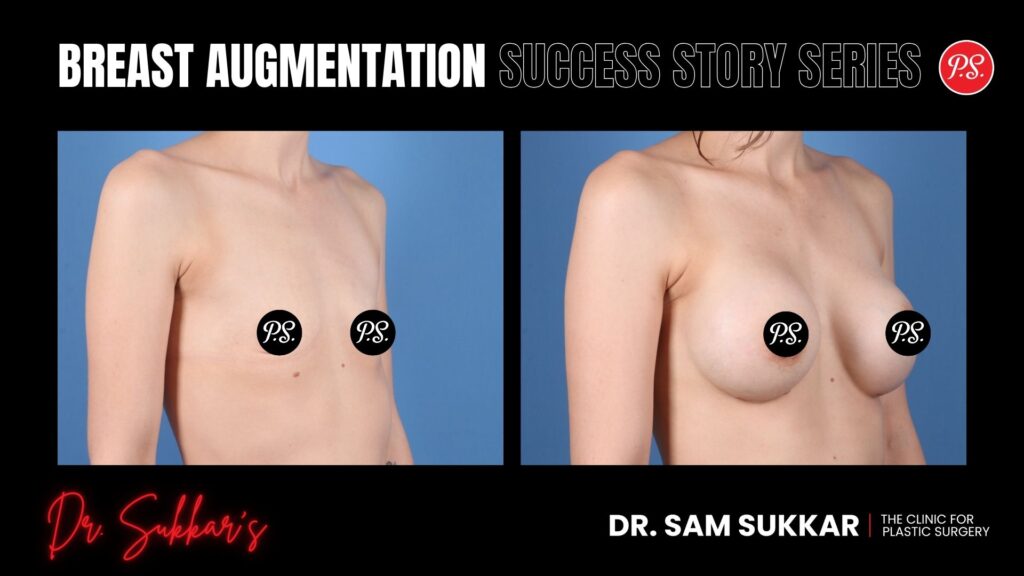
At her three-month follow-up, the results were exactly what we’d planned: Natural upper pole slope. Appropriate lower pole fullness. Symmetrical projection. Soft tissue that moved naturally. No visible implant edges. No “bolt-on” appearance. Just proportionate, enhanced breasts that integrated seamlessly with her frame.

Final Results at 3 Months Post-Augmentation

Measurable Outcomes

The transformation was evident but not theatrical:

  • Implant specifications: 400cc high-profile silicone, bilateral
  • Incision location: Inframammary fold (hidden in natural breast crease)
  • Placement: Subpectoral (dual-plane)
  • Cup size change: Approximately two cup sizes (specific measurements not disclosed per patient privacy)
  • Symmetry: Excellent bilateral symmetry achieved
  • Scarring: Minimal, well-concealed within breast fold

Three months provided sufficient time for complete tissue integration. The implants had settled into their permanent position. The pectoralis muscle had fully adapted. And the incisions had matured into thin, barely perceptible lines.

Beyond the Physical Transformation

What struck me during Amira’s* follow-up wasn’t just the aesthetic result, it was her comfort in her own body. She mentioned shopping for clothes had become enjoyable rather than frustrating. Swimsuit season no longer required strategic padding. And she finally felt proportionate in a way she’d never experienced naturally.

This is precisely the outcome breast augmentation should deliver, not a dramatic before-and-after that announces surgical intervention, but a natural enhancement that simply looks like you, only more balanced.

What Made This Result Exceptional

Several factors contributed to Amira’s* excellent outcome:

Realistic expectations from the start. She understood that 400cc would provide enhancement, not dramatic transformation. This alignment between expectation and reality is crucial.

Appropriate implant selection. High-profile silicone at 400cc provided the volume and projection her frame could support without appearing disproportionate.

Subpectoral placement for her tissue type. The dual-plane approach gave her moderate native tissue the additional coverage needed for natural upper contour.

Meticulous surgical technique. Precise pocket creation, symmetrical positioning, and careful hemostasis all contribute to optimal healing and final aesthetics.

Excellent post-operative compliance. Amira* followed every recovery protocol exactly, compression garment wear, activity restrictions, massage protocols, and follow-up attendance. This adherence directly impacts long-term results.

Breast Augmentation Success: Natural Results at 3 Months - Mommy Makeover Success Story Series in Houston, TX by Dr. Sam Sukkar, MD
Photo Illustration by: Dr. Sam Sukkar, MD, The Clinic for Plastic Surgery.
Common Questions About Breast Augmentation Like Amira’s*

Is 400cc considered a large implant volume?

Not particularly, it’s actually a moderate volume that works well for many body types. Implant size is relative to your frame, existing tissue, and chest wall dimensions. 400cc provided noticeable enhancement without overwhelming her proportions. For a smaller-framed patient, 400cc might appear more dramatic. For a larger frame, it might provide subtle enhancement. This is why tissue-based planning during consultation is essential, we’re not selecting implants based on arbitrary volume numbers but on what will achieve proportionate results for your unique anatomy.

How long do silicone breast implants last?

Modern silicone implants don’t have a predetermined “expiration date.” The previous recommendation for replacement every 10-15 years has evolved with improved implant technology. Current consensus: If your implants are functioning well, causing no issues, and you’re satisfied with their appearance, there’s no medical reason for prophylactic replacement. I see patients regularly with 20+ year-old implants that remain in excellent condition. That said, should complications arise (capsular contracture, implant malposition, desire for size change), revision surgery becomes appropriate. Regular follow-up and occasional imaging help monitor long-term implant integrity.

Why choose subpectoral placement over subglandular?

For Amira*, subpectoral (dual-plane) placement offered several advantages. The pectoralis muscle provides additional soft tissue coverage over the upper implant, creating natural upper pole contour and reducing the risk of visible implant edges or rippling. This placement also potentially reduces capsular contracture rates and simplifies future mammography. However, subglandular (above-muscle) placement can be appropriate for patients with different tissue characteristics or aesthetic goals. The decision depends on your existing breast tissue, chest wall anatomy, lifestyle factors, and desired outcome, all factors we evaluate during your consultation to determine the optimal approach for your unique case.

Ready to Write Your Own Breast Augmentation Success Story?

Amira* walked into my Houston office seeking balance, proportions that matched her frame and her self-image. Three months later, she’d achieved exactly that. Not a dramatic transformation that announced surgical intervention, but natural enhancement that simply completed what should have been there all along.

Your goals might be different. Maybe you’re seeking restoration after pregnancy and breastfeeding, correction of asymmetry that’s bothered you for years, or simply the proportions that genetics didn’t provide. But the common thread is this: You deserve to feel confident and comfortable in your own body. Your body deserves the same dedication you give to fitness and health.

If feeling disproportionate is affecting your quality of life, transformation is possible.

Your Premier Destination for Plastic Surgery in Houston, Texas (TX)

Are you located in one of these Houston Metro Area cities?

Houston, The Woodlands, Sugar Land, Katy, Pearland, Pasadena, League City, Baytown, Conroe, Cypress, Spring, Kingwood, Humble, Missouri City, Friendswood, Bellaire, Clear Lake, Tomball, Galveston, Richmond, Rosenberg, Stafford, La Porte, Deer Park, Seabrook, Webster, Alvin, and Channelview.

Board-Certified Plastic Surgeon Dr. Sam Sukkar, MD, FACS, and The Clinic for Plastic Surgery Team are here to help you achieve refined, natural-looking results.

Offering expert cosmetic enhancements in:

  • Breast Augmentation, Breast Lifts, and Breast Reduction
  • Tummy Tucks, Mommy Makeovers, and Liposuction
  • Facelifts, Neck Lifts, and Rhinoplasty
  • Body Contouring and Skin Tightening Procedures
  • Non-Surgical Aesthetic Treatments

Visit our modern 18,000+ sq.ft. luxurious plastic surgery center and med spa in Houston, Texas, where expertise meets artistry. Our highly skilled and compassionate team ensures a seamless experience, from consultation to recovery.

For patients outside of the Houston area or those with a busy schedule, Schedule a Virtual Consultation.

Schedule your personalized consultation today at DrSukkar.com or call (281) 940-1535.

About the Author – Meet Dr. Sam Sukkar, MD

Dr. Sam Sukkar, MD, FACS is a highly respected Board-Certified Plastic Surgeon in Houston, Texas, known for his expertise in advanced cosmetic and reconstructive procedures. As the founder of The Clinic for Plastic Surgery, Dr. Sukkar has set a new standard for excellence, performing over 20,000 procedures with a focus on delivering natural, refined results.

Dr. Sukkar earned his Doctor of Medicine (M.D.) degree from Louisiana State University School of Medicine in 1992 after graduating summa cum laude with a Bachelor of Science in Microbiology. He then completed an intensive General Surgery Residency at the University of Texas Hermann Hospital before being selected for a highly competitive Plastic Surgery Fellowship at Northwestern University in Chicago, one of the most prestigious training programs in the country.

With more than 20 years of experience, Dr. Sukkar is a Diplomate of the American Board of Plastic Surgery and a Fellow of the American College of Surgeons (FACS). He is also an active member of the American Society of Plastic Surgeons (ASPS) and the Houston Society of Plastic Surgery (HSPS). His dedication to innovation and continuing education has solidified his reputation as a leading expert in aesthetic surgery, specializing in breast surgery, body contouring, facial procedures, and non-invasive treatments.

Dr. Sukkar’s expertise has been recognized by Houston Magazine, naming him one of Houston’s “Top Docs for Women,” and he has been featured among RealSelf’s America’s Top Doctors. Committed to his patients, he prioritizes personalized care, ensuring every individual feels informed, comfortable, and confident in their aesthetic journey.

Contact Dr. Sukkar today to schedule a consultation, visit DrSukkar.com to learn more, or call us directly at (281) 940-1535.

Breast Lift Success: Houston Mom’s Journey to Restored Confidence

Breast Lift Success Story Series by Dr. Sam Sukkar, MD | Case Study #3185


This is part of our series featuring real patient transformations at The Clinic for Plastic Surgery. Each case study provides an in-depth look at actual procedures, recovery experiences, and results from Houston patients who’ve undergone breast lift surgery with Dr. Sam M. Sukkar.


The consultation room went quiet for a moment. Across from me sat a 39-year-old Houston mother who’d just finished explaining why she’d avoided sleeveless shirts for three years. “I used to love sundresses,” she said, gesturing toward her chest. “Now I plan my entire wardrobe around what I can’t wear.”

She wasn’t talking about size. She was talking about shape, specifically, the deflated appearance and downward position that breastfeeding twins had left behind. Her goals were refreshingly clear: restore the perkiness she’d had before children, maintain her natural breast size, and skip implants entirely.

Six months later, she walked back into my office wearing exactly what she’d avoided for years: a sleeveless dress. The transformation wasn’t just physical, it radiated through her posture, her smile, and the confidence in how she carried herself.

*The patient’s name was changed to protect their privacy. All medical details and photographic before and after results are from actual Patient Case #3185. Individual results may vary based on body type, surgical approach, and adherence to post-operative instructions.

What Drove Jasmine* to Seek Breast Lift Surgery

Post-Nursing Changes That Couldn’t Be Ignored

Jasmine* came to me at 39 years old, standing 5’0″ and weighing 120 pounds, well within healthy range for her frame. But her measurements only told part of the story. After breastfeeding twins for over a year, her breasts had undergone dramatic changes that diet and exercise couldn’t reverse.

“I went from a full C-cup during nursing to what felt like deflated B-cups afterward,” she explained during our initial consultation. The volume loss was compounded by significant ptosis (sagging), with her nipples positioned well below the natural breast fold. She described feeling self-conscious not just in swimwear or intimate settings, but in everyday clothing that once made her feel attractive.

Her primary concerns centered on three specific issues:

  • Loss of upper pole fullness creating a deflated, drooping appearance
  • Nipple position hanging below the inframammary fold (the crease under the breast)
  • Breast asymmetry that had worsened post-nursing, with her left breast sitting noticeably lower

What made Jasmine’s* case particularly interesting was her adamant preference to avoid implants. She didn’t want added size, she wanted her natural breast tissue lifted, reshaped, and repositioned to restore the youthful contour she’d had before motherhood. This is where a breast lift without breast implants becomes the ideal solution for many Houston mothers.

Addressing Pre-Surgery Questions and Fears

During our consultation, Jasmine* voiced concerns I hear frequently from breast lift candidates:

Scarring concerns: “Will the scars be obvious? How long will they last?” I explained that modern breast lift techniques have evolved significantly. While all surgical procedures create scars, strategic incision placement and meticulous closure techniques minimize visibility. Most patients find that scars fade substantially within 12-18 months and become easily concealed under bras and swimwear. For Houston patients particularly concerned about scarring, I detailed the approaches covered in my article on breast lift scars.

Maintaining natural appearance: She worried about ending up with an “obviously operated” look, breasts that appeared artificially perky or unnatural. This is where surgical artistry matters. My approach focuses on creating results that look natural when standing, sitting, or lying down, contours that match a patient’s frame and age appropriately.

Recovery logistics: As a mother of young twins, Jasmine* needed to understand exactly how surgery would impact her daily life. When could she lift her children? Return to normal activities? Resume exercise? These weren’t abstract questions, they were critical logistical concerns that would determine her surgical timing.

Dr. Sukkar’s Approach: Jasmine’s* Customized Breast Lift Plan

The Surgical Technique Selected

For Jasmine’s* specific anatomical needs, I recommended a vertical breast lift (lollipop lift) with internal tissue reshaping. This approach would address her degree of ptosis while creating the natural, perky result she envisioned.

1. Vertical Mastopexy (Lollipop Lift)

  • Incision around the areola with a single vertical line extending to the breast crease
  • Allows significant lifting capability for moderate to severe ptosis
  • Creates less visible scarring than traditional anchor-pattern lifts
  • Enables precise reshaping of the breast mound and repositioning of the nipple-areolar complex

2. Nipple-Areolar Complex Repositioning

  • Elevated nipple position 4-5 cm to align with the midpoint of the upper arm
  • Maintained nipple sensation through careful tissue handling
  • Preserved proportional areola size (reduced slightly from 4.5 cm to 4 cm diameter)

3. Internal Tissue Reshaping

  • Utilized remaining breast tissue to create upper pole fullness
  • Established internal breast support structure for long-lasting lift
  • Removed minimal excess skin to achieve optimal contour without over-tightening

The vertical lift technique provides excellent results for patients like Jasmine* who have good breast volume but significant sagging. Unlike the mini breast lift, which works for mild ptosis, or the full anchor-pattern lift for severe cases, the lollipop lift strikes the perfect balance, substantial correction with more limited scarring.

What distinguishes this from simply choosing between breast lift vs implants is understanding that Jasmine* didn’t need volume addition. She needed strategic tissue redistribution and elevation, reshaping what was already there rather than adding foreign material.

Breast Lift Success: Houston, Texas Mom’s Journey to Restored Confidence - Breast Lift Success Story Series
Photo Illustration by: Dr. Sam Sukkar, MD, The Clinic for Plastic Surgery.

Why This Approach Made Sense for Jasmine*

After 25+ years performing breast surgeries in Houston, I’ve learned that successful outcomes depend on matching technique to patient anatomy, lifestyle, and goals. Here’s why the vertical lift was Jasmine’s* optimal solution:

Anatomical considerations: At 5’0″ with a naturally petite frame, Jasmine* had adequate breast tissue volume (approximately 250-280 grams per breast). The issue wasn’t lack of tissue, it was poor tissue distribution and position. Adding implants would have created unnecessary upper pole fullness that looked disproportionate on her frame.

Lifestyle compatibility: As an active mother of twins, Jasmine* needed results that would hold up during the physical demands of parenting, lifting children, playing on the floor, and maintaining an active lifestyle. The internal tissue reshaping I performed creates structural support that maintains lift over time, unlike simple skin tightening that can relapse as tissue stretches. This durability factor is crucial for patients seeking breast lift surgery in Houston who want results that last.

Natural aesthetic goals: Jasmine* specifically referenced photographs of herself from age 24-25, before pregnancy, as her ideal aesthetic. She wanted breasts that looked natural in all positions, avoided the “operated” appearance, and matched her body frame. The vertical lift allowed me to recreate that youthful contour without the telltale signs of augmentation (upper pole roundness, implant edges, unnatural cleavage).

Scarring trade-off: While the lollipop incision creates more scarring than a crescent or donut lift, it provides the lifting power Jasmine* needed to correct her moderate-to-severe ptosis. I explained this honestly during consultation: effective correction of her degree of sagging required this incision pattern, but strategic placement and closure techniques would minimize visibility. Most of my Houston patients find this trade-off acceptable when they understand that inadequate lifting means compromised results.

Long-term satisfaction: Research shows that breast lift patients without implants report higher long-term satisfaction rates because they avoid implant-related complications (capsular contracture, implant rupture, need for replacement). For patients like Jasmine* who are happy with their natural size, lifting alone provides dramatic improvement without introducing foreign materials or future revision concerns.

Jasmine’s* Recovery: Week-by-Week Progress After Breast Lift

The First Two Weeks: Foundation Phase

Days 1-3: Immediate Post-Operative Period

Jasmine* left the surgical center wearing a specialized compression garment, not a traditional bra, but a snug supportive vest that minimizes movement and swelling. The first 72 hours require the most careful attention to activity restrictions.

The immediate post-op experience is manageable but not insignificant. Most patients describe tightness rather than sharp pain, a sensation of pulling across the chest as tissues adjust to their new position. Jasmine* used prescribed pain medication for the first 48 hours, then transitioned to over-the-counter acetaminophen by day three.

Swelling peaks around day two to three. During this phase, the breasts appear higher and fuller than final results, perfectly normal as the body responds to surgical trauma. I always prepare patients for this: what you see in the mirror at day three is NOT your final result.

Week 1-2: Gradual Return to Function

By the end of week one, Jasmine* had transitioned fully to over-the-counter pain management and resumed most daily activities with modifications. She could shower independently (with assistance for the first few times), dress herself, and handle light meal preparation.

Critical recovery rules during this phase:

  • No overhead reaching (affects internal sutures and tension on incisions)
  • No lifting objects over 5 pounds (this includes her young twins, she arranged childcare help)
  • Sleep elevated at 30-45 degrees (minimizes swelling and supports healing tissues)
  • Maintain compression garment 24/7 (except during showering)

The most challenging restriction for Jasmine* wasn’t physical discomfort, it was not being able to lift her twins. We’d discussed this extensively pre-operatively, and she’d arranged for family support during the first two weeks. This planning made the difference between a smooth recovery and unnecessary stress.

For patients researching what to expect, I detail this timeline extensively in my guide on breast lift recovery time, which provides week-by-week expectations.

Months 2-3: Watching Results Emerge

Weeks 3-4: Regaining Normalcy

By week three, Jasmine* had returned to most normal activities with continued restrictions on strenuous exercise and heavy lifting. She could lift her children with proper technique (supporting them against her body rather than extending arms), drive comfortably, and return to work (she had an office job that didn’t require physical labor).

The transformation became more apparent as swelling subsided. Her breast shape began settling into its final position, nipples aligned properly with the midpoint of her upper arms, upper pole fullness restored, and natural teardrop contour evident.

Weeks 5-8: Final Results Taking Shape

At the eight-week mark, Jasmine* was cleared to resume all activities including upper body workouts and high-impact cardio. The internal tissues had healed sufficiently to withstand normal stress without compromising the lift.

Her incision lines had progressed through typical healing stages: initially red and slightly raised, they had faded to pink lines that were well-concealed under bras and swimwear. I’d recommended silicone scar sheets starting at week four, which she used consistently for three months, a practice that demonstrably improves long-term scar appearance.

The most significant change Jasmine* reported wasn’t visible in measurements, it was psychological. She purchased her first sleeveless summer dresses in three years. She felt comfortable in swimwear again. Most importantly, she reported feeling “like myself” when she looked in the mirror, rather than seeing the physical reminder of what pregnancy and nursing had taken from her body.

Six-Month Results: Jasmine’s* Breast Lift Transformation

At her six-month follow-up appointment, Jasmine* presented results that exemplified why the vertical breast lift remains my preferred technique for patients with her degree of ptosis and adequate natural volume.

Her breasts exhibited the natural, youthful contour she’d hoped to restore:

  • Nipple position elevated 4.5 cm from pre-operative baseline, now aligned at the optimal midpoint of her upper arms
  • Upper pole fullness restored creating the rounded appearance she’d lost after nursing
  • Improved symmetry with both breasts now positioned at matching heights
  • Maintained natural breast size (approximately 250-280 grams per breast, her original tissue volume redistributed rather than augmented)
  • Cup size stabilized at 34C (the same size she wore before pregnancy, but with dramatically improved shape and position)
  • Areola diameter reduced from 4.5 cm to 4 cm for better proportionality
  • Incision lines faded to thin pink lines easily concealed under standard bras and swimwear

Beyond these measurable outcomes, Jasmine* described the transformation’s impact on her daily life. She’d resumed wearing the sleeveless tops and sundresses she’d avoided for three years. She felt confident in swimwear during a recent family vacation. Most significantly, she reported feeling reconnected with her pre-motherhood body, not in a way that denied her experience as a mother, but in a way that honored both her maternal journey and her identity as a woman.

“I don’t think about my breasts anymore,” she told me during her final follow-up. “They’re just… there, the way they’re supposed to be. I don’t plan outfits around hiding them. I don’t feel self-conscious when my husband looks at me. They’re just part of my body again, not something I’m constantly aware of.”

This psychological shift represents the true measure of successful breast lift surgery, patients stop focusing on what bothers them and start simply living in their bodies.

Breast Lift Success: Houston, TX Mom’s Journey to Restored Confidence - Breast Lift Success Story Series
Photo Illustration by: Dr. Sam Sukkar, MD, The Clinic for Plastic Surgery.
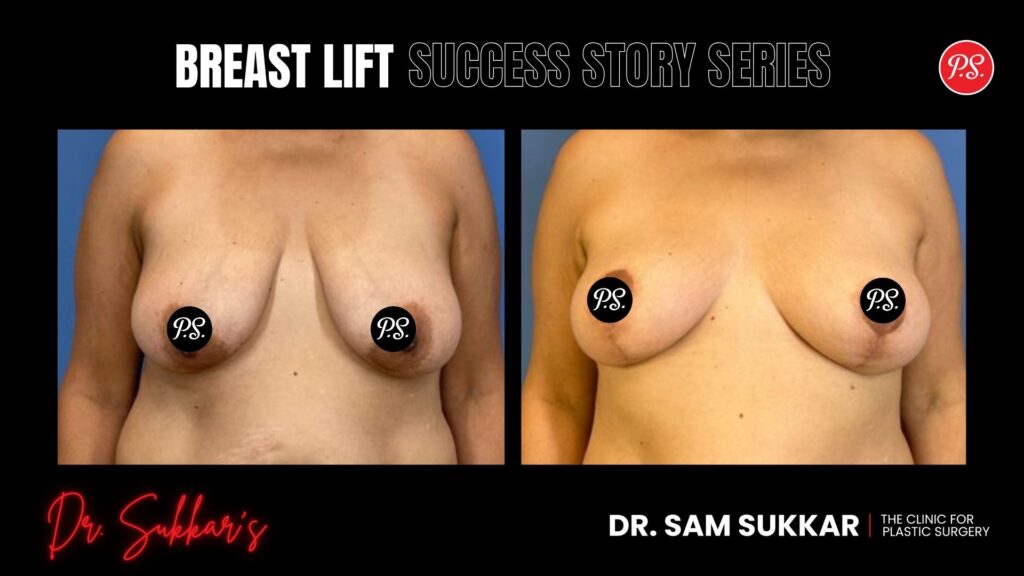
What Made Jasmine’s* Result Exceptional

Several factors contributed to Jasmine’s* outstanding outcome, elements I emphasize with every breast lift candidate I consult in Houston:

Realistic expectations aligned with anatomical possibilities. Jasmine* didn’t ask to look 18 again or to have breasts that defied gravity permanently. She wanted age-appropriate, natural-looking results that restored what pregnancy had changed. This realistic mindset meant she was thrilled with results that matched her pre-consultation goals rather than disappointed they didn’t exceed them.

Optimal timing relative to future plans. She’d completed her family and had no plans for future pregnancies. Breast lift surgery in Houston delivers the best long-term results for patients who’ve finished having children, as subsequent pregnancy and nursing can compromise lift longevity.

Appropriate technique selection for her anatomy. The vertical lift provided adequate lifting power for her moderate-to-severe ptosis without the excessive scarring of an anchor-pattern lift. Patients with less sagging might achieve similar results with a mini breast lift, but Jasmine’s* degree of ptosis required the more comprehensive vertical approach.

Meticulous adherence to post-operative instructions. She followed activity restrictions precisely, wore her compression garment as directed, avoided premature return to exercise, and attended all follow-up appointments. This discipline directly contributed to optimal healing and excellent scar maturation.

Excellent tissue quality and natural healing response. At 39, Jasmine* had youthful skin elasticity and healthy tissue that responded well to surgical manipulation. While I can’t control this variable, it certainly contributed to her excellent outcome. Younger patients generally experience better healing and longer-lasting lift compared to older patients with sun-damaged skin and compromised tissue elasticity.

Procedures like Jasmine’s*, focused on reshaping and repositioning natural breast tissue without implants, generally fall within Houston’s competitive pricing for breast lift cost. Many patients utilize financing plans that make this transformation accessible without compromising surgical quality or safety.

Common Questions About Breast Lift Surgery Like Jasmine’s*

Will a breast lift without implants give me enough upper pole fullness?

This is the question I hear most frequently from Houston mothers considering breast lift surgery. The answer depends entirely on how much natural breast tissue you have and where it’s currently positioned. In Jasmine’s* case, she had approximately 250-280 grams of breast tissue per side, adequate volume that had simply descended and deflated. By removing excess skin, repositioning the nipple-areolar complex, and reshaping internal breast tissue, I was able to restore significant upper pole fullness without implants. However, patients with minimal breast tissue or those who want to increase size beyond their natural volume may benefit from combining a lift with augmentation. During consultation, I assess your existing tissue, discuss your aesthetic goals, and recommend whether you’re a candidate for breast lift with augmentation in Houston or whether lifting alone will achieve your desired outcome.

How did you decide on the vertical lift technique instead of other breast lift options?

The degree of ptosis (sagging) determines which lift technique will deliver optimal results. Jasmine* presented with Grade II to Grade III ptosis, her nipples were positioned at or below the breast crease, and her breast tissue had lost significant upper pole volume. For this moderate-to-severe sagging, a vertical lift provides adequate correction while creating less scarring than a traditional anchor-pattern lift. Patients with mild sagging (nipples above the crease) might achieve excellent results with a periareolar or mini breast lift, which creates minimal scarring. Those with severe ptosis (nipples pointing downward, tissue hanging well below the crease) typically require a full anchor-pattern lift for adequate correction. The key is matching technique to anatomy, using the least invasive approach that will deliver complete correction rather than under-correcting to minimize scars.

Can I breastfeed after a vertical breast lift?

This question matters tremendously to younger patients considering breast lift surgery. The vertical lift technique I used for Jasmine* has a good track record for preserving breastfeeding capability because it maintains connections between milk ducts and the nipple. However, I cannot guarantee breastfeeding will remain possible after any breast surgery, some women experience difficulty related to surgical trauma, and others have pre-existing lactation challenges unrelated to surgery. For patients who plan future pregnancies, I typically recommend waiting until after completing their family, as subsequent pregnancy and nursing can compromise lift results and potentially require revision surgery. That said, many of my Houston patients successfully breastfeed after breast lift procedures, and I use techniques specifically designed to preserve as much glandular tissue and ductal connections as possible.

Ready to Write Your Own Breast Lift Success Story?

Jasmine* walked into my Houston office carrying three years of wardrobe restrictions and self-consciousness. She walked out months later wearing the sleeveless dresses she’d avoided and feeling reconnected with her pre-motherhood body.

Your story might be different. Maybe you’re concerned about severe sagging after multiple pregnancies, wondering whether you need implants along with a lift, or trying to understand which breast lift technique suits your specific anatomy. But the common thread is this: You deserve to feel confident and comfortable in your own body. The physical changes motherhood brings are natural, but you don’t have to accept every one of them permanently.

If post-pregnancy breast changes are affecting how you see yourself and what you feel comfortable wearing, transformation is possible.

Your Premier Destination for Plastic Surgery in Houston, Texas (TX)

Are you located in one of these Houston Metro Area cities?

Houston, The Woodlands, Sugar Land, Katy, Pearland, Pasadena, League City, Baytown, Conroe, Cypress, Spring, Kingwood, Humble, Missouri City, Friendswood, Bellaire, Clear Lake, Tomball, Galveston, Richmond, Rosenberg, Stafford, La Porte, Deer Park, Seabrook, Webster, Alvin, and Channelview.

Board-Certified Plastic Surgeon Dr. Sam Sukkar, MD, FACS, and The Clinic for Plastic Surgery Team are here to help you achieve refined, natural-looking results.

Offering expert cosmetic enhancements in:

  • Breast Augmentation, Breast Lifts, and Breast Reduction
  • Tummy Tucks, Mommy Makeovers, and Liposuction
  • Facelifts, Neck Lifts, and Rhinoplasty
  • Body Contouring and Skin Tightening Procedures
  • Non-Surgical Aesthetic Treatments

Visit our modern 18,000+ sq.ft. luxurious plastic surgery center and med spa in Houston, Texas, where expertise meets artistry. Our highly skilled and compassionate team ensures a seamless experience, from consultation to recovery.

For patients outside of the Houston area or those with a busy schedule, Schedule a Virtual Consultation.

Schedule your personalized consultation today at DrSukkar.com or call (281) 940-1535.

About the Author – Meet Dr. Sam Sukkar, MD

Dr. Sam Sukkar, MD, FACS is a highly respected Board-Certified Plastic Surgeon in Houston, Texas, known for his expertise in advanced cosmetic and reconstructive procedures. As the founder of The Clinic for Plastic Surgery, Dr. Sukkar has set a new standard for excellence, performing over 20,000 procedures with a focus on delivering natural, refined results.

Dr. Sukkar earned his Doctor of Medicine (M.D.) degree from Louisiana State University School of Medicine in 1992 after graduating summa cum laude with a Bachelor of Science in Microbiology. He then completed an intensive General Surgery Residency at the University of Texas Hermann Hospital before being selected for a highly competitive Plastic Surgery Fellowship at Northwestern University in Chicago, one of the most prestigious training programs in the country.

With more than 20 years of experience, Dr. Sukkar is a Diplomate of the American Board of Plastic Surgery and a Fellow of the American College of Surgeons (FACS). He is also an active member of the American Society of Plastic Surgeons (ASPS) and the Houston Society of Plastic Surgery (HSPS). His dedication to innovation and continuing education has solidified his reputation as a leading expert in aesthetic surgery, specializing in breast surgery, body contouring, facial procedures, and non-invasive treatments.

Dr. Sukkar’s expertise has been recognized by Houston Magazine, naming him one of Houston’s “Top Docs for Women,” and he has been featured among RealSelf’s America’s Top Doctors. Committed to his patients, he prioritizes personalized care, ensuring every individual feels informed, comfortable, and confident in their aesthetic journey.

Contact Dr. Sukkar today to schedule a consultation, visit DrSukkar.com to learn more, or call us directly at (281) 940-1535.

Breast Augmentation with High-Profile Implants: Houston Success

Breast Augmentation Success Story Series by Dr. Sam Sukkar, MD | Case Study #01


This is part of our series featuring real patient transformations at The Clinic for Plastic Surgery. Each case study provides an in-depth look at actual procedures, recovery experiences, and results from Houston patients who’ve undergone breast augmentation with Dr. Sam M. Sukkar.


When Emily* walked into The Clinic for Plastic Surgery in Houston, she carried more than just concerns about her modest chest, she carried years of frustration with feeling less feminine than she wanted.

At her consultation, she’d tried everything: padded bras, push-up styles, and countless attempts to enhance her natural shape through exercise. But the lack of natural breast volume simply wouldn’t change.

Sound familiar? You’re not alone.

After researching Houston plastic surgeons and carefully reviewing before-and-after galleries, Emily* decided it was time to invest in herself.

What happened next wasn’t just a physical transformation. It was a complete restoration of confidence and feminine self-assurance.

*The patient’s name was changed to protect their privacy. All medical details and photographic before and after results are from actual Patient Case #01. Individual results may vary based on body type, surgical approach, and adherence to post-operative instructions.

Why Emily* Chose Breast Augmentation in Houston

Emily* came to our Houston practice with specific concerns that resonated with countless women I’ve worked with over my 25+ years in plastic surgery. With an average frame and naturally small breast size, she wasn’t looking to become someone else, she wanted to look like herself again, just with proportions that matched her feminine identity.

Her primary frustrations included:

  • Minimal natural breast volume that left her feeling self-conscious in fitted clothing
  • Lack of upper pole fullness creating a flat chest appearance
  • Difficulty achieving balanced proportions despite maintaining a healthy weight
  • Avoiding certain styles like strapless dresses, swimwear, and form-fitting tops

What made Emily* an ideal breast augmentation candidate was her realistic expectations. She understood that plastic surgery isn’t magic, it’s a powerful tool that works best when combined with healthy lifestyle habits and proper planning.

Common Concerns Emily* Had Before Surgery

During our consultation, Emily* expressed several main worries that I hear frequently from prospective patients:

  1. Recovery time: She needed to know exactly how long before she could return to work and normal activities
  2. Implant visibility: Would high-profile implants look natural on her frame, or would they appear obvious?
  3. Scarring: Would the inframammary fold incision leave noticeable marks?
  4. Long-term results: How would the implants look and feel years down the road?

These concerns are completely valid, and addressing them honestly is crucial to achieving patient satisfaction. That’s why I always emphasize the importance of choosing a board-certified plastic surgeon in Houston who prioritizes both aesthetics and patient safety.

Dr. Sukkar’s Customized Breast Augmentation Approach for Emily*

After a comprehensive physical examination and discussion of Emily’s* goals, I designed a customized surgical plan that would address all her concern areas in a single procedure:

Breast Augmentation with High-Profile Implants: Houston, Texas Success - Breast Augmentation Success Story Series
Photo Illustration by: Dr. Sam Sukkar, MD, The Clinic for Plastic Surgery.
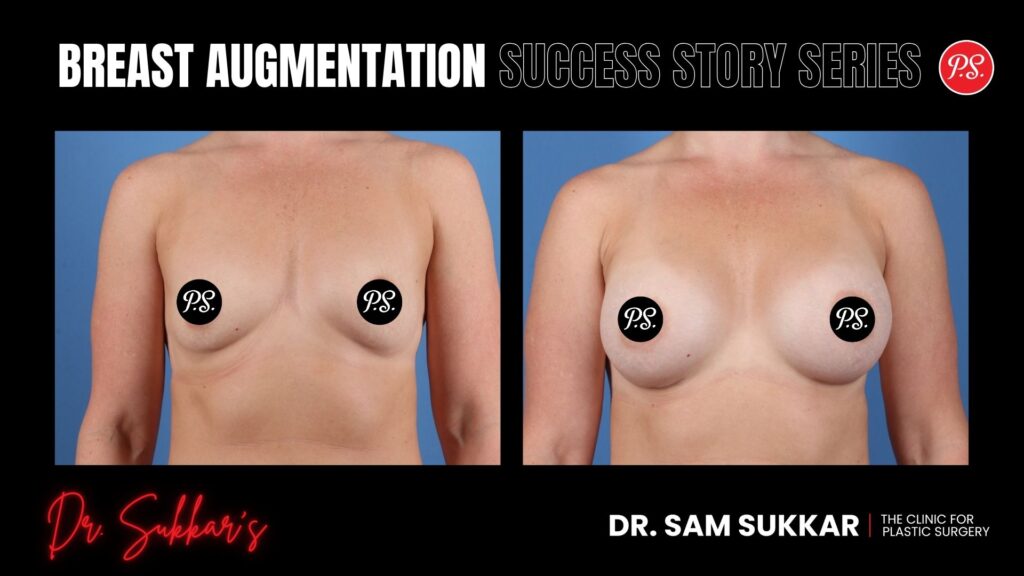
Procedures and Techniques Included in Emily’s* Breast Enhancement

1. Bilateral Augmentation Mammoplasty (Breast Augmentation)

  • 385cc high-profile silicone gel implants (both right and left breasts)
  • Matched pair sizing for optimal symmetry
  • Focus on creating maximum projection with natural contours

2. Inframammary Fold (IMF) Incision Approach

  • Incision placed in the natural crease beneath the breast
  • Approximately 4-5cm length for precise implant insertion
  • Allows direct visualization and optimal implant positioning
  • Results in well-concealed scars hidden in natural breast fold

3. Subpectoral (Submuscular) Implant Placement

  • Implants positioned beneath the pectoralis major muscle
  • Provides superior soft tissue coverage and upper pole fullness
  • Reduces visibility and palpability of implants
  • Minimizes risk of capsular contracture
  • Creates more natural transition from chest wall to breast

4. High-Profile Silicone Gel Implants

  • Maximum forward projection with narrower base width
  • Ideal for patients seeking dramatic enhancement on smaller frames
  • Cohesive silicone gel for natural feel and movement
  • Modern implant technology for safety and longevity

This combination represents what many Houston women are now seeking in breast augmentation surgery, a significant enhancement that creates feminine curves while maintaining proportionate, natural-looking results.

The Strategy Behind Emily’s* Surgical Plan

You might wonder why I recommended this specific combination rather than alternative approaches. Here’s my thinking:

The Maximum Projection Approach: Emily* had minimal natural breast tissue with a relatively narrow chest wall. High-profile implants were ideal because they provide maximum forward projection without requiring a wide base width. This creates dramatic enhancement while maintaining proportionate dimensions for her frame.

Subpectoral Placement Benefits: By positioning the 385cc implants beneath the pectoralis muscle, we achieved several advantages: superior upper pole fullness, natural soft tissue coverage, reduced visibility of implant edges, and better mammography imaging in the future. This technique also significantly reduces the risk of capsular contracture compared to subglandular placement.

IMF Incision Precision: The inframammary fold approach allowed me direct visualization during surgery, ensuring precise pocket creation and optimal implant positioning. The scar heals beautifully in the natural breast crease, becoming virtually invisible over time.

Single Recovery Period: By achieving her complete transformation in one comprehensive procedure, Emily* only had to go through one recovery rather than potentially returning for size adjustments or revision. This approach is both more cost-effective and more convenient for busy patients.

This strategic planning is what separates an average result from an exceptional one. It’s also why understanding what breast augmentation consists of before your consultation helps you ask the right questions.

Emily’s* Breast Augmentation Recovery Journey

Early Recovery: Days 1-14 After Surgery

The first 72 hours are tough. Emily* experienced:

  • Moderate discomfort across the chest (managed with prescribed pain medication)
  • Tightness and muscle soreness from subpectoral implant placement
  • Swelling and bruising across the chest and upper torso
  • Limited mobility requiring assistance with overhead movements
  • Need to sleep elevated at 30-45 degrees to reduce swelling
  • Sensation of tightness as tissues adjusted to new implants

Week 1-2: Progress and Milestones

By the end of week one, Emily* noticed significant improvements:

  • Pain reduced to mild discomfort and muscle tightness
  • Able to perform light daily activities with careful movement
  • Surgical dressings removed and surgical support bra fitted at 7-day appointment
  • Initial swelling beginning to subside
  • Implants positioned high on chest wall (normal “riding high” appearance)
  • First post-op appointment confirmed excellent healing with no complications

Critical Recovery Rules:

  • No lifting anything over 10 pounds for 4-6 weeks
  • Surgical support bra worn 24/7 (except when showering)
  • Short walks encouraged to prevent blood clots
  • No raising arms overhead or pushing/pulling movements
  • Sleeping elevated for first 2 weeks minimum

Understanding the detailed breast augmentation and lift recovery week by week timeline helps patients prepare mentally and physically for the healing journey.

Breast Augmentation with High-Profile Implants: Houston Success - Breast Augmentation Success Story Series in Houston, TX
Photo Illustration by: Dr. Sam Sukkar, MD, The Clinic for Plastic Surgery.
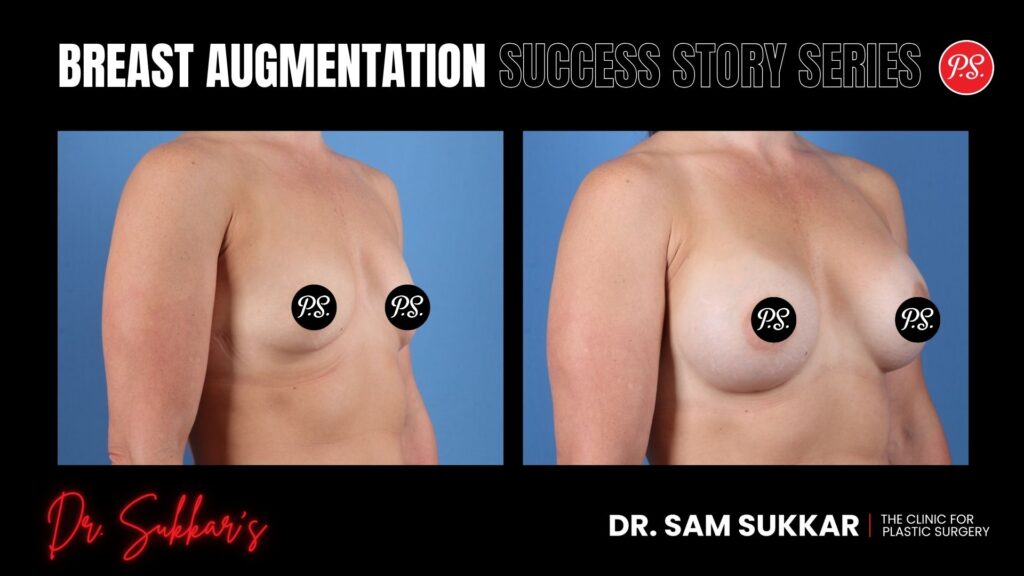
Later Recovery: Getting Back to Your Routine

Weeks 3-4: Feeling Human Again

This is when most patients start feeling normal again:

  • Return to desk work and light activities possible
  • Light household chores resumed with continued restrictions
  • Showering and dressing independently
  • Significant swelling reduction revealing improved shape
  • Implants beginning to “drop and fluff” into proper position
  • Upper pole fullness becoming more natural-looking

By 3 Months: Remarkable Transformation

By her 3-month follow-up appointment, Emily’s* transformation was remarkable:

  • Breast Size: Minimal A cup → Full C/Small D cup
  • Implant Size: 385cc high-profile silicone gel per breast
  • Upper Pole Fullness: Dramatic improvement with natural-looking projection
  • Symmetry: Excellent bilateral symmetry with matched implant sizing
  • Projection: Significant forward projection creating feminine contours
  • Scar Maturation: Inframammary fold incisions healing beautifully and virtually invisible in natural breast crease

Emily* could now:

  • Exercise without restrictions (with proper support bra)
  • Wear form-fitting clothes, strapless styles, and swimwear with confidence
  • Feel proportionate and balanced in her overall silhouette
  • Enjoy natural movement and soft feel of silicone gel implants

Final Breast Augmentation Results at 3 Months Post-Op

Let’s look at Emily’s* measurable outcomes at 3 months post-op:

  • Starting breast size: Minimal A cup → Final size: Full C/Small D cup
  • Implant specifications: 385cc high-profile silicone gel (bilateral)
  • Placement method: Subpectoral (submuscular)
  • Incision approach: Inframammary fold (IMF)
  • Recovery time to normal activities: 4-6 weeks
  • Time to final settling: 3 months (continued subtle softening expected up to 6 months)

But numbers only tell part of the story. What matters most is how Emily* feels.

The most gratifying part of my work isn’t just the physical transformation, it’s the renewed confidence I see in my patients. Emily’s* satisfaction was evident in her enthusiasm about her results and her newfound comfort wearing styles she’d previously avoided.

Procedures like Emily’s*, featuring 385cc high-profile silicone gel implants with subpectoral placement via inframammary fold incision, generally range from $5,000 to $8,500 in Houston depending on implant selection and surgical complexity. Many patients, including Emily*, utilize financing plans as low as $150/month to make their transformation possible through flexible payment options available at our practice.

Key Factors in Emily’s* Outstanding Outcome

Several factors contributed to Emily’s* outstanding outcome:

1. Strategic Implant Selection: The 385cc high-profile implants provided maximum projection without requiring excessive base width, perfectly suited for her narrow chest wall and frame

2. Optimal Placement Technique: Subpectoral positioning ensured superior soft tissue coverage, natural upper pole fullness, and reduced long-term complication risks

3. Precise Surgical Execution: The inframammary fold incision allowed direct visualization and meticulous pocket creation, ensuring proper implant positioning and symmetry

4. Excellent Tissue Quality: Emily* had healthy skin elasticity and adequate chest wall dimensions, which contributed to smooth, natural-looking results

5. Perfect Compliance: She followed all pre-op and post-op instructions meticulously, including proper support garment wear, activity restrictions, and massage protocols

6. Surgeon Experience: With over 25 years performing breast augmentation procedures and more than 20,000 surgeries completed, I’ve refined techniques that minimize scarring, optimize implant positioning, and maximize natural-looking results.

This is why choosing an experienced Houston plastic surgeon for breast augmentation matters so much, the surgeon’s skill directly impacts both your safety and your aesthetic outcome.

Your Breast Augmentation Questions Answered

Will high-profile implants look natural like Emily’s* results?

Absolutely! High-profile implants can create beautiful, natural-looking results when properly selected for your anatomy. Emily* received 385cc high-profile silicone gel implants, which provided maximum forward projection with a narrower base width, ideal for her frame. The key is matching implant profile to your chest wall dimensions. High-profile implants work exceptionally well for patients with narrow chest walls who want significant volume increase. Combined with subpectoral placement, they create natural upper pole fullness and smooth contours. Emily’s* results at 3 months demonstrate how breast augmentation can achieve dramatic enhancement while maintaining proportionate, feminine appearance.

How long until implants “drop and fluff” after subpectoral placement?

The timeline is gradual with submuscular placement. Emily* experienced the typical progression:

  • Weeks 1-2: Implants positioned high on chest wall (“riding high” appearance is normal)
  • Weeks 3-6: Gradual downward settling as muscle relaxes and tissues stretch
  • Weeks 6-12: Continued softening and final positioning
  • 3 months+: Final shape achieved with natural upper pole fullness

Emily’s* implants had settled beautifully by her 3-month appointment. Subpectoral placement takes slightly longer to settle than subglandular, but the wait is worth it for superior soft tissue coverage and reduced complication risks. Patience during this process is essential, the final results are exceptional.

What’s the advantage of inframammary fold incision over other approaches?

The IMF (inframammary fold) incision offers several benefits that I selected for Emily’s* case. This approach provides direct visualization of the surgical pocket, allowing precise dissection and optimal implant positioning. The incision, typically 4-5cm in length, heals in the natural breast crease where it becomes virtually invisible. Unlike periareolar or transaxillary approaches, IMF incisions allow easy access for various implant sizes, reduce risk of nipple sensation changes, and simplify potential future revisions. The scar location is easily concealed by the breast itself and by most clothing styles. For patients like Emily* receiving larger breast augmentation with high-profile implants, the IMF approach ensures controlled placement and excellent aesthetic outcomes.

Ready to Write Your Own Breast Augmentation Success Story?

Emily* walked into my Houston office carrying years of frustration with minimal breast volume and feeling less feminine than she wanted. She walked out 3 months later thriving with results that exceeded her expectations, full, proportionate breasts with natural projection and renewed confidence in every aspect of her life.

Your story might be different. Maybe you’re concerned about implant sizing and profile selection, wondering about recovery timelines and activity restrictions, or trying to understand whether high-profile implants are right for your frame.

But the common thread is this: You deserve to feel confident and comfortable in your own body. Your feminine proportions deserve the same attention you give to fitness, health, and self-care. If lack of breast volume is affecting your quality of life and confidence, transformation is possible.

Your Premier Destination for Plastic Surgery in Houston, Texas (TX)

Are you located in one of these Houston Metro Area cities?

Houston, The Woodlands, Sugar Land, Katy, Pearland, Pasadena, League City, Baytown, Conroe, Cypress, Spring, Kingwood, Humble, Missouri City, Friendswood, Bellaire, Clear Lake, Tomball, Galveston, Richmond, Rosenberg, Stafford, La Porte, Deer Park, Seabrook, Webster, Alvin, and Channelview.

Board-Certified Plastic Surgeon Dr. Sam Sukkar, MD, FACS, and The Clinic for Plastic Surgery Team are here to help you achieve refined, natural-looking results.

Offering expert cosmetic enhancements in:

  • Breast Augmentation, Breast Lifts, and Breast Reduction
  • Tummy Tucks, Mommy Makeovers, and Liposuction
  • Facelifts, Neck Lifts, and Rhinoplasty
  • Body Contouring and Skin Tightening Procedures
  • Non-Surgical Aesthetic Treatments

Visit our modern 18,000+ sq.ft. luxurious plastic surgery center and med spa in Houston, Texas, where expertise meets artistry. Our highly skilled and compassionate team ensures a seamless experience, from consultation to recovery.

For patients outside of the Houston area or those with a busy schedule, Schedule a Virtual Consultation.

Schedule your personalized consultation today at DrSukkar.com or call (281) 940-1535.

About the Author – Meet Dr. Sam Sukkar, MD

Dr. Sam Sukkar, MD, FACS is a highly respected Board-Certified Plastic Surgeon in Houston, Texas, known for his expertise in advanced cosmetic and reconstructive procedures. As the founder of The Clinic for Plastic Surgery, Dr. Sukkar has set a new standard for excellence, performing over 20,000 procedures with a focus on delivering natural, refined results.

Dr. Sukkar earned his Doctor of Medicine (M.D.) degree from Louisiana State University School of Medicine in 1992 after graduating summa cum laude with a Bachelor of Science in Microbiology. He then completed an intensive General Surgery Residency at the University of Texas Hermann Hospital before being selected for a highly competitive Plastic Surgery Fellowship at Northwestern University in Chicago, one of the most prestigious training programs in the country.

With more than 20 years of experience, Dr. Sukkar is a Diplomate of the American Board of Plastic Surgery and a Fellow of the American College of Surgeons (FACS). He is also an active member of the American Society of Plastic Surgeons (ASPS) and the Houston Society of Plastic Surgery (HSPS). His dedication to innovation and continuing education has solidified his reputation as a leading expert in aesthetic surgery, specializing in breast surgery, body contouring, facial procedures, and non-invasive treatments.

Dr. Sukkar’s expertise has been recognized by Houston Magazine, naming him one of Houston’s “Top Docs for Women,” and he has been featured among RealSelf’s America’s Top Doctors. Committed to his patients, he prioritizes personalized care, ensuring every individual feels informed, comfortable, and confident in their aesthetic journey.

Contact Dr. Sukkar today to schedule a consultation, visit DrSukkar.com to learn more, or call us directly at (281) 940-1535.

Breast Implant Recovery: Best Tips for a Smooth Healing Process

Recovery from breast implant surgery takes time, patience, and the right care. Most people can expect the initial healing process to last about six to eight weeks, with gradual improvements each day. Knowing what happens during each stage helps set realistic expectations and makes the journey smoother.

In the first days after breast augmentation surgery, rest and gentle movement play a big role in healing. Swelling, tightness, and mild discomfort are common, but these symptoms usually improve with proper post-operative care. By understanding what’s normal and what’s not, it’s easier to spot any concerns early.

Key Takeaways of Breast Implant Recovery Process

  • Recovery after breast implant surgery usually takes six to eight weeks, with progress becoming more noticeable each progression day.
  • The first days are the most important, when rest, incision care, and wearing a supportive bra help protect healing tissue.
  • Most patients can return to light activities and desk work within a week, while strenuous exercise and heavy lifting should wait until later stages.
  • Breast augmentation recovery times differ based on overall health, implant size, and whether implants are placed above or below the muscle.
  • Long-term results last longer with proper care, including follow-up visits, breast self-exams, and healthy lifestyle habits.

Breast Implant Recovery

Healing after breast implant surgery involves rest, gradual return to normal activities, and close attention to any signs of complications. Recovery steps and timing can vary based on the type of procedure, implant placement, and the patient’s overall health.

What to Expect After Surgery

In the first 24–48 hours, patients often experience swelling, tightness, and mild to moderate discomfort. Pain is usually managed with prescribed medication or over-the-counter options.

Most surgeons recommend wearing a supportive surgical bra to reduce movement and help the implants settle. Patients are usually advised to avoid lifting heavy objects, raising their arms above the shoulders, or engaging in strenuous activity.

Breast Augmentation Recovery Timeline

While recovery varies, many patients return to desk work within a week. Light activities can often resume in 2–3 weeks, but full healing may take 6–8 weeks according to breast augmentation recovery time guidelines.

Patients with implants placed under the muscle may have a slightly longer healing period compared to over-the-muscle placement. It’s important to follow all post-operative instructions to prevent complications and support proper implant positioning.

Factors Affecting Recovery

Several factors can influence how quickly a person heals from breast augmentation. Surgical technique, such as incision location and implant placement, can change recovery speed and comfort.

Overall health plays a role, non-smokers and those in good physical condition often heal faster. Age, skin elasticity, and existing medical conditions can also affect the process. The size and type of implant may impact swelling and discomfort. Larger implants or textured surfaces may require a longer adjustment period.

Finally, adherence to post-surgery care, such as wearing support garments, avoiding certain movements, and attending follow-ups, directly affects recovery outcomes.

Preparing for Breast Implant Recovery

A smooth healing process after breast augmentation surgery starts with clear communication, informed choices, and a comfortable space to rest. Patients who plan ahead often find it easier to follow post-operative instructions and avoid unnecessary stress during recovery.

Consultation with Your Plastic Surgeon

Before surgery, the patient meets with a board-certified plastic surgeon to review medical history and discuss goals. This is the time to talk about implant type, size, and placement options.

The board certified plastic surgeon explains the surgery, the recovery timeline, possible side effects, and activity restrictions. Clear instructions on wound care, medications, and follow-up visits help the patient know exactly what to expect. Patients should bring a written list of questions. Topics may include when they can return to work, how to manage swelling, and what warning signs to watch for.

If needed, the surgeon may order lab work or imaging to ensure the patient is healthy enough for surgery. Following these steps can reduce the risk of complications and support safe healing.

Choosing the Right Implants

Selecting the right breast implant for breast augmentation procedure affects both the surgical process and recovery. Patients typically choose between saline breast implants and silicone implants, each with different feel, incision size, and monitoring needs.

In breast surgery, implant placement also matters. Submuscular placement (under the chest muscle) may lead to a longer recovery than subglandular placement (above the muscle). The surgeon will explain the advantages and trade-offs of each option.

Trying on sizers during the consultation can help the patient choose a size that matches their body frame and lifestyle. This decision can reduce the need for revision surgery later.

Setting Up Your Recovery Space

A well-prepared recovery space makes the first days after surgery easier. Patients often set up a comfortable chair or bed with extra pillows to keep the upper body elevated.

Essential items should be within easy reach:

  • Prescribed medications
  • Bottled water and light snacks
  • Phone and charger
  • Soft, front-closing clothing

Some patients prepare meals ahead of time or arrange for help with household tasks. Good lighting, a nearby bathroom, and a quiet environment can also improve comfort. Following post-surgery guidelines in a supportive home setup helps the patient focus on rest and healing during the early recovery period.

The First Week of Healing

During the first week after breast augmentation, the body focuses on reducing swelling, protecting the surgical area, and adjusting to the implants. Comfort, proper support, and careful monitoring play a major role in recovery at this stage.

Wearing a Support Bra

A support bra helps keep the breasts stable while breast tissues heal. Most surgeons recommend wearing it day and night, except when showering. This reduces movement, which can prevent strain on the incisions and surrounding tissue. The bra should fit snugly but not be overly tight. A front-closure design often makes it easier to put on and take off without raising the arms too much.

Underwire bras are usually avoided in the early weeks because they can press against the incision area. Soft, non-irritating fabrics are best for comfort.

Caring for Incisions

Incision care is an important part of post-operative care. The goal is to keep the area clean, dry, and protected to lower the risk of infection. Patients are usually told to gently clean the area with mild soap and water during showers, then pat dry with a clean towel. Harsh scrubbing should be avoided.

Some surgeons apply surgical tape or special dressings that should remain in place until the follow-up visit. If these coverings loosen, they should only be replaced if instructed by the doctor. It’s important to avoid applying creams, lotions, or oils to the incision unless the surgeon says it is safe. This helps prevent irritation and delayed healing.

Rest and Light Activity

The first few days often require plenty of rest, but light movement can help prevent stiffness and improve circulation. Short walks around the home are usually encouraged once the patient feels steady.

Activities that raise the heart rate too much or involve lifting more than 5–10 pounds should be avoided. These movements can increase swelling or disrupt healing tissue.

Most people can return to light daily tasks after a few days, but they should pace themselves. Listening to the body’s signals is important to avoid overexertion. Following a gradual increase in activity, as outlined by the surgeon, can help speed breast surgery recovery without risking complications.

Monitoring for Complications

During the first week, patients should watch for signs of potential problems. These can include unusual swelling, redness, warmth, or drainage at the incision site. Fever, sharp pain that does not improve with medication, or sudden changes in breast shape should be reported to the surgeon right away.

Keeping a simple daily log of symptoms can make it easier to notice changes. This can be shared at the follow-up visit for a clearer picture of healing progress. Early detection and prompt communication with the care team help ensure a smoother recovery and better long-term results.

Weeks 2 to 4: Gradual Recovery

During this period, many patients notice less pain and more mobility. Swelling and bruising start to fade, and light daily activities often become easier. Regular communication with the plastic surgeon remains important to monitor progress and address any concerns.

Returning to Daily Activities

By week 2, most people can resume light household tasks, short walks, and desk work. Activities that raise heart rate too much or strain the chest should still be avoided. Driving is usually possible once they are off prescription pain medication and can move their arms comfortably. Lifting anything heavier than 5–10 pounds is not advised.

Some return to work during this time, especially if the job is not physically demanding. Those with active or labor-intensive jobs may need more recovery time before returning. The goal is to slowly reintroduce normal routines without rushing.

Follow-Up Appointments

Follow-up visits with the plastic surgeon are typically scheduled during weeks 2 to 4. These allow the surgeon to check incision healing, implant positioning, and any lingering swelling.

Patients may receive updated instructions on massage techniques, scar care, or activity levels. This is also a good time to ask about safe timelines for exercise, travel, or returning to more physical hobbies.

Managing Swelling and Bruising

Swelling often decreases noticeably during this stage, though mild puffiness may remain. Bruising typically fades to lighter shades before disappearing completely. Cold compresses are less necessary now, but some patients still use them for comfort after light activity. Keeping the upper body slightly elevated during rest can also help.

A balanced diet with enough protein, vitamins, and hydration supports tissue healing. Gentle movement, like short walks, can improve circulation and reduce stiffness.

Resuming Normal Activities

Most people can return to light daily routines within one to two weeks after breast augmentation recovery. Strenuous exercise, heavy lifting, and high-impact activities usually require more time before they are safe. Wearing a support bra and following the surgeon’s advice helps protect healing tissues and implants.

Exercise and Physical Activity

During the first week, patients should avoid exercise that raises heart rate or blood pressure. Even light stretching can strain chest muscles and slow healing. Walking at a gentle pace is usually safe and can help circulation.

By weeks 2–3, many can add light lower-body workouts, such as stationary cycling. Upper-body exercises should wait until cleared by the surgeon. This often happens around 4–6 weeks, depending on healing progress.

High-impact activities like running, jumping, or contact sports can place stress on the chest and implants. Most patients resume these safely after six weeks. A supportive sports bra is recommended for all workouts to reduce movement and discomfort.

Returning to Work

The time needed before returning to work depends on the job’s physical demands. Many people with desk jobs return in about 5–7 days, once swelling and discomfort are manageable. Jobs requiring lifting or physical labor often need 2–3 weeks or more.

Some surgeons suggest adjusting the workstation to avoid reaching or stretching during early recovery. Short breaks to walk and stretch the legs can help prevent stiffness.

For combined surgeries, such as a breast lift with implants, the return-to-work timeline can be longer. As noted in breast augmentation and lift recovery, heavy tasks should be delayed until at least 4–6 weeks post-surgery.

Social Engagements

Social activities can resume as soon as the patient feels comfortable and has enough energy. Outings that involve minimal movement, such as dinners or movies, are often fine within the first week.

Events that require standing for long periods, dancing, or carrying items should wait until the body has regained more strength. Wearing a support bra under clothing can help with comfort and appearance.

If traveling, especially by air, it’s best to wait at least 1–2 weeks. This reduces the risk of swelling from changes in cabin pressure and ensures follow-up appointments are not missed.

Long-Term Results and Care

Breast implants change over time as the body heals and adapts. Patients can maintain results for many years by following medical guidance, caring for their skin and tissue, and making healthy lifestyle choices.

Final Results and Implant Settling

Breast implants usually take several months to fully settle into position. This process, sometimes called “drop and fluff,” happens as swelling decreases and tissues relax. In most cases, final results appear between 3 to 6 months after surgery, though some patients may notice changes for up to a year. The breasts often look higher and firmer at first, then gradually take on a softer, more natural shape.

Patients should follow their surgeon’s advice on massage, support bras, and activity limits. These steps can help the implants settle evenly and reduce long-term discomfort.

Ongoing Breast Health

Even after healing, breast health needs regular attention. Patients should perform monthly self-exams to check for lumps, swelling, or changes in shape. Routine visits with a plastic surgeon allow for professional evaluation of the implants and surrounding tissue. Many surgeons recommend imaging, such as MRI or ultrasound, every few years to detect silent rupture or other issues.

Lifestyle Considerations

Daily habits can influence how long breast implants look their best. Wearing a supportive bra during exercise helps protect the tissue and implant position. Maintaining a stable weight prevents skin stretching or sagging that can alter results. Avoiding smoking supports skin elasticity and overall healing.

A post-breast augmentation care plan often includes limiting high-impact activities during early healing, then gradually returning to normal routines. Long-term, activities like running or weightlifting are usually safe with proper support.

Balanced nutrition, hydration, and sun protection also help maintain the skin’s quality over the implants, keeping results looking natural for longer.

Frequently Asked Questions About Breast Implant Recovery: Best Tips for a Smooth Healing Process

What are the stages of healing after breast augmentation?

Healing often begins with a rest and recovery phase in the first few days. Swelling, bruising, and tightness are common. Over the next few weeks, the body focuses on reducing inflammation and allowing tissues to settle. By a few months, most people see final results, though internal healing can continue for up to a year.

How can I manage pain during my breast implant recovery?

Doctors may prescribe pain medication for the first few days. Over-the-counter options can help as discomfort lessens. Using cold compresses, wearing a supportive surgical bra, and following activity restrictions can also reduce pain.

What is the typical timeline for recovery week by week following breast augmentation?

A week-by-week recovery guide shows that most people rest for the first week, then slowly return to light activities. By weeks 3–4, swelling often decreases, and normal movement becomes easier. Many return to full activity after 6–8 weeks, depending on the surgeon’s advice.

Are there any tips to accelerate the recovery process after getting breast implants?

Following the surgeon’s instructions is the most important step. Wearing the right support garment and avoiding heavy lifting help protect healing tissue. Eating balanced meals, staying hydrated, and walking short distances can also support recovery.

Conclusion and Summary of Breast Implant Recovery: Best Tips for a Smooth Healing Process

Recovering from breast implant surgery is a process that unfolds in stages, from the first days of rest and careful monitoring to the gradual return of normal activities. Patience, preparation, and close communication with the surgeon are central to achieving a smooth healing journey.

By following post-operative guidelines, setting up a supportive recovery space, and listening to the body’s signals, patients can recover safely and enjoy long-lasting results with confidence.

Your Premier Destination for Plastic Surgery in Houston, Texas (TX)

Are you located in one of these Houston Metro Area cities?

Houston, The Woodlands, Sugar Land, Katy, Pearland, Pasadena, League City, Baytown, Conroe, Cypress, Spring, Kingwood, Humble, Missouri City, Friendswood, Bellaire, Clear Lake, Tomball, Galveston, Richmond, Rosenberg, Stafford, La Porte, Deer Park, Seabrook, Webster, Alvin, and Channelview.

Board-Certified Plastic Surgeon Dr. Sam Sukkar, MD, FACS, and The Clinic for Plastic Surgery Team are here to help you achieve refined, natural-looking results.

Offering expert cosmetic enhancements in:

  • Breast Augmentation, Breast Lifts, and Breast Reduction
  • Tummy Tucks, Mommy Makeovers, and Liposuction
  • Facelifts, Neck Lifts, and Rhinoplasty
  • Body Contouring and Skin Tightening Procedures
  • Non-Surgical Aesthetic Treatments

Visit our modern 18,000+ sq.ft. luxurious plastic surgery center and med spa in Houston, Texas, where expertise meets artistry. Our highly skilled and compassionate team ensures a seamless experience, from consultation to recovery.

For patients outside of the Houston area or those with a busy schedule, Schedule a Virtual Consultation.

Schedule your personalized consultation today at DrSukkar.com or call (281) 940-1535.

About the Author – Meet Dr. Sam Sukkar, MD

Dr. Sam Sukkar, MD, FACS is a highly respected Board-Certified Plastic Surgeon in Houston, Texas, known for his expertise in advanced cosmetic and reconstructive procedures. As the founder of The Clinic for Plastic Surgery, Dr. Sukkar has set a new standard for excellence, performing over 20,000 procedures with a focus on delivering natural, refined results.

Dr. Sukkar earned his Doctor of Medicine (M.D.) degree from Louisiana State University School of Medicine in 1992 after graduating summa cum laude with a Bachelor of Science in Microbiology. He then completed an intensive General Surgery Residency at the University of Texas Hermann Hospital before being selected for a highly competitive Plastic Surgery Fellowship at Northwestern University in Chicago, one of the most prestigious training programs in the country.

With more than 20 years of experience, Dr. Sukkar is a Diplomate of the American Board of Plastic Surgery and a Fellow of the American College of Surgeons (FACS). He is also an active member of the American Society of Plastic Surgeons (ASPS) and the Houston Society of Plastic Surgery (HSPS). His dedication to innovation and continuing education has solidified his reputation as a leading expert in aesthetic surgery, specializing in breast surgery, body contouring, facial procedures, and non-invasive treatments.

Dr. Sukkar’s expertise has been recognized by Houston Magazine, naming him one of Houston’s “Top Docs for Women,” and he has been featured among RealSelf’s America’s Top Doctors. Committed to his patients, he prioritizes personalized care, ensuring every individual feels informed, comfortable, and confident in their aesthetic journey.

Contact Dr. Sukkar today to schedule a consultation, visit DrSukkar.com to learn more, or call us directly at (281) 940-1535.

Types of Breast Implants: How to Choose the Best Option for You

Choosing the right breast implant can feel like a big decision, but understanding the options makes it much easier. Breast implants come in several types, each with unique materials, shapes, and textures that affect how they look and feel. Whether someone prefers a natural shape or a fuller appearance, there is an implant style designed to match those goals.

From saline-filled implants that use sterile saltwater to silicone gel implants that mimic the feel of natural tissue, the choices go beyond just size. Shape, profile, and surface texture also play a role in the final result. By learning the differences, anyone considering breast augmentation can make a confident, informed choice.

Key Takeaways of Types of Breast Implants

Breast Implant Types

When considering breast augmentation surgery, breast implants options differ mainly in the material used to fill the implant shell. Each type has its own feel, appearance, and maintenance needs. Choosing the right one often depends on personal preferences, body type, and doctor recommendations.

Saline Breast Implants

Saline implants have a silicone outer shell filled with sterile saltwater. Surgeons usually insert them empty and fill them once in place, which can allow for smaller incisions.

If a saline implant leaks, the body absorbs the saltwater safely. However, the implant shell will deflate, making the change noticeable. This can make leaks easier to detect compared to silicone.

Saline implants often feel firmer than natural breast tissue. Some people notice slight rippling under the skin, especially if they have thinner breast tissue. They are approved for patients 18 and older for breast augmentation. Many choose them for their safety profile and lower cost compared to silicone options.

Silicone Breast Implants

Silicone breast implants are filled with a cohesive silicone gel that feels more like natural breast tissue. This gel holds its shape well and is less likely to ripple.

If a silicone implant leaks, the gel may stay inside the shell or spread into the surrounding tissue. Leaks are not always obvious, so regular imaging, such as MRI or ultrasound, is often recommended.

They tend to offer a softer, more natural feel than saline implants. Many people prefer them for aesthetic reasons, especially in cases with less natural breast tissue. Silicone implants are approved for patients 22 and older for breast augmentation.

Saline Breast Implants

Saline breast implants use a silicone shell filled with sterile saline solution. They are inserted empty and then filled during surgery, which allows for smaller incisions and some size adjustments. The filling material is salt water, which the body can absorb safely if the implant leaks.

Traditional Saline Implants

Traditional saline implants have a smooth or textured silicone shell that holds a sterile saline solution. Surgeons insert them empty and fill them once they are in place. This method can make the surgery less invasive because the incision may be smaller.

They tend to feel firmer than silicone gel implants and may show more rippling under thin breast tissue. This is especially noticeable in patients with little natural breast tissue or body fat. These implants are FDA-approved for breast augmentation in women 18 and older and for reconstruction in women of any age.

Structured Saline Breast Implants

Structured saline breast implants also use a silicone shell and saline solution, but they have internal chambers or layers. These internal structures help control the movement of the saline, which can improve shape and reduce sloshing.

The design aims to give a feel closer to silicone gel implants while keeping the safety benefits of saline. Patients often report a softer, more natural feel compared to traditional saline implants.

These implants may cost more than traditional saline options, but many patients choose them for the improved texture and reduced rippling.

Silicone Breast Implants

Silicone breast implants use a silicone shell filled with a cohesive gel that feels similar to natural breast tissue. They are available in different shapes, sizes, and firmness levels to match a person’s body and desired look. These implants tend to hold their shape well and are often chosen for their realistic texture and appearance.

Silicone Gel Implants

Silicone gel implants contain a soft, cohesive silicone gel inside a durable silicone shell. The gel is designed to mimic the feel of natural breast tissue more closely than saline implants.

They come in both round and anatomical (teardrop) shapes, allowing for different aesthetic outcomes. Round implants often create more fullness at the top of the breast, while anatomical shapes provide a more gradual slope.

Most silicone gel implants require a slightly larger incision than saline implants because they come pre-filled. This can affect scar placement and size. Regular monitoring is important because a rupture may not cause obvious changes. The FDA recommends MRI or ultrasound screenings to check for silent ruptures.

Gummy Bear Breast Implants

Gummy bear implants are a type of silicone implant filled with a highly cohesive gel that holds its shape even if the shell breaks. This gel has a thicker consistency than standard silicone gel implants.

They are usually shaped like a teardrop, with more volume at the bottom and a gentle slope toward the top. This can create a natural-looking contour.

Because of their firmness, gummy bear implants may feel less soft than traditional silicone gel implants. However, they are less likely to wrinkle or fold inside the breast. These implants require a longer incision for placement due to their pre-filled, form-stable design.

Implant Shapes and Profiles

Breast implants come in different shapes and projection profiles that affect how the breasts look from the front and the side. Shape impacts fullness and contour, while profile determines how far the implant projects from the chest.

Round Breast Implants

Round breast implants create even fullness in both the upper and lower parts of the breast. This can give a more prominent look, especially in the upper pole. They are the most common choice for breast augmentation.

These implants can be filled with saline, silicone gel, or cohesive silicone gel (often called gummy bear breast implants). The filling type affects firmness and movement.

Round implants come in several projection profiles, such as low, moderate, and high. Low profile offers a wider base with less projection, while high profile provides a narrower base with more forward projection.

Teardrop-Shaped (Anatomical) Implants

Teardrop-shaped implants, also called anatomical implants, have a sloped contour. The upper portion is thinner, and the lower portion is fuller, mimicking the natural breast shape.

These implants are usually filled with cohesive silicone gel to help maintain their form. This filling also helps reduce rippling and keeps the shape stable over time. Teardrop implants often work well for reconstruction or for patients seeking a subtle, natural look. They can enhance lower pole fullness without adding as much volume to the upper breast.

Because of their shape, they require a textured surface to reduce the risk of rotation. If a teardrop implant rotates, it can distort the breast shape.

Surface Textures of Implants

Breast implants can have different outer shell finishes that affect how they feel, how they move, and how tissue grows around them. The texture of the shell can also influence the risk of certain complications and how the implant stays in place over time.

Smooth Breast Implants

Smooth breast implants have a soft outer shell with no surface roughness. This allows them to move more freely inside the breast implant pocket, which can create a natural feel and appearance.

They are often round in shape and may shift slightly with movement, which some patients prefer. Many surgeons choose smooth implants because they are linked to a lower risk of certain rare conditions, such as breast implant-associated anaplastic large cell lymphoma (BIA-ALCL), compared to some textured types.

Textured Breast Implants

Textured breast implants have a slightly rough or dimpled shell. This surface is designed to help the surrounding tissue attach to the implant, which can reduce movement and rotation.

Some textured implants are shaped, such as teardrop designs, where stability is important. The texture can also lower the risk of capsular contracture, a condition where scar tissue tightens around the implant.

There are different levels of texture, including macro-texture and micro-texture, each with unique tissue responses as noted in research on implant surfaces. However, certain textured implants have been linked to a higher risk of BIA-ALCL, leading some surgeons to use them less often.

Choosing the Right Breast Implant

Making the right implant choice depends on both medical guidance and personal preferences. Patients benefit most when they match implant type, size, and placement to their body proportions, lifestyle, and long-term goals.

Consulting a Board-Certified Plastic Surgeon

A board-certified plastic surgeon from the by The American Board of Plastic Surgery (ABPS) has completed specialized training and passed rigorous exams. This ensures they meet high standards for safety and surgical skill. During a consultation, the surgeon reviews the patient’s medical history, examines their chest anatomy, and discusses desired results. They may use 3D imaging or sample implants to help visualize possible outcomes.

Patients can ask about the differences between saline, silicone, and gummy bear implants, as well as placement options above or below the muscle. Each choice affects feel, appearance, and recovery time.

A surgeon’s experience with breast augmentation surgery is also important. Patients should request before-and-after photos of similar body types.

Frequently Asked Questions About Types of Breast Implants: How to Choose the Best Option for You

What are the different materials used for breast implants?

Breast implants are most often made with saline or silicone gel. Saline implants contain sterile saltwater, while silicone implants are filled with a cohesive silicone gel. Some newer options, like form-stable implants, use a thicker gel to help maintain shape. Each material offers a different feel and appearance.

How do saline and silicone implants compare?

Saline implants are filled after placement, which allows smaller incisions. They can feel less natural than silicone, especially in thinner patients. Silicone implants tend to feel more like natural breast tissue. They may require regular imaging to check for silent ruptures, as the gel does not deflate like saline.

What are ‘gummy bear’ breast implants and how do they differ from other types?

Gummy bear implants are form-stable silicone implants with a thicker gel. They hold their shape even if the shell breaks. They are often teardrop-shaped, which can create a more natural slope. However, they may require a slightly larger incision for placement.

What should I know about the side effects of breast implants?

Common side effects can include swelling, bruising, and temporary discomfort. More serious risks may include infection, implant rupture, or capsular contracture, where scar tissue tightens around the implant. Some patients may also experience changes in nipple or breast sensation.

Conclusion and Summary of Types of Breast Implants: How to Choose the Best Option for You

Choosing the right breast implant for breast augmentation involves more than just size. It requires an understanding of materials, shapes, profiles, and surface textures. From saline to silicone and gummy bear implants, each option offers distinct benefits and considerations.

With guidance from a board-certified plastic surgeon, patients can match their personal goals and body type to the implant style that best supports their desired results.

Your Premier Destination for Plastic Surgery in Houston, Texas (TX)

Are you located in one of these Houston Metro Area cities?

Houston, The Woodlands, Sugar Land, Katy, Pearland, Pasadena, League City, Baytown, Conroe, Cypress, Spring, Kingwood, Humble, Missouri City, Friendswood, Bellaire, Clear Lake, Tomball, Galveston, Richmond, Rosenberg, Stafford, La Porte, Deer Park, Seabrook, Webster, Alvin, and Channelview.

Board-Certified Plastic Surgeon Dr. Sam Sukkar, MD, FACS, and The Clinic for Plastic Surgery Team are here to help you achieve refined, natural-looking results.

Offering expert cosmetic enhancements in:

  • Breast Augmentation, Breast Lifts, and Breast Reduction
  • Tummy Tucks, Mommy Makeovers, and Liposuction
  • Facelifts, Neck Lifts, and Rhinoplasty
  • Body Contouring and Skin Tightening Procedures
  • Non-Surgical Aesthetic Treatments

Visit our modern 18,000+ sq.ft. luxurious plastic surgery center and med spa in Houston, Texas, where expertise meets artistry. Our highly skilled and compassionate team ensures a seamless experience, from consultation to recovery.

For patients outside of the Houston area or those with a busy schedule, Schedule a Virtual Consultation.

Schedule your personalized consultation today at DrSukkar.com or call (281) 940-1535.

About the Author – Meet Dr. Sam Sukkar, MD

Dr. Sam Sukkar, MD, FACS is a highly respected Board-Certified Plastic Surgeon in Houston, Texas, known for his expertise in advanced cosmetic and reconstructive procedures. As the founder of The Clinic for Plastic Surgery, Dr. Sukkar has set a new standard for excellence, performing over 20,000 procedures with a focus on delivering natural, refined results.

Dr. Sukkar earned his Doctor of Medicine (M.D.) degree from Louisiana State University School of Medicine in 1992 after graduating summa cum laude with a Bachelor of Science in Microbiology. He then completed an intensive General Surgery Residency at the University of Texas Hermann Hospital before being selected for a highly competitive Plastic Surgery Fellowship at Northwestern University in Chicago, one of the most prestigious training programs in the country.

With more than 20 years of experience, Dr. Sukkar is a Diplomate of the American Board of Plastic Surgery and a Fellow of the American College of Surgeons (FACS). He is also an active member of the American Society of Plastic Surgeons (ASPS) and the Houston Society of Plastic Surgery (HSPS). His dedication to innovation and continuing education has solidified his reputation as a leading expert in aesthetic surgery, specializing in breast surgery, body contouring, facial procedures, and non-invasive treatments.

Dr. Sukkar’s expertise has been recognized by Houston Magazine, naming him one of Houston’s “Top Docs for Women,” and he has been featured among RealSelf’s America’s Top Doctors. Committed to his patients, he prioritizes personalized care, ensuring every individual feels informed, comfortable, and confident in their aesthetic journey.

Contact Dr. Sukkar today to schedule a consultation, visit DrSukkar.com to learn more, or call us directly at (281) 940-1535.

Saline Breast Implants: What to Expect After Breast Augmentation

Saline breast implants use a silicone shell filled with sterile salt water to enhance breast size or restore shape after surgery or injury. They offer a natural look and feel while allowing for smaller incisions during surgery. Many choose them because they can be adjusted in size during the procedure and any leaks are quickly noticeable and harmless to the body.

Unlike silicone implants, saline implants are filled after placement, which can make the surgery more flexible. They are FDA-approved for breast augmentation in individuals 18 and older and for reconstruction at any age. Learning how they compare to silicone options, can help someone make an informed choice.

Key Takeaways of Saline Breast Implants

What Are Saline Breast Implants?

Saline breast implants use a silicone outer shell filled with sterile salt water. They are placed during breast augmentation surgery and can be filled to a set volume for size and shape control. Many people choose them for their safety profile and the option for smaller incisions.

How Saline Breast Implants Work

A saline implant has a silicone shell that holds a sterile saline (saltwater) solution. The surgeon usually inserts the shell empty, then fills it with saline during surgery. This method allows for minor adjustments in volume to achieve better symmetry between breasts.

If a saline implant leaks or ruptures, the saline is naturally absorbed by the body. The breast will lose its shape, making the rupture easy to notice.

Some models, often used in reconstruction, have an adjustable fill port. This lets the surgeon add or remove saline over several months before removing the port. The filling process and quick detection of leaks are two main reasons some people prefer saline implants.

Types of Saline Breast Implants: Saline and Silicone Implants

Saline implants come in different shapes and profiles to match body types and desired results.

Common options include:

  • Round: Uniform shape with equal fullness. Adds more upper breast volume.
  • Teardrop (anatomical): Slopes downward for a natural look. Mimics natural breast shape.
  • High-profile: Narrow base, more projection. Suitable for a fuller front view.

Some saline implants are pre-filled before surgery, while others are inflated after insertion. Post-fill types often require smaller incisions. Textured breast implants shells may help the implant stay in place, while smooth shells can move more naturally within the breast pocket.

Saline vs. Silicone Gel Breast Implants

Both saline and silicone gel implants are FDA-approved and used for augmentation or reconstruction. They can have a similar appearance after surgery. The main difference is the filler material. Saline implants are filled with saltwater, while silicone implants contain a cohesive silicone gel.

If a saline implant ruptures, the body absorbs the saline, and the breast deflates quickly. In contrast, a silicone rupture may not be obvious, as the gel can remain in place or leak slowly. Some people feel saline implants are firmer to the touch than silicone. Others prefer the softer, more natural feel of silicone.

Benefits of Saline Breast Implants

Saline breast implants use a silicone shell filled with sterile salt water. They can be placed empty and filled during breast implants surgery, which allows for size adjustments and often smaller incisions. Many people choose them for their safety profile and the way the body can absorb the saline if the implant leaks.

Natural Appearance and Feel

Saline implants can create a balanced and proportional look when sized and placed correctly. While they may feel slightly firmer than silicone breast implants, they can still provide a natural shape, especially when placed under the chest muscle.

The outer shell is smooth or textured silicone, which helps maintain a realistic contour. Skilled surgeons can adjust placement and fill to match the patient’s body type.

Some people notice that saline implants may show slight rippling under thin skin. This is more common for those with little natural breast tissue. Choosing the right placement and size can reduce this effect and improve the overall appearance.

Customizable Size and Volume

One of the main benefits of saline implants is that they are filled after being placed in the breast pocket. This allows the surgeon to fine-tune the volume during surgery for better symmetry.

Adjusting the fill level can help match the size of the other breast in cases of natural asymmetry. This flexibility can be especially helpful during reconstructive surgery after injury or mastectomy.

Some saline implants are designed to be adjustable even after surgery. These models have a small fill port that allows the surgeon to add or remove saline later. This can help patients who want minor changes without a full replacement procedure.

Smaller Incision and Scar

Because saline implants are inserted empty, the initial incision can be smaller than what is needed for pre-filled silicone implants. This can result in a shorter scar, which may be less noticeable over time.

A smaller incision also means less tissue disruption during breast augmentation surgery. This can sometimes lead to a quicker recovery and reduced discomfort in the early healing stage.

Placement options for the incision include under the breast fold, around the areola, or in the armpit. The choice depends on the patient’s anatomy and the surgeon’s recommendation, but the smaller size makes all three approaches possible.

Potential Drawbacks of Saline Breast Implants

Saline implants can be a safe and effective choice, but they also have limits that may affect comfort, appearance, and maintenance. Some concerns involve how the implant feels, how it reacts to damage, and how it looks under certain conditions.

Firmness and Rippling

Saline breast implants tend to feel firmer than natural breast tissue. This is more noticeable in people with little natural breast tissue or thin skin.

A common issue is rippling, where folds or wrinkles in the implant shell can be seen or felt through the skin. Rippling is more likely when implants are placed over the chest muscle. It can appear along the sides, bottom, or cleavage area. It may be visible when bending forward or in certain lighting.

Some people reduce rippling risk by placing the implant under the muscle or choosing a larger implant to better fill the skin envelope, but these options have trade-offs.

Rupture and Deflation

If a saline implant ruptures, the saltwater solution leaks out quickly and the breast loses volume. This change can happen over hours or days.

The body absorbs the saline safely, but the deflated implant shell still needs surgical removal or replacement. Saline implant safety guides note that rupture is easier to detect than with silicone implants because the change is visible. Manufacturers often recommend replacing implants after 10–15 years, but rupture can occur sooner.

Aesthetic Limitations

Saline implants may not look as natural as silicone options. They can create a rounder, less soft appearance, especially in patients with small amounts of natural tissue.

Breast Implant surgery comparisons show that saline implants sometimes move less naturally and may not settle into the breast shape as smoothly.

In very thin patients, the edges of the implant may be visible. This can limit clothing choices or affect confidence in certain situations. While surgical techniques can improve results, these implants still have physical limits in how closely they can mimic the look and feel of natural breasts.

Longevity and Maintenance

Saline breast implants often remain in good condition for many years, but they are not designed to last a lifetime. Their durability depends on the implant quality, surgical technique, and how well a person maintains their health and follows medical advice.

Expected Lifespan of Saline Implants

On average, saline implants last about 10 to 15 years before they may need replacement. Some last longer, while others may require earlier revision due to issues like leakage or deflation.

A rupture in a saline implant is usually noticeable because the breast loses volume quickly. The saline solution is safely absorbed by the body, but the implant shell will still need replacement.

Monitoring and Regular Checkups

Regular self-exams help detect early changes in shape, size, or firmness. These checks should be done monthly.

Annual visits to a board-certified plastic surgeon ensure professional evaluation. The surgeon can check for subtle signs of rupture or capsular contracture that may not be obvious.

Some patients may also benefit from imaging tests, such as ultrasound or MRI, if the surgeon suspects an issue. While saline ruptures are usually visible, imaging can confirm the diagnosis and rule out other concerns.

Replacement and Revision Surgery

When a saline implant fails, replacement surgery is usually straightforward. The surgeon removes the old implant, cleans the pocket, and places a new one.

Some people choose to replace both implants at the same time, even if only one has ruptured, to keep symmetry. Others may decide to switch to silicone implants during revision. In some cases, revision surgery addresses not just rupture but also changes in breast shape over time.

Saline Breast Implants Cost and Insurance Considerations in Houston

Saline breast implants usually cost less than silicone implants, but the final price depends on several details. Cosmetic procedures like this are rarely covered by insurance unless they are medically necessary.

Average Cost of Saline Breast Implants

The price for saline breast implants in Houston often ranges from $5,000 to $8,500. This amount usually includes the surgeon’s fee, anesthesia, and the use of a surgical facility.

Some clinics advertise lower prices, but these may not include all related expenses. Patients should confirm if the quote covers consultations, follow-up visits, and any post-surgery garments or medications. Choosing a highly experienced surgeon may also raise the total cost but can improve safety and results.

Factors Influencing Price

Several factors can change the total cost:

  • Surgeon’s experience and reputation – More skilled and board certified plastic surgeons often charge higher fees.
  • Geographic location – Urban centers usually have higher prices.
  • Facility type – Accredited surgical centers may cost more than office-based clinics.
  • Additional procedures – Combining breast augmentation with a breast lift or other surgery increases costs.

Implant type also matters. Saline implants are usually less expensive than silicone by about $1,000 or less according. Long-term costs should be considered too. Breast implants may need replacement or revision surgery after 10–20 years, which adds to lifetime expenses.

Insurance Coverage

Most insurance plans do not cover saline breast implants for cosmetic purposes. Policies may only pay for the procedure if it is part of breast reconstruction after mastectomy or to correct a congenital deformity. Some insurers even treat breast augmentation as a pre-existing condition, which can affect future coverage.

Patients should check their policy documents and speak with their insurance provider before scheduling surgery. Written confirmation of coverage or non-coverage can prevent unexpected bills. Even when insurance covers the surgery, it may not include related costs like anesthesia, hospital stays, or follow-up visits.

Frequently Asked Questions About Saline Breast Implants: What to Expect After Breast Augmentation

What are the benefits of choosing saline implants for breast augmentation?

Saline implants are filled with sterile saltwater, which the body can safely absorb if the implant leaks. They can be inserted empty and filled once in place, which may allow for smaller incisions during surgery. Some people choose them because they can be adjusted during surgery to achieve the desired size.

How long do saline implants typically last?

Saline implants are not lifetime devices. On average, they may last between 10 and 20 years before needing replacement. Rupture rates are about 1% per year, so regular check-ups are important to monitor their condition.

Are there any risks or complications associated with saline breast implants?

Possible risks include infection, implant rupture, capsular contracture, and changes in breast sensation. If a rupture occurs, the saline solution is harmlessly absorbed, but the implant will deflate and require replacement. Some patients may also experience visible rippling under the skin.

Can saline breast implants be adjusted after the initial surgery?

In some cases, saline implants can be adjusted during surgery by adding or removing saline to change the size. After the surgery is complete, size adjustments are not typically possible without another procedure. This adjustability during placement can help achieve better symmetry and proportion.

Conclusion and Summary of Saline Breast Implants: What to Expect After Breast Augmentation

Saline breast implants offer a safe, customizable, and cost-effective option for breast augmentation. They are popular because they can be inserted empty, allowing for smaller incisions and precise size adjustments during surgery.

While they may feel slightly firmer and show rippling in some cases, they remain a reliable choice for those who prioritize safety, quick rupture detection, and flexibility in achieving balanced results. With proper monitoring and timely replacement, saline implants can provide long-lasting improvements in breast shape and symmetry.

Your Premier Destination for Plastic Surgery in Houston, Texas (TX)

Are you located in one of these Houston Metro Area cities?

Houston, The Woodlands, Sugar Land, Katy, Pearland, Pasadena, League City, Baytown, Conroe, Cypress, Spring, Kingwood, Humble, Missouri City, Friendswood, Bellaire, Clear Lake, Tomball, Galveston, Richmond, Rosenberg, Stafford, La Porte, Deer Park, Seabrook, Webster, Alvin, and Channelview.

Board-Certified Plastic Surgeon Dr. Sam Sukkar, MD, FACS, and The Clinic for Plastic Surgery Team are here to help you achieve refined, natural-looking results.

Offering expert cosmetic enhancements in:

  • Breast Augmentation, Breast Lifts, and Breast Reduction
  • Tummy Tucks, Mommy Makeovers, and Liposuction
  • Facelifts, Neck Lifts, and Rhinoplasty
  • Body Contouring and Skin Tightening Procedures
  • Non-Surgical Aesthetic Treatments

Visit our modern 18,000+ sq.ft. luxurious plastic surgery center and med spa in Houston, Texas, where expertise meets artistry. Our highly skilled and compassionate team ensures a seamless experience, from consultation to recovery.

For patients outside of the Houston area or those with a busy schedule, Schedule a Virtual Consultation.

Schedule your personalized consultation today at DrSukkar.com or call (281) 940-1535.

About the Author – Meet Dr. Sam Sukkar, MD

Dr. Sam Sukkar, MD, FACS is a highly respected Board-Certified Plastic Surgeon in Houston, Texas, known for his expertise in advanced cosmetic and reconstructive procedures. As the founder of The Clinic for Plastic Surgery, Dr. Sukkar has set a new standard for excellence, performing over 20,000 procedures with a focus on delivering natural, refined results.

Dr. Sukkar earned his Doctor of Medicine (M.D.) degree from Louisiana State University School of Medicine in 1992 after graduating summa cum laude with a Bachelor of Science in Microbiology. He then completed an intensive General Surgery Residency at the University of Texas Hermann Hospital before being selected for a highly competitive Plastic Surgery Fellowship at Northwestern University in Chicago, one of the most prestigious training programs in the country.

With more than 20 years of experience, Dr. Sukkar is a Diplomate of the American Board of Plastic Surgery and a Fellow of the American College of Surgeons (FACS). He is also an active member of the American Society of Plastic Surgeons (ASPS) and the Houston Society of Plastic Surgery (HSPS). His dedication to innovation and continuing education has solidified his reputation as a leading expert in aesthetic surgery, specializing in breast surgery, body contouring, facial procedures, and non-invasive treatments.

Dr. Sukkar’s expertise has been recognized by Houston Magazine, naming him one of Houston’s “Top Docs for Women,” and he has been featured among RealSelf’s America’s Top Doctors. Committed to his patients, he prioritizes personalized care, ensuring every individual feels informed, comfortable, and confident in their aesthetic journey.

Contact Dr. Sukkar today to schedule a consultation, visit DrSukkar.com to learn more, or call us directly at (281) 940-1535.

Silicone Breast Implants: Requirements and Recovery

Silicone breast implants have become a popular choice for those looking to enhance breast shape or restore volume after surgery. They are filled with a soft, cohesive silicone gel that closely mimics the feel of natural breast tissue. They offer a smooth, realistic look and feel that many find more natural than saline implants.

These implants come in different shapes, sizes, and firmness levels, allowing a customized result that matches personal goals. Options range from round to teardrop-shaped designs, and some have textured shells to help them stay in place. Learning about these choices can help someone decide which type best fits their needs during breast enlargement.

Key Takeaways of Silicone Breast Implants

What Are Silicone Breast Implants?

Breast enhancement with silicone breast implants use a soft, cohesive gel that aims to feel similar to natural breast tissue. They are a common choice for both cosmetic breast augmentation and reconstructive surgery after injury or mastectomy.

Composition and Structure

Silicone implants have an outer shell made of durable, elastic silicone. Inside, they are filled with a medical-grade silicone gel. This gel can be either cohesive (holds its shape) or form-stable (often called “gummy bear” implants).

The gel’s consistency helps it maintain shape while feeling soft to the touch. Many people choose silicone gel implants because they tend to feel more like natural breast tissue compared to saline-filled breast implants.

They come in round or teardrop (anatomical) shapes and in smooth or textured shell surfaces. Smooth shells can move more naturally, while textured shells may help reduce implant shifting.

How Silicone Implants Differ from Saline Implants

The main difference is the filling material. Silicone implants use a gel, while saline implants are filled with sterile saltwater. Saline implants are inserted empty and filled during surgery, but silicone implants come pre-filled. Silicone implants generally feel softer and more natural. Saline implants may feel firmer and are more prone to visible rippling under thin skin. Silicone gel can better mimic the weight and texture of natural breast tissue.

If a saline implant leaks, the body absorbs the saltwater safely, and the implant visibly deflates. A silicone implant rupture may not cause an immediate change in size, which is why monitoring is important. Both types have FDA approval for specific age groups: silicone implants for augmentation in women 22 and older, and saline implants for women 18 and older.

Types of Silicone Breast Implants

Silicone breast implants come in different designs that vary in shape, firmness, and shell texture. Each type uses a silicone outer shell filled with silicone gel, but the gel’s consistency and the shell’s surface can change how the implant feels, looks, and holds its shape over time.

Traditional Silicone Implants

Traditional silicone implants use a silicone outer shell filled with soft silicone gel. This gel has a consistency similar to natural breast tissue, which many people find appealing. They are available in a variety of sizes and profiles to match different body types and aesthetic goals. The gel is not form-stable, so if the implant shell breaks, the gel may leak into the surrounding tissue.

These implants have been used for decades and are approved by the FDA for breast augmentation in women age 22 or older. They can be smooth or textured, and they are often chosen for their natural feel rather than their shape retention.

Gummy Bear Breast Implants

Gummy bear breast implants, also called form-stable implants, are filled with a cohesive silicone gel that is thicker than the gel in traditional implants. This gel holds its shape even if the shell is damaged.

They are often teardrop-shaped to mimic the natural slope of the breast. The thicker gel makes them firmer to the touch, which can reduce wrinkling and rippling under the skin. Because of their shape, they usually have a textured shell to help them stay in place. Many patients choose gummy bear implants for their durability and shape stability, though they can feel less soft than traditional silicone types.

Smooth Silicone Implants

Smooth silicone implants have a soft outer shell with no texture. This allows them to move more freely within the breast pocket, which can create a more natural movement. They usually feel softer than textured implants but may have a higher chance of shifting position over time. Smooth shells are available with both traditional and cohesive gel fillings.

Many people choose smooth implants because they tend to have a lower risk of visible rippling in women with more natural breast tissue. They also tend to cost less than some specialty designs.

Textured Silicone Implants

Textured silicone implants have a roughened outer shell designed to help the implant stay in place. The texture encourages tissue to grow into the surface, which can reduce movement inside the breast pocket.

They are often used with teardrop-shaped or form-stable implants to prevent rotation. Textured shells can be paired with both softer and more cohesive silicone gels.

While they can improve stability, textured implants have been linked to a rare condition called breast implant-associated anaplastic large cell lymphoma (BIA-ALCL). Patients considering textured implants should discuss the risks and benefits with a qualified surgeon.

Benefits of Silicone Breast Implants in Breast Augmentation Surgical Procedure

Silicone breast implants use a cohesive silicone gel that holds its shape while feeling soft to the touch. Many people choose them in breast augmentation because they can closely match the appearance and texture of natural breast tissue. They also come in many styles to fit different body types and goals.

Natural Look and Feel

Silicone gel implants are often chosen for their realistic texture. The gel inside is thick and cohesive, which helps it mimic the softness of natural breast tissue. This can make them less likely to wrinkle or ripple under the skin compared to saline implants.

Many patients say that after healing, the implants feel more like their own breasts. Silicone implants are widely preferred for their natural appearance in both look and touch. They also maintain their shape well when a person moves or changes position. This can be important for those who want results that blend well with the rest of their body.

Durability and Longevity

Silicone gel filled implants are built with a strong outer shell that helps them last for many years. The cohesive gel inside holds its form even if the shell is damaged, so the implant does not collapse like a saline-filled one might.

Many surgeons note that silicone implants can offer longer-lasting results compared to some other options. While no implant is permanent, they often remain in good condition for 10 years or more before replacement is considered.

They are also less likely to show visible folds or ripples over time. This durability can be especially important for patients with less natural breast tissue to cover the implant.

Versatility in Shapes and Sizes

Silicone gel implants are available in a wide variety of shapes, profiles, and sizes. Patients can choose between round implants for more fullness or teardrop-shaped implants for a sloped, natural look.

This variety allows surgeons to match the implant to the patient’s chest width, breast base, and desired projection. The range of options makes it easier to create balanced proportions during cosmetic surgery.

Risks and Potential Complications

Silicone breast implants can lead to specific medical issues over time. These may include damage to the implant shell, changes in breast shape or feel, and in rare cases, certain cancers linked to the implant surface. Early detection and proper medical follow-up can help reduce long-term problems.

Implant Rupture and Detection

An implant rupture happens when the silicone shell tears or develops a hole. This can occur from aging of the implant, injury, or during certain medical procedures. Unlike saline breast implants, silicone ruptures are often “silent” because the gel may stay inside the scar tissue around the implant.

Because symptoms are not always obvious, the U.S. Food and Drug Administration recommends routine imaging such as MRI or ultrasound to detect a rupture. Common signs can include changes in breast size, shape, or firmness.

If a rupture is confirmed, doctors usually recommend removing or replacing the implant. According to the FDA, leaving a ruptured silicone implant in place can lead to pain, swelling, or further complications.

Capsular Contracture

Capsular contracture occurs when the body forms scar tissue around the implant that becomes unusually tight or hard. This can cause the breast to feel firm, change shape, or become painful. The exact cause is not always known, but infection, bleeding, or implant rupture may increase the risk.

Doctors classify capsular contracture in grades from mild to severe. In severe cases, the breast may look distorted and revision surgery may be needed to remove or replace the implant.

Treatment options can include surgical removal of the scar tissue (capsulectomy) or replacing the implant with a different type or surface texture. The American Board of Cosmetic Surgery notes that proper surgical technique and post-operative care can help lower the risk.

Anaplastic Large Cell Lymphoma (ALCL)

Breast implant-associated anaplastic large cell lymphoma (BIA-ALCL) is a rare cancer of the immune system. It is not breast cancer but a type of non-Hodgkin’s lymphoma. Most cases have been linked to textured-surface implants rather than smooth ones.

Symptoms can include swelling, pain, or fluid buildup around the implant, often years after surgery. Diagnosis usually involves imaging and fluid or tissue testing.

The Harvard Health review notes that early treatment, which often includes removing the implant and surrounding scar tissue, can lead to good outcomes. The FDA advises patients with implants to be aware of symptoms and seek medical evaluation if they occur.

Silicone Breast Implant Procedure

Silicone breast implant surgery involves several important steps that affect the final look, feel, and recovery. Patients work closely with a qualified surgeon to select the right implant type, surgical method, and aftercare plan for their needs.

Consultation and Choosing the Right Implant

The process begins with a meeting with a board-certified plastic surgeon. During this consultation, the surgeon reviews the patient’s medical history, breast measurements, and desired results.

They discuss implant options, including size, shape, and profile. Many choose silicone breast implants because they tend to feel more natural than saline options. The surgeon may also recommend a breast lift if the patient has sagging tissue. This can be done at the same time as the implant procedure.

To help visualize results, some clinics use 3D imaging or allow patients to try sizers inside a bra. This step helps set realistic expectations before surgery.

Surgical Techniques and Incision Options

The breast implant procedure is usually done under general anesthesia. The surgeon makes an incision in one of three common locations:

Incision SiteLocationCommon Use
InframammaryUnder the breast foldMost common, allows precise placement
PeriareolarAround the edge of the nippleMay hide scars, suited for certain cases
TransaxillaryIn the armpitAvoids scars on the breast itself

The implant can be placed above or below the chest muscle. Placement choice depends on body type, implant size, and tissue thickness.

The surgeon inserts the silicone implant, checks symmetry, and closes the incision with sutures. Surgery usually takes one to two hours.

Recovery and Aftercare

Most patients go home the same day. During breast augmentation recovery patients wear a surgical bra or compression garment to reduce swelling and support healing. Mild discomfort, swelling, and bruising are common in the first week. Pain is usually managed with prescribed medication.

Surgeons often advise avoiding heavy lifting or strenuous activity for at least four to six weeks. Follow-up visits are important to check healing and implant position. Long-term care includes regular self-checks and occasional imaging to monitor implant condition. Silicone implants may require MRI or ultrasound scans over time to detect silent ruptures.

Silicone Breast Implants in Breast Reconstruction

Silicone breast implants are often chosen to restore breast shape after surgery for breast cancer. They have a soft, gel-like filling that feels closer to natural breast tissue than saline implants, and they come in different sizes and shapes to match a patient’s body.

Role in Post-Mastectomy Reconstruction

After a mastectomy, many patients choose silicone implants to help recreate the breast mound. These implants have a silicone outer shell and are filled with silicone gel, which can provide a more natural look and feel compared to saline.

Some surgeons prefer silicone for its lower risk of visible rippling under the skin. However, patients should know that implants may need replacement in the future due to wear or complications.

Silicone implants are FDA-approved for breast reconstruction at any age and for augmentation in women aged 22 and older. They can be placed either above or below the chest muscle, depending on the patient’s anatomy and the surgeon’s plan.

In some cases, textured implants have been linked to a rare cancer called breast implant-associated anaplastic large cell lymphoma, so many doctors now use smooth-surfaced models.

Tissue Expanders and Staged Reconstruction

When there is not enough skin or muscle to place a permanent implant right away, surgeons may use breast tissue expanders. These temporary devices are placed under the skin and gradually filled with saline over several weeks.

This process stretches the tissue to make space for the final silicone implant. The expansion is done in small steps during office visits to keep discomfort low.

In staged reconstruction, the expander is later removed and replaced with a silicone implant in a second surgery. This method can improve the final breast shape and position. According to the American Cancer Society, tissue expanders are common after mastectomy when the skin has been tightened or removed. They help ensure the implant fits well and looks balanced with the other breast.

Cost, Longevity, and Replacement Considerations

Silicone breast implants can last for many years, but they are not designed to be permanent. Breast implant surgery cost vary widely depending on the surgeon, location, and type of implant, and replacement surgery may be necessary due to aging, damage, or a change in personal preference.

Average Lifespan of Silicone Implants

Most implant manufacturers suggest silicone implants can last 10–15 years before replacement is considered. However, some last longer if there are no complications.

Factors that affect lifespan include:

  • Implant type – cohesive gel implants tend to be more durable.
  • Placement technique – proper surgical placement may reduce wear.
  • Body changes – weight fluctuations, pregnancy, and aging can alter results.

The FDA recommends periodic MRI or ultrasound scans to check for silent ruptures. For example, cohesive gel implants may remain intact even if the shell is damaged, but replacement is still advised if a rupture is confirmed.

Replacement and Revision Surgeries

Replacement surgery may be needed for several reasons:

  • Rupture or leakage of the implant
  • Capsular contracture (scar tissue tightening)
  • Shifts in implant position
  • Desire for a different size or shape

A breast implant revision can involve removing the old implant, replacing it with a new one, or adjusting the pocket for better placement. Some patients combine revision with a breast lift to address sagging.

Revision surgeries can be more complex than the original augmentation, especially if scar tissue must be removed. Recovery time is usually similar to the first surgery.

Financial Considerations

The average cost for breast implant surgery in Houston is about $5,000 to $8,500, but revision or replacement can cost more. In high-demand areas, fees may range from $8,000 to $35,000.

Some implant manufacturers offer limited warranties that may cover part of the cost if there is a rupture within a certain time frame. Patients should review warranty terms before surgery to understand coverage limits.

Frequently Asked Questions About Silicone Breast Implants: Requirements and Recovery

What are the potential risks associated with getting breast implants?

Breast implants carry risks such as infection, scarring, changes in nipple or breast sensation, and implant rupture. Some may also experience capsular contracture, where scar tissue hardens around the implant. The FDA monitors implants for safety and has regulated them to set quality standards.

How long do breast implants plastic surgery typically last?

Breast implants are not considered lifetime devices. Many last 10–20 years, but they may need replacement sooner if problems occur. Regular check-ups help detect issues early and guide decisions about replacement or removal.

Can you breastfeed after having breast implant surgery?

Many women can breastfeed after implants, whether they are silicone or saline. Studies show no higher silicone levels in the milk of women with implants compared to those without. However, some surgical techniques may affect milk production, depending on incision location and placement.

How can you tell if a breast implant has ruptured?

A saline implant rupture usually causes a sudden decrease in breast size. The body absorbs the saline safely. A silicone implant rupture may not cause visible changes. This is called a “silent rupture” and is often found through MRI or ultrasound imaging.

What is the recovery time after breast implant surgery?

Most people return to light activities within a week. Strenuous exercise and heavy lifting are usually avoided for 4–6 weeks. Full healing and final results can take several months, depending on the individual’s health and the surgical approach used.

Conclusion and Summary of Silicone Breast Implants: Requirements and Recovery

Silicone breast implants remain one of the most popular options for breast augmentation and reconstruction because of their natural look, soft feel, and long-lasting results. With a wide range of shapes, sizes, and textures available, patients can choose implants that best match their goals and body type.

While they offer many benefits, regular monitoring and awareness of potential complications, are important for maintaining health and results over time. Working with a skilled, board-certified plastic surgeon helps ensure safe placement, realistic outcomes, and proper follow-up care.

Your Premier Destination for Plastic Surgery in Houston, Texas (TX)

Are you located in one of these Houston Metro Area cities?

Houston, The Woodlands, Sugar Land, Katy, Pearland, Pasadena, League City, Baytown, Conroe, Cypress, Spring, Kingwood, Humble, Missouri City, Friendswood, Bellaire, Clear Lake, Tomball, Galveston, Richmond, Rosenberg, Stafford, La Porte, Deer Park, Seabrook, Webster, Alvin, and Channelview.

Board-Certified Plastic Surgeon Dr. Sam Sukkar, MD, FACS, and The Clinic for Plastic Surgery Team are here to help you achieve refined, natural-looking results.

Offering expert cosmetic enhancements in:

  • Breast Augmentation, Breast Lifts, and Breast Reduction
  • Tummy Tucks, Mommy Makeovers, and Liposuction
  • Facelifts, Neck Lifts, and Rhinoplasty
  • Body Contouring and Skin Tightening Procedures
  • Non-Surgical Aesthetic Treatments

Visit our modern 18,000+ sq.ft. luxurious plastic surgery center and med spa in Houston, Texas, where expertise meets artistry. Our highly skilled and compassionate team ensures a seamless experience, from consultation to recovery.

For patients outside of the Houston area or those with a busy schedule, Schedule a Virtual Consultation.

Schedule your personalized consultation today at DrSukkar.com or call (281) 940-1535.

About the Author – Meet Dr. Sam Sukkar, MD

Dr. Sam Sukkar, MD, FACS is a highly respected Board-Certified Plastic Surgeon in Houston, Texas, known for his expertise in advanced cosmetic and reconstructive procedures. As the founder of The Clinic for Plastic Surgery, Dr. Sukkar has set a new standard for excellence, performing over 20,000 procedures with a focus on delivering natural, refined results.

Dr. Sukkar earned his Doctor of Medicine (M.D.) degree from Louisiana State University School of Medicine in 1992 after graduating summa cum laude with a Bachelor of Science in Microbiology. He then completed an intensive General Surgery Residency at the University of Texas Hermann Hospital before being selected for a highly competitive Plastic Surgery Fellowship at Northwestern University in Chicago, one of the most prestigious training programs in the country.

With more than 20 years of experience, Dr. Sukkar is a Diplomate of the American Board of Plastic Surgery and a Fellow of the American College of Surgeons (FACS). He is also an active member of the American Society of Plastic Surgeons (ASPS) and the Houston Society of Plastic Surgery (HSPS). His dedication to innovation and continuing education has solidified his reputation as a leading expert in aesthetic surgery, specializing in breast surgery, body contouring, facial procedures, and non-invasive treatments.

Dr. Sukkar’s expertise has been recognized by Houston Magazine, naming him one of Houston’s “Top Docs for Women,” and he has been featured among RealSelf’s America’s Top Doctors. Committed to his patients, he prioritizes personalized care, ensuring every individual feels informed, comfortable, and confident in their aesthetic journey.

Contact Dr. Sukkar today to schedule a consultation, visit DrSukkar.com to learn more, or call us directly at (281) 940-1535.