Botox vs. Xeomin: Key Differences and How Each One Works

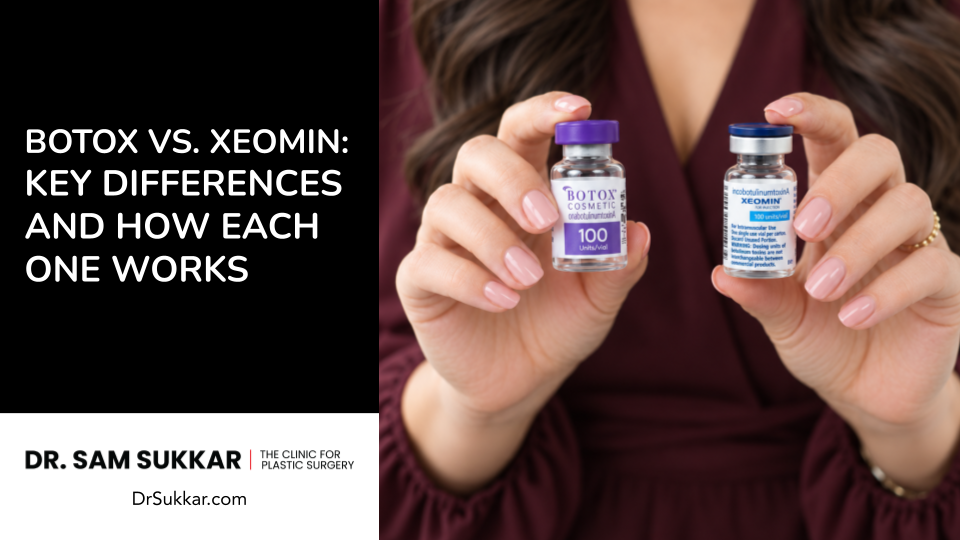
Botox vs Xeomin is a common comparison patients research when choosing an injectable treatment for dynamic wrinkles. The direct answer: both Botox and Xeomin contain botulinum toxin type A as the active ingredient and work by temporarily blocking nerve signals to targeted muscles, but Xeomin’s formulation lacks the accessory proteins that Botox contains, making Xeomin a “naked” or pure neurotoxin. This key difference means Xeomin may be less likely to trigger neutralizing antibodies over time, making it a popular alternative for patients with a long treatment history.
If you are considering your first treatment, noticing reduced effectiveness with Botox, or exploring alternatives, knowing how Xeomin and Botox compare can help you choose an option that aligns with your facial anatomy and aesthetic goals.
Key Takeaways of Xeomin vs. Botox
- Both Botox and Xeomin contain botulinum toxin type A and work by temporarily blocking nerve signals to relax muscles, they produce the same overall effect.
- Xeomin’s formulation contains no accessory proteins (also called complexing proteins), while Botox Cosmetic contains additional proteins bound to the active ingredient.
- Xeomin may be less likely to trigger immune responses and neutralizing antibodies over long-term use, making it valuable for patients with treatment history who developed resistance to Botox treatment.
- Both are FDA approved neurotoxins for treating dynamic wrinkles like frown lines, forehead lines, glabellar lines, and crow’s feet.
- Xeomin units and Botox units are approximately 1:1 equivalent, unlike Dysport injections, which requires unit conversion, making cost comparison straightforward.
Botox Injections vs Xeomin
Botox and Xeomin are both FDA approved neurotoxins containing botulinum toxin type A. They work identically to relax muscles that cause dynamic wrinkles and dynamic lines, with the key difference being the presence or absence of accessory proteins in the formulation.
Quick Comparison
Here is a quick comparison of Xeomin vs Botox on the key factors:
- Botox: Contains botulinum toxin plus accessory proteins; onset 3-5 days; Botox lasts 3-4 months.
- Xeomin: Pure botulinum toxin without accessory proteins; onset 3-6 days; most patients notice effects of Xeomin within three to five days, and lasts 3-4 months.
- Both: FDA approved botulinum toxin type A products, 1:1 unit equivalence, similar side effects, but Xeomin may cause fewer allergic reactions than Botox..
- Botox best for: patients new to injectables, established treatment history that works well.
- Xeomin best for: patients with developed resistance, sensitivity to additional proteins, purity preferences.
Neither is universally superior, each has distinct advantages depending on your specific situation and treatment goals.
Same Mechanism, Different Formulation
Both Botox and Xeomin work through the same mechanism: botulinum toxin type A blocks the release of acetylcholine at the neuromuscular junction, preventing muscle contraction. When injected into targeted muscles, this blocking action produces temporary muscle relaxation, allowing overlying skin to smooth out and reducing dynamic wrinkles and expression lines from facial expressions.
The critical difference is what surrounds the active ingredient. Botox Cosmetic includes additional proteins (called complexing proteins or accessory proteins) that occur naturally in Clostridium botulinum type A. Xeomin removes these proteins during manufacturing, leaving only the pure neurotoxin.
The “Naked” Difference: Accessory Proteins
Xeomin’s most distinctive feature is its lack of accessory proteins. Understanding what this means and why it might matter helps you evaluate whether Xeomin is right for you.
What Are Accessory Proteins?
Accessory proteins are additional proteins that occur naturally with botulinum toxin type A when produced by the bacterium Clostridium botulinum. In traditional formulations like Botox Cosmetic, these proteins remain bound to the active ingredient during manufacturing. They serve as a natural stabilizer for the toxin protein but do not contribute to the muscle-relaxing effect.
Xeomin uses a purification process that removes these accessory proteins, leaving only the pure neurotoxin (referred to as “naked” botulinum toxin). This is why Xeomin is sometimes described as the purest form of botulinum toxin available among the three neurotoxins approved for aesthetic purposes.
Why the Difference May Matter
The removal of accessory proteins matters most for long-term patients. Over years of neurotoxin treatments, some patients develop neutralizing antibodies to botulinum toxin. When this happens, treatments become less effective, the body’s immune response neutralizes the Botox before it can fully work on targeted muscles. Since accessory proteins may contribute to immune responses, Xeomin’s protein-free formulation may reduce this risk over time.
How Each Product Compares in Onset, Duration, and Areas Treated
Beyond the accessory proteins difference, Botox and Xeomin have very similar practical characteristics. Slight differences in onset and duration exist but often do not affect real-world outcomes.
Onset and Duration
Practical timing differences between Botox and Xeomin:
- Botox onset: Initial results in 3 to 5 days; full effect at 7 to 14 days.
- Xeomin onset: Initial results in 3 to 6 days; full effect at 7 to 14 days.
- Both durations: 3 to 4 months for most patients.
- Xeomin may last slightly longer for some patients (up to 4 to 5 months) after repeat injections.
- Both maintain results with repeat treatments every 3 to 4 months.
Xeomin’s onset is very slightly slower than Botox for most patients, usually just 1 to 2 days difference, which rarely matters in practice. The similar duration means maintenance appointments happen on essentially the same schedule with either product, preventing new wrinkles from forming between sessions.
Treatment Areas
Both Botox and Xeomin work equally well for the same treatment areas:
- Forehead lines (horizontal forehead wrinkles)
- Glabellar lines (frown lines between the brows)
- Severe glabellar lines that need more units
- Crow’s feet at the outer eyes
- Bunny lines on the nose
- Lip flip (upper lip enhancement)
- Neck bands (platysmal bands)
- Masseter (jawline slimming)
The choice of treatment area does not typically influence whether Botox or Xeomin is the better choice. Both are used to treat dynamic wrinkles effectively and produce natural youthful appearance results across all treatment areas. Xeomin compared to Botox in these areas produces indistinguishable results for most patients, both Xeomin and Botox treat the same wrinkles effectively.

Side Effects, Safety, and Antibody Resistance
Both Botox treatment and Xeomin have strong safety records backed by extensive clinical use. Side effects are typically very similar between the two products.
Common Side Effects
Common side effects for both Botox and Xeomin include:
- Mild bruising at injection sites.
- Temporary redness or swelling in the treated area.
- Occasional headache in the first 24 hours.
- Brief tenderness at injection points.
- Rare cases of temporary muscle weakness beyond targeted muscles.
These effects are typically mild and resolve within a few days. Both products carry small risks of more significant issues like allergic reactions, eyelid drooping if Botox affects nearby muscles, or asymmetric results. Serious complications are extremely rare with either product when administered by qualified providers.
The Antibody Resistance Advantage
Xeomin’s biggest safety-related advantage is its potentially lower risk of triggering neutralizing antibodies over long-term use. When patients develop antibodies to botulinum toxin, treatments gradually lose effectiveness, a phenomenon called treatment resistance. Because accessory proteins in traditional formulations may contribute to immune responses, removing them theoretically reduces this risk.
For patients who have used Botox successfully for many years and begin noticing reduced effectiveness, switching to Xeomin may be considered. Because Xeomin contains only the active botulinum toxin type A protein without accessory proteins, it is sometimes discussed as an alternative when antibody-related resistance is a concern. Both Botox and Xeomin are also used for medical conditions beyond aesthetics, including chronic migraines, cervical dystonia, urinary incontinence, and muscle spasms, where maintaining treatment effectiveness can be especially important for long-term symptom control and function.
Choosing Between Botox and Xeomin for Your Goals
The right choice depends on your treatment history, aesthetic goals, budget, and personal preferences. There is no universally correct answer.
When to Choose Xeomin
Xeomin is often the better choice for patients who:
- Have used Botox for many years and noticed Botox results diminishing over time.
- Have known or suspected antibody responses to botulinum toxin.
- Want a slightly lower price point when available. Xeomin is often considered a more affordable alternative to Botox.
- Prefer purer, minimally-processed injectable drugs when patients feel strongly about formulation.
Xeomin’s purification advantage matters most for long-term users. For patients starting fresh with no treatment history, Xeomin’s advantages are less relevant but still exist.
When to Choose Botox
Botox may be the better choice for patients who:
- Have successfully used Botox with good results and no signs of resistance
- Prefer the most well-established among injectable neuromodulators with the longest track record.
- If your current Botox treatments work well, there is no compelling reason to switch.
The decision to explore Xeomin makes more sense when your current treatment plan is producing diminishing returns or you want to prevent future resistance.
Frequently Asked Questions About Botox vs. Xeomin: Key Differences and How Each One Works
Is Xeomin better than Botox?
Neither is universally better. Xeomin may be better for patients who developed resistance to Botox or want a pure formulation without accessory proteins. Botox has the longest track record and most extensive clinical data. The right choice depends on your treatment history, goals, and how your body responds to each product.
Can I switch from Botox to Xeomin?
Yes. Many patients switch between Botox and Xeomin with no issues. Both are botulinum toxin type A products that work through the same mechanism. Patients often switch because they developed resistance to Botox, want a pure formulation, or want to try a different product.
Which lasts longer, Botox or Xeomin?
Both typically last 3 to 4 months for most patients. Some patients report Xeomin lasting slightly longer (up to 4 to 5 months) after multiple treatments, while others find them essentially identical in duration. Individual metabolism affects duration more than the specific product used. Duration of effects varies based on dose and muscle strength.
Is Xeomin safer than Botox?
Both Botox and Xeomin have excellent safety records with similar rates of side effects. Xeomin’s main safety-related advantage is potentially lower risk of triggering neutralizing antibodies over long-term use. For short-term or first-time users, safety profiles are essentially equivalent.
Which is best for first-time users?
Either is a reasonable choice for first-time users. Botox in Houston, TX has the longest track record and most established dosing patterns. Xeomin offers a purer formulation with potentially lower resistance risk long-term. During consultation, the choice between products can be based on your treatment goals, facial anatomy, and individual response.
Conclusion and Summary of Botox vs. Xeomin: Key Differences and How Each One Works
Botox vs Xeomin comes down to matching the right product to your treatment history, goals, and preferences. Both contain botulinum toxin type A and work identically to temporarily relax targeted muscles and reduce wrinkles caused by dynamic muscle activity. The purification process makes all the difference, Xeomin’s protein-free formulation, no accessory proteins or complexing proteins, which may reduce the risk of developing neutralizing antibodies over long-term use. This makes Xeomin especially valuable for patients with extensive treatment history who noticed Botox becoming less effective.
Both Botox and Xeomin typically last about 3 to 4 months and produce very similar results for most patients across common aesthetic treatment areas. The right choice depends on factors such as your facial anatomy, treatment goals, personal preferences, and relevant medical history. Either option can be an effective way to soften expression lines and maintain a natural, refreshed appearance with regular treatment.

Your Trusted Destination for Botox in Houston, Texas (TX)
Are you located in one of these Houston Metro Area cities?
Houston, The Woodlands, Sugar Land, Katy, Pearland, Pasadena, League City, Baytown, Conroe, Cypress, Spring, Kingwood, Humble, Missouri City, Friendswood, Bellaire, Clear Lake, Tomball, Galveston, Richmond, Rosenberg, Stafford, La Porte, Deer Park, Seabrook, Webster, Alvin, and Channelview.
Board-Certified Plastic Surgeon Dr. Sam Sukkar, MD, FACS, and The Clinic for Plastic Surgery Team provide advanced Botox treatments designed to smooth dynamic wrinkles and create a refreshed, natural-looking appearance.
If you are concerned about expression lines, wrinkles, or other signs of facial aging, we offer Botox treatments for areas including:
- Forehead Lines
- Frown Lines Between the Eyebrows
- Crow’s Feet
- Bunny Lines
- Brow Lift
- Gummy Smile
- Chin Dimpling
- Jawline Slimming
Visit our modern 18,000+ sq. ft. plastic surgery center and med spa in Houston, Texas, designed for comfort, privacy, and results-driven care. From your initial consultation through follow-up treatments, our talented team focuses on subtle, natural-looking Botox results that help you look refreshed without changing your facial expressions.
For patients outside the Houston area or those with limited availability, schedule a virtual consultation to discuss your aesthetic goals and Botox treatment options.
Book Your Personalized Botox Consultation today at DrSukkar.com or call (281) 940-1535.
About the Author – Meet Dr. Sam Sukkar, MD

Dr. Sam Sukkar, MD, FACS is a highly respected Board-Certified Plastic Surgeon in Houston, Texas, known for his expertise in advanced cosmetic and reconstructive procedures. As the founder of The Clinic for Plastic Surgery, Dr. Sukkar has set a new standard for excellence, performing over 20,000 procedures with a focus on delivering natural, refined results.
Dr. Sukkar earned his Doctor of Medicine (M.D.) degree from Louisiana State University School of Medicine in 1992 after graduating summa cum laude with a Bachelor of Science in Microbiology. He then completed an intensive General Surgery Residency at the University of Texas Hermann Hospital before being selected for a highly competitive Plastic Surgery Fellowship at Northwestern University in Chicago, one of the most prestigious training programs in the country.
With more than 20 years of experience, Dr. Sukkar is a Diplomate of the American Board of Plastic Surgery and a Fellow of the American College of Surgeons (FACS). He is also an active member of the American Society of Plastic Surgeons (ASPS) and the Houston Society of Plastic Surgery (HSPS). His dedication to innovation and continuing education has solidified his reputation as a leading expert in aesthetic surgery, specializing in breast surgery, body contouring, facial procedures, and non-invasive treatments.
Dr. Sukkar’s expertise has been recognized by Houston Magazine, naming him one of Houston’s “Top Docs for Women,” and he has been featured among RealSelf’s America’s Top Doctors. Committed to his patients, he prioritizes personalized care, ensuring every individual feels informed, comfortable, and confident in their aesthetic journey.
Contact Dr. Sukkar today to schedule a consultation, visit DrSukkar.com to learn more, or call us directly at (281) 940-1535.
Cover Image Illustration by: Dr. Sam Sukkar, MD, The Clinic for Plastic Surgery.