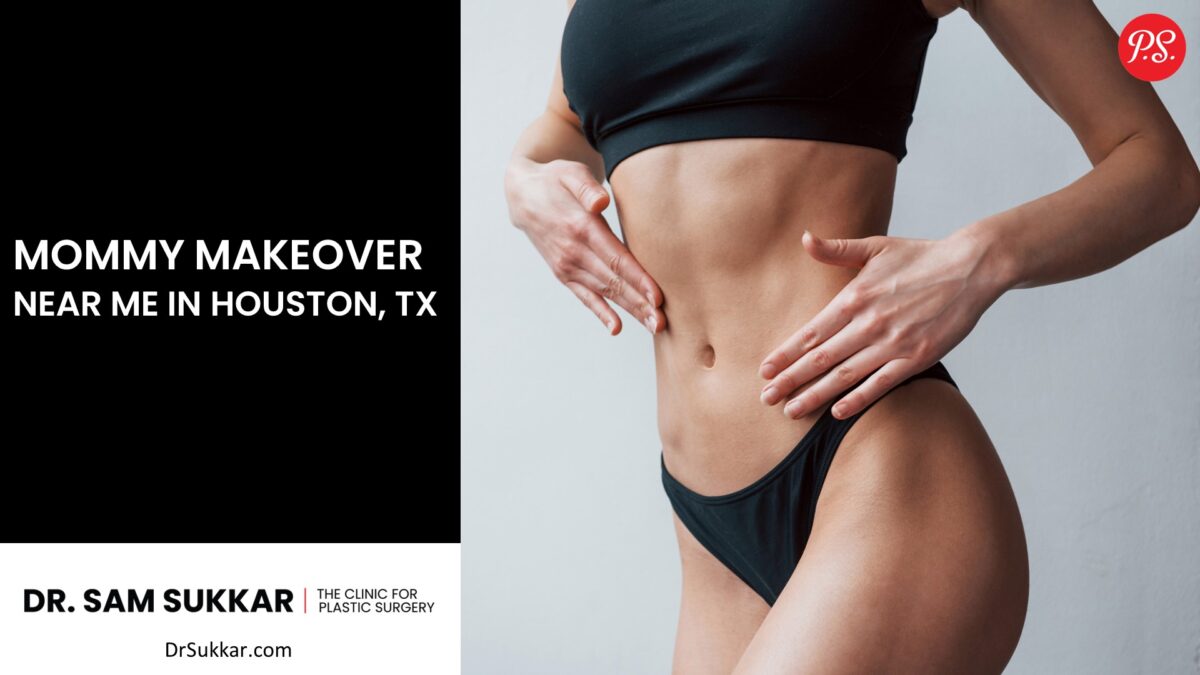
In Houston, How Much Does a Mommy Makeover Cost in Time and Money?


Houston’s Top-Rated Mommy Makeover awaits you with real Cosmetic Surgery results. Consult Dr. Sam Sukkar now!
Houston’s Top-Rated Mommy Makeover awaits you with real Cosmetic Surgery results. Consult Dr. Sam Sukkar now!
Reclaim your confidence with a Mommy Makeover Plastic Surgery procedure in Houston, TX. Trust Dr. Sam Sukkar for life-changing results!
See Mommy Makeover before and after miracles happening at Houston’s Top Cosmetic Surgery Center, The Clinic for Plastic Surgery. Your turn is next!
Searching “Mommy Makeover near me” in Houston? Get jaw-dropping Plastic Surgery results with The Clinic for Plastic Surgery. Call now before spots fill up!
How much is a Mommy Makeover in Houston, TX? Get the real numbers from Top Plastic Surgeon Dr. Sam Sukkar. Book your private consult now!
Houston Moms, find out what a Mommy Makeover is and where to get the Best Cosmetic Surgery Results. Consult The Clinic for Plastic Surgery today!
Unlock Mommy Makeover cost and pricing secrets in Houston, TX. Meet your Expert Team at The Clinic for Plastic Surgery and start your dream body journey today!
Motherhood is an amazing, transformative experience, but it can do a number on your body. After months (or years) of stretching, shifting, and rearranging, things don’t always bounce back the way we hope. That’s where a Mommy Makeover comes in. This is the ultimate confidence-boosting, body-restoring procedure designed to help you reclaim your pre-baby (or even better!) body.
But before we get to the slimmed waist, lifted curves, and perky everything, let’s go over the numbers. How much does a Mommy Makeover cost in 2025? What’s included? And how do you pay for it without giving yourself or your wallet a mini heart attack? Let’s break it all down.
The cost of a Mommy Makeover in 2025 can range anywhere from $12,000 to $30,000+. Yes, it’s an investment — but one that delivers significant transformations. The final price tag varies based on which procedures you include—more extensive makeovers with tummy tucks, breast surgeries, and liposuction will naturally cost more than a simpler combination. The experience and reputation of the plastic surgeon you choose also play a role; highly skilled, board-certified surgeons often charge more, but their expertise is well worth it.
Location matters, too. Procedures in major metropolitan areas tend to be more expensive than in smaller cities.
Hospital fees, anesthesia, and aftercare costs can also make it feel like you are saving up for a small yacht. While it is a considerable investment, it’s important to remember that a Mommy Makeover isn’t just about looking good — it’s about restoring your confidence and feeling like you again.
Mommy Makeovers are completely personalized to the patient based on their cosmetic concerns. The cost of a Mommy Makeover depends on many factors, but here’s a rough breakdown:
Before you start calculating how many lattes you need to give up to afford this, keep in mind the factors that impact the cost of your procedure. Your chosen surgeon’s experience, the location of the surgeon’s practice, facility fees, anesthesia fees, and post-surgery care can all add up quickly. Luckily, most doctors will let you finance your payments, so they aren’t as overwhelming.
Not ready to drop thousands of dollars in one go? No worries, not many people are! There are many kinds of financing options to ensure your dream makeover happens. However, it is important that you talk with your surgeon before your surgery to make sure that they accept the financing plan that you have. This is usually brought up during your consultation. Below are some of the most common choices for financing.
It is no secret that a good Mommy Makeover is going to cost you a pretty penny. Fortunately, the brunt of the cost can be split up into payments through financing plans, meaning that you can look and feel amazing while not having to worry about breaking the bank. If you are looking to embrace the best, most confident version of yourself, we definitely recommend a Mommy Makeover as the right choice for you.
Ready to take the leap and schedule a consultation? Call Dr. Sam Sukkar today and get the best treatment in the Houston, TX area.
If you’ve ever noticed a stubborn belly bulge that won’t go away—no matter how many crunches you do—you might be dealing with diastasis recti. Diastasis recti is a very common condition where the muscles in your abdomen separate and leave a gap down the center of your stomach. This condition can leave you feeling less than confident in your body, and if you’ve been searching for solutions, you’ve probably come across tummy tuck surgery (aka abdominoplasty) as a possible fix. But would a tummy tuck actually repair those separated muscles? We’re here to break it down so you know exactly what to expect.
Diastasis recti occurs when the two parts of your rectus abdominis (the “six-pack” muscles) pull apart, creating a gap down the middle. It is an especially common condition in women after pregnancy, but it can also be caused by drastic weight fluctuations, genetics, and even improper weightlifting techniques.
Signs of diastasis recti include:
Unfortunately, this condition doesn’t only create cosmetic issues. It can make daily movements harder, contribute to lower back pain, and even lead to hernias in severe cases.
A tummy tuck can absolutely repair diastasis recti, but not all tummy tucks automatically include muscle repair. If your goal is to fix separated abdominal muscles, you’ll need a full tummy tuck (not a mini tummy tuck) with muscle plication – the fancy term for stitching those muscles back together. Most tummy tuck procedures follow the same steps:
Once the diastasis recti is repaired, the muscles will stay that way as long as you take care of them. To keep your muscles in good shape, avoid poor weightlifting techniques and drastic weight fluctuations.
Targeted exercises that focus on deep core engagement (think Pilates or physical therapy) can potentially reverse some cases of mild diastasis recti. However, if the gap is significant, no amount of exercise will fully close it. Once the connective tissue between your abdominal muscles gets stretched out, surgery is generally the only way to permanently bring them back together.
If you do plan to get a tummy tuck, strengthening your core beforehand can help with recovery. Your doctor can give you a list of recommended stretches or light workouts that can help you prepare for a tummy tuck with diastasis recti. Just make sure you’re avoiding traditional crunches, sit-ups, or planks—those can actually worsen the condition.
If you’re considering a tummy tuck to correct your diastasis recti and are unsure what to expect from your recovery, here is a quick breakdown of the post-op process.
It isn’t just about looks, though the benefits of a tummy tuck are definitely a pleasant bonus. Fixing your diastasis recti is about restoring function and core strength while letting you feel comfortable in your own skin again. This condition can make every day an unnecessary challenge, but a full tummy tuck with muscle repair could be the game-changer you’ve been searching for.
Of course, surgery is a big decision, so the best first step is to talk to a board-certified plastic surgeon. They’ll assess your case, discuss your options, and help you decide whether a tummy tuck with muscle repair included is right for you. The right surgeon will also create a personalized treatment plan tailored to your needs, so you won’t have to worry about finding a procedure on your own that may not suit you.
Are you ready to decide and start talking with a plastic surgeon today? No worries if not—it’s an important choice to make! If you are ready to get started, contact us for a consultation at The Clinic For Plastic Surgery with Dr. Sam Sukkar, the best plastic surgeon in Houston, TX.
If you’ve been taking Ozempic for weight loss, you’ve probably noticed the number on the scale dropping—sometimes dramatically. This prescription medication, originally designed for managing blood sugar levels in people with type 2 diabetes, has gained massive popularity for its ability to help with chronic weight management. But while shedding excess weight can be life-changing, one of the unexpected side effects for many people is loose skin.
From sagging jowls (aka “Ozempic face”) to excess skin on the upper arms, abdomen, and thighs, many who lose weight quickly with weight loss drugs like Ozempic are left wondering: Can anything be done about loose skin? And is it possible to prevent it in the first place?
Ahead, we dive into why loose skin occurs after significant weight loss, what factors influence skin elasticity, and how to treat sagging skin—both non-surgically and through plastic surgery.
Loose skin after weight loss isn’t exclusive to weight loss injections like Ozempic—it can happen with other weight loss medications, bariatric surgery, or even traditional diet and exercise. But Ozempic, Wegovy, and similar drugs often lead to rapid weight loss, which can affect skin elasticity more than gradual weight loss does.
Here’s why:
Not everyone who takes Ozempic will experience loose skin, but certain factors play a significant role in whether your skin will bounce back or remain stretched after significant weight loss. While some people maintain enough skin elasticity for their skin to retract naturally, others may struggle with excess skin that doesn’t shrink even after they’ve reached their goal body weight.
So, how much weight loss is too much when it comes to skin laxity? Generally, people who lose 50 pounds or more—especially over a short period—are more likely to notice sagging skin, particularly in areas like the abdomen, upper arms, thighs, and neck.
Factors that affect loose skin after weight loss include:
1. Amount of Weight Lost
The more excess weight you shed, the more your skin has to adjust. Losing 10 to 20 pounds may not cause noticeable loose skin, but losing 50+ pounds often leads to excess skin folds that won’t tighten up on their own. Massive weight loss (100 pounds or more) typically results in loose skin that requires either non-surgical skin tightening treatments or plastic surgery for removal.
2. Age
Younger skin contains more collagen and elastin, which allows it to contract better after fat loss. If you lose weight in your 20s or early 30s, your skin has a better chance of snapping back compared to someone in their 40s or 50s, when collagen production declines. As a result, older individuals are more likely to experience facial sagging, hollowed cheeks, and a gaunt appearance after weight loss.
3. Genetics
Just like some people naturally have firm, elastic skin, others are predisposed to sagging jowls and loose skin after weight loss. Your genetic makeup determines how well your skin bounces back and how much collagen production slows down as you age.
4. How Long You Carried Excess Weight
If you were overweight or obese for many years, your skin’s elasticity has likely weakened, making it harder for it to shrink back. The longer your skin remains stretched, the less likely it is to fully tighten after losing weight.
5. Rate of Weight Loss
While rapid weight loss is often seen as a good thing, losing too much weight too fast can leave you with excess skin. When you lose weight quickly—whether through weight loss medications, Ozempic, bariatric surgery, or extreme dieting—your skin doesn’t have time to gradually adjust to your new body shape. Slower weight loss allows your skin tissue to keep up with your body fat reduction, potentially reducing the severity of loose skin.
While there’s no foolproof way to completely prevent loose skin, there are ways to improve skin elasticity and minimize sagging while losing weight. The key is to focus on gradual weight loss, muscle retention, and skin health.
1. Prioritize Strength Training
One of the best ways to combat loose skin is to replace lost fat tissue with muscle mass. When you build muscle, it helps fill out your skin, reducing the appearance of excess skin. Strength training can be particularly helpful for areas prone to sagging, such as the arms, thighs, and abdomen.
Aim for resistance training at least three to four times a week, focusing on compound movements like squats, lunges, push-ups, and deadlifts. This not only supports skin tightening but also helps shape your new body after losing weight.
2. Stay Hydrated
Hydration is essential for collagen production and skin elasticity. When skin is dehydrated, it loses its ability to snap back, making sagging skin more pronounced. Drinking at least 8 to 10 glasses of water daily helps keep skin cells plump, improving the overall appearance of loose skin.
3. Focus on Nutrition
What you eat plays a major role in skin health. Prioritize nutrient-dense foods that support collagen production and skin repair:
4. Lose Weight Gradually
If you’re using Ozempic or other weight loss medications, work with your doctor to set realistic weight loss goals. Aim to lose no more than 1 to 2 pounds per week, which allows your skin tissue to gradually adjust and reduces the risk of excess skin.
If you’re dealing with moderate sagging but aren’t ready for plastic surgery, non-invasive and minimally invasive treatments can help tighten loose skin and restore a youthful appearance.
1. Topical Skincare
While skincare alone won’t reverse excess skin, certain ingredients can support skin elasticity and collagen production. Look for:
2. Skin-Tightening Procedures
For those wanting noticeable results without surgical procedures, these options can help:
3. Dermal Fillers & Fat Grafting
For those experiencing facial sagging or a hollowed appearance, injectables can help restore facial fullness:
For those experiencing severe loose skin after massive weight loss, plastic surgery may be the most effective way to achieve a more sculpted, toned appearance. While non-surgical skin tightening treatments can help with mild skin laxity, individuals with significant excess skin may require surgical procedures to remove it permanently.
Here’s a closer look at the surgical options available:
1. Tummy Tuck (Abdominoplasty)
A tummy tuck is one of the most popular procedures for individuals who have lost a significant amount of weight, especially after taking Ozempic or undergoing bariatric surgery. This surgery removes excess abdominal skin and tightens the underlying muscles, resulting in a flatter, more toned stomach.
2. Arm Lift (Brachioplasty)
After rapid weight loss, many people develop loose skin on the upper arms, sometimes called “bat wings.” An arm lift (brachioplasty) removes excess skin from the upper arms, giving them a firmer, more toned look.
3. Neck Lift & Deep Plane Facelift
One of the most talked-about side effects of losing weight quickly with Ozempic and other weight loss medications is facial sagging, often referred to as “Ozempic face.” This happens when facial fat is lost too quickly, leading to a gaunt, hollowed-out appearance. A neck lift and deep plane facelift can help restore facial fullness while tightening the face and neck area.
4. Body Contouring Procedures
For individuals with loose skin in multiple areas, a full body lift or body contouring surgery may be the best approach. This involves a combination of skin removal procedures, such as a posterior body lift with buttock auto-augmentation, tummy tuck, thigh lift, arm lift, and breast lift, tailored to the patient’s specific needs.
If your loose skin is causing discomfort, rashes, or self-consciousness, it may be time to consult with a plastic surgeon or dermatologist. Consider seeing a professional if:
Losing weight with Ozempic can be empowering, but it’s important to be aware of the potential for loose skin—especially if you lose weight quickly. While diet and exercise can improve skin elasticity, non-surgical treatments, and plastic surgery, options can help treat Ozempic face, tighten sagging skin, and restore a more youthful appearance.
If loose skin is a concern, speaking with a board-certified plastic surgeon can help you explore your options and decide what’s best for your body weight and lifestyle.
Would you consider a skin-tightening procedure or surgical intervention after major weight loss? Let us know in the comments!